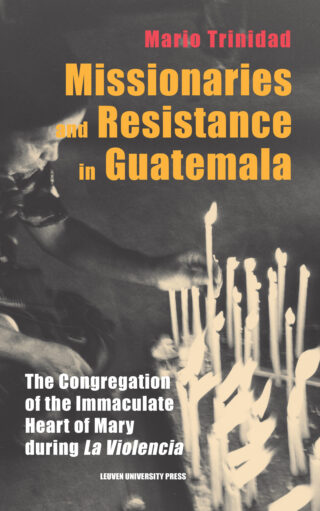
Missionaries and Resistance in Guatemala
The Congregation of the Immaculate Heart of Mary during 'La Violencia'
Mario Trinidad (Author),
Series: Leuven Studies in Mission and Modernity 3
Category: Americas, Religion, Social Science
Language: English
ISBN: 9789462704169
Publication date: August 12, 2024
€70.00 (including 6% VAT)
Buy NowNumber of pages: 304
Size: 234 x 156 x 20 mm
Illustrations and other content description:
Illustrated

Stock item: 161449
Standard delivery time for print books:
For Belgium: 5 to 8 working days
For EU: 2 to 3 weeks
For other countries: 4 to 5 weeks
Series: Leuven Studies in Mission and Modernity 3
Category: Americas, Religion, Social Science
Language: English
ISBN: 9789461666123
Publication date: October 15, 2024
€59.00 (including 6% VAT)
Buy NowNumber of pages: 304
Illustrations and other content description:
Illustrated
Series: Leuven Studies in Mission and Modernity 3
Category: Americas, Religion, Social Science
Language: English
ISBN: 9789461665614
Publication date: August 12, 2024
€59.00 (including 6% VAT)
Buy NowNumber of pages: 304
Illustrations and other content description:
Illustrated
Catholic missionaries in the revolutionary movements of the 1970s and 1980s in Guatemala.
In Guatemala, the 36-year armed conflict from 1960 to 1996 claimed 200,000 lives, over two per cent of the population, and displaced a million more. In the 1970s and the 1980s the widespread and violent repression of social movements fighting for justice and human rights reached unimaginable proportions, involving assassinations, disappearances, and exile. Even parts of the Church, traditionally considered an ally of the powerful and the wealthy, were not spared this fate.
Missionaries and Resistance in Guatemala chronicles the involvement of certain Catholic missionaries in popular and revolutionary movements. Based primarily on their own accounts, it narrates their gradual progression from conservative theological and pastoral practices to radical positions, informed by their solidarity with the poor and a theology of liberation. Their stories are situated in a wider geopolitical and ecclesial context.
This publication is GPRC-labeled (Guaranteed Peer-Reviewed Content).
This book will be made open access within three years of publication thanks to Path to Open, a program developed in partnership between JSTOR, the American Council of Learned Societies (ACLS), University of Michigan Press, and The University of North Carolina Press to bring about equitable access and impact for the entire scholarly community, including authors, researchers, libraries, and university presses around the world. Learn more at https://about.jstor.org/path-to-open/
Acknowledgements
Introduction
Tengo una deuda con el pasado
I owe the past a debt
Abrupt end of my first missionary experience
From la tierra de la eterna primavera to la tierra de la eterna tiranía
Methodology and sources
Chapter 1
Pensábamos que estábamos preparados
We thought we were prepared
Guatemala, the first years of a new mission
‘Direct’ and ‘indirect apostolate’
We thought we were prepared for missionary work
The first months in Guatemala
First impressions
Internal division in the face of external division
Universal ecclesial and geopolitical developments
Internal division among Scheutists
Sources of division among Scheutists in Guatemala
Chapter 2
No fue capricho, ni locura, ni gran equivocación
Not a whim, madness, nor a big mistake
First assignments
Traditional ideals, traditional pastoral methods, and traditional allies
Call for reform
Studies at CIDOC and other Latin American Institutes
Three interrelated initiatives
Study, planning and evaluation day
Popular materials
Links with popular organizations
Chapter 3
En el camino la gente nos concientizó
On the journey the people conscientized us
Linking everyday life with big structures through relationships
The missionaries and the guerrillas
Missionaries who joined the guerrillas
Three events before May 1, 1980
Conclusion
Chapter 4
Al fin sufren ahora la misma suerte que la de su pueblo humillado
Finally they suffer the same fate as their crushed people
Mechanisms of terror
Martyrdom: cosmic conflict between good and evil
Conrado de la Cruz (July 27, 1946 – May 1, 1980)
Walter Voordeckers (September 2, 1939 – May 12, 1980)
Congregational response
Just the beginning
The assassination of Scheutists continues
Conclusion
Fue realmente una página de historia
It was truly a page out of history
Epilogue
Abbreviations
Bibliography
Illustration credits
Index of persons
Thanks to his deep knowledge of the order and the events of this period, which represents both the apex and nadir of liberation theology in Guatemala, Trinidad has the tools to probe very deeply into the radicalization of Scheut, which has been somewhat overshadowed by the stories of other religious actors—particularly the Jesuits, with whom they were often allied. One of the most vivid elements of this work—which is accessibly written, archivally grounded, and meticulously researched—is the author’s reliance on intimate and heartfelt oral histories with his former colleagues and confreres. These interlocutors are willing to speak openly with Trinidad both as a fellow compan˜ ero and as a fellow traveler in historical memory. - Virginia Garrard, Hispanic American Historical Review (2025) 105 (4): 780–781, https://doi.org/10.1215/00182168-11981081
By emphasizing the central role of laypeople and the fluid interaction between urban and rural groups, the book offers a powerful account of how faith and politics intertwined during la violencia. Ultimately, Trinidad’s work offers a valuable contribution to understanding the ethical and spiritual foundations of activism, emphasizing the moral responsibility borne by war survivors to preserve the memory of the disappeared and continue the fight for justice.- Bonar Hernández Sandoval, The Catholic Historical Review, Volume 111, Number 4, Autumn 2025, https://doi.org/10.1353/cat.2025.a982650
Das Buch stellt einen wichtigen Beitrag zur Erinnerung an diese –wie an zahlreiche andere –Opfer der Gewalt in Guatemala dar. Es bezieht sich häufig auf offizielle Dokumente der Erinnerung und Aufarbeitung dieser Jahre und stellt die Bezüge zur kirchlichen und pastoralen Arbeit her. Dadurch entwickelt es auch eine große kirchenhistorische Bedeutung für die Rekonstruktion dieser konfliktiven Phase der Entwicklung der Kirche in Lateinamerika, speziell in Guatemala, und der Bedeutung europäischer (und anderer) Ordensangehöriger in dieser Zeit. - Stefan Silber, Theologische Revue 121 (Juli 2025), DOI: https://doi.org/10.17879/thrv-2025-8782
Frequently Asked Questions
What is "Missionaries and Resistance in Guatemala" about?
Catholic missionaries in the revolutionary movements of the 1970s and 1980s in Guatemala.
In Guatemala, the 36-year armed conflict from 1960 to 1996 claimed 200,000 lives, over two per cent of the population, and displaced a million more. In the 1970s and the 1980s the widespread and violent repression of social movements fighting for justice and human rights reached unimaginable proportions, involving assassinations, disappearances, and exile. Even parts of the Church, traditionally considered an ally of the powerful and the wealthy, were not spared this fate.
Missionaries and Resistance in Guatemala chronicles the involvement of certain Catholic missionaries in popular and revolutionary movements. Based primarily on their own accounts, it narrates their gradual progression from conservative theological and pastoral practices to radical positions, informed by their solidarity with the poor and a theology of liberation. Their stories are situated in a wider geopolitical and ecclesial context.
This publication is GPRC-labeled (Guaranteed Peer-Reviewed Content).
This book will be made open access within three years of publication thanks to Path to Open, a program developed in partnership between JSTOR, the American Council of Learned Societies (ACLS), University of Michigan Press, and The University of North Carolina Press to bring about equitable access and impact for the entire scholarly community, including authors, researchers, libraries, and university presses around the world. Learn more at https://about.jstor.org/path-to-open/
Who wrote "Missionaries and Resistance in Guatemala"?
"Missionaries and Resistance in Guatemala" was written by Mario Trinidad.
Mario Trinidad was a member of the Congregation of the Immaculate Heart of Mary and served in Guatemala in the 1970s. He now resides in Australia and is a retired social worker and university lecturer.
Is "Missionaries and Resistance in Guatemala" part of a series?
Yes, "Missionaries and Resistance in Guatemala" is part of the "Leuven Studies in Mission and Modernity" series. It's book 3 in the series.

Leuven Studies in Mission and Modernity is a peer-reviewed book series which aims to showcase groundbreaking works on the history of missionaries and missionary organisations during the nineteenth and twentieth centuries. The series will steer mission history towards new thematic frontiers by exploring the multiple ways in which missionary operations have affected local societies and cultures around the globe, and how their significance is negotiated in the present. Leuven Studies in Mission and Modernity provides a forum for original contributions to the study of religious missions and how they have been embedded in broader processes of colonisation/decolonisation, globalisation, secularisation, and humanitarianism from the nineteenth century onwards.
MiMoRA
Leuven Studies in Mission and Modernity is an initiative by the Mission and Modernity Research Academy (MiMoRA). Created in 2018 by several partners within KU Leuven, MiMoRA aims to reinvigorate international research on missionaries by providing a forum for academic debate and by creating new research networks and publication possibilities for young and promising scholars across the globe. MiMoRA is coordinated by KADOC-KU Leuven, the interfaculty Documentation and Research Centre on Religion, Culture and Society associated with KU Leuven and supported by the Flemish Community.
Technical details
All books are published in English for an international audience of scholars. All manuscripts are subject to peer review.
The series welcomes contributions by established scholars as well as by promising young researchers, and embraces diversity in terms of gender, nationality, and ethnicity.
Series Board
Kim Christiaens (KADOC-KU Leuven), Carine Dujardin (KADOC-KU Leuven), Idesbald Goddeeris (KU Leuven, Faculty of Arts), Jonas Van Mulder (KADOC-KU Leuven), Dries Vanysacker (KU Leuven, Theology and Religious Studies) and Pieter Verstraete (KU Leuven, Psychology and Educational Sciences)
For more information, please visit kadoc.kuleuven.be/mimora and kadoc.kuleuven.be.
What is the Table of Contents for "Missionaries and Resistance in Guatemala"?
Acknowledgements
Introduction
Tengo una deuda con el pasado
I owe the past a debt
Abrupt end of my first missionary experience
From la tierra de la eterna primavera to la tierra de la eterna tiranía
Methodology and sources
Chapter 1
Pensábamos que estábamos preparados
We thought we were prepared
Guatemala, the first years of a new mission
‘Direct’ and ‘indirect apostolate’
We thought we were prepared for missionary work
The first months in Guatemala
First impressions
Internal division in the face of external division
Universal ecclesial and geopolitical developments
Internal division among Scheutists
Sources of division among Scheutists in Guatemala
Chapter 2
No fue capricho, ni locura, ni gran equivocación
Not a whim, madness, nor a big mistake
First assignments
Traditional ideals, traditional pastoral methods, and traditional allies
Call for reform
Studies at CIDOC and other Latin American Institutes
Three interrelated initiatives
Study, planning and evaluation day
Popular materials
Links with popular organizations
Chapter 3
En el camino la gente nos concientizó
On the journey the people conscientized us
Linking everyday life with big structures through relationships
The missionaries and the guerrillas
Missionaries who joined the guerrillas
Three events before May 1, 1980
Conclusion
Chapter 4
Al fin sufren ahora la misma suerte que la de su pueblo humillado
Finally they suffer the same fate as their crushed people
Mechanisms of terror
Martyrdom: cosmic conflict between good and evil
Conrado de la Cruz (July 27, 1946 – May 1, 1980)
Walter Voordeckers (September 2, 1939 – May 12, 1980)
Congregational response
Just the beginning
The assassination of Scheutists continues
Conclusion
Fue realmente una página de historia
It was truly a page out of history
Epilogue
Abbreviations
Bibliography
Illustration credits
Index of persons
Related titles
 The Romero Memory
Judith Gruber (Editor), Jonas Van Mulder (Editor), Stephan Parmentier (Editor), Veerle Draulans (Editor), Joren Janssens (Editor), Jacques Haers (Editor), Kim Christiaens (Editor),
November 2026

 Infrastructuring Arrival
Karel Arnaut (Editor), Luce Beeckmans (Editor), Bruno Meeus (Editor),
November 2026
 Feminists Resisting Gendered Violence
Hemangini Gupta (Editor), Fiona Mackay (Editor), Jan Breckenridge (Editor), Louise Chappell (Editor), Rachna Mehra (Editor), Rukmini Sen (Editor), Mailin Suchting (Editor),
October 2026
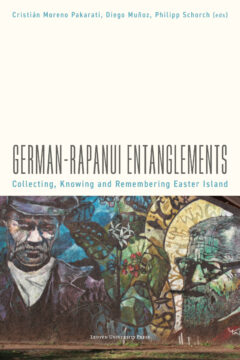 German–Rapanui Entanglements
Cristián Moreno Pakarati (Editor), Diego Muñoz (Editor), Philipp Schorch (Editor),
August 2026
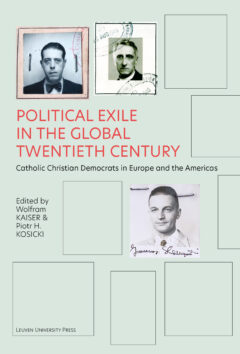 Political Exile in the Global Twentieth Century
Wolfram Kaiser (Editor), Piotr H. Kosicki (Editor),
April 2026
 Comics and the Global South
Andrea Aramburú (Editor), Dibyadyuti Roy (Editor), Joe Sutliff Sanders (Editor),
February 2026
 Teaching About the Violent Past
Line Kuppens (Author), Justin Sheria Nfundiko (Author),
October 2025
 Integration Otherwise Inspiration Kit
Luce Beeckmans (Author), Dounia Salamé (Author), Martina Bovo (Author), Mary Hogan (Author),
June 2025
 Christian Churches and Postwar Society
Kristien Suenens (Editor), Michael Snape (Editor), Martin Baumeister (Editor),
June 2025
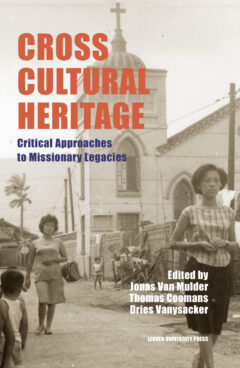 Cross-Cultural Heritage
Jonas Van Mulder (Editor), Thomas Coomans (Editor), Dries Vanysacker (Editor),
April 2025