

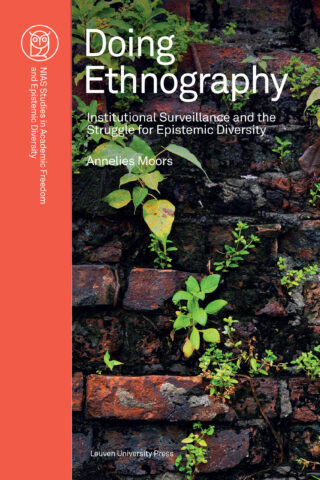

Doing Ethnography
Institutional Surveillance and the Struggle for Epistemic Diversity
Annelies Moors (Author),

Series: NIAS Studies in Academic Freedom and Epistemic Diversity
Category: Social Science
Language: English
ISBN: 9789462705159
Publication date: February 3, 2026
€49.50 (including 6% VAT)
Buy NowNumber of pages: 184
Size: 234 x 156 x 10 mm

Funded by: KU Leuven Fund for Fair Open Access
Open Book Collective
NIAS - Netherlands Institute for Advanced Studies in the Humanities and Social Sciences
Stock item: 169843
Standard delivery time for print books:
For Belgium: 5 to 8 working days
For EU: 2 to 3 weeks
For other countries: 4 to 5 weeks
Series: NIAS Studies in Academic Freedom and Epistemic Diversity
Category: Social Science
Language: English
ISBN: 9789461667502
Publication date: February 3, 2026
Download Free EpubNumber of pages: 184
Funded by: KU Leuven Fund for Fair Open Access
Open Book Collective
NIAS - Netherlands Institute for Advanced Studies in the Humanities and Social Sciences
Series: NIAS Studies in Academic Freedom and Epistemic Diversity
Category: Social Science
Language: English
ISBN: 9789461667496
Publication date: February 3, 2026
Download Free PDFNumber of pages: 184
Funded by: KU Leuven Fund for Fair Open Access
Open Book Collective
NIAS - Netherlands Institute for Advanced Studies in the Humanities and Social Sciences
Timely critique of the expanding institutional control over academic research and its impact on ethnographic practice.
In recent decades, academic research has come under increasing institutional surveillance and control. Doing Ethnography traces the rise of ethical review procedures, open science mandates, and integrity protocols, examining how these developments shape ethnographic practice. It critically explores key themes such as doing no harm, informed consent, transparency, anonymity, researcher positionality, and the sharing of field notes.
The book argues that contemporary academia often enforces universal, bureaucratic forms of regulatory ethics. Rooted in quantitative and (post-)positivist paradigms, these frameworks frequently clash with ethnography’s interpretive, intersubjective, and immersive fieldwork approach. In response, it calls for a situated, context-sensitive ethics of care attuned to the specificities of ethnographic engagement. Ultimately, Doing Ethnography offers both a critical reflection on institutional power and a plea to recognise and sustain the epistemic diversity on which academic freedom depends.
Listen to the ‘Room to Explore’ episode with Annelies Moors: Spotify.
Acknowledgements
Chapter 1. Beyond an affaire: managing ethnography
1.1. An article and its afterlife: reputation management in action
1.2. Engaging with the trouble: ethnography, academia, and society
1.3. Writing this book: set-up and chapters
Chapter 2. Doing ethnography: an approach, not a method
2.1. Ethnography as relational and processual
2.2. Ethnography beyond anthropology
2.3. Ethnography in a changing world
2.4. Conclusion: epistemological plurality
Chapter 3. Research ethics: problems with regulation
3.1. Ethical self-regulation in anthropology
3.2. Enforceable ethics: state governance and beyond
3.3. Conclusion: doing ethics differently
Chapter 4. The complexities of doing no harm and informed consent
4.1. Doing no harm: power and ethos
4.2. Informed consent: the forms
4.3. Informed consent: the principle
4.4. Ethnography, concealment, and publication
4.5. Conclusion: ethical dilemmas
Chapter 5. Open Science and replication: trust, distrust, and transparency
5.1. The Open Science movement: from utopia to dystopia?
5.2. The trouble with transparency
5.3. The replication crisis: what does it mean?
5.4. Ethnography, replication, and openness
5.5. Conclusion: another kind of openness
Chapter 6. Constructing integrity: codification in context
6.1. Public scandals and the emergence of integrity codes
6.2. Constructing integrity: comparing the codes
6.3. Policy-making: projectification and integrity
6.4. Conclusion: from ethics to commerce
Chapter 7. Anonymity, positionality, and field notes: integrity in practice
7.1. Contesting anonymity: a turn to disclosure?
7.2. Positionality and substance: relations in process
7.3. The problem with sharing field notes
7.4. Conclusion: a case-by-case approach
Chapter 8. Academic freedom: scholarship and politics
8.1. A diversity of perspectives: politicising the academy
8.2. Funding and employment
8.3. External threats and internal harassment
8.4. Israel/Palestine: academic freedom in action
8.5. Conclusion: acting with responsibility
Chapter 9. Conclusion: dilemmas and responsibilities
9.1. Ethics, integrity, and power
9.2. Doing ethics and integrity differently
9.3. Academic freedom: ethnography and beyond
Notes
References
Annelies Moors
Annelies Moors is an anthropologist and Professor Emerita at the University of Amsterdam. Most recently she was the principal investigator of the ERC advanced grant ‘Muslim Marriages’ and held the NIAS fellowship ‘The Struggle for the Future of Ethnography’.
This book rescues research ethics, integrity and transparency from the clutches of an alienated and alienating managerialism and puts them at the heart of a relational ethnographic practice. It is a vital companion for all caring researchers. - Ghassan Hage, University of Melbourne
Doing Ethnography is the book we, ethnographers of the global world, have desperately needed. With remarkable clarity and courage, Annelies Moors tackles the bureaucratic stranglehold that threatens to suffocate ethnographic research. What makes Doing Ethnography essential is Moors' refusal to accept the false choice between ethics and ethnography. Instead, she demonstrates that the standardized protocols, designed for positivist research, often work against the very values they claim to protect. There is an epistemic violence embedded in one-size-fits-all regulations that fail to recognise the relational, processual nature of ethnographic knowledge production. Moors' arguments are both validating and urgent. This book should be required reading for every ethics committee member, research administrator, and scholar wrestling with the growing tensions between doing ethnography and satisfying institutional demands. Moors gives us the vocabulary and the courage to insist on epistemic diversity—not as a luxury, but as a precondition for ethical and rigorous research. - Sertaç Sehlikoglu, University College London
Doing Ethnography is a deep engagement with ethnography that inspires us to (re)consider its possibilities and practices in times when our research is increasingly subjected to various kinds of research management that take positivist approaches as normative. The book takes practices of ethnography as a vantage point to discuss burning questions about the production of scholarly knowledge in our times – questions such as academic freedom, research integrity, open science, transparency, neutrality, and the commodification and “projectification” of knowledge. Moors offers a compelling case for more ethics of care, autonomy, and situatedness in research, allowing us to cultivate epistemic diversity and more reliable knowledge production within the scientific field at large. - Sarah Bracke, University of Amsterdam
Frequently Asked Questions
What is "Doing Ethnography" about?
Timely critique of the expanding institutional control over academic research and its impact on ethnographic practice.
In recent decades, academic research has come under increasing institutional surveillance and control. Doing Ethnography traces the rise of ethical review procedures, open science mandates, and integrity protocols, examining how these developments shape ethnographic practice. It critically explores key themes such as doing no harm, informed consent, transparency, anonymity, researcher positionality, and the sharing of field notes.
The book argues that contemporary academia often enforces universal, bureaucratic forms of regulatory ethics. Rooted in quantitative and (post-)positivist paradigms, these frameworks frequently clash with ethnography’s interpretive, intersubjective, and immersive fieldwork approach. In response, it calls for a situated, context-sensitive ethics of care attuned to the specificities of ethnographic engagement. Ultimately, Doing Ethnography offers both a critical reflection on institutional power and a plea to recognise and sustain the epistemic diversity on which academic freedom depends.
Listen to the 'Room to Explore' episode with Annelies Moors: Spotify.
Who wrote "Doing Ethnography"?
"Doing Ethnography" was written by Annelies Moors.
Annelies Moors is an anthropologist and Professor Emerita at the University of Amsterdam. Most recently she was the principal investigator of the ERC advanced grant ‘Muslim Marriages’ and held the NIAS fellowship ‘The Struggle for the Future of Ethnography’.
Is "Doing Ethnography" part of a series?
Yes, "Doing Ethnography" is part of the "NIAS Studies in Academic Freedom and Epistemic Diversity" series.

Visit www.nias.knaw.nl for more information about the Netherlands Institute for Advanced Study in the Humanities and Social Sciences (NIAS-KNAW).
Institutes for Advanced Study hold a special position within academia. By welcoming world-class scholars and fostering disciplinary, epistemological and cultural diversity, these institutes are highly conducive to generating new comparative perspectives and cross-pollinations. The particular combination of advanced scholarship, freedom from institutional constraints and the liberty to venture into new directions, makes them ideal laboratories for reflecting on science and society – and, consequently, for engaging with fundamental questions about academic freedoms, epistemic diversity and the science system.
With this series of monographs and edited volumes, the Netherlands Institute for Advanced Study in the Humanities and Social Sciences (NIAS-KNAW) aims to present insights from the institute’s fellows, alumni and partners that foreground the structural challenges scholars, disciplines, knowledge domains and academic institutions encounter as they contend with political, policy-related, economic and societal pressures. In doing so, the series seeks to open or further discussions about where scholars and disciplines currently stand, where we envision them going and what is needed to help them get there.
The NIAS Studies in Academic Freedom and Epistemic Diversity is primarily a series by and for academics within the Humanities and Social Sciences, but will also be of interest to academic administrators and policymakers. Titles will be considered based on proposals submitted by NIAS fellows and alumni, initiated by the editorial board, or received through open submission.
Editorial Board
Antoine Buyse, Netherlands Institute for Advanced Study (NIAS-KNAW) (editor-in-chief)
Merlijn Olnon, NIAS-KNAW (editorial secretary & editor)
Markus Balkenhol, Meertens Instituut - KNAW (editor)
Jacob Boersema, New York University (editor)
Nadia Bouras, Universiteit Leiden (editor)
Karwan Fatah-Black, Universiteit Leiden (editor)
Proposals
Proposals and enquiries can be sent to the series editor-in-chief Antoine Buyse.
Please make use of the submission form to present your manuscript or proposal to our board.
Authors interested in Open Access can consult the available funding options.
Links & Resources
Is "Doing Ethnography" available Open Access?
Yes, "Doing Ethnography" is published Open Access. It is available under a BY-NC-ND license.
Who funded the publication of "Doing Ethnography"?
Publication of "Doing Ethnography" was funded by KU Leuven Fund for Fair Open Access
Open Book Collective
NIAS - Netherlands Institute for Advanced Studies in the Humanities and Social Sciences
.
What is the Table of Contents for "Doing Ethnography"?
Acknowledgements
Chapter 1. Beyond an affaire: managing ethnography
1.1. An article and its afterlife: reputation management in action
1.2. Engaging with the trouble: ethnography, academia, and society
1.3. Writing this book: set-up and chapters
Chapter 2. Doing ethnography: an approach, not a method
2.1. Ethnography as relational and processual
2.2. Ethnography beyond anthropology
2.3. Ethnography in a changing world
2.4. Conclusion: epistemological plurality
Chapter 3. Research ethics: problems with regulation
3.1. Ethical self-regulation in anthropology
3.2. Enforceable ethics: state governance and beyond
3.3. Conclusion: doing ethics differently
Chapter 4. The complexities of doing no harm and informed consent
4.1. Doing no harm: power and ethos
4.2. Informed consent: the forms
4.3. Informed consent: the principle
4.4. Ethnography, concealment, and publication
4.5. Conclusion: ethical dilemmas
Chapter 5. Open Science and replication: trust, distrust, and transparency
5.1. The Open Science movement: from utopia to dystopia?
5.2. The trouble with transparency
5.3. The replication crisis: what does it mean?
5.4. Ethnography, replication, and openness
5.5. Conclusion: another kind of openness
Chapter 6. Constructing integrity: codification in context
6.1. Public scandals and the emergence of integrity codes
6.2. Constructing integrity: comparing the codes
6.3. Policy-making: projectification and integrity
6.4. Conclusion: from ethics to commerce
Chapter 7. Anonymity, positionality, and field notes: integrity in practice
7.1. Contesting anonymity: a turn to disclosure?
7.2. Positionality and substance: relations in process
7.3. The problem with sharing field notes
7.4. Conclusion: a case-by-case approach
Chapter 8. Academic freedom: scholarship and politics
8.1. A diversity of perspectives: politicising the academy
8.2. Funding and employment
8.3. External threats and internal harassment
8.4. Israel/Palestine: academic freedom in action
8.5. Conclusion: acting with responsibility
Chapter 9. Conclusion: dilemmas and responsibilities
9.1. Ethics, integrity, and power
9.2. Doing ethics and integrity differently
9.3. Academic freedom: ethnography and beyond
Notes
References
What is the DOI for "Doing Ethnography"?
The Digital Object Identifier (DOI) for "Doing Ethnography" is 10.11116/9789461667502.
Related titles

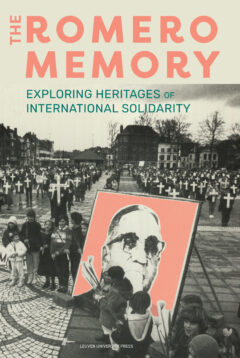 The Romero Memory
Judith Gruber (Editor), Jonas Van Mulder (Editor), Stephan Parmentier (Editor), Veerle Draulans (Editor), Joren Janssens (Editor), Jacques Haers (Editor), Kim Christiaens (Editor),
December 2026
 Infrastructuring Arrival
Karel Arnaut (Editor), Luce Beeckmans (Editor), Bruno Meeus (Editor),
November 2026
 Feminists Resisting Gendered Violence
Hemangini Gupta (Editor), Fiona Mackay (Editor), Jan Breckenridge (Editor), Louise Chappell (Editor), Rachna Mehra (Editor), Rukmini Sen (Editor), Mailin Suchting (Editor),
October 2026
 German–Rapanui Entanglements
Cristián Moreno Pakarati (Editor), Diego Muñoz (Editor), Philipp Schorch (Editor),
August 2026
 Teaching About the Violent Past
Line Kuppens (Author), Justin Sheria Nfundiko (Author),
October 2025
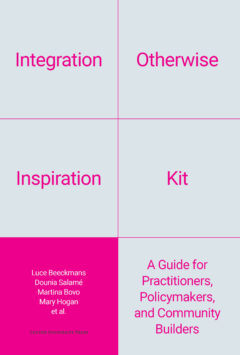 Integration Otherwise Inspiration Kit
Luce Beeckmans (Author), Dounia Salamé (Author), Martina Bovo (Author), Mary Hogan (Author),
June 2025
 Newcomers Navigating the Welfare State
Hanne Vandermeerschen (Editor), Elsa Mescoli (Editor), Jean-Michel Lafleur (Editor), Peter De Cuyper (Editor),
December 2023

 Islamophobia as a Form of Radicalisation
Leen d’Haenens (Editor), Abdelwahed Mekki-Berrada (Editor),
March 2023
 Exploring the Transnational Neighbourhood
Stephan Ehrig (Editor), Britta C. Jung (Editor), Gad Schaffer (Editor),
October 2022
 Handbook for Ethiopian Public Administration Program Accreditation
Bacha Kebede Debela (Editor), Geert Bouckaert (Editor), Berhanu Temesgen Eshetu (Editor), Chala Deyessa Fita (Editor), Hailu Megersa Tola (Editor), Kiflie Worku Angaw (Editor), Shumey Berhie Teshome (Editor), Solomon Gebreyohans Gebru (Editor),
June 2022