

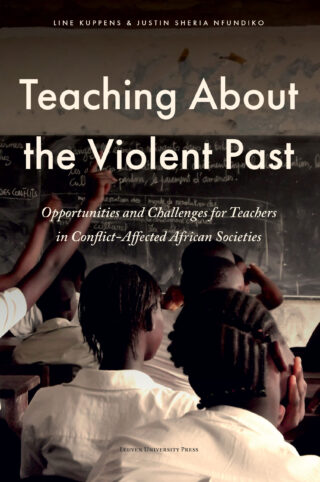

Teaching About the Violent Past
Opportunities and Challenges for Teachers in Conflict-Affected African Societies
Line Kuppens (Author), Justin Sheria Nfundiko (Author),

Category: African Studies, Education, Social Science
Language: English
ISBN: 9789462704725
Publication date: October 15, 2025
€25.00 (including 6% VAT)
Buy NowNumber of pages: 220
Size: 234 x 156 x 13 mm
Illustrations and other content description:
black & white illustrations

Funded by: KU Leuven Fund for Fair Open Access
Open Book Collective
Stock item: 168205
Standard delivery time for print books:
For Belgium: 5 to 8 working days
For EU: 2 to 3 weeks
For other countries: 4 to 5 weeks
Category: African Studies, Education, Social Science
Language: English
ISBN: 9789461666697
Publication date: October 15, 2025
Download Free EpubNumber of pages: 220
Illustrations and other content description:
black & white illustrations
Funded by: KU Leuven Fund for Fair Open Access
Open Book Collective
Category: African Studies, Education, Social Science
Language: English
ISBN: 9789461666680
Publication date: October 15, 2025
Download Free PDFNumber of pages: 220
Illustrations and other content description:
black & white illustrations
Funded by: KU Leuven Fund for Fair Open Access
Open Book Collective
Policy recommendations and strategies to support teachers in addressing the violent past.
Education plays a vital role in fostering reconciliation and teaching peace in conflict-affected societies. In particular, teaching about the violent past from multiple perspectives helps replace fear and hatred with mutual understanding. While conflict-history education has been explored across sub-Saharan Africa and beyond, curricular reforms often overlook teachers—despite their key role in achieving success.
Building on insights from education sciences, sociology, political sciences, memory studies and social psychology, this book introduces a novel and interdisciplinary framework to analyse secondary school teachers’ engagement with conflict-history education, using both qualitative and quantitative methods. It focuses on three distinct locations—Kenya, Côte d’Ivoire, and the Democratic Republic of Congo—that differ in the intensity of violence experienced and the time elapsed since conflict ended.
This practice-oriented book aims at identifying teachers’ needs to feel confident and competent in driving reconciliation in their classrooms and provides actionable policy recommendations and teaching strategies to support them in this essential role.
Preface
List of Abbreviations
Introduction
I.1. Research gaps and objectives
I.2. Case study contexts
I.3. Methodology
I.4. Outline of this book
Part 1. Theory & Concepts
Chapter 1. Reconciliation, memory and (peace) education
1.1. Conflict narratives
1.2. Challenging conflict narratives through transitional justice
1.3. Education as a subject & instrument of transitional justice
1.4. Direct peace education
1.5. Sociological time & societal ‘ripeness’
1.6. Alternatives to direct peace education
1.7. Theory of change of direct peace education
Chapter 2. The risk-taking continuum 2.0
2.1. Curricular-instructional gatekeeping
2.2. The risk-taking continuum
2.3. Limitations of the risk-taking continuum
2.4. Alternative frameworks
2.5. Towards a risk-taking continuum 2.0: the conflict-history education framework
2.6. Using the conflict-history education framework
Part 2. Empirical evidence
Chapter 3. Teaching about ethnic tensions in Kenya
3.1. Ethnic tensions and violence in Kenya
3.2. Education, conflict & peace
3.2.1. Kenya’s education system
3.2.2. Education & conflict
3.2.3. Education & peace
3.3. Survey data
3.4. Support for (in)direct peace education
3.4.1. Support for multicultural education
3.4.2. Support for direct peace education
3.5. (Dis)comfort
3.6. (In)competence: Stereotyping and ethnic favouritism in the classroom
3.6.1. Stereotyping in the classroom
3.6.2. Ethnic favouritism in the classroom
3.7. Situating Kenyan teachers within the framework of conflict-history education
Chapter 4. Teaching about the violent past in Côte d’Ivoire
4.1. Conflict dynamics
4.2. Education, conflict & peace
4.2.1. Côte d’Ivoire’s educational system
4.2.2. Education & conflict
4.2.3. Education & peace
4.3. Survey data
4.4. Support for (in)direct peace education
4.4.1. Support for indirect peace education
4.4.2. Support for direct peace education
4.5. (Dis)comfort
4.6. (In)competence
4.6.1. Focus on competing narratives of conflict
4.6.2. Support for teacher training
4.7. Situating Ivorian teachers within the framework of conflict-history education
Chapter 5. Teaching about ongoing violence in the eastern Democratic Republic of Congo
5.1. Conflict dynamics
5.2. Education, conflict & peace
5.2.1. The Congolese education system
5.2.2. Education & conflict
5.2.3. Education & peace
5.3. Survey data
5.4. Support for (in)direct peace education
5.4.1. Support for indirect peace education
5.4.2. Support for direct peace education
5.5. (Dis)comfort
5.6. (In)competence
5.7. Uprooted
5.7.1. Background on ‘Uprooted’
5.7.2. Fostering critical design experts through ‘Uprooted’
5.8. Situating Congolese teachers within the framework of conflict-history education
Part 3. Conclusions & Policy recommendations
Chapter 6. Main findings and conclusions
6.1. Situating teachers in terms of their support for direct peace education
6.2. Explaining differences
6.3. Teachers’ professional development needs
6.4. Limitations & future research directions
Chapter 7. Promoting critical design experts? Policy recommendations
7.1. Reflections from the field
7.1.1. Kenya: Mary Wanjiru Kang’ethe
7.1.2. Côte d’Ivoire: Louis-Gervais Adomon Anoma
7.2. Policy recommendations
7.3. Teaching strategies
7.3.1. Silent conversations
7.3.2. Exploring the unknown
7.3.3. Forum theatre
Appendix
Notes
References
Index
'This is a really excellent book that explores the role of teachers in exploring the challenging issues of teaching about the past in conflict affected contexts. With case studies from Kenya, Cote D’Ivoire and DRC it provides a sophisticated mixed methods research exploration of the challenges and potential of teaching about the past in highly contested contexts. It is well written, well-structured and a stimulating read that is useful for academics, teachers and policy makers concerned with issues relating to the role of education in conflict affected contexts.' - Mario Novelli, University of Sussex
Teaching About the Violent Past offers an engaging and empirically ambitious contribution to scholarship on conflict history, peace education, and pedagogy. It foregrounds an issue that education systems routinely inherit yet seldom resolve: how schools render contested histories teachable, speakable, and civically consequential. - Rui da Silva, Canadian Journal of African Studies / Revue canadienne des études africaines, https://doi.org/10.1080/00083968.2026.2684477
Frequently Asked Questions
What is "Teaching About the Violent Past" about?
Policy recommendations and strategies to support teachers in addressing the violent past.
Education plays a vital role in fostering reconciliation and teaching peace in conflict-affected societies. In particular, teaching about the violent past from multiple perspectives helps replace fear and hatred with mutual understanding. While conflict-history education has been explored across sub-Saharan Africa and beyond, curricular reforms often overlook teachers—despite their key role in achieving success.
Building on insights from education sciences, sociology, political sciences, memory studies and social psychology, this book introduces a novel and interdisciplinary framework to analyse secondary school teachers’ engagement with conflict-history education, using both qualitative and quantitative methods. It focuses on three distinct locations—Kenya, Côte d’Ivoire, and the Democratic Republic of Congo—that differ in the intensity of violence experienced and the time elapsed since conflict ended.
This practice-oriented book aims at identifying teachers’ needs to feel confident and competent in driving reconciliation in their classrooms and provides actionable policy recommendations and teaching strategies to support them in this essential role.
Who wrote "Teaching About the Violent Past"?
"Teaching About the Violent Past" was written by Line Kuppens, Justin Sheria Nfundiko, Louis-Gervais Adomon Anoma and Mary Kange’the.
Line Kuppens is an assistant professor at the University of Amsterdam, and visiting fellow at the Centre for Research on Peace and Development, KU Leuven. Her research focuses on peace education.
Justin Sheria Nfundiko is an associate professor at the Université Officielle de Bukavu and Université Catholique de Bukavu. His research focuses on the role of education in consolidating peace.
Is "Teaching About the Violent Past" available Open Access?
Yes, "Teaching About the Violent Past" is published Open Access. It is available under a BY-NC-ND license.
Who funded the publication of "Teaching About the Violent Past"?
Publication of "Teaching About the Violent Past" was funded by KU Leuven Fund for Fair Open Access
Open Book Collective
.
What is the Table of Contents for "Teaching About the Violent Past"?
Preface
List of Abbreviations
Introduction
I.1. Research gaps and objectives
I.2. Case study contexts
I.3. Methodology
I.4. Outline of this book
Part 1. Theory & Concepts
Chapter 1. Reconciliation, memory and (peace) education
1.1. Conflict narratives
1.2. Challenging conflict narratives through transitional justice
1.3. Education as a subject & instrument of transitional justice
1.4. Direct peace education
1.5. Sociological time & societal ‘ripeness’
1.6. Alternatives to direct peace education
1.7. Theory of change of direct peace education
Chapter 2. The risk-taking continuum 2.0
2.1. Curricular-instructional gatekeeping
2.2. The risk-taking continuum
2.3. Limitations of the risk-taking continuum
2.4. Alternative frameworks
2.5. Towards a risk-taking continuum 2.0: the conflict-history education framework
2.6. Using the conflict-history education framework
Part 2. Empirical evidence
Chapter 3. Teaching about ethnic tensions in Kenya
3.1. Ethnic tensions and violence in Kenya
3.2. Education, conflict & peace
3.2.1. Kenya’s education system
3.2.2. Education & conflict
3.2.3. Education & peace
3.3. Survey data
3.4. Support for (in)direct peace education
3.4.1. Support for multicultural education
3.4.2. Support for direct peace education
3.5. (Dis)comfort
3.6. (In)competence: Stereotyping and ethnic favouritism in the classroom
3.6.1. Stereotyping in the classroom
3.6.2. Ethnic favouritism in the classroom
3.7. Situating Kenyan teachers within the framework of conflict-history education
Chapter 4. Teaching about the violent past in Côte d’Ivoire
4.1. Conflict dynamics
4.2. Education, conflict & peace
4.2.1. Côte d’Ivoire’s educational system
4.2.2. Education & conflict
4.2.3. Education & peace
4.3. Survey data
4.4. Support for (in)direct peace education
4.4.1. Support for indirect peace education
4.4.2. Support for direct peace education
4.5. (Dis)comfort
4.6. (In)competence
4.6.1. Focus on competing narratives of conflict
4.6.2. Support for teacher training
4.7. Situating Ivorian teachers within the framework of conflict-history education
Chapter 5. Teaching about ongoing violence in the eastern Democratic Republic of Congo
5.1. Conflict dynamics
5.2. Education, conflict & peace
5.2.1. The Congolese education system
5.2.2. Education & conflict
5.2.3. Education & peace
5.3. Survey data
5.4. Support for (in)direct peace education
5.4.1. Support for indirect peace education
5.4.2. Support for direct peace education
5.5. (Dis)comfort
5.6. (In)competence
5.7. Uprooted
5.7.1. Background on ‘Uprooted’
5.7.2. Fostering critical design experts through ‘Uprooted’
5.8. Situating Congolese teachers within the framework of conflict-history education
Part 3. Conclusions & Policy recommendations
Chapter 6. Main findings and conclusions
6.1. Situating teachers in terms of their support for direct peace education
6.2. Explaining differences
6.3. Teachers’ professional development needs
6.4. Limitations & future research directions
Chapter 7. Promoting critical design experts? Policy recommendations
7.1. Reflections from the field
7.1.1. Kenya: Mary Wanjiru Kang’ethe
7.1.2. Côte d’Ivoire: Louis-Gervais Adomon Anoma
7.2. Policy recommendations
7.3. Teaching strategies
7.3.1. Silent conversations
7.3.2. Exploring the unknown
7.3.3. Forum theatre
Appendix
Notes
References
Index
Related titles
 The Romero Memory
Judith Gruber (Editor), Jonas Van Mulder (Editor), Stephan Parmentier (Editor), Veerle Draulans (Editor), Joren Janssens (Editor), Jacques Haers (Editor), Kim Christiaens (Editor),
December 2026
 Infrastructuring Arrival
Karel Arnaut (Editor), Luce Beeckmans (Editor), Bruno Meeus (Editor),
November 2026
 Feminists Resisting Gendered Violence
Hemangini Gupta (Editor), Fiona Mackay (Editor), Jan Breckenridge (Editor), Louise Chappell (Editor), Rachna Mehra (Editor), Rukmini Sen (Editor), Mailin Suchting (Editor),
October 2026
 A City in Practice
Aude Tournaye (Editor), Filip De Boeck (Editor), Picha Collective (Editor),
September 2026
 German–Rapanui Entanglements
Cristián Moreno Pakarati (Editor), Diego Muñoz (Editor), Philipp Schorch (Editor),
August 2026
 Jean Katambayi Mukendi
Johannes Muselaers (Editor), Stéphane Symons (Editor), Anne-Claire Schmitz (Editor), Emma Enderby (Editor),
April 2026
 Comics and the Global South
Andrea Aramburú (Editor), Dibyadyuti Roy (Editor), Joe Sutliff Sanders (Editor),
February 2026
 Leren in maatschappelijk betrokken onderwijs – derde, grondig herziene editie
Jan Elen (Editor), Andy Thys (Editor),
September 2025
 Integration Otherwise Inspiration Kit
Luce Beeckmans (Author), Dounia Salamé (Author), Martina Bovo (Author), Mary Hogan (Author),
June 2025
 Academische vrijheid
Sarah Van Ruyskensvelde (Editor), Kaat Wils (Editor), Rajesh Heynickx (Editor),
June 2025
 Violence and Trauma in Contemporary Performance
Sofie de Smet (Editor), Marieke Breyne (Editor), Pedzisai Maedza (Editor), Christel Stalpaert (Editor),
May 2025
 Textures of Power
Florence Bernault (Editor), Benoît Henriet (Editor), Emery Kalema (Editor),
May 2025