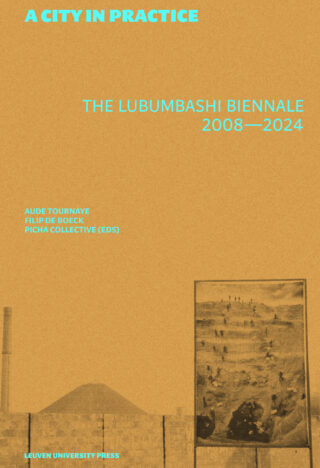

First comprehensive publication on the Biennale of Lubumbashi, tracing the city’s and the art scene’s growth through collective practice.
Launched by the artist collective Picha in 2008, the Lubumbashi Biennale has evolved alongside the city that hosts it—a place that still bears the traces of mining, empire, and the global flow of resources. This book maps the Biennale’s evolution and the collective gestures that inform it. Through essays, images and conversations, it captures an event that renews itself with every edition, balancing the fragility and invention that emerge from collective practice and everyday resilience. The book’s contributions reflect on what it means to create within a landscape marked by extraction and endurance, and reveals an art world sustained by collaboration and the will to imagine alternatives. Featuring a wealth of visual material, A City in Practice combines historical, visual, and first-hand perspectives from artists and curators, connecting art, urban studies, and social history in an accessible, engaging way.
Introduction: The Collective as Method and Instituent Practice
Introduction : le collectif comme méthode et pratique instituante
Aude Tournaye & Filip De Boeck
PART I
GENEALOGIES OF PRACTICE: MEMORY, MATERIALITY, AND EMERGENCE
GÉNÉALOGIES DES PRATIQUES : MÉMOIRE, MATÉRIALITÉ ET ÉMERGENCE
A Season in the Congo
Une saison au Congo
Simon Njami
Representing the World from Katanga: “Reclaiming” Cultural Memory
Représenter le monde à partir du Katanga : reprendre la mémoire culturelle
Bogumil Jewsiewicki
Future Genealogies: Tales from the Equatorial Line
Généalogies futures : récits depuis l’Équateur
Sandrine Colard
Alchemising Toxicity: The Lubumbashi Biennale’s Transformative Work in the Museum and Beyond
Alchimiser la toxicité : le travail transformateur de la Biennale de Lubumbashi au musée et au-delà
Lotte Arndt
PART II
PLOTFORMS AND PLATFORMS: CIRCULATION, COLLABORATION, AND COLLECTIVE WORK
PLOTFORMS ET PLATEFORMES : CIRCULATION, COLLABORATION ET TRAVAIL COLLECTIF
Between Autonomy and Alliance: How the Lubumbashi Biennale Came to Be
Entre autonomie et alliance : la genèse de la Biennale de Lubumbashi
Daniella Géo & Sammy Baloji (2018)
Platform/Plotform: On Doing Things with Art
Platform/Plotform : faire des choses avec l’art
Kim Gurney
Curating Dazzlement
Orchestrer l’éblouissement
Annick M’Kele & Toma Muteba Luntumbue (2015)
PART III
TRANSFORMATIONS: URBAN ECOLOGIES, TOXICITY, AND POSTCOLONIAL AFTERLIVES
TRANSFORMATIONS : ÉCOLOGIES URBAINES, TOXICITÉ ET DEVENIRS POSTCOLONIAUX
Toxicity: Presenting the Lubumbashi Biennale 2022
Toxicité : Présentation de la Biennale de Lubumbashi 2022
Filip De Boeck & collectif Picha
Rethinking the Colonial Library: The Lubumbashi Biennale as an Antidote Against Toxicity
Repenser la bibliothèque coloniale : la Biennale de Lubumbashi comme antidote à la toxicité
Filip De Boeck & Jean-Sylvain Tshilumba Mukendi
Dazzlements
Éblouissements
Joseph Tonda
On the Violence of the Imaginary in Central Africa
Penser la violence de l’imaginaire en Afrique centrale
Toma Muteba Luntumbue & Joseph Tonda (2019)
Such Gentle Ways of Destroying
De si douces manières de détruire
Marynet Jeannerod
Notes
Bibliography
Illustrations
Authors
Index
Aude Tournaye
Aude Tournaye is a curator and PhD candidate at Columbia University, researching art collectives in Africa and engaging in collaborative curatorial projects.
Filip De Boeck
Filip De Boeck is Professor of Anthropology at KU Leuven, whose research explores urban life, art, and imagination in Central Africa, particularly in the Democratic Republic of Congo.
Picha Collective
Picha is a collective of artists and curators based in Lubumbashi, Democratic Republic of Congo, dedicated to supporting experimental artistic practices. The collective has organised the Biennale de Lubumbashi since 2008.
Kim Gurney
Bogumil Jewsiewicki
Lotte Arndt
Joseph Tonda
Toma Muteba Lutumbue
Daniela Géo
Simon Njami
Sandrine Colard
Sandrine Colard is curator and assistant professor of African Art History at Rutgers University, Newark.
Marynet Jeannerod
Frequently Asked Questions
What is "A City in Practice" about?
First comprehensive publication on the Biennale of Lubumbashi, tracing the city’s and the art scene’s growth through collective practice.
Launched by the artist collective Picha in 2008, the Lubumbashi Biennale has evolved alongside the city that hosts it—a place that still bears the traces of mining, empire, and the global flow of resources. This book maps the Biennale’s evolution and the collective gestures that inform it. Through essays, images and conversations, it captures an event that renews itself with every edition, balancing the fragility and invention that emerge from collective practice and everyday resilience. The book’s contributions reflect on what it means to create within a landscape marked by extraction and endurance, and reveals an art world sustained by collaboration and the will to imagine alternatives. Featuring a wealth of visual material, A City in Practice combines historical, visual, and first-hand perspectives from artists and curators, connecting art, urban studies, and social history in an accessible, engaging way.
Who wrote "A City in Practice"?
"A City in Practice" was written by Kim Gurney, Bogumil Jewsiewicki, Lotte Arndt, Joseph Tonda, Toma Muteba Lutumbue, Daniela Géo, Simon Njami, Sandrine Colard and Marynet Jeannerod.
Sandrine Colard is curator and assistant professor of African Art History at Rutgers University, Newark.
Who edited "A City in Practice"?
"A City in Practice" was edited by Aude Tournaye, Filip De Boeck and Picha Collective.
Aude Tournaye is a curator and PhD candidate at Columbia University, researching art collectives in Africa and engaging in collaborative curatorial projects.
Filip De Boeck is Professor of Anthropology at KU Leuven, whose research explores urban life, art, and imagination in Central Africa, particularly in the Democratic Republic of Congo.
Picha is a collective of artists and curators based in Lubumbashi, Democratic Republic of Congo, dedicated to supporting experimental artistic practices. The collective has organised the Biennale de Lubumbashi since 2008.
Is "A City in Practice" part of a series?
Yes, "A City in Practice" is part of the "KU Leuven A.R.T.S.S. Series" series.
“We must necessarily think of science as art if we expect to derive any kind of wholeness from it.”
- Johann Wolfgang von Goethe
The KU Leuven Art Research on Technology, Science, and Society series is an initiative of the KU Leuven Committee for Contemporary Art encouraging close collaboration between leading scientists and contemporary artists. Each volume is the result of an ongoing dialogue in which international researchers from various disciplines engage with artists working across a wide range of media. These encounters actively shape the questions, methods, and forms of presentation developed in each publication, going beyond mere illustration.
While contemporary societies have reached unprecedented levels of complexity, scientific responses to their most pressing issues are all too often overly diversified and fragmented. The KU Leuven A.R.T.S.S. series explores the common ground between art, science, and technology, approaching urgent societal challenges and global problems in a more integrated manner. By foregrounding processes of exchange, translation, and critical reflection, the series provides alternative frameworks for thinking across disciplinary boundaries and for articulating forms of knowledge and imagination that transcend established academic or artistic categories.
Series Editor
Stéphane Symons
Editorial Board
Sandrine Colard
Catherine de Zegher
Ute Meta Bauer
Michael Newman
For more information about the KU Leuven Committee for Contemporary Art, please visit https://www.kuleuven.be/english/committees/contemporary-art
Proposals
Proposals and enquiries can be sent to Stéphane Symons.
Please make use of the submission form to present your manuscript or proposal to our board.
Authors interested in Open Access can consult the available funding options.
Links & Resources
Is "A City in Practice" available Open Access?
Yes, "A City in Practice" is published Open Access. It is available under a BY-NC-ND license.
Who funded the publication of "A City in Practice"?
Publication of "A City in Practice" was funded by Open Book Collective
CIFAR (Canadian Institute for Advanced Research)
.
What is the Table of Contents for "A City in Practice"?
Introduction: The Collective as Method and Instituent Practice
Introduction : le collectif comme méthode et pratique instituante
Aude Tournaye & Filip De Boeck
PART I
GENEALOGIES OF PRACTICE: MEMORY, MATERIALITY, AND EMERGENCE
GÉNÉALOGIES DES PRATIQUES : MÉMOIRE, MATÉRIALITÉ ET ÉMERGENCE
A Season in the Congo
Une saison au Congo
Simon Njami
Representing the World from Katanga: “Reclaiming” Cultural Memory
Représenter le monde à partir du Katanga : reprendre la mémoire culturelle
Bogumil Jewsiewicki
Future Genealogies: Tales from the Equatorial Line
Généalogies futures : récits depuis l’Équateur
Sandrine Colard
Alchemising Toxicity: The Lubumbashi Biennale’s Transformative Work in the Museum and Beyond
Alchimiser la toxicité : le travail transformateur de la Biennale de Lubumbashi au musée et au-delà
Lotte Arndt
PART II
PLOTFORMS AND PLATFORMS: CIRCULATION, COLLABORATION, AND COLLECTIVE WORK
PLOTFORMS ET PLATEFORMES : CIRCULATION, COLLABORATION ET TRAVAIL COLLECTIF
Between Autonomy and Alliance: How the Lubumbashi Biennale Came to Be
Entre autonomie et alliance : la genèse de la Biennale de Lubumbashi
Daniella Géo & Sammy Baloji (2018)
Platform/Plotform: On Doing Things with Art
Platform/Plotform : faire des choses avec l’art
Kim Gurney
Curating Dazzlement
Orchestrer l’éblouissement
Annick M’Kele & Toma Muteba Luntumbue (2015)
PART III
TRANSFORMATIONS: URBAN ECOLOGIES, TOXICITY, AND POSTCOLONIAL AFTERLIVES
TRANSFORMATIONS : ÉCOLOGIES URBAINES, TOXICITÉ ET DEVENIRS POSTCOLONIAUX
Toxicity: Presenting the Lubumbashi Biennale 2022
Toxicité : Présentation de la Biennale de Lubumbashi 2022
Filip De Boeck & collectif Picha
Rethinking the Colonial Library: The Lubumbashi Biennale as an Antidote Against Toxicity
Repenser la bibliothèque coloniale : la Biennale de Lubumbashi comme antidote à la toxicité
Filip De Boeck & Jean-Sylvain Tshilumba Mukendi
Dazzlements
Éblouissements
Joseph Tonda
On the Violence of the Imaginary in Central Africa
Penser la violence de l’imaginaire en Afrique centrale
Toma Muteba Luntumbue & Joseph Tonda (2019)
Such Gentle Ways of Destroying
De si douces manières de détruire
Marynet Jeannerod
Notes
Bibliography
Illustrations
Authors
Index
What is the DOI for "A City in Practice"?
The Digital Object Identifier (DOI) for "A City in Practice" is 10.11116/9789461667908.
Related titles
 Margarete Schütte-Lihotzky and the Architecture of Collective Dissidence, 1918–1989
S.E. Eisterer (Author),
April 2027
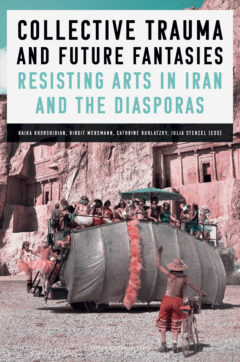 Collective Trauma and Future Fantasies
Raika Khorshidian (Editor), Birgit Mersmann (Editor), Cathrine Bublatzky (Editor), Julia Stenzel (Editor),
November 2026

 Infrastructuring Arrival
Karel Arnaut (Editor), Luce Beeckmans (Editor), Bruno Meeus (Editor),
November 2026
 Feminists Resisting Gendered Violence
Hemangini Gupta (Editor), Fiona Mackay (Editor), Jan Breckenridge (Editor), Louise Chappell (Editor), Rachna Mehra (Editor), Rukmini Sen (Editor), Mailin Suchting (Editor),
October 2026

 Ecologies of Photography in the American West
Monica Bravo (Editor), Carolin Görgen (Editor),
September 2026
 German–Rapanui Entanglements
Cristián Moreno Pakarati (Editor), Diego Muñoz (Editor), Philipp Schorch (Editor),
August 2026
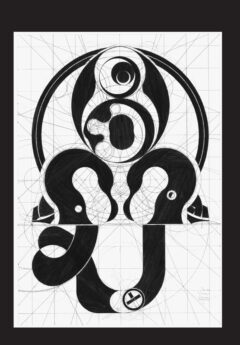 Jean Katambayi Mukendi
Johannes Muselaers (Editor), Stéphane Symons (Editor), Anne-Claire Schmitz (Editor), Emma Enderby (Editor),
April 2026
 Brusselse plaatsnamen
Iadine Degryse (Editor), Benjamin Wayens (Editor), Chantal Kesteloot (Editor), Dennis De Vriese (Editor), Matthijs Degraeve (Editor),
April 2026
 Nomadic Camera
Burcu Dogramaci (Editor), Winfried Gerling (Editor), Jens Jäger (Editor), Birgit Mersmann (Editor),
March 2026
 Cartographies of Catastrophes
Laura Demeter (Editor), Carmen M. Enss (Editor), Piotr Kisiel (Editor), Carol Ludwig (Editor),
February 2026
 Comics and the Global South
Andrea Aramburú (Editor), Dibyadyuti Roy (Editor), Joe Sutliff Sanders (Editor),
February 2026