

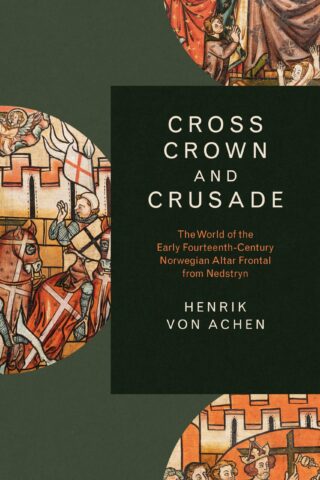

Cross, Crown and Crusade
The World of the Early Fourteenth-Century Norwegian Altar Frontal from Nedstryn
Henrik von Achen (Author),

Category: Art, History, Media and Visual Culture, Museum and Heritage Studies, Religion
Language: English
ISBN: 9789462705418
Publication date: October 14, 2026
€65.00 (including 6% VAT)
Buy NowNumber of pages: 392
Size: 234 x 156 x mm
Illustrations and other content description:
Illustrated, 80 pages in colour

Funded by: KU Leuven Fund for Fair Open Access
University of Bergen
Stock item: 174803
Standard delivery time for print books:
For Belgium: 5 to 8 working days
For EU: 2 to 3 weeks
For other countries: 4 to 5 weeks
Category: Art, History, Media and Visual Culture, Museum and Heritage Studies, Religion
Language: English
ISBN: 9789461667960
Publication date: October 14, 2026
Download Free EpubNumber of pages: 392
Illustrations and other content description:
Illustrated, 80 pages in colour
Funded by: KU Leuven Fund for Fair Open Access
University of Bergen
Category: Art, History, Media and Visual Culture, Museum and Heritage Studies, Religion
Language: English
ISBN: 9789461667953
Publication date: October 14, 2026
Download Free PDFNumber of pages: 392
Illustrations and other content description:
Illustrated, 80 pages in colour
Funded by: KU Leuven Fund for Fair Open Access
University of Bergen
A multidisciplinary study of a unique Scandinavian altar frontal.
The altar frontal from Nedstryn in Western Norway is the only preserved medieval panel painting in Europe that displays an extensive version of the legend of Heraclius and the True Cross. To understand the message conveyed by the painting, this study adopts a multidisciplinary approach that encompasses the art history of High Medieval altar frontal decorations, discusses the primary agents – patron, adviser, and master – and considers the intended Norwegian audience, while tracing the visual and textual sources available around 1300.
Embedded in this seemingly straightforward narrative lies a wealth of meaning: the function of the Holy Cross, the concept of Christian kingship and the role of Crusades as waging both a military and spiritual battle against “enemies of the Cross”. The audience was encouraged to follow the example of Heraclius and engage in this struggle.
Grounded in a contextual analysis of both meaning and production, the study mobilises sources across regions and centuries, and shows how visual and textual literacies were shaped by secular and liturgical practices. It demonstrates how a work produced in Bergen around 1315 aligns with broader Northern European artistic and cultural developments.
Preface
Chapter 1. Introduction
1.1 The altar frontal from Nedstryn: A presentation
1.2 Intention of the study
1.3 Structure of the investigation
Chapter 2. The Medieval Altar Frontal
2.1 The altar frontal
2.2 Frontal or retable
2.3 Sets of panels decorating the altar
2.4 Antependia
2.5 European panel painting 1250–1350
Chapter 3. Method and Research: A Survey
3.1 The loss of medieval altar frontals
3.2 The problem of similarity: homogeneity and conventionality
3.3 The rationality of using images
3.4 Research on the altar frontal from Nedstryn: A survey
Chapter 4. The Production of the Altar Frontal from Nedstryn
4.1 Introductory remarks
4.2 Patron
4.3 Advisor
4.4 Master
4.5 Workshop
4.6 Art trade
Chapter 5. Sources of the Heraclius Narrative: Text, Tradition, and Tituli
5.1 Textual sources
5.2 Written versions of the Heraclius narrative in the North
5.3 Discrepancies
5.4 Tituli
Chapter 6. The Iconographic Tradition of the Heraclius Narrative
6.1 Introductory remarks
6.2 Illuminations
6.3 The Sienese panel
6.4 Enamelled plaques
6.5 The window in Sainte-Chapelle, Paris
6.6 Murals
Chapter 7. The Narrative: Context and Meaning
7.1 Introductory remarks
7.2 Exemplum
7.3 Compositional structure
7.4 The eschatological dimension
7.5 King
7.6 Courtly literature and pious bravery
7.7 Crusader
7.8 Christian
Chapter 8. The Liturgical Context of the Nedstryn Frontal
8.1 Introductory remarks
8.2 Liturgy
8.3 Liturgical literacy
8.4 Liturgical change
8.5 Presentation of the Cross
8.6 Palm Sunday and Good Friday
8.7 The Feast of the Exaltation of the Cross
Chapter 9. Provenance and Patron of the Nedstryn Frontal
9.1 The uncertainty of the provenance
9.2 The less-probable provenances
9.3 The church at Nedstryn in Nordfjord
9.4 A royal chapel: The Church of the Holy Cross in Fana
9.5 A royal chapel: The Church of the Apostles in Bergen
9.6 The patron of the altar frontal from Nedstryn
Chapter 10. Conclusion
10.1 The basic positions
10.2 The altar frontal from Nedstryn
10.3 Sources
10.4 Meaning
10.5 Summary
Tables
Table 1. Correspondence between scene, titulus, and image
Table 2. Scenes from the legend of Heraclius and the True Cross, depicted before 1362
Notes
Abbreviations
Bibliography
This book illuminates an unparalleled masterpiece of medieval art through diverse and insightful analytical lenses. - Ángel Pazos-López, Universidad Rey Juan Carlos
Frequently Asked Questions
What is "Cross, Crown and Crusade" about?
A multidisciplinary study of a unique Scandinavian altar frontal.
The altar frontal from Nedstryn in Western Norway is the only preserved medieval panel painting in Europe that displays an extensive version of the legend of Heraclius and the True Cross. To understand the message conveyed by the painting, this study adopts a multidisciplinary approach that encompasses the art history of High Medieval altar frontal decorations, discusses the primary agents – patron, adviser, and master – and considers the intended Norwegian audience, while tracing the visual and textual sources available around 1300.
Embedded in this seemingly straightforward narrative lies a wealth of meaning: the function of the Holy Cross, the concept of Christian kingship and the role of Crusades as waging both a military and spiritual battle against “enemies of the Cross”. The audience was encouraged to follow the example of Heraclius and engage in this struggle.
Grounded in a contextual analysis of both meaning and production, the study mobilises sources across regions and centuries, and shows how visual and textual literacies were shaped by secular and liturgical practices. It demonstrates how a work produced in Bergen around 1315 aligns with broader Northern European artistic and cultural developments.
Who wrote "Cross, Crown and Crusade"?
"Cross, Crown and Crusade" was written by Henrik von Achen.
Henrik von Achen is Professor Emeritus of Art History at the University of Bergen.
Is "Cross, Crown and Crusade" available Open Access?
Yes, "Cross, Crown and Crusade" is published Open Access. It is available under a BY-NC-ND license.
Who funded the publication of "Cross, Crown and Crusade"?
Publication of "Cross, Crown and Crusade" was funded by KU Leuven Fund for Fair Open Access
University of Bergen
.
What is the Table of Contents for "Cross, Crown and Crusade"?
Preface
Chapter 1. Introduction
1.1 The altar frontal from Nedstryn: A presentation
1.2 Intention of the study
1.3 Structure of the investigation
Chapter 2. The Medieval Altar Frontal
2.1 The altar frontal
2.2 Frontal or retable
2.3 Sets of panels decorating the altar
2.4 Antependia
2.5 European panel painting 1250–1350
Chapter 3. Method and Research: A Survey
3.1 The loss of medieval altar frontals
3.2 The problem of similarity: homogeneity and conventionality
3.3 The rationality of using images
3.4 Research on the altar frontal from Nedstryn: A survey
Chapter 4. The Production of the Altar Frontal from Nedstryn
4.1 Introductory remarks
4.2 Patron
4.3 Advisor
4.4 Master
4.5 Workshop
4.6 Art trade
Chapter 5. Sources of the Heraclius Narrative: Text, Tradition, and Tituli
5.1 Textual sources
5.2 Written versions of the Heraclius narrative in the North
5.3 Discrepancies
5.4 Tituli
Chapter 6. The Iconographic Tradition of the Heraclius Narrative
6.1 Introductory remarks
6.2 Illuminations
6.3 The Sienese panel
6.4 Enamelled plaques
6.5 The window in Sainte-Chapelle, Paris
6.6 Murals
Chapter 7. The Narrative: Context and Meaning
7.1 Introductory remarks
7.2 Exemplum
7.3 Compositional structure
7.4 The eschatological dimension
7.5 King
7.6 Courtly literature and pious bravery
7.7 Crusader
7.8 Christian
Chapter 8. The Liturgical Context of the Nedstryn Frontal
8.1 Introductory remarks
8.2 Liturgy
8.3 Liturgical literacy
8.4 Liturgical change
8.5 Presentation of the Cross
8.6 Palm Sunday and Good Friday
8.7 The Feast of the Exaltation of the Cross
Chapter 9. Provenance and Patron of the Nedstryn Frontal
9.1 The uncertainty of the provenance
9.2 The less-probable provenances
9.3 The church at Nedstryn in Nordfjord
9.4 A royal chapel: The Church of the Holy Cross in Fana
9.5 A royal chapel: The Church of the Apostles in Bergen
9.6 The patron of the altar frontal from Nedstryn
Chapter 10. Conclusion
10.1 The basic positions
10.2 The altar frontal from Nedstryn
10.3 Sources
10.4 Meaning
10.5 Summary
Tables
Table 1. Correspondence between scene, titulus, and image
Table 2. Scenes from the legend of Heraclius and the True Cross, depicted before 1362
Notes
Abbreviations
Bibliography
What is the DOI for "Cross, Crown and Crusade"?
The Digital Object Identifier (DOI) for "Cross, Crown and Crusade" is 10.11116/9789461667960.
Related titles

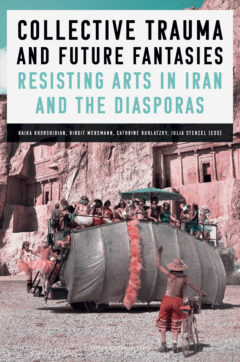 Collective Trauma and Future Fantasies
Raika Khorshidian (Editor), Birgit Mersmann (Editor), Cathrine Bublatzky (Editor), Julia Stenzel (Editor),
November 2026


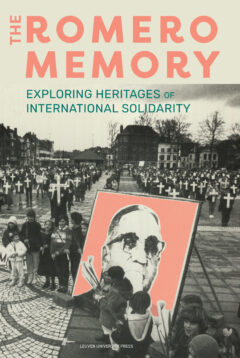 The Romero Memory
Judith Gruber (Editor), Jonas Van Mulder (Editor), Stephan Parmentier (Editor), Veerle Draulans (Editor), Joren Janssens (Editor), Jacques Haers (Editor), Kim Christiaens (Editor),
November 2026
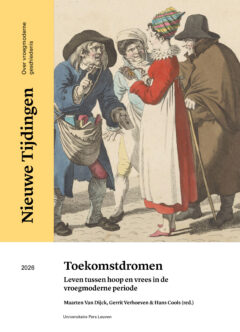 Toekomstdromen
Maarten Van Dijck (Editor), Gerrit Verhoeven (Editor), Hans Cools (Editor),
November 2026
 Feminists Resisting Gendered Violence
Hemangini Gupta (Editor), Fiona Mackay (Editor), Jan Breckenridge (Editor), Louise Chappell (Editor), Rachna Mehra (Editor), Rukmini Sen (Editor), Mailin Suchting (Editor),
October 2026
 A City in Practice
Aude Tournaye (Editor), Filip De Boeck (Editor), Picha Collective (Editor),
September 2026
 Ecologies of Photography in the American West
Monica Bravo (Editor), Carolin Görgen (Editor),
September 2026
 German–Rapanui Entanglements
Cristián Moreno Pakarati (Editor), Diego Muñoz (Editor), Philipp Schorch (Editor),
August 2026
 Trend en toeval – vierde editie
Bruno Blondé (Author), Isabelle Devos (Author), Jord Hanus (Author), Wouter Ryckbosch (Author),
August 2026
 Cinema in Post-War Belgium
Gertjan Willems (Editor), Bjorn Gabriels (Editor), Bénédicte Rochet (Editor),
May 2026

 Performing Magnetism
Eleonora Paklons (Editor), Kristof Smeyers (Editor), Kurt Vanhoutte (Editor), Hannah Welslau (Editor),
May 2026
 Christian Democracy and the Fall of Communism
Michael Gehler (Editor), Piotr H. Kosicki (Editor), Helmut Wohnout (Editor),
April 2026
 Political Exile in the Global Twentieth Century
Wolfram Kaiser (Editor), Piotr H. Kosicki (Editor),
April 2026
 Jean Katambayi Mukendi
Johannes Muselaers (Editor), Stéphane Symons (Editor), Anne-Claire Schmitz (Editor), Emma Enderby (Editor),
April 2026