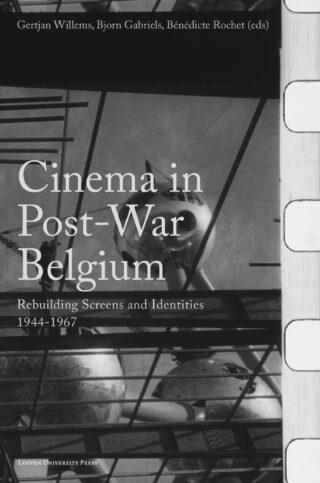

Cinema in Post-War Belgium
Rebuilding Screens and Identities, 1944-1967
Gertjan Willems (Editor), Bjorn Gabriels (Editor), Bénédicte Rochet (Editor),

Category: History 1800-present, Media and Visual Culture
Language: English
ISBN: 9789462705173
Publication date: May 20, 2026
€35.00 (including 6% VAT)
Buy NowNumber of pages: 384
Size: 234 x 156 x mm
Number of illustrations: 25
Illustrations and other content description:
black & white illustrations

Funded by: FWO
KU Leuven Fund for Fair Open Access
University of Antwerp
University of Namur
Stock item: 172617
Standard delivery time for print books:
For Belgium: 5 to 8 working days
For EU: 2 to 3 weeks
For other countries: 4 to 5 weeks
Category: History 1800-present, Media and Visual Culture
Language: English
ISBN: 9789461667540
Publication date: May 20, 2026
Download Free EpubNumber of pages: 384
Number of illustrations: 25
Illustrations and other content description:
black & white illustrations
Funded by: FWO
KU Leuven Fund for Fair Open Access
University of Antwerp
University of Namur
Category: History 1800-present, Media and Visual Culture
Language: English
ISBN: 9789461667533
Publication date: May 20, 2026
Download Free PDFNumber of pages: 384
Number of illustrations: 25
Illustrations and other content description:
black & white illustrations
Funded by: FWO
KU Leuven Fund for Fair Open Access
University of Antwerp
University of Namur
First comprehensive history of Belgian cinema in the post-war decades.
Between the liberation of 1944 and the mid-1960s, cinema in Belgium was both booming and fragile. Film theatres across the country attracted record audiences and were rebuilt into dazzling spaces, while local film production remained a precarious enterprise. This book brings that paradoxical landscape to life. It explores cinephile culture and institutional developments alongside popular comedies, art documentaries, colonial films, industrial productions and experimental shorts. Sixteen chapters show how cinema related to Belgium’s shifting identities in a period of reconstruction and transition. The book also challenges long-standing notions of a linguistic divide within Belgian cinema, showing that in the decades before regional film policies emerged, filmmakers and audiences largely operated within a shared national film culture. Generously illustrated and grounded in fresh archival research, this is the first comprehensive history of Belgian cinema in the post-war decades. Situating Belgian cinema within wider cultural, political and international contexts, it offers a compelling resource for film historians, cultural scholars, and heritage institutions.
Foreword
Tomas Leyers
Acknowledgements
Introduction: Cinema in post-war Belgium
Bjorn Gabriels, Gertjan Willems, & Bénédicte Rochet
PART I: Setting the Stage: Contextualising Post-War Belgian Cinema
Chapter 1. From national to regional film support: Belgian film production policy in the post-war era (1945–1967)
Gertjan Willems & Alexander De Man
Chapter 2. Concentric spheres of control: On film censorship and discipline during the Belgian Trente Glorieuses
Daniel Biltereyst
Chapter 3. Reel power: Belgian colonial filmmaking after 1945
Matthew G. Stanard
Chapter 4. Mechanics of the industrial image at Sofidoc, the Société du Film Documentaire: Where aesthetic ambitions meet the demands of commissioned films (1947–1960)
Bénédicte Rochet
Chapter 5. From film club to film archive: The 1947 Brussels 1st Festival Mondial du Film et des Beaux-Arts and the making of the Cinémathèque de Belgique
Xavier García Bardón
Chapter 6. From cinephilia to cinéma critique: The Haesaerts brothers’ impact on post-war Belgian film culture, non-fiction networks, and art documentaries
Joséphine Vandekerckhove
PART II: Behind the Camera: Key Figures and Filmmaking Practices
Chapter 7. Flemish popular comedies: Edith Kiel, Jan Vanderheyden, and the Antwerp Film Company AFO, 1952–1961
Dirk Van Engeland, Roel Vande Winkel, & Gertjan Willems
Chapter 8. Towards the myth of the industrial hero: Charles Dekeukeleire’s theories on fiction films
Mathilde Lejeune
Chapter 9. Marcel Broodthaers: Documentary filmmaker (1957–1964)
Margaux Van Uytvanck & Raf Wollaert
Chapter 10. Red searching for form: The early works of Harry Kümel
Ernest Mathijs
Chapter 11. Tracing the origins of Fugitive Cinema
Liesje Baltussen & Gertjan Willems
PART III: On Screen: Identities, Politics and Modernism
Chapter 12. Ceci est un cinéma d’auteur belge: Belgian auteur cinema inspired by Italian, French, and Belgian modernist cinema
Wouter Hessels
Chapter 13. Meeting another Waterloo: Edmond Bernhard and the “metaphysical subversion of the tourist film”
Bjorn Gabriels
Chapter 14. Henri Storck’s The Smugglers’ Banquet (1952): Blurring the borders between commission and reality
Christoph Brüll & Jeremy Hamers
Chapter 15. Silver screens, gendered lenses: Age and gender in post-war Belgian fiction films
Femke De Sutter
Chapter 16. A royal zero hour? Belgian King Leopold III and SS officer Ernst Schäfer making Masters of the Congo Jungle (1958)
Matthias De Groof, Bjorn Gabriels, & Koen Aerts
Contributors
Index
Gertjan Willems
Gertjan Willems is Associate Professor in Film Studies at the University of Antwerp and Visiting Professor at Ghent University.
Bjorn Gabriels
Bjorn Gabriels is a film critic and researcher at the Universities of Antwerp and Namur.
Bénédicte Rochet
Bénédicte Rochet is Professor of History at the University of Namur.
Christoph Brull
Daniel Biltereyst
Ernest Mathijs
Femke De Sutter
Jérémy Hamers
Joséphine Vandekerckhove
Koen Aerts
Liesje Baltussen
Mathilde Lejeune
Matthias De Groof
Matthias De Groof is a postdoctoral researcher affiliated with the University of Antwerp. He has held visiting fellow appointments at the New York University, the Helsinki Collegium for Advanced Studies in Finland, and the Africa Multiple Cluster of Excellence of the Bayreuth University in Germany.
Raf Wollaert
Raf Wollaert completed a PhD on the subject of Marcel Broodthaers’s cinema at the University of Antwerp in 2024.
Margaux Van Uytvanck
Tomas Leyers
Xavier García Bardón
Matthew Stanard
Matthew G. Stanard is professor of history at Berry College in Mount Berry, Georgia, USA.
Wouter Hessels
Alexander De Man
Roel Vande Winkel
Dirk Van Engeland
The contributions depict a vivid cinephilic culture in Belgium regarding art documentaries, industrial films, shorts, educational films, colonial movies. Moreover, the volume sheds a surprising light on the reigning assumption that the film climate in Belgium has been marked by a ‘split screen’ between Flemish and Francophone cinema. - Peter Verstraten, Leiden University
Frequently Asked Questions
What is "Cinema in Post-War Belgium" about?
First comprehensive history of Belgian cinema in the post-war decades.
Between the liberation of 1944 and the mid-1960s, cinema in Belgium was both booming and fragile. Film theatres across the country attracted record audiences and were rebuilt into dazzling spaces, while local film production remained a precarious enterprise. This book brings that paradoxical landscape to life. It explores cinephile culture and institutional developments alongside popular comedies, art documentaries, colonial films, industrial productions and experimental shorts. Sixteen chapters show how cinema related to Belgium’s shifting identities in a period of reconstruction and transition. The book also challenges long-standing notions of a linguistic divide within Belgian cinema, showing that in the decades before regional film policies emerged, filmmakers and audiences largely operated within a shared national film culture. Generously illustrated and grounded in fresh archival research, this is the first comprehensive history of Belgian cinema in the post-war decades. Situating Belgian cinema within wider cultural, political and international contexts, it offers a compelling resource for film historians, cultural scholars, and heritage institutions.
Who wrote "Cinema in Post-War Belgium"?
"Cinema in Post-War Belgium" was written by Christoph Brull, Daniel Biltereyst, Ernest Mathijs, Femke De Sutter, Jérémy Hamers, Joséphine Vandekerckhove, Koen Aerts, Liesje Baltussen, Mathilde Lejeune, Matthias De Groof, Raf Wollaert, Margaux Van Uytvanck, Tomas Leyers, Xavier García Bardón, Matthew Stanard, Wouter Hessels, Alexander De Man, Roel Vande Winkel and Dirk Van Engeland.
Matthias De Groof is a postdoctoral researcher affiliated with the University of Antwerp. He has held visiting fellow appointments at the New York University, the Helsinki Collegium for Advanced Studies in Finland, and the Africa Multiple Cluster of Excellence of the Bayreuth University in Germany.
Raf Wollaert completed a PhD on the subject of Marcel Broodthaers’s cinema at the University of Antwerp in 2024.
Matthew G. Stanard is professor of history at Berry College in Mount Berry, Georgia, USA.
Who edited "Cinema in Post-War Belgium"?
"Cinema in Post-War Belgium" was edited by Gertjan Willems, Bjorn Gabriels and Bénédicte Rochet.
Gertjan Willems is Associate Professor in Film Studies at the University of Antwerp and Visiting Professor at Ghent University.
Bjorn Gabriels is a film critic and researcher at the Universities of Antwerp and Namur.
Bénédicte Rochet is Professor of History at the University of Namur.
Is "Cinema in Post-War Belgium" available Open Access?
Yes, "Cinema in Post-War Belgium" is published Open Access. It is available under a BY-NC-ND license.
Who funded the publication of "Cinema in Post-War Belgium"?
Publication of "Cinema in Post-War Belgium" was funded by FWO
KU Leuven Fund for Fair Open Access
University of Antwerp
University of Namur
.
What is the Table of Contents for "Cinema in Post-War Belgium"?
Foreword
Tomas Leyers
Acknowledgements
Introduction: Cinema in post-war Belgium
Bjorn Gabriels, Gertjan Willems, & Bénédicte Rochet
PART I: Setting the Stage: Contextualising Post-War Belgian Cinema
Chapter 1. From national to regional film support: Belgian film production policy in the post-war era (1945–1967)
Gertjan Willems & Alexander De Man
Chapter 2. Concentric spheres of control: On film censorship and discipline during the Belgian Trente Glorieuses
Daniel Biltereyst
Chapter 3. Reel power: Belgian colonial filmmaking after 1945
Matthew G. Stanard
Chapter 4. Mechanics of the industrial image at Sofidoc, the Société du Film Documentaire: Where aesthetic ambitions meet the demands of commissioned films (1947–1960)
Bénédicte Rochet
Chapter 5. From film club to film archive: The 1947 Brussels 1st Festival Mondial du Film et des Beaux-Arts and the making of the Cinémathèque de Belgique
Xavier García Bardón
Chapter 6. From cinephilia to cinéma critique: The Haesaerts brothers’ impact on post-war Belgian film culture, non-fiction networks, and art documentaries
Joséphine Vandekerckhove
PART II: Behind the Camera: Key Figures and Filmmaking Practices
Chapter 7. Flemish popular comedies: Edith Kiel, Jan Vanderheyden, and the Antwerp Film Company AFO, 1952–1961
Dirk Van Engeland, Roel Vande Winkel, & Gertjan Willems
Chapter 8. Towards the myth of the industrial hero: Charles Dekeukeleire’s theories on fiction films
Mathilde Lejeune
Chapter 9. Marcel Broodthaers: Documentary filmmaker (1957–1964)
Margaux Van Uytvanck & Raf Wollaert
Chapter 10. Red searching for form: The early works of Harry Kümel
Ernest Mathijs
Chapter 11. Tracing the origins of Fugitive Cinema
Liesje Baltussen & Gertjan Willems
PART III: On Screen: Identities, Politics and Modernism
Chapter 12. Ceci est un cinéma d’auteur belge: Belgian auteur cinema inspired by Italian, French, and Belgian modernist cinema
Wouter Hessels
Chapter 13. Meeting another Waterloo: Edmond Bernhard and the “metaphysical subversion of the tourist film”
Bjorn Gabriels
Chapter 14. Henri Storck’s The Smugglers’ Banquet (1952): Blurring the borders between commission and reality
Christoph Brüll & Jeremy Hamers
Chapter 15. Silver screens, gendered lenses: Age and gender in post-war Belgian fiction films
Femke De Sutter
Chapter 16. A royal zero hour? Belgian King Leopold III and SS officer Ernst Schäfer making Masters of the Congo Jungle (1958)
Matthias De Groof, Bjorn Gabriels, & Koen Aerts
Contributors
Index
What is the DOI for "Cinema in Post-War Belgium"?
The Digital Object Identifier (DOI) for "Cinema in Post-War Belgium" is 10.11116/9789461667540.
Related titles
 Margarete Schütte-Lihotzky and the Architecture of Collective Dissidence, 1918–1989
S.E. Eisterer (Author),
April 2027
 Feminists Resisting Gendered Violence
Hemangini Gupta (Editor), Fiona Mackay (Editor), Jan Breckenridge (Editor), Louise Chappell (Editor), Rachna Mehra (Editor), Rukmini Sen (Editor), Mailin Suchting (Editor),
October 2026
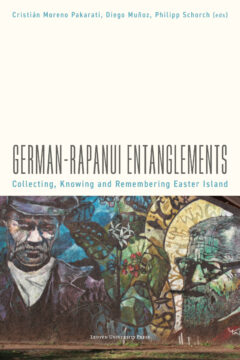 German–Rapanui Entanglements
Cristián Moreno Pakarati (Editor), Diego Muñoz (Editor), Philipp Schorch (Editor),
August 2026
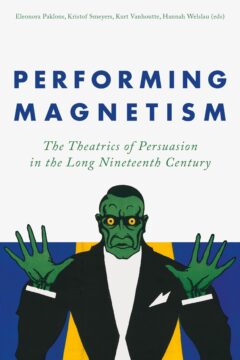 Performing Magnetism
Eleonora Paklons (Editor), Kristof Smeyers (Editor), Kurt Vanhoutte (Editor), Hannah Welslau (Editor),
May 2026
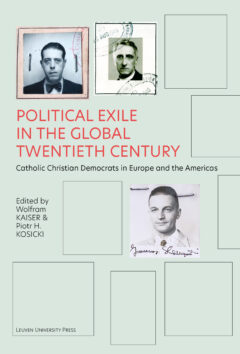 Political Exile in the Global Twentieth Century
Wolfram Kaiser (Editor), Piotr H. Kosicki (Editor),
April 2026
 Christian Democracy and the Fall of Communism
Michael Gehler (Editor), Piotr H. Kosicki (Editor), Helmut Wohnout (Editor),
April 2026
 Comics and the Global South
Andrea Aramburú (Editor), Dibyadyuti Roy (Editor), Joe Sutliff Sanders (Editor),
February 2026
 Cartographies of Catastrophes
Laura Demeter (Editor), Carmen M. Enss (Editor), Piotr Kisiel (Editor), Carol Ludwig (Editor),
February 2026