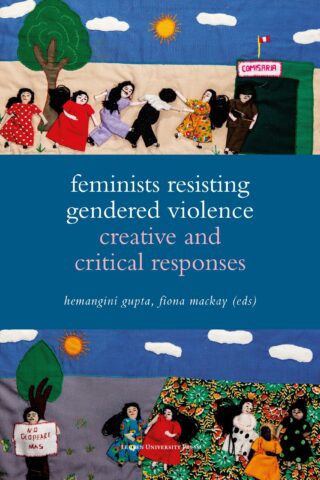
An anthology of feminist perspectives combining arts-based interventions with scholarship, activism, testimony, and lived experience to address contemporary gendered violence.
At a time when gendered violence is intensifying, and even the language and mechanisms for addressing it are being constrained, this timely anthology foregrounds creative, critical, collective, and transnational responses built from the ground up. Across essays, artworks, testimonies, and reflections by a diverse group of contributors—artists, activists, scholars, and community organisers—the collection illuminates violence as legal and institutional, intimate and structural, historical and contemporary, visible and painfully ordinary. Through art, song, performance, archives, and digital practices, it renders legible forms of harm that are often marginalised or silenced in formal policy and legal discourse. In doing so, the collection redefines what counts as evidence, resistance, and justice precisely at a moment when such expansion is most needed. Going beyond documentation, it invites readers to think urgently and expansively about how gendered violence is locally named, remembered, resisted, and transformed. Offering both insight and inspiration, it highlights feminist collaboration across borders as a crucial resource for understanding and challenging violence in the present.
Contributing authors: Maria Krayem Abdo, Maria Alina Asavei, Hazel Atkinson, Gabrielle Bardall, Linda Bartolomei, Esther Wanyema Baruti, Christine Bell, Sutanuka Bhattacharya, Ahmed S. Bile, Clayton Boeyink, Jan Breckenridge, Anna Bull, Urvashi Butalia, Divya Chopra, Jo Clifford, Lydia C. Cole, Kyllie Cripps, Ngozi Anyadike-Danes, Adrija Dey, Maria Adela Diaz, Anni Donaldson, Catherine Donovan, Sarah Easy, Jean-Benoît Falisse, Eliza Garnsey, Nicole George, Rina Ghafoerkhan, Radhika Govinda, Rosemary Grey, Anne Marie Hicks, Maša Hilčišin, Claire Houghton, Anna Hush, Laura Jeffrey, Rachana Johri, Leonard Muzee Kazamwali, Seema Kazi, Bindu K.C., Corrine Kumar, Ishtar Lakhani, Rowena Lawrie, Amy Life, Lucy Lowe, Amina Jama Mahmud, Rwitee Mandal, Lesley McMillan, Rachna Mehra, Krishna Menon, Zubin Mistry, Claire Mitchell KC, Said A. Mohamoud, Henry Ngongo Muganza, Denise Mapendo Mukwege, Sharessa Naidoo, Manjula O’Connor, Lili Pâquet, Jasmeen Patheja, Jennifer M. Piscopo, Eileen Pittaway, Karine Polwart, Lora Prabhu, Ulrike Roth, Mohamed A. Ali-Salad, Balvinder Kaur Saund, Rukmini Sen, Garima Singh, Sara Singh, Kirsty M. Stewart, Mailin Suchting, Anne Summers, Mayur Suresh, Masuma Tavakoli, Mareese Terare, David Nieuwe Weme, Deborah White, Zoe Venditozzi.
This book will be made open access within three years of publication thanks to Path to Open, a program developed in partnership between JSTOR, the American Council of Learned Societies (ACLS), University of Michigan Press, and The University of North Carolina Press to bring about equitable access and impact for the entire scholarly community, including authors, researchers, libraries, and university presses around the world. Learn more at https://about.jstor.org/path-to-open/
Acknowledgments
Introduction
Part I: “In Darkness We Find Light”: Creative Responses to Violence
Chapter 1. South Africa’s Blue Dress: Art as an Alternative Record of Gendered Violence
Eliza Garnsey
Chapter 2. Textile Testimonies
Lydia C. Cole
Chapter 3. On Cultural Memories of Collective Violence
Maria Alina Asavei
Chapter 4. I Never Ask For It: Building Testimonials of Clothing to End Victim Blame. Listening to Blank Noise
Jasmeen Patheja
Chapter 5. Fursat ki Fizayen: A Reclamation of Space, Rights and Aspirations
Divya Chopra and Rwitee Mandal
Chapter 6. Statues and Status: Mexican Feminist Collectives Change the Face of History to Combat Gendered Violence Today
Sarah Easy
Chapter 7. The Stories We Remember and The Songs We Sing: Scottish Ballads of Gendered Violence and Resistance
Karine Polwart
Chapter 8. Voices of Resistance: Women’s Folksongs and Response to Domestic Violence
Garima Singh
Chapter 9. We Can’t Breathe
María Adela Díaz
Chapter 10. Art as Resistance in the Face of Hate
Jo Clifford
Chapter 11. In Darkness We Find Light
Maša Hilčišin
Part II: Activist Movements for Change
Chapter 12. Can’t or Won’t? The Difficulties of Changing Systems in Institutions
Amy Life and Sharessa Naidoo
Chapter 13. Witches of Scotland: A Campaign to Right Historic Wrongs
Claire Mitchell KC and Zoe Venditozzi
Chapter 14. Taking Transformative Action on Sexual Violence in Universities
Anna Hush
Chapter 15. Harnessing Community Power: The #erasethegrey Campaign
Lesley McMillan
Chapter 16. Social Action in the 80s—Has Anything Changed?
Jan Breckenridge and Mailin Suchting
Chapter 17. Playing Politics to Get Sex Workers’ Rights on the Agenda
Ishtar Lakhani
Chapter 18. Technologising Rape and Sexual Assault: Can We Really Innovate the Problem Away?
Lesley McMillan and Deborah White
Chapter 19. Hostile Environments
Lucy Lowe
Chapter 20. #MeToo India: Why Are Survivors Turning to Online Spaces for Justice?
Adrija Dey
Chapter 21. Our “Chak De” Moments
Lora Prabhu
Chapter 22. “Bad Girls,” Everyday Sexism and Activist Campaigns in Millennial India
Radhika Govinda
Chapter 23. #Hear Me Too: A Celebration of Children and Young People’s Activism
Claire Houghton
Chapter 24. Democracy’s Promise Unfulfilled While Violence Against Women in Politics Persists
Gabrielle Bardall
Chapter 25. Invisible Impact: The Sikh Women’s Alliance Twenty Years On
Zubin Mistry and Balvinder Kaur Saund
Chapter 26. Where It All Began: The Story of Elsie Women’s Refuge
Anne Summers
Part III: Accounting for Gendered Violence
Chapter 27. I Am a Feminist: These Are the Things I Struggle With
Catherine Donovan
Chapter 28. Truth Tales: Gendering the Violence of Displacement
Urvashi Butalia
Chapter 29. Does She Have a Voice? Do We Hear Her? The Silencing of Indigenous Women and Girls
Kyllie Cripps
Chapter 30. Migration and Violence: The Question of Transmasculine Persons in India
Sutanuka Bhattacharya and Bindu K.C.
Chapter 31. Myth, Reality and Amorous Dissonance Before and After India’s Partition
Rachna Mehra
Chapter 32. Violence in the Archives: Curating the Past Without Perpetrating Harm
Kirsty M. Stewart
Chapter 33. Confronting Gendered Violence in Ancient Rome: The Sexual Violation of Pubescent Boys
Ulrike Roth
Chapter 34. I Sing of Arms and the Woman: The Mythic Heroine Reclaimed?
Hazel Atkinson
Chapter 35. Witch-branding in Eastern India
Mayur Suresh
Chapter 36. From “Battered Wives” to “Coercive Control”: Domestic Abuse in Late Twentieth Century Scotland
Anni Donaldson
Chapter 37. Returning to a Violent Home
Rukmini Sen
Chapter 38. Sexual Consent: Nodding Your Head but Meaning No
Ngozi Anyadike-Danes
Chapter 39. Abusive Language and Violence Against Women in the Public Sphere
Jennifer M. Piscopo
Chapter 40. First Nations Women’s Lived Experiences of Gendered Violence: History Matters and Cultural Safety is Essential
Mareese Terare and Rowena Lawrie
Part IV: Reimagining Justice as a Collective Endeavour
Chapter 41. When the Law Against Violence becomes Violent
Rachana Johri, Bindu K.C. and Krishna Menon
Chapter 42. Towards a Just Conclusion: A Prosecutor’s Perspective on Tackling Domestic Abuse in Scotland
Anne Marie Hicks
Chapter 43. “Slow Activism” to Address Gender-based Violence in Higher Education: Research and Campaigning from The 1752 Group
Anna Bull
Chapter 44. To Speak/To Complain: Reflections on Indian Feminist Politics in the Moment of #MeToo and LoSHA
Rukmini Sen
Chapter 45. No Justice Without Healing; No Healing Without Justice
Clayton Boeyink, Mohamed A Ali-Salad, Esther Wanyema Baruti, Ahmed S. Bile, Jean-Benoît Falisse, Leonard Muzee Kazamwali, Said A. Mohamoud, Henry Ngongo Muganza, Denise Mapendo Mukwege, and Amina Jama Mahmud
Chapter 46. The Courts of Women
Corrine Kumar
Chapter 47. Can Victim-Survivors of Violent Crimes Find Justice through True Crime Podcasts?
Lili Pâquet
Chapter 48. Bringing Back Hope
Maha Krayem Abdo
Chapter 49. Dowry Abuse and Exit Trafficking in the Transnational Context
Sara Singh and Manjula O’Connor
Chapter 50. “It’s Not Just the War that Displaces these People”: Care and Containment in Displacement Contexts
Rina Ghafoerkhan, Elise Griede, Laura Jeffery, Lucy Lowe, and David Nieuwe Weme
Chapter 51. Three Decades of Struggle: Academics and Refugee Women Working Together
Linda Bartolomei and Eileen Pittaway
Chapter 52. The Human Rights Necklace
Masuma Tavakoli
Chapter 53. LGBT+ Rights in War and Peace
Christine Bell
Chapter 54. Women’s Right to Physical Security in the Pacific Region
Nicole George
Chapter 55. Illuminating the Links Between Genocide and Gendered Violence
Rosemary Grey
Epilogue
Feminists Resisting Gendered Violence is ultimately a call to renewed feminist action. It invites readers not only to understand gendered violence in its many forms, but to engage critically, creatively, and collectively in the work of challenging it. This is a significant and inspiring contribution that will resonate across disciplines and well beyond the academy. - Kcasey McLoughlin, The University of Newcastle
At a moment when gendered violence is both globally pervasive and politically contested, Feminists Resisting Gendered Violence offers not only insight, but inspiration—a reminder that feminist collaboration across borders remains one of our most vital resources for understanding harm and imagining change. - Swethaa S. Ballakrishnen, University of California
Frequently Asked Questions
What is "Feminists Resisting Gendered Violence" about?
An anthology of feminist perspectives combining arts-based interventions with scholarship, activism, testimony, and lived experience to address contemporary gendered violence.
At a time when gendered violence is intensifying, and even the language and mechanisms for addressing it are being constrained, this timely anthology foregrounds creative, critical, collective, and transnational responses built from the ground up. Across essays, artworks, testimonies, and reflections by a diverse group of contributors—artists, activists, scholars, and community organisers—the collection illuminates violence as legal and institutional, intimate and structural, historical and contemporary, visible and painfully ordinary. Through art, song, performance, archives, and digital practices, it renders legible forms of harm that are often marginalised or silenced in formal policy and legal discourse. In doing so, the collection redefines what counts as evidence, resistance, and justice precisely at a moment when such expansion is most needed. Going beyond documentation, it invites readers to think urgently and expansively about how gendered violence is locally named, remembered, resisted, and transformed. Offering both insight and inspiration, it highlights feminist collaboration across borders as a crucial resource for understanding and challenging violence in the present.
Contributing authors: Maria Krayem Abdo, Maria Alina Asavei, Hazel Atkinson, Gabrielle Bardall, Linda Bartolomei, Esther Wanyema Baruti, Christine Bell, Sutanuka Bhattacharya, Ahmed S. Bile, Clayton Boeyink, Jan Breckenridge, Anna Bull, Urvashi Butalia, Divya Chopra, Jo Clifford, Lydia C. Cole, Kyllie Cripps, Ngozi Anyadike-Danes, Adrija Dey, Maria Adela Diaz, Anni Donaldson, Catherine Donovan, Sarah Easy, Jean-Benoît Falisse, Eliza Garnsey, Nicole George, Rina Ghafoerkhan, Radhika Govinda, Rosemary Grey, Anne Marie Hicks, Maša Hilčišin, Claire Houghton, Anna Hush, Laura Jeffrey, Rachana Johri, Leonard Muzee Kazamwali, Seema Kazi, Bindu K.C., Corrine Kumar, Ishtar Lakhani, Rowena Lawrie, Amy Life, Lucy Lowe, Amina Jama Mahmud, Rwitee Mandal, Lesley McMillan, Rachna Mehra, Krishna Menon, Zubin Mistry, Claire Mitchell KC, Said A. Mohamoud, Henry Ngongo Muganza, Denise Mapendo Mukwege, Sharessa Naidoo, Manjula O’Connor, Lili Pâquet, Jasmeen Patheja, Jennifer M. Piscopo, Eileen Pittaway, Karine Polwart, Lora Prabhu, Ulrike Roth, Mohamed A. Ali-Salad, Balvinder Kaur Saund, Rukmini Sen, Garima Singh, Sara Singh, Kirsty M. Stewart, Mailin Suchting, Anne Summers, Mayur Suresh, Masuma Tavakoli, Mareese Terare, David Nieuwe Weme, Deborah White, Zoe Venditozzi.
This book will be made open access within three years of publication thanks to Path to Open, a program developed in partnership between JSTOR, the American Council of Learned Societies (ACLS), University of Michigan Press, and The University of North Carolina Press to bring about equitable access and impact for the entire scholarly community, including authors, researchers, libraries, and university presses around the world. Learn more at https://about.jstor.org/path-to-open/
Who edited "Feminists Resisting Gendered Violence"?
"Feminists Resisting Gendered Violence" was edited by Hemangini Gupta, Fiona Mackay, Jan Breckenridge, Louise Chappell, Rachna Mehra, Rukmini Sen and Mailin Suchting.
Hemangini Gupta is Senior Lecturer in Gender and Global Politics at the University of Edinburgh.
Fiona Mackay is Professor Emerita of Politics and founding director of the interdisciplinary hub, GENDER.ED, at the University of Edinburgh.
Jan Breckenridge is Professor and Head of the School of Social Sciences and the Co-Convener of the UNSW Gendered Violence Research Network, UNSW.
Louise Chappell is Scientia Professor at the University of New South Wales, where she is also Director of the Australian Human Rights Institute.
Rachna Mehra is Assistant Professor in the Urban Studies Programme at Dr. B R Ambedkar University, Delhi.
Rukmini Sen is Professor of Sociology at Dr. B R Ambedkar University, Delhi.
Mailin Suchting is Manager of the Gendered Violence Research Network (GVRN), UNSW Sydney.
Who funded the publication of "Feminists Resisting Gendered Violence"?
Publication of "Feminists Resisting Gendered Violence" was funded by Path to Open
.
What is the Table of Contents for "Feminists Resisting Gendered Violence"?
Acknowledgments
Introduction
Part I: “In Darkness We Find Light”: Creative Responses to Violence
Chapter 1. South Africa’s Blue Dress: Art as an Alternative Record of Gendered Violence
Eliza Garnsey
Chapter 2. Textile Testimonies
Lydia C. Cole
Chapter 3. On Cultural Memories of Collective Violence
Maria Alina Asavei
Chapter 4. I Never Ask For It: Building Testimonials of Clothing to End Victim Blame. Listening to Blank Noise
Jasmeen Patheja
Chapter 5. Fursat ki Fizayen: A Reclamation of Space, Rights and Aspirations
Divya Chopra and Rwitee Mandal
Chapter 6. Statues and Status: Mexican Feminist Collectives Change the Face of History to Combat Gendered Violence Today
Sarah Easy
Chapter 7. The Stories We Remember and The Songs We Sing: Scottish Ballads of Gendered Violence and Resistance
Karine Polwart
Chapter 8. Voices of Resistance: Women’s Folksongs and Response to Domestic Violence
Garima Singh
Chapter 9. We Can’t Breathe
María Adela Díaz
Chapter 10. Art as Resistance in the Face of Hate
Jo Clifford
Chapter 11. In Darkness We Find Light
Maša Hilčišin
Part II: Activist Movements for Change
Chapter 12. Can’t or Won’t? The Difficulties of Changing Systems in Institutions
Amy Life and Sharessa Naidoo
Chapter 13. Witches of Scotland: A Campaign to Right Historic Wrongs
Claire Mitchell KC and Zoe Venditozzi
Chapter 14. Taking Transformative Action on Sexual Violence in Universities
Anna Hush
Chapter 15. Harnessing Community Power: The #erasethegrey Campaign
Lesley McMillan
Chapter 16. Social Action in the 80s—Has Anything Changed?
Jan Breckenridge and Mailin Suchting
Chapter 17. Playing Politics to Get Sex Workers’ Rights on the Agenda
Ishtar Lakhani
Chapter 18. Technologising Rape and Sexual Assault: Can We Really Innovate the Problem Away?
Lesley McMillan and Deborah White
Chapter 19. Hostile Environments
Lucy Lowe
Chapter 20. #MeToo India: Why Are Survivors Turning to Online Spaces for Justice?
Adrija Dey
Chapter 21. Our “Chak De” Moments
Lora Prabhu
Chapter 22. “Bad Girls,” Everyday Sexism and Activist Campaigns in Millennial India
Radhika Govinda
Chapter 23. #Hear Me Too: A Celebration of Children and Young People’s Activism
Claire Houghton
Chapter 24. Democracy’s Promise Unfulfilled While Violence Against Women in Politics Persists
Gabrielle Bardall
Chapter 25. Invisible Impact: The Sikh Women’s Alliance Twenty Years On
Zubin Mistry and Balvinder Kaur Saund
Chapter 26. Where It All Began: The Story of Elsie Women’s Refuge
Anne Summers
Part III: Accounting for Gendered Violence
Chapter 27. I Am a Feminist: These Are the Things I Struggle With
Catherine Donovan
Chapter 28. Truth Tales: Gendering the Violence of Displacement
Urvashi Butalia
Chapter 29. Does She Have a Voice? Do We Hear Her? The Silencing of Indigenous Women and Girls
Kyllie Cripps
Chapter 30. Migration and Violence: The Question of Transmasculine Persons in India
Sutanuka Bhattacharya and Bindu K.C.
Chapter 31. Myth, Reality and Amorous Dissonance Before and After India’s Partition
Rachna Mehra
Chapter 32. Violence in the Archives: Curating the Past Without Perpetrating Harm
Kirsty M. Stewart
Chapter 33. Confronting Gendered Violence in Ancient Rome: The Sexual Violation of Pubescent Boys
Ulrike Roth
Chapter 34. I Sing of Arms and the Woman: The Mythic Heroine Reclaimed?
Hazel Atkinson
Chapter 35. Witch-branding in Eastern India
Mayur Suresh
Chapter 36. From “Battered Wives” to “Coercive Control”: Domestic Abuse in Late Twentieth Century Scotland
Anni Donaldson
Chapter 37. Returning to a Violent Home
Rukmini Sen
Chapter 38. Sexual Consent: Nodding Your Head but Meaning No
Ngozi Anyadike-Danes
Chapter 39. Abusive Language and Violence Against Women in the Public Sphere
Jennifer M. Piscopo
Chapter 40. First Nations Women’s Lived Experiences of Gendered Violence: History Matters and Cultural Safety is Essential
Mareese Terare and Rowena Lawrie
Part IV: Reimagining Justice as a Collective Endeavour
Chapter 41. When the Law Against Violence becomes Violent
Rachana Johri, Bindu K.C. and Krishna Menon
Chapter 42. Towards a Just Conclusion: A Prosecutor’s Perspective on Tackling Domestic Abuse in Scotland
Anne Marie Hicks
Chapter 43. “Slow Activism” to Address Gender-based Violence in Higher Education: Research and Campaigning from The 1752 Group
Anna Bull
Chapter 44. To Speak/To Complain: Reflections on Indian Feminist Politics in the Moment of #MeToo and LoSHA
Rukmini Sen
Chapter 45. No Justice Without Healing; No Healing Without Justice
Clayton Boeyink, Mohamed A Ali-Salad, Esther Wanyema Baruti, Ahmed S. Bile, Jean-Benoît Falisse, Leonard Muzee Kazamwali, Said A. Mohamoud, Henry Ngongo Muganza, Denise Mapendo Mukwege, and Amina Jama Mahmud
Chapter 46. The Courts of Women
Corrine Kumar
Chapter 47. Can Victim-Survivors of Violent Crimes Find Justice through True Crime Podcasts?
Lili Pâquet
Chapter 48. Bringing Back Hope
Maha Krayem Abdo
Chapter 49. Dowry Abuse and Exit Trafficking in the Transnational Context
Sara Singh and Manjula O’Connor
Chapter 50. “It’s Not Just the War that Displaces these People”: Care and Containment in Displacement Contexts
Rina Ghafoerkhan, Elise Griede, Laura Jeffery, Lucy Lowe, and David Nieuwe Weme
Chapter 51. Three Decades of Struggle: Academics and Refugee Women Working Together
Linda Bartolomei and Eileen Pittaway
Chapter 52. The Human Rights Necklace
Masuma Tavakoli
Chapter 53. LGBT+ Rights in War and Peace
Christine Bell
Chapter 54. Women’s Right to Physical Security in the Pacific Region
Nicole George
Chapter 55. Illuminating the Links Between Genocide and Gendered Violence
Rosemary Grey
Epilogue
What is the DOI for "Feminists Resisting Gendered Violence"?
The Digital Object Identifier (DOI) for "Feminists Resisting Gendered Violence" is 10.11116/9789461668134.
Related titles

 Margarete Schütte-Lihotzky and the Architecture of Collective Dissidence, 1918–1989
S.E. Eisterer (Author),
April 2027



 Collective Trauma and Future Fantasies
Raika Khorshidian (Editor), Birgit Mersmann (Editor), Cathrine Bublatzky (Editor), Julia Stenzel (Editor),
November 2026


 The Romero Memory
Judith Gruber (Editor), Jonas Van Mulder (Editor), Stephan Parmentier (Editor), Veerle Draulans (Editor), Joren Janssens (Editor), Jacques Haers (Editor), Kim Christiaens (Editor),
November 2026
 Infrastructuring Arrival
Karel Arnaut (Editor), Luce Beeckmans (Editor), Bruno Meeus (Editor),
November 2026

 A City in Practice
Aude Tournaye (Editor), Filip De Boeck (Editor), Picha Collective (Editor),
September 2026

 Ecologies of Photography in the American West
Monica Bravo (Editor), Carolin Görgen (Editor),
September 2026
 German–Rapanui Entanglements
Cristián Moreno Pakarati (Editor), Diego Muñoz (Editor), Philipp Schorch (Editor),
August 2026

 Affect in Translation and Interpreting
Sofía Monzón (Editor), Lucie Spezzatti (Editor), Elisabeth Goemans (Editor),
May 2026
 Research Methods in Literary Reception Studies
Jeroen Dera (Editor), Anne Oerlemans (Editor), Frederik Van Dam (Editor),
May 2026
 Cinema in Post-War Belgium
Gertjan Willems (Editor), Bjorn Gabriels (Editor), Bénédicte Rochet (Editor),
May 2026

 Performing Magnetism
Eleonora Paklons (Editor), Kristof Smeyers (Editor), Kurt Vanhoutte (Editor), Hannah Welslau (Editor),
May 2026
 Jean Katambayi Mukendi
Johannes Muselaers (Editor), Stéphane Symons (Editor), Anne-Claire Schmitz (Editor), Emma Enderby (Editor),
April 2026