
Citizenship in Nativist Times
Menno Hurenkamp (Editor), Tamar de Waal (Editor),

Series: NIAS Studies in Academic Freedom and Epistemic Diversity
Category: Political Science, Social Science
Language: English
ISBN: 9789462705241
Publication date: April 24, 2026
€70.00 (including 6% VAT)
Buy NowNumber of pages: 408
Size: 234 x 156 x mm

Funded by: KU Leuven Fund for Fair Open Access
Open Book Collective
NIAS - Netherlands Institute for Advanced Studies in the Humanities and Social Sciences
Stock item: 172040
Standard delivery time for print books:
For Belgium: 5 to 8 working days
For EU: 2 to 3 weeks
For other countries: 4 to 5 weeks
Series: NIAS Studies in Academic Freedom and Epistemic Diversity
Category: Political Science, Social Science
Language: English
ISBN: 9789461667694
Publication date: April 24, 2026
Download Free EpubNumber of pages: 408
Funded by: KU Leuven Fund for Fair Open Access
Open Book Collective
NIAS - Netherlands Institute for Advanced Studies in the Humanities and Social Sciences
Series: NIAS Studies in Academic Freedom and Epistemic Diversity
Category: Political Science, Social Science
Language: English
ISBN: 9789461667687
Publication date: April 24, 2026
Download Free PDFNumber of pages: 408
Funded by: KU Leuven Fund for Fair Open Access
Open Book Collective
NIAS - Netherlands Institute for Advanced Studies in the Humanities and Social Sciences
Presenting a novel multidimensional framework of citizenship confronting the urgent challenges of populism and nativism.
Over the past two decades, debates about diversity, belonging, and feeling at home have intensified significantly. A particularly prominent argument posits that growing diversity threatens societal cohesion, eroding citizens’ commitment to ideals such as solidarity and justice. Similarly widespread is the claim that various societal divides—between urban and rural populations, politicians and constituents, cosmopolitans and communitarians—are widening rapidly, leaving many feeling abandoned and disillusioned.
As perceptions of deepening divides gain traction, citizenship has become a central site of political struggle. Populist and nativist forces increasingly dictate who counts as a ‘real’ citizen, often undermining democratic principles, the rule of law, and the welfare state. Citizenship—with all its perplexities—is the central focus of this collection. Through case studies and theoretical reflections, essays by well-established international experts explore the tensions and intersections among the political, social, cultural, and academic dimensions of citizenship. From rights and representation to social welfare and public discourse, the contributions question how citizenship is being restricted, reimagined, or reclaimed—and by whom.
Engaging with current debates, this volume is essential reading on democracy, justice, and belonging amid populism, nativism, and (perceived) societal fragmentation.
Foreword
Michael Ignatieff
Citizenship in Nativist Times
Menno Hurenkamp and Tamar de Waal
‘I Have Consistently Found Differences to Be Smaller’ Interview With Jan Willem Duyvendak
Menno Hurenkamp and Tamar de Waal
Part 1. Nativism and Nostalgia
Nativism Past and Present: A View from the United States
Nancy Foner
God Terms and the Fragility of Liberalism
James M. Jasper
Citizenship, Nativism and Public Space: A Plea for the City
Philip Kasinitz
The Migrant, the Family, and the Rule of Law: On Migration Politics and Authoritarianism
Saskia Bonjour
Homogeneity, Harmony, Hierarchy: Nativist Nostalgia in the Netherlands
Josip Kešić
Part 2. Promises and Pitfalls of Citizenship
In Search of a New Culture of Citizenship
Timothey Stacey
Time for Citizenship: Temporal Practices of Migrants in the Netherlands
Minke Hajer, Zana Chadud Cosac, and Christian Bröer
Can Citizenship Break with its Past?
Rogier van Reekum
Between Stigma and Moral Comfort : Engaging Men in Violence Prevention in Times of Sexual Nationalism
Mischa Dekker
Racialised Assimilationism, Cultural Citizenship, and Migrants’ Self-Denial of Racist Experience
Yannick Coenders and Sonia Planson
Informality and Everyday Citizenship : Belonging Through ‘Tolerantie’ and ‘Égalité’ in Marginalised Neighbourhoods in the Netherlands and France
Simone van de Wetering
Resilience and the Politics of Citizenship
Stefan Dudink
Part 3. Politics of Home
The Lost Home: Occupation, Domicide and the Uncanny
Ido de Haan
Hospitality, Xenophobia and the Politics of Home: Insights from Greece
Apostolos Andrikopoulos
Roots Are Made Not Given: On Home As a Verb
Bernike Pasveer
Home as a Sociological Matter : Promises and Pitfalls of a Concept for Majority–Minority Relations, and Beyond
Paolo Boccagni
Part 4. Moral and Emotional Divides
Reflections on the Experiences of “Homing”, Cultural Intimacy, and Recognition for the Study of Symbolic Boundaries and Inequality
Michèle Lamont
Can a Second-Class Citizen Ever Belong?
Halleh Ghorashi
Polarisation Between Distance and Proximity Ethics
Evelien Tonkens and Tsjalling Swierstra
(Un)Successful Crisis Mobilisation: Migration Versus Climate Change
Thijs van Dooremalen
Part 5. Social Institutions and the Welfare State
Institutions, Belonging, and the Making of Citizenship in Contexts
Christophe Bertossi
Social Citizenship in Nativist Times : Is the Welfare State Under Pressure From Migration?
Monique Kremer
History in the Making of Contemporary Social Work
Thomas Kampen
Frontline Workers as Citizenship Whisperers
Imrat Verhoeven
Some Notes on the Citizenship of Children and Immigrants : Culturalisation, Civilisation
Rineke van Daalen
Home’s Best: Dutch Discourse on Care and Independent Living
David J. Bos
Part 6. Public Sociology
Reactionary Social Media
Justus Uitermark
Three days in September: Belonging in academia in times of nativist attacks
Olav Velthuis
Political Freedom Rights for Citizens and Contemporary Tolerance
Kees Schuyt
The Engaged Sociologist : Three Lessons From W.E.B. Du Bois on the Practice of Scholarship in Times of Fascism
Jacob Boersema
About the Authors
Jan Willem Duyvendak
In this volume, the valuable work of Jan Willem Duyvendak provides the point of departure for a reflection on key questions of citizenship today. It shows that in periods of democratic and rule-of-law erosion, that universities, academics, and scholarship have an essential role to play - not only in producing knowledge, but in sustaining the moral, civic, and institutional conditions of a free society. - Michael Ignatieff, academic, author, and former politician
Frequently Asked Questions
What is "Citizenship in Nativist Times" about?
Presenting a novel multidimensional framework of citizenship confronting the urgent challenges of populism and nativism.
Over the past two decades, debates about diversity, belonging, and feeling at home have intensified significantly. A particularly prominent argument posits that growing diversity threatens societal cohesion, eroding citizens' commitment to ideals such as solidarity and justice. Similarly widespread is the claim that various societal divides—between urban and rural populations, politicians and constituents, cosmopolitans and communitarians—are widening rapidly, leaving many feeling abandoned and disillusioned.
As perceptions of deepening divides gain traction, citizenship has become a central site of political struggle. Populist and nativist forces increasingly dictate who counts as a ‘real’ citizen, often undermining democratic principles, the rule of law, and the welfare state. Citizenship—with all its perplexities—is the central focus of this collection. Through case studies and theoretical reflections, essays by well-established international experts explore the tensions and intersections among the political, social, cultural, and academic dimensions of citizenship. From rights and representation to social welfare and public discourse, the contributions question how citizenship is being restricted, reimagined, or reclaimed—and by whom.
Engaging with current debates, this volume is essential reading on democracy, justice, and belonging amid populism, nativism, and (perceived) societal fragmentation.
Who wrote "Citizenship in Nativist Times"?
"Citizenship in Nativist Times" was written by Apostolos Andrikopoulos, Christophe Bertossi, Paolo Boccagni, Jacob Boersma, Saskia Bonjour, David Bos, Christian Bröer, Yannick Coenders, Rineke van Daalen, Mischa Dekker, Thijs van Dooremalen, Stefan Dudink, Nancy Foner, Halleh Ghorashi, Ido de Haan, Minke Hajer, James Jasper, Thomas Kampen, Philip Kasinitz, Josip Kesic, Monique Kremer, Michele Lamont, Rogier van Reekum, Kees Schuyt, Evelien Tonkens, Justus Uitermark, Imrat Verhoeven, Olav Velthuis, Simone van de Wetering, Timothy Stacey, Bernike Pasveer and Tsjalling Swierstra.
Who edited "Citizenship in Nativist Times"?
"Citizenship in Nativist Times" was edited by Menno Hurenkamp and Tamar de Waal.
Menno Hurenkamp is Professor of Democracy at the University of Humanistic Studies in Utrecht.
Tamar de Waal is Associate Professor in Legal Philosophy and Citizenship at the Amsterdam Law School, University of Amsterdam.
Is "Citizenship in Nativist Times" part of a series?
Yes, "Citizenship in Nativist Times" is part of the "NIAS Studies in Academic Freedom and Epistemic Diversity" series.

Visit www.nias.knaw.nl for more information about the Netherlands Institute for Advanced Study in the Humanities and Social Sciences (NIAS-KNAW).
Institutes for Advanced Study hold a special position within academia. By welcoming world-class scholars and fostering disciplinary, epistemological and cultural diversity, these institutes are highly conducive to generating new comparative perspectives and cross-pollinations. The particular combination of advanced scholarship, freedom from institutional constraints and the liberty to venture into new directions, makes them ideal laboratories for reflecting on science and society – and, consequently, for engaging with fundamental questions about academic freedoms, epistemic diversity and the science system.
With this series of monographs and edited volumes, the Netherlands Institute for Advanced Study in the Humanities and Social Sciences (NIAS-KNAW) aims to present insights from the institute’s fellows, alumni and partners that foreground the structural challenges scholars, disciplines, knowledge domains and academic institutions encounter as they contend with political, policy-related, economic and societal pressures. In doing so, the series seeks to open or further discussions about where scholars and disciplines currently stand, where we envision them going and what is needed to help them get there.
The NIAS Studies in Academic Freedom and Epistemic Diversity is primarily a series by and for academics within the Humanities and Social Sciences, but will also be of interest to academic administrators and policymakers. Titles will be considered based on proposals submitted by NIAS fellows and alumni, initiated by the editorial board, or received through open submission.
Editorial Board
Antoine Buyse, Netherlands Institute for Advanced Study (NIAS-KNAW) (editor-in-chief)
Merlijn Olnon, NIAS-KNAW (editorial secretary & editor)
Markus Balkenhol, Meertens Instituut - KNAW (editor)
Jacob Boersema, New York University (editor)
Nadia Bouras, Universiteit Leiden (editor)
Karwan Fatah-Black, Universiteit Leiden (editor)
Proposals
Proposals and enquiries can be sent to the series editor-in-chief Antoine Buyse.
Please make use of the submission form to present your manuscript or proposal to our board.
Authors interested in Open Access can consult the available funding options.
Links & Resources
Is "Citizenship in Nativist Times" available Open Access?
Yes, "Citizenship in Nativist Times" is published Open Access. It is available under a BY-NC-ND license.
Who funded the publication of "Citizenship in Nativist Times"?
Publication of "Citizenship in Nativist Times" was funded by KU Leuven Fund for Fair Open Access
Open Book Collective
NIAS - Netherlands Institute for Advanced Studies in the Humanities and Social Sciences
.
What is the Table of Contents for "Citizenship in Nativist Times"?
Foreword
Michael Ignatieff
Citizenship in Nativist Times
Menno Hurenkamp and Tamar de Waal
‘I Have Consistently Found Differences to Be Smaller’ Interview With Jan Willem Duyvendak
Menno Hurenkamp and Tamar de Waal
Part 1. Nativism and Nostalgia
Nativism Past and Present: A View from the United States
Nancy Foner
God Terms and the Fragility of Liberalism
James M. Jasper
Citizenship, Nativism and Public Space: A Plea for the City
Philip Kasinitz
The Migrant, the Family, and the Rule of Law: On Migration Politics and Authoritarianism
Saskia Bonjour
Homogeneity, Harmony, Hierarchy: Nativist Nostalgia in the Netherlands
Josip Kešić
Part 2. Promises and Pitfalls of Citizenship
In Search of a New Culture of Citizenship
Timothey Stacey
Time for Citizenship: Temporal Practices of Migrants in the Netherlands
Minke Hajer, Zana Chadud Cosac, and Christian Bröer
Can Citizenship Break with its Past?
Rogier van Reekum
Between Stigma and Moral Comfort : Engaging Men in Violence Prevention in Times of Sexual Nationalism
Mischa Dekker
Racialised Assimilationism, Cultural Citizenship, and Migrants’ Self-Denial of Racist Experience
Yannick Coenders and Sonia Planson
Informality and Everyday Citizenship : Belonging Through ‘Tolerantie’ and ‘Égalité’ in Marginalised Neighbourhoods in the Netherlands and France
Simone van de Wetering
Resilience and the Politics of Citizenship
Stefan Dudink
Part 3. Politics of Home
The Lost Home: Occupation, Domicide and the Uncanny
Ido de Haan
Hospitality, Xenophobia and the Politics of Home: Insights from Greece
Apostolos Andrikopoulos
Roots Are Made Not Given: On Home As a Verb
Bernike Pasveer
Home as a Sociological Matter : Promises and Pitfalls of a Concept for Majority–Minority Relations, and Beyond
Paolo Boccagni
Part 4. Moral and Emotional Divides
Reflections on the Experiences of “Homing”, Cultural Intimacy, and Recognition for the Study of Symbolic Boundaries and Inequality
Michèle Lamont
Can a Second-Class Citizen Ever Belong?
Halleh Ghorashi
Polarisation Between Distance and Proximity Ethics
Evelien Tonkens and Tsjalling Swierstra
(Un)Successful Crisis Mobilisation: Migration Versus Climate Change
Thijs van Dooremalen
Part 5. Social Institutions and the Welfare State
Institutions, Belonging, and the Making of Citizenship in Contexts
Christophe Bertossi
Social Citizenship in Nativist Times : Is the Welfare State Under Pressure From Migration?
Monique Kremer
History in the Making of Contemporary Social Work
Thomas Kampen
Frontline Workers as Citizenship Whisperers
Imrat Verhoeven
Some Notes on the Citizenship of Children and Immigrants : Culturalisation, Civilisation
Rineke van Daalen
Home’s Best: Dutch Discourse on Care and Independent Living
David J. Bos
Part 6. Public Sociology
Reactionary Social Media
Justus Uitermark
Three days in September: Belonging in academia in times of nativist attacks
Olav Velthuis
Political Freedom Rights for Citizens and Contemporary Tolerance
Kees Schuyt
The Engaged Sociologist : Three Lessons From W.E.B. Du Bois on the Practice of Scholarship in Times of Fascism
Jacob Boersema
About the Authors
Jan Willem Duyvendak
What is the DOI for "Citizenship in Nativist Times"?
The Digital Object Identifier (DOI) for "Citizenship in Nativist Times" is 10.11116/9789461667694.
Related titles

 The Romero Memory
Judith Gruber (Editor), Jonas Van Mulder (Editor), Stephan Parmentier (Editor), Veerle Draulans (Editor), Joren Janssens (Editor), Jacques Haers (Editor), Kim Christiaens (Editor),
November 2026
 Infrastructuring Arrival
Karel Arnaut (Editor), Luce Beeckmans (Editor), Bruno Meeus (Editor),
November 2026
 Feminists Resisting Gendered Violence
Hemangini Gupta (Editor), Fiona Mackay (Editor), Jan Breckenridge (Editor), Louise Chappell (Editor), Rachna Mehra (Editor), Rukmini Sen (Editor), Mailin Suchting (Editor),
October 2026
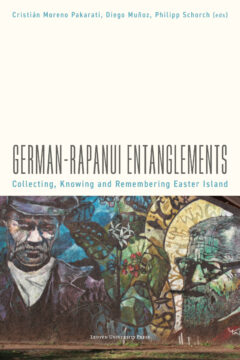 German–Rapanui Entanglements
Cristián Moreno Pakarati (Editor), Diego Muñoz (Editor), Philipp Schorch (Editor),
August 2026
 Teaching About the Violent Past
Line Kuppens (Author), Justin Sheria Nfundiko (Author),
October 2025
 Integration Otherwise Inspiration Kit
Luce Beeckmans (Author), Dounia Salamé (Author), Martina Bovo (Author), Mary Hogan (Author),
June 2025
 Brussel in een België met vier gewesten?
Dirk Moors (Editor), Anneloes Vandenbroucke (Editor), Iadine Degryse (Editor), Simon Boone (Editor),
February 2025
 Architectures of Resistance
Angeliki Sioli (Editor), Nishat Awan (Editor), Kristopher Palagi (Editor),
August 2024
 Newcomers Navigating the Welfare State
Hanne Vandermeerschen (Editor), Elsa Mescoli (Editor), Jean-Michel Lafleur (Editor), Peter De Cuyper (Editor),
December 2023

 Islamophobia as a Form of Radicalisation
Leen d’Haenens (Editor), Abdelwahed Mekki-Berrada (Editor),
March 2023