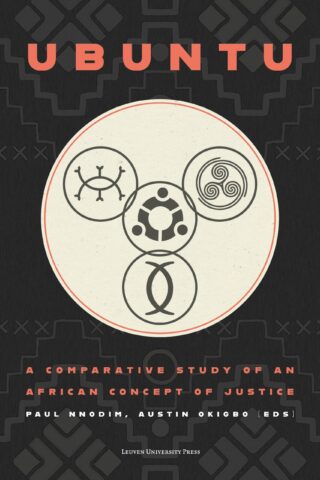
Ubuntu
A Comparative Study of an African Concept of Justice
Paul Nnodim (Editor), Austin Okigbo (Editor),
Category: African Studies, Diversity and Equity Studies, Philosophy, Social Science
Language: English
ISBN: 9789462703933
Publication date: February 6, 2024
€46.00 (including 6% VAT)
Buy NowNumber of pages: 250
Size: 234 x 156 x 10 mm

Funded by: Path to Open
Stock item: 158786
Standard delivery time for print books:
For Belgium: 5 to 8 working days
For EU: 2 to 3 weeks
For other countries: 4 to 5 weeks
Category: African Studies, Diversity and Equity Studies, Philosophy, Social Science
Language: English
ISBN: 9789461665386
Publication date: February 6, 2024
€39.00 (including 6% VAT)
Buy NowNumber of pages: 250
Funded by: Path to Open
The philosophy of Ubuntu in dialogue with Western normative ideas.
Ubuntu is an African philosophical tradition that embodies the ability of one human being to empathize with another. It is the quintessence of African humanism, communalism, and belonging. As the late Archbishop Desmond Tutu anticipated, Ubuntu resonated with the moral intuition of the majority of black South Africans in the 1990s. As a result, it became the foundational ethical basis for articulating a new post-apartheid era of reconciliation and forgiveness in the face of a history marked by brutal racial violence. Yet Ubuntu, as a philosophy or ethical practice which has arguably come to represent African humanism and communalism, has not been sufficiently assimilated into contemporary philosophical scholarship.
This anthology weaves interdisciplinary perspectives into the discourse on African relational ethics in dialogue with Western normative ideals across a wide range of issues, including justice, sustainable development, musical culture, journalism, and peace. It explains the philosophy of Ubuntu to both African and non-African scholars. Comprehensively written, this book will appeal to a broad audience of academic and non-academic readers.
Contributors: Aboubacar Dakuyo (University of Ottawa), Brahim El Guabli (Williams College), Leyla Tavernaro-Haidarian (University of Johannesburg), Damascus Kafumbe (Middlebury College), Joseph Kunnuji (University of the Free State), David Lutz (Holy Cross College, Notre Dame), Thaddeus Metz (University of Pretoria), Emmanuel-Lugard Nduka (media practitioner), Levi U.C. Nkwocha (University of Saint Francis, Fort Wayne).
This publication is GPRC-labeled (Guaranteed Peer-Reviewed Content).
This book will be made open access within three years of publication thanks to Path to Open, a program developed in partnership between JSTOR, the American Council of Learned Societies (ACLS), University of Michigan Press, and The University of North Carolina Press to bring about equitable access and impact for the entire scholarly community, including authors, researchers, libraries, and university presses around the world. Learn more at https://about.jstor.org/path-to-open/
ACKNOWLEDGMENTS
INTRODUCTION
UBUNTU: MEANING, CONTEXT, AND THE CONCEPTION OF JUSTICE
Austin Okigbo and Paul Nnodim
CHAPTER 1
UBUNTU, LIBERAL INDIVIDUALISM, AND JUSTICE
David Lutz
CHAPTER 2
JUSTICE AS FAIRNESS AND UBUNTU: CONCEPTUALIZING JUSTICE THROUGH HUMAN DIGNITY
Paul Nnodim and Austin Okigbo
CHAPTER 3
RELATIONAL NORMATIVE ECONOMICS: AN AFRICAN APPROACH TO DISTRIBUTIVE JUSTICE
Thaddeus Metz
CHAPTER 4
UBUNTU AND SUSTAINABLE DEVELOPMENT: MOBILIZING CAPACITY
Leyla Tavernaro-Haidarian
CHAPTER 5
UBUNTU: THE ARTICULATION OF AFRICAN VALUES AS AN ETHICAL FRAMEWORK FOR GLOBAL JOURNALISM
Emmanuel-Lugard Nduka
CHAPTER 6
GBENOPO IN OGU MUSICAL CULTURE: AN ETHNOGRAPHY OF SOCIAL CAPITAL IN BADAGRY
Joseph Kunnuji
CHAPTER 7
GGANGA HAD A NARROW ESCAPE: PUNISHMENT AND FORGIVENESS IN KIGANDA COURT SONG
Damascus Kafumbe
CHAPTER 8
INTERFACING UBUNTU AND PALAVER IN A JUSTICE SYSTEM
Levi U.C. Nkwocha
CHAPTER 9
WE ARE BECAUSE YOU ARE SILENCED: SEARCHING FOR MEMORY IN THE TEMPORALITIES OF MOROCCO’S TRANSITIONAL JUSTICE
Brahim El Guabli
CHAPTER 10
POST-CONFLICT JUSTICE IN SOUTH SUDAN’S LOCAL COMMUNITIES: THE CONTRIBUTION OF THE MORALITY OF “AFRICAN-COMMUNITARIANISM” TO PEACE
Aboubacar Dakuyo
CONCLUSION
UBUNTU: OPPORTUNITIES AND CHALLENGES FOR AFRICA AND THE WORLD
Paul Nnodim and Austin Okigbo
ABOUT THE CONTRIBUTORS
INDEX
Paul Nnodim
Paul Nnodim is a professor of philosophy at Massachusetts College of Liberal Arts.
Austin Okigbo
Austin Okigbo is an associate professor of ethnomusicology, African Studies, and global health at the University of Colorado Boulder.
This anthology brings together diverse perspectives and disciplinary approaches ranging from philosophy, restorative justice, comparative literature to media studies and musicology, to highlight the multi-faceted aspects of an African relational ethic: Ubuntu. The authors also present a dialogue with Western ethical paradigms and make a convincing case that Ubuntu gives us a welcome antidote to hegemonic liberal individualism in the realm of deliberative discourses concerning (social) justice.
Mechthild Nagel, SUNY Cortland
‘Ubuntu’, as propounded in this book, significantly contributes to the decolonization of knowledge production (in practice) by centering an alternative epistemic register to the dominant Western philosophies in scholarship. The book brings back in the ‘human touch’ in the academic literature in ways that amplify Africans’ lived experiences and challenge the liberal individualistic worldviews that are prevalent in today’s capitalistic societies.
Geoffrey Lugano, Kenyatta University
The volume offers a valuable exploration of Ubuntu, tracing its development from precolonial African societies through colonial disruptions to postcolonial applications. It ultimately issues a powerful call for the rejuvenation of Ubuntu as an ethical compass for African societies and potentially the world. - Oyinade Adekunle, Canadian Journal of African Studies / Revue Canadienne Des Études Africaines, 59(3), 655–657. https://doi.org/10.1080/00083968.2025.2555664
'Ubuntu: A comparative study of an African concept of justice' is an important and thought-provoking book. It challenges Western assumptions about justice and introduces Ubuntu as a philosophy grounded in connection, healing and community involvement in dispute resolution. While its insights are profound, the book occasionally struggles to bridge theory and practice. Still, its greatest strength lies in broadening the conversation around justice – inviting scholars and policymakers to consider a more humane and interconnected approach to governance. For Ubuntu to have a lasting impact on global justice discourse, however, it must move beyond academic debate and into real-world application. - Gabagambi, J. J., The International Journal of Restorative Justice, 8(2), 370-373. https://doi.org/10.1163/25890905-00802005
Frequently Asked Questions
What is "Ubuntu" about?
The philosophy of Ubuntu in dialogue with Western normative ideas.
Ubuntu is an African philosophical tradition that embodies the ability of one human being to empathize with another. It is the quintessence of African humanism, communalism, and belonging. As the late Archbishop Desmond Tutu anticipated, Ubuntu resonated with the moral intuition of the majority of black South Africans in the 1990s. As a result, it became the foundational ethical basis for articulating a new post-apartheid era of reconciliation and forgiveness in the face of a history marked by brutal racial violence. Yet Ubuntu, as a philosophy or ethical practice which has arguably come to represent African humanism and communalism, has not been sufficiently assimilated into contemporary philosophical scholarship.
This anthology weaves interdisciplinary perspectives into the discourse on African relational ethics in dialogue with Western normative ideals across a wide range of issues, including justice, sustainable development, musical culture, journalism, and peace. It explains the philosophy of Ubuntu to both African and non-African scholars. Comprehensively written, this book will appeal to a broad audience of academic and non-academic readers.
Contributors: Aboubacar Dakuyo (University of Ottawa), Brahim El Guabli (Williams College), Leyla Tavernaro-Haidarian (University of Johannesburg), Damascus Kafumbe (Middlebury College), Joseph Kunnuji (University of the Free State), David Lutz (Holy Cross College, Notre Dame), Thaddeus Metz (University of Pretoria), Emmanuel-Lugard Nduka (media practitioner), Levi U.C. Nkwocha (University of Saint Francis, Fort Wayne).
This publication is GPRC-labeled (Guaranteed Peer-Reviewed Content).
This book will be made open access within three years of publication thanks to Path to Open, a program developed in partnership between JSTOR, the American Council of Learned Societies (ACLS), University of Michigan Press, and The University of North Carolina Press to bring about equitable access and impact for the entire scholarly community, including authors, researchers, libraries, and university presses around the world. Learn more at https://about.jstor.org/path-to-open/
Who edited "Ubuntu"?
"Ubuntu" was edited by Paul Nnodim and Austin Okigbo.
Paul Nnodim is a professor of philosophy at Massachusetts College of Liberal Arts.
Austin Okigbo is an associate professor of ethnomusicology, African Studies, and global health at the University of Colorado Boulder.
Who funded the publication of "Ubuntu"?
Publication of "Ubuntu" was funded by Path to Open
.
What is the Table of Contents for "Ubuntu"?
ACKNOWLEDGMENTS
INTRODUCTION
UBUNTU: MEANING, CONTEXT, AND THE CONCEPTION OF JUSTICE
Austin Okigbo and Paul Nnodim
CHAPTER 1
UBUNTU, LIBERAL INDIVIDUALISM, AND JUSTICE
David Lutz
CHAPTER 2
JUSTICE AS FAIRNESS AND UBUNTU: CONCEPTUALIZING JUSTICE THROUGH HUMAN DIGNITY
Paul Nnodim and Austin Okigbo
CHAPTER 3
RELATIONAL NORMATIVE ECONOMICS: AN AFRICAN APPROACH TO DISTRIBUTIVE JUSTICE
Thaddeus Metz
CHAPTER 4
UBUNTU AND SUSTAINABLE DEVELOPMENT: MOBILIZING CAPACITY
Leyla Tavernaro-Haidarian
CHAPTER 5
UBUNTU: THE ARTICULATION OF AFRICAN VALUES AS AN ETHICAL FRAMEWORK FOR GLOBAL JOURNALISM
Emmanuel-Lugard Nduka
CHAPTER 6
GBENOPO IN OGU MUSICAL CULTURE: AN ETHNOGRAPHY OF SOCIAL CAPITAL IN BADAGRY
Joseph Kunnuji
CHAPTER 7
GGANGA HAD A NARROW ESCAPE: PUNISHMENT AND FORGIVENESS IN KIGANDA COURT SONG
Damascus Kafumbe
CHAPTER 8
INTERFACING UBUNTU AND PALAVER IN A JUSTICE SYSTEM
Levi U.C. Nkwocha
CHAPTER 9
WE ARE BECAUSE YOU ARE SILENCED: SEARCHING FOR MEMORY IN THE TEMPORALITIES OF MOROCCO’S TRANSITIONAL JUSTICE
Brahim El Guabli
CHAPTER 10
POST-CONFLICT JUSTICE IN SOUTH SUDAN’S LOCAL COMMUNITIES: THE CONTRIBUTION OF THE MORALITY OF “AFRICAN-COMMUNITARIANISM” TO PEACE
Aboubacar Dakuyo
CONCLUSION
UBUNTU: OPPORTUNITIES AND CHALLENGES FOR AFRICA AND THE WORLD
Paul Nnodim and Austin Okigbo
ABOUT THE CONTRIBUTORS
INDEX
Related titles



 The Romero Memory
Judith Gruber (Editor), Jonas Van Mulder (Editor), Kim Christiaens (Editor), Veerle Draulans (Editor), Jacques Haers (Editor), Joren Janssens (Editor), Stephan Parmentier (Editor),
December 2026


 Orality and Scribal Culture in the High Middle Ages
Timothy B. Noone (Author), Mark J. Clark (Author),
November 2026

 Infrastructuring Arrival
Karel Arnaut (Editor), Luce Beeckmans (Editor), Bruno Meeus (Editor),
November 2026
 Feminists Resisting Gendered Violence
Hemangini Gupta (Editor), Fiona Mackay (Editor), Jan Breckenridge (Editor), Louise Chappell (Editor), Rachna Mehra (Editor), Rukmini Sen (Editor), Mailin Suchting (Editor),
October 2026
 A City in Practice
Aude Tournaye (Editor), Filip De Boeck (Editor), Picha Collective (Editor),
September 2026
 Summa (Quaestiones ordinariae) art. LXXIII – LXXV
Henry of Ghent (Author), Gordon Wilson (Editor), Juan Carlos Flores (Editor),
September 2026
 German–Rapanui Entanglements
Cristián Moreno Pakarati (Editor), Diego Muñoz (Editor), Philipp Schorch (Editor),
August 2026
 The Medieval Aristotle
Nena Bobovnik (Editor), Clelia V. Crialesi (Editor), Lisa Devriese (Editor),
August 2026
 Jean Katambayi Mukendi
Johannes Muselaers (Editor), Stéphane Symons (Editor), Anne-Claire Schmitz (Editor), Emma Enderby (Editor),
April 2026

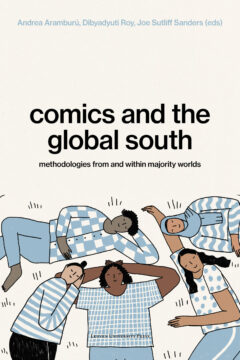 Comics and the Global South
Andrea Aramburú (Editor), Dibyadyuti Roy (Editor), Joe Sutliff Sanders (Editor),
February 2026
 Thomas Aquinas and Hervaeus Natalis on Concepts and Intentional Objects
Fabrizio Amerini (Author),
February 2026