

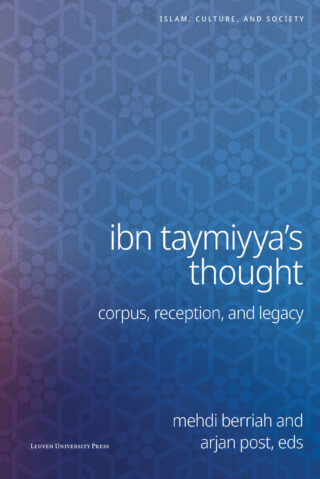

Ibn Taymiyya’s Thought
Corpus, Reception, and Legacy
Mehdi Berriah (Editor), Arjan Post (Editor),

Series: Islam, Culture and Society
Category: History 500-1500, Religion, Social Science
Language: English
ISBN: 9789462704961
Publication date: March 25, 2026
€39.50 (including 6% VAT)
Buy NowNumber of pages: 282
Size: 234 x 156 x 10 mm

Funded by: KU Leuven Fund for Fair Open Access
Stock item: 171282
Standard delivery time for print books:
For Belgium: 5 to 8 working days
For EU: 2 to 3 weeks
For other countries: 4 to 5 weeks
Series: Islam, Culture and Society
Category: History 500-1500, Religion, Social Science
Language: English
ISBN: 9789461667052
Publication date: March 25, 2026
Download Free EpubNumber of pages: 282
Funded by: KU Leuven Fund for Fair Open Access
Series: Islam, Culture and Society
Category: History 500-1500, Religion, Social Science
Language: English
ISBN: 9789461667045
Publication date: March 25, 2026
Download Free PDFNumber of pages: 282
Funded by: KU Leuven Fund for Fair Open Access
A fresh reading of medieval thinker Ibn Taymiyya, offering pathbreaking insight into his lasting relevance in debates on Islam, authority, and religious thought.
Ibn Taymiyya’s Thought: Corpus, Reception, and Legacy explores the work, influence, and lasting impact of one of the most controversial and prolific figures in Islamic intellectual history: Taqī l-Dīn Aḥmad Ibn Taymiyya (d. 728/1328). Adopting a clear and rigorous approach, this book traces the key strands of Ibn Taymiyya’s thought and shows how his writings have been interpreted, transformed, challenged, and reappropriated over time. It sheds light on the tensions between tradition and renewal, and between religious authority and critical inquiry. Beyond Taymiyyan thought itself, the book offers a deeper understanding of contemporary debates about Islam by situating them within a long and complex intellectual history. Thus, it will appeal both to readers eager to grasp the complex thought of one of medieval Islam’s most controversial scholars and to those interested in the ongoing relevance of his ideas in modern intellectual and religious debates across the Muslim world. This volume makes a vital contribution to the study of Ibn Taymiyya by engaging closely with his texts, and considering them in their original historical context as well as in the diverse settings in which they have been reread and reappropriated, whether directly or indirectly.
Introduction. Rethinking the Taymiyyan Phenomenon: Contexts, Corpus, and Reception
Mehdi Berriah and Arjan Post
Chapter 1. Jinn-s and Exorcism in Ibn Taymiyya
Mehdi Berriah
Chapter 2. Debates and Controversies Surrounding an Epistle Attributed to Ibn Taymiyya: Qāʿida mukhtaṣara fī qitāl al-kuffār
Farid Bouchiba
Chapter 3. Omniscience, Causality, and Fatalism: Ibn Taymiyya on the Problem of Petitionary Prayers
Safaruk Zaman Chowdhury
Chapter 4. The God of the Philosophers: The Refutation of Thābit b. Qurra’s Talkhīṣ of the Metaphysics in Ibn Taymiyya’s Darʾ taʿāruḍ al-ʿaql wa-l-naql
Adrien Candiard
Chapter 5. Ḥanbalī Theology after Ibn Taymiyya: Positioning Ibn al-Mabrid (d. 909/1503) in the Debate on God’s Attributes
Arjan Post
Chapter 6. Between Ibn Taymiyya and the Mutakallimūn: Muḥammad b. Aḥmad al-Saffārīnī (d. 1188/1774) on the Attributes of God
Sarah Van Eyken
Chapter 7. The Taymiyyan Turn in Early Twentieth-Century Islamic Reform and the Controversy over Cursing Muʿāwiya
Pieter Coppens
Chapter 8. Ibn Taymiyya between Fact and Fiction in Modern Turkey: A Special Reference to Necip Fazıl Kısakürek’s (1905- 1983) Perception of Ibn Taymiyya
Kadir Gömbeyaz
Chapter 9. From the Shaykh al-Islam to the Intellectual: Reception and Functions of Ibn Taymiyya in Francophone Islamic Literature
Daoud Riffi
About the Editors and Authors
Frequently Asked Questions
What is "Ibn Taymiyya’s Thought" about?
A fresh reading of medieval thinker Ibn Taymiyya, offering pathbreaking insight into his lasting relevance in debates on Islam, authority, and religious thought.
Ibn Taymiyya’s Thought: Corpus, Reception, and Legacy explores the work, influence, and lasting impact of one of the most controversial and prolific figures in Islamic intellectual history: Taqī l-Dīn Aḥmad Ibn Taymiyya (d. 728/1328). Adopting a clear and rigorous approach, this book traces the key strands of Ibn Taymiyya’s thought and shows how his writings have been interpreted, transformed, challenged, and reappropriated over time. It sheds light on the tensions between tradition and renewal, and between religious authority and critical inquiry. Beyond Taymiyyan thought itself, the book offers a deeper understanding of contemporary debates about Islam by situating them within a long and complex intellectual history. Thus, it will appeal both to readers eager to grasp the complex thought of one of medieval Islam’s most controversial scholars and to those interested in the ongoing relevance of his ideas in modern intellectual and religious debates across the Muslim world. This volume makes a vital contribution to the study of Ibn Taymiyya by engaging closely with his texts, and considering them in their original historical context as well as in the diverse settings in which they have been reread and reappropriated, whether directly or indirectly.
Who wrote "Ibn Taymiyya’s Thought"?
"Ibn Taymiyya’s Thought" was written by Pieter Coppens, Kadir Gömbeyaz, Sarah Van Eyken, Farid Bouchiba, Safaruk Chowdhury, Daoud Riffi and Adrien Candiard.
Who edited "Ibn Taymiyya’s Thought"?
"Ibn Taymiyya’s Thought" was edited by Mehdi Berriah and Arjan Post.
Mehdi Berriah is a researcher in Islamic Studies and Islamic History at the French Institute for the Near East (Ifpo). His work focuses on Muslim thought, theology, jihad, Ibn Taymiyya, and the intellectual, political, military, and social history of the Islamic world.
Arjan Post is Associate Professor of Arabic and Islamic Studies at KU Leuven. His fields of interest include Sufism, kalām, theology, and the intellectual history of the Hanbali school, specifically during the Mamluk period.
Is "Ibn Taymiyya’s Thought" part of a series?
Yes, "Ibn Taymiyya’s Thought" is part of the "Islam, Culture and Society" series.

The peer-reviewed book series Islam, Culture, and Society provides a strong academic platform for national and international scholars engaged in research on Muslim societies from various perspectives and disciplines. The series promotes a multidisciplinary approach and welcomes contributions from all fields of the Humanities and Social Sciences, including theology, religious studies, history, law, philosophy, philology, literature, anthropology, sociology, social and cultural psychology, cultural studies, and the arts.
Topics of particular interest to the series include the interdisciplinary role of history, social behaviour, religious (and other) identities, local traditions, and cultural and legal systems, as well as diversity, inclusion, and tolerance in (re)shaping the plurality, changeability, diversity and global interconnectedness of Muslim cultures and societies.
All volumes in the series present cutting-edge scholarship and foster ongoing scholarly debates related to the historical and contemporary facets of Muslim societies. In doing so, Islam, Culture, and Society contributes to a more comprehensive, profound, and more nuanced understanding of the complexities of Muslim practices and perspectives in the social, cultural, psychological and religious spheres within a globalized world.
The series Islam, Culture, and Society is an initiative of the Leuven Centre for the Study of Islam, Culture, and Society (LCSICS).
The editors accept monographs and edited volumes covering a broad appeal of topics in a wide geographic range, including North Africa, the Middle East, Sub-Saharan Africa, Central Asia, South and Southeast Asia, and Muslim communities in the West.
The series welcomes contributions by established scholars as well as by promising young researchers, and embraces diversity in terms of gender, nationality, and ethnicity.
The main publication language of the series is English, although selective room is offered to titles in Dutch, French and Arabic. All books are written for an international audience of scholars. All manuscripts are subject to peer review.
Series editors
Chaïma Ahaddour (Faculty of Theology and Religious Studies, KU Leuven)
Nadia Fadil (Faculty of Social Sciences, KU Leuven)
Arjan Post (Faculty of Arts, KU Leuven)
Umar Ryad (Faculty of Arts, KU Leuven)
Editorial board
Ahmet Alibašić (University of Sarajevo)
Martijn de Koning (Radboud University – Nijmegen)
Mohammed Ghaly (University of Hamad Bin Khalifa – Doha)
Christian Lange (Utrecht University)
Jon Hoover (University of Nottingham)
Helge Daniëls (KU Leuven)
Advisory board
Albrecht Fuess (University of Marburg)
Agata S. Nalborczyk (University of Warsaw)
Jonathan Brown (Georgetown University)
John Brockopp (The Pennsylvania State University)
Annelies Moors (University of Amsterdam)
Pascal Buresi (French National Centre for Scientific Research – Paris)
Proposals
Proposals and enquiries can be sent to Umar Ryad.
Please make use of the submission form to present your manuscript or proposal to our board.
Authors interested in Open Access can consult the available funding options.
Links & Resources
Is "Ibn Taymiyya’s Thought" available Open Access?
Yes, "Ibn Taymiyya’s Thought" is published Open Access. It is available under a BY-NC-ND license.
Who funded the publication of "Ibn Taymiyya’s Thought"?
Publication of "Ibn Taymiyya’s Thought" was funded by KU Leuven Fund for Fair Open Access
.
What is the Table of Contents for "Ibn Taymiyya’s Thought"?
Introduction. Rethinking the Taymiyyan Phenomenon: Contexts, Corpus, and Reception
Mehdi Berriah and Arjan Post
Chapter 1. Jinn-s and Exorcism in Ibn Taymiyya
Mehdi Berriah
Chapter 2. Debates and Controversies Surrounding an Epistle Attributed to Ibn Taymiyya: Qāʿida mukhtaṣara fī qitāl al-kuffār
Farid Bouchiba
Chapter 3. Omniscience, Causality, and Fatalism: Ibn Taymiyya on the Problem of Petitionary Prayers
Safaruk Zaman Chowdhury
Chapter 4. The God of the Philosophers: The Refutation of Thābit b. Qurra’s Talkhīṣ of the Metaphysics in Ibn Taymiyya’s Darʾ taʿāruḍ al-ʿaql wa-l-naql
Adrien Candiard
Chapter 5. Ḥanbalī Theology after Ibn Taymiyya: Positioning Ibn al-Mabrid (d. 909/1503) in the Debate on God’s Attributes
Arjan Post
Chapter 6. Between Ibn Taymiyya and the Mutakallimūn: Muḥammad b. Aḥmad al-Saffārīnī (d. 1188/1774) on the Attributes of God
Sarah Van Eyken
Chapter 7. The Taymiyyan Turn in Early Twentieth-Century Islamic Reform and the Controversy over Cursing Muʿāwiya
Pieter Coppens
Chapter 8. Ibn Taymiyya between Fact and Fiction in Modern Turkey: A Special Reference to Necip Fazıl Kısakürek’s (1905- 1983) Perception of Ibn Taymiyya
Kadir Gömbeyaz
Chapter 9. From the Shaykh al-Islam to the Intellectual: Reception and Functions of Ibn Taymiyya in Francophone Islamic Literature
Daoud Riffi
About the Editors and Authors
What is the DOI for "Ibn Taymiyya’s Thought"?
The Digital Object Identifier (DOI) for "Ibn Taymiyya’s Thought" is 10.11116/9789461667045.
Related titles


 The Romero Memory
Judith Gruber (Editor), Jonas Van Mulder (Editor), Stephan Parmentier (Editor), Veerle Draulans (Editor), Joren Janssens (Editor), Jacques Haers (Editor), Kim Christiaens (Editor),
November 2026
 Orality and Scribal Culture in the High Middle Ages
Timothy B. Noone (Author), Mark J. Clark (Author),
November 2026
 Infrastructuring Arrival
Karel Arnaut (Editor), Luce Beeckmans (Editor), Bruno Meeus (Editor),
November 2026
 Feminists Resisting Gendered Violence
Hemangini Gupta (Editor), Fiona Mackay (Editor), Jan Breckenridge (Editor), Louise Chappell (Editor), Rachna Mehra (Editor), Rukmini Sen (Editor), Mailin Suchting (Editor),
October 2026

 German–Rapanui Entanglements
Cristián Moreno Pakarati (Editor), Diego Muñoz (Editor), Philipp Schorch (Editor),
August 2026
 The Medieval Aristotle
Nena Bobovnik (Editor), Clelia V. Crialesi (Editor), Lisa Devriese (Editor),
August 2026
 Thomas Aquinas and Hervaeus Natalis on Concepts and Intentional Objects
Fabrizio Amerini (Author),
February 2026
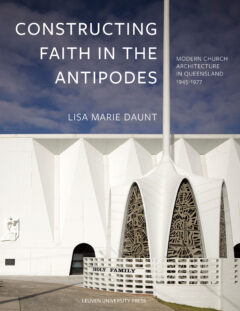
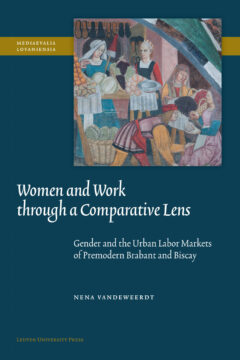
 Teaching About the Violent Past
Line Kuppens (Author), Justin Sheria Nfundiko (Author),
October 2025
 Integration Otherwise Inspiration Kit
Luce Beeckmans (Author), Dounia Salamé (Author), Martina Bovo (Author), Mary Hogan (Author),
June 2025
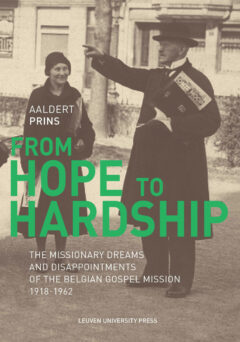
 Christian Churches and Postwar Society
Kristien Suenens (Editor), Michael Snape (Editor), Martin Baumeister (Editor),
June 2025
 Student Notes from Latin Europe (1400–1750)
Xander Feys (Editor), Maxime Maleux (Editor), Andy Peetermans (Editor), Raf Van Rooy (Editor),
May 2025
 Urban Women
Jelle Haemers (Editor), Andrea Bardyn (Editor), Chanelle Delameillieure (Editor),
April 2025
 Cross-Cultural Heritage
Jonas Van Mulder (Editor), Thomas Coomans (Editor), Dries Vanysacker (Editor),
April 2025