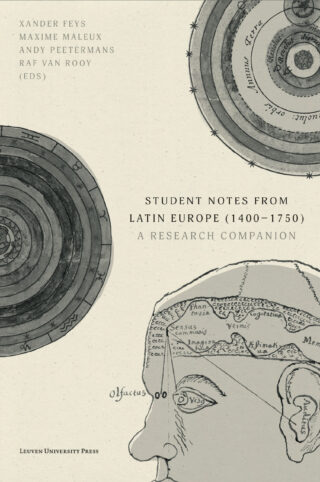

Student Notes from Latin Europe (1400–1750)
A Research Companion
Xander Feys (Editor), Maxime Maleux (Editor), Andy Peetermans (Editor), Raf Van Rooy (Editor),

Category: Education, History, History 1500-1800, History 500-1500
Language: English
ISBN: 9789462704565
Publication date: May 2, 2025
€39.50 (including 6% VAT)
Buy NowNumber of pages: 264
Size: 234 x 156 x mm
Number of illustrations: 60
Illustrations and other content description:
45 black & white illustrations, 15 illustrations in colour

Funded by: KU Leuven Fund for Fair Open Access
Open Book Collective
Stock item: 165473
Standard delivery time for print books:
For Belgium: 5 to 8 working days
For EU: 2 to 3 weeks
For other countries: 4 to 5 weeks
Category: Education, History, History 1500-1800, History 500-1500
Language: English
ISBN: 9789461666413
Publication date: May 2, 2025
Download Free EpubNumber of pages: 264
Number of illustrations: 60
Illustrations and other content description:
45 black & white illustrations, 15 illustrations in colour
Funded by: KU Leuven Fund for Fair Open Access
Open Book Collective
Category: Education, History, History 1500-1800, History 500-1500
Language: English
ISBN: 9789461666406
Publication date: May 2, 2025
Download Free PDFNumber of pages: 264
Number of illustrations: 60
Illustrations and other content description:
45 black & white illustrations, 15 illustrations in colour
Funded by: KU Leuven Fund for Fair Open Access
Open Book Collective
The first comprehensive guide dedicated solely to research on Latin-European early modern student notes.
The many preserved collections of student notes from the early modern period – ranging from neatly maintained notebooks to barely legible scribbles crammed between lines of printed text – hold considerable but largely untapped potential as an historical source. At the same time, the analysis of these notes poses significant challenges for scholars. This book aims to be a concise and accessible companion for scholars interested in engaging with this young and burgeoning research field. Written by a diverse group of specialists from across Europe and the US, it explores the various technical and practical aspects involved in reading, interpreting, and editing student notes, while also demonstrating how these sources can enrich various areas of historical research. Indeed, student notes reveal that early modern lecture halls were often more dynamic, diverse, and creative than we might have expected.
Introduction
Raf Van Rooy and Maxime Maleux, on behalf of the editors
1. Education in early modern Latin Europe: A scene from Leuven
2. Structure of the research companion
3. Why Leuven?
Acknowledgments
Notes
References
Part I—The Basics of Student Notes Research
Chapter 1—The Making of Student Notes
Ann M. Blair
1. The survival of student notes
2. The forms of student notes
3. Methods of note-taking in the classroom
4. What can and cannot be learned from student notes
Notes
Suggestions for further reading
References
Chapter 2—Getting a First Grasp of Student Notes
Raf Van Rooy and Xander Feys
1. Introduction
2. Referentiality, fragmentariness, and provenance
3. Paleography
4. Drawing up a typology for student notes
4.1. Form
4.2. Structure
4.3. Contents
5. Conclusion
6. Exercise
Notes
References
Transcription and model solution
Chapter 3—The Materiality of the Student Notebook
Jarrik Van Der Biest
1. Introduction
2. From paper mill to preservation
3. Analysis
3.1. Quire structure
3.2. Distribution of watermarks
3.3. Dates
3.4. Textual divisions, codicological blocks
Notes
Thematic bibliography
Chapter 4—Book History: The Basics with Two Case Studies
Natasha Constantinidou, Dieter Cammaerts, and Violet Soen
1. Introduction
2. An increasingly interdisciplinary field
3. Production and distribution of printed books
4. From production to consumption: An inquiry into material objects
5. Analyzing printed text editions: Aspects of book history in practice
6. Conclusions
Notes
Thematic bibliography
Chapter 5—How to Make Student Notes Accessible
Raf Van Rooy
1. Introduction
2. Choose wisely from the start
2.1. Diplomatic and semi-diplomatic transcription
2.2. XML
2.3. The act of transcribing: Benefits and tools
2.4. Good practices
3. Conclusion
Notes
References
Student Notes Toolkit
Part II—The Potential of Student Notes Research
Chapter 6—History of Education
Daniel Gehrt and Michael Stolberg
1. Introduction
2. The diversity and flexibility of basic academic education
3. Training for professional practice: Medical students’ notebooks
4. Conclusion
Notes
References
Chapter 7—Intellectual History
Lorenz Demey, Marc Laureys, Maxime Maleux, and Andy Peetermans
1. Introduction
2. Revolutionary rhetoric versus didactic continuity: Juvenal in Bologna
3. Official policies versus didactic non-conformism: The university of Leuven and the Wegestreit
4. Textbook canonicity versus didactic creativity
4.1. Aristotelian diagrams beyond the square of opposition
4.2. Hebrew in Leuven and Paris
5. Conclusion
Notes
References
Chapter 8—Book History
Xander Feys and Raf Van Rooy
1. Introduction
2. Book circulation
3. Interleaving for intermezzi
4. Student practices in handling books and their flaws
5. Pedagogic pragmatism
6. Conclusion
Notes
References
Chapter 9—Visual History
Alicja Bielak and Gwendoline de Mûelenaere
1. Introduction
2. Visual elements in notebooks
2.1. Heterogeneous visual languages
2.2. Diagrams
2.3. The materiality of the image
3. Classification of images in student notebooks
3.1. Traditional university iconography
3.2. Scientific drawings and engravings
3.3. Symbolic language
4. Emblems as didactic and mnemonic devices
4.1. Scientific emblemata
4.2. Recuperation of emblematic devices
4.3. Emblems as memory aids
5. Conclusion
Notes
References
Chapter 10—History of Orality
Tomás Antonio Valle and Raf Van Rooy
1. Introduction
2. Conversational culture at Wittenberg university c. 1550
3. The oral/aural challenges of teaching and learning
4. Conclusion
Notes
References
Further reading
Chapter 11—Socio-Cultural History
Maximilian Schuh, Xander Feys, and Raf Van Rooy
1. Introduction
2. Case study 1: The arts faculties at Uppsala and Ingolstadt
2.1. Uppsala
2.2. Ingolstadt
3. Case study 2: Triangular teaching in Milan in about 1465
4. Case study 3: Aeneid 12 and the Turkish threat
5. Conclusion
Notes
References
Multilingual Glossary
"This is a highly effective, well-designed guide to student notes, a complex subject requiring a wide range of skills (palaeography, Latin, knowledge of codicology and material bibliography, the historical knowledge needed for contextualisation, etc.). The ways of approaching this subject and the benefits that researchers in many fields can derive from it are explained clearly and pedagogically, with the help of numerous relevant examples." - Christine Bénévent, École nationale des chartes
"This volume takes stock, for the first time, of a new and exciting field of study at the crossroads of different disciplines: students notes research. Through an analysis of a conspicuous array of first-hand sources such as manuscript notes, diagrams and drawings left in the margins of school editions, on loose sheets, in notebooks, the authors take us into the classrooms of some of northern Europe's most prestigious universities, and show us not only the teaching and learning practices in vogue in the modern age, but also glimpses of the daily lives of young people who took classes on subjects as diverse as literature, philosophy, medicine, etc." - Luigi Silvano, Università di Torino
Frequently Asked Questions
What is "Student Notes from Latin Europe (1400–1750)" about?
The first comprehensive guide dedicated solely to research on Latin-European early modern student notes.
The many preserved collections of student notes from the early modern period – ranging from neatly maintained notebooks to barely legible scribbles crammed between lines of printed text – hold considerable but largely untapped potential as an historical source. At the same time, the analysis of these notes poses significant challenges for scholars. This book aims to be a concise and accessible companion for scholars interested in engaging with this young and burgeoning research field. Written by a diverse group of specialists from across Europe and the US, it explores the various technical and practical aspects involved in reading, interpreting, and editing student notes, while also demonstrating how these sources can enrich various areas of historical research. Indeed, student notes reveal that early modern lecture halls were often more dynamic, diverse, and creative than we might have expected.
Who wrote "Student Notes from Latin Europe (1400–1750)"?
"Student Notes from Latin Europe (1400–1750)" was written by Alicja Bielak, Ann Blair, Dieter Cammaerts, Natasha Constantinidou, Gwendoline de Mûelenaere, Lorenz Demey, Daniel Gehrt, Marc Laureys, Maximilian Schuh, Violet Soen, Michael Stolberg, Tomás Valle and Jarrik Van Der Biest.
Marc Laureys is Professor of Medieval Latin and Neo-Latin Philology as well as Founding Director of the Centre for the Classical Tradition at the University of Bonn.
Violet Soen is als historica verbonden aan de Onderzoeksgroep Nieuwe Tijd, KU Leuven. Ze doet onderzoek naar religie in de grensgebieden van de Spaans-Habsburgse wereld, en bestudeert de wisselwerking tussen godsdienstoorlogen en -vredes in de zestiende en zeventiende eeuw.
Who edited "Student Notes from Latin Europe (1400–1750)"?
"Student Notes from Latin Europe (1400–1750)" was edited by Xander Feys, Maxime Maleux, Andy Peetermans and Raf Van Rooy.
Xander Feys is a postdoctoral researcher at KU Leuven, specializing in humanist pedagogical praxis, university and book history in the Southern Low Countries, and the early modern reception of Vergil and Homer.
Maxime Maleux earned his PhD in linguistics with a dissertation on the teaching of Hebrew in the early modern Low Countries and currently works as a postdoctoral researcher at KU Leuven.
Andy Peetermans is a research associate at KU Leuven, interested in early modern grammar writing and its didactic dimensions.
Raf Van Rooy is assistant professor of Latin Literature at KU Leuven, working on early modern literary multilingualism, with a specific interest in exchanges between Latin and Greek.
Is "Student Notes from Latin Europe (1400–1750)" available Open Access?
Yes, "Student Notes from Latin Europe (1400–1750)" is published Open Access. It is available under a BY-NC-ND license.
Who funded the publication of "Student Notes from Latin Europe (1400–1750)"?
Publication of "Student Notes from Latin Europe (1400–1750)" was funded by KU Leuven Fund for Fair Open Access
Open Book Collective
.
What is the Table of Contents for "Student Notes from Latin Europe (1400–1750)"?
Introduction
Raf Van Rooy and Maxime Maleux, on behalf of the editors
1. Education in early modern Latin Europe: A scene from Leuven
2. Structure of the research companion
3. Why Leuven?
Acknowledgments
Notes
References
Part I—The Basics of Student Notes Research
Chapter 1—The Making of Student Notes
Ann M. Blair
1. The survival of student notes
2. The forms of student notes
3. Methods of note-taking in the classroom
4. What can and cannot be learned from student notes
Notes
Suggestions for further reading
References
Chapter 2—Getting a First Grasp of Student Notes
Raf Van Rooy and Xander Feys
1. Introduction
2. Referentiality, fragmentariness, and provenance
3. Paleography
4. Drawing up a typology for student notes
4.1. Form
4.2. Structure
4.3. Contents
5. Conclusion
6. Exercise
Notes
References
Transcription and model solution
Chapter 3—The Materiality of the Student Notebook
Jarrik Van Der Biest
1. Introduction
2. From paper mill to preservation
3. Analysis
3.1. Quire structure
3.2. Distribution of watermarks
3.3. Dates
3.4. Textual divisions, codicological blocks
Notes
Thematic bibliography
Chapter 4—Book History: The Basics with Two Case Studies
Natasha Constantinidou, Dieter Cammaerts, and Violet Soen
1. Introduction
2. An increasingly interdisciplinary field
3. Production and distribution of printed books
4. From production to consumption: An inquiry into material objects
5. Analyzing printed text editions: Aspects of book history in practice
6. Conclusions
Notes
Thematic bibliography
Chapter 5—How to Make Student Notes Accessible
Raf Van Rooy
1. Introduction
2. Choose wisely from the start
2.1. Diplomatic and semi-diplomatic transcription
2.2. XML
2.3. The act of transcribing: Benefits and tools
2.4. Good practices
3. Conclusion
Notes
References
Student Notes Toolkit
Part II—The Potential of Student Notes Research
Chapter 6—History of Education
Daniel Gehrt and Michael Stolberg
1. Introduction
2. The diversity and flexibility of basic academic education
3. Training for professional practice: Medical students’ notebooks
4. Conclusion
Notes
References
Chapter 7—Intellectual History
Lorenz Demey, Marc Laureys, Maxime Maleux, and Andy Peetermans
1. Introduction
2. Revolutionary rhetoric versus didactic continuity: Juvenal in Bologna
3. Official policies versus didactic non-conformism: The university of Leuven and the Wegestreit
4. Textbook canonicity versus didactic creativity
4.1. Aristotelian diagrams beyond the square of opposition
4.2. Hebrew in Leuven and Paris
5. Conclusion
Notes
References
Chapter 8—Book History
Xander Feys and Raf Van Rooy
1. Introduction
2. Book circulation
3. Interleaving for intermezzi
4. Student practices in handling books and their flaws
5. Pedagogic pragmatism
6. Conclusion
Notes
References
Chapter 9—Visual History
Alicja Bielak and Gwendoline de Mûelenaere
1. Introduction
2. Visual elements in notebooks
2.1. Heterogeneous visual languages
2.2. Diagrams
2.3. The materiality of the image
3. Classification of images in student notebooks
3.1. Traditional university iconography
3.2. Scientific drawings and engravings
3.3. Symbolic language
4. Emblems as didactic and mnemonic devices
4.1. Scientific emblemata
4.2. Recuperation of emblematic devices
4.3. Emblems as memory aids
5. Conclusion
Notes
References
Chapter 10—History of Orality
Tomás Antonio Valle and Raf Van Rooy
1. Introduction
2. Conversational culture at Wittenberg university c. 1550
3. The oral/aural challenges of teaching and learning
4. Conclusion
Notes
References
Further reading
Chapter 11—Socio-Cultural History
Maximilian Schuh, Xander Feys, and Raf Van Rooy
1. Introduction
2. Case study 1: The arts faculties at Uppsala and Ingolstadt
2.1. Uppsala
2.2. Ingolstadt
3. Case study 2: Triangular teaching in Milan in about 1465
4. Case study 3: Aeneid 12 and the Turkish threat
5. Conclusion
Notes
References
Multilingual Glossary
What is the DOI for "Student Notes from Latin Europe (1400–1750)"?
The Digital Object Identifier (DOI) for "Student Notes from Latin Europe (1400–1750)" is 10.11116/9789461666406.
Related titles


 Orality and Scribal Culture in the High Middle Ages
Timothy B. Noone (Author), Mark J. Clark (Author),
November 2026
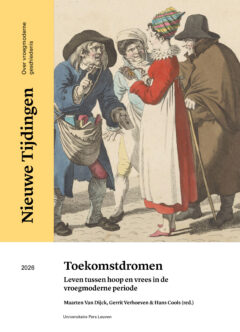 Toekomstdromen
Maarten Van Dijck (Editor), Gerrit Verhoeven (Editor), Hans Cools (Editor),
November 2026


 The Medieval Aristotle
Nena Bobovnik (Editor), Clelia V. Crialesi (Editor), Lisa Devriese (Editor),
August 2026
 Trend en toeval – vierde editie
Bruno Blondé (Author), Isabelle Devos (Author), Jord Hanus (Author), Wouter Ryckbosch (Author),
August 2026


 Christian Democracy and the Fall of Communism
Michael Gehler (Editor), Piotr H. Kosicki (Editor), Helmut Wohnout (Editor),
April 2026
 Political Exile in the Global Twentieth Century
Wolfram Kaiser (Editor), Piotr H. Kosicki (Editor),
April 2026
 Brusselse plaatsnamen
Iadine Degryse (Editor), Benjamin Wayens (Editor), Chantal Kesteloot (Editor), Dennis De Vriese (Editor), Matthijs Degraeve (Editor),
April 2026



 Cartographies of Catastrophes
Laura Demeter (Editor), Carmen M. Enss (Editor), Piotr Kisiel (Editor), Carol Ludwig (Editor),
February 2026

 Thomas Aquinas and Hervaeus Natalis on Concepts and Intentional Objects
Fabrizio Amerini (Author),
February 2026