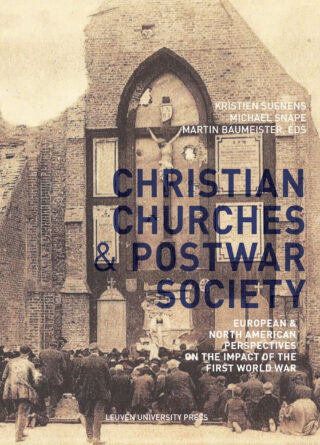
Christian Churches and Postwar Society
European and North American Perspectives on the Impact of the First World War
Kristien Suenens (Editor), Michael Snape (Editor), Martin Baumeister (Editor),
Series: KADOC-Studies on Religion, Culture and Society 33
Category: History 1800-present, Religion
Language: English
ISBN: 9789462704695
Publication date: June 4, 2025
€45.00 (including 6% VAT)
Buy NowNumber of pages: 240
Size: 244 x 170 x 11 mm

Stock item: 166142
Standard delivery time for print books:
For Belgium: 5 to 8 working days
For EU: 2 to 3 weeks
For other countries: 4 to 5 weeks
Series: KADOC-Studies on Religion, Culture and Society 33
Category: History 1800-present, Religion
Language: English
ISBN: 9789461666611
Publication date: June 4, 2025
€38.00 (including 6% VAT)
Buy NowNumber of pages: 240
Series: KADOC-Studies on Religion, Culture and Society 33
Category: History 1800-present, Religion
Language: English
ISBN: 9789461666604
Publication date: June 4, 2025
€38.00 (including 6% VAT)
Buy NowNumber of pages: 240
The enduring influence of religion in shaping postwar Europe.
This volume examines the role of Christian churches in Europe during the often-overlooked postwar period (ca. 1918–ca. 1925), enriching our understanding of the enduring influence of religion in the aftermath of conflict. Taking a multinational, multidenominational, and multidimensional perspective, the essays explore the complex religious landscapes of postwar Europe, the resilience of ecclesiastical networks, and the transnational loyalties connecting Europe and North America. By highlighting the enduring vitality of faith and religious institutions, this study provides fresh insights into the evolving roles of churches, religious movements, and communities. Together, the essays shed light on the broader religious landscape of postwar Europe and provide an invaluable resource for understanding the lasting impact of religion in a transformed world.
Introduction
Kristien Suenens, Michael Snape, and Martin Baumeister
1 Refusal or Reconciliation, Renewal or Revolution: European Churches and the Legacy of the First World War
Jan Bank
2 Archbishop Söderblom, Lutheranism, and Ecumenism in Interwar Europe (1918-1925)
Christian Chanel
3 The Holy See and the Nationalisation of the New Italian Provinces (1918-1928)
Daiana Menti
4 The French Catholic Clergy and New Forms of Ministry and Apostolate after the First World War
Xavier Boniface
5 Between the Great War and the ‘Great Repression’: Women Religious Institutes in Postwar Belgium
Kristien Suenens
6 Between Secularisation and Revitalisation: ‘Waves’ of Religiosity in the Czech Lands (1918–1925)
Tomáš W. Pavlíček
7 Religious Reorientations and the First World War: The ‘Provincialisation’ of Herrnhut and the ‘Invention’ of Schönstatt
Jan-Martin Zollitsch
8 The Church, Christian Charity, and the Rehabilitative Process of Wounded First World War Veterans in Interwar Britain
Bethany Rowley
9 American Quakers and Humanitarian Aid to Germany (1919-1922)
Laura Viktoria Huth and Daniel Maul
10 A Constant Trajectory: The Protestant Episcopal Church, the First World War, and its Aftermath
Michael Snape
Colophon
Rather than solving any of these questions, the variety of case studies collected here whet the appetite for further research and demonstrate how much we still do not know about the complex story of Christianity in postwar Europe and America. Highly recommended. - Roland Clark, The Catholic Historical Review, vol. 112 no. 1, 2026, p. 150-151., https://dx.doi.org/10.1353/cat.2026.a993539.
Frequently Asked Questions
What is "Christian Churches and Postwar Society" about?
The enduring influence of religion in shaping postwar Europe.
This volume examines the role of Christian churches in Europe during the often-overlooked postwar period (ca. 1918–ca. 1925), enriching our understanding of the enduring influence of religion in the aftermath of conflict. Taking a multinational, multidenominational, and multidimensional perspective, the essays explore the complex religious landscapes of postwar Europe, the resilience of ecclesiastical networks, and the transnational loyalties connecting Europe and North America. By highlighting the enduring vitality of faith and religious institutions, this study provides fresh insights into the evolving roles of churches, religious movements, and communities. Together, the essays shed light on the broader religious landscape of postwar Europe and provide an invaluable resource for understanding the lasting impact of religion in a transformed world.
Who wrote "Christian Churches and Postwar Society"?
"Christian Churches and Postwar Society" was written by Jan Bank, Christian Chanel, Daiana Menti, Xavier Boniface, Tomáš W. Pavlíček, Jan-Martin Zollitsch, Bethany Rowley, Laura Viktoria Huth and Daniel Maul.
Who edited "Christian Churches and Postwar Society"?
"Christian Churches and Postwar Society" was edited by Kristien Suenens, Michael Snape and Martin Baumeister.
Kristien Suenens is a senior researcher and heritage consultant at KADOC-KU Leuven, with a focus on the intersection of women's history and Catholicism.
Michael Snape is the inaugural Michael Ramsey Professor of Anglican Studies at Durham University. He is an ecumenical lay canon of Durham Cathedral and a Fellow of the British Academy. He has published extensively on the history of religion and conflict.
Martin Baumeister held the Chair in Contemporary European History at the Ludwig-Maximilians-Universität of Munich from 2003 to 2017. Until 2024 he has been the director of the German Historical Institute in Rome. He has published widely on the history of contemporary Southern Europe and the Mediterranean with a focus on Italy and Spain.
Is "Christian Churches and Postwar Society" part of a series?
Yes, "Christian Churches and Postwar Society" is part of the "KADOC-Studies on Religion, Culture and Society" series. It's book 33 in the series.


The longstanding peer-reviewed book series KADOC Studies in Religion, Culture and Society is devoted to a deeper understanding of the role of religion(s) in society in Europe and the world since 1750. By means of monographs and edited volumes, the series explores thematic frontiers and embraces innovative methodological approaches in historical, sociological and anthropological scholarship on religion, culture and society. The series particularly welcomes manuscripts adopting interreligious and transnational perspectives. Taken together, KADOC Studies in Religion, Culture and Society and its companion series KADOC Artes represent a diptych featuring the immaterial and material legacies of religions in Europe and the world from the 18th century onwards.
KADOC Studies in Religion, Culture and Society is managed by an independent Editorial Board. Books are published in English. Open Access publishing is encouraged. Financial support will be examined on a case-by-case basis and in consultation with the author.
KADOC, the Interfaculty Documentation and Research Centre on Religion, Culture and Society at KU Leuven, is an internationally oriented interdisciplinary research center as well as a heritage institution recognized by the Flemish Government with particularly rich and diverse documentary holdings.
Editorial board
Elena Arigita Maza (Universidad de Granada)
Florian Bock (Ruhr Universität Bochum)
Timothy Brittain‐Catlin (University of Cambridge)
James Chappel (Duke University)
Kim Christiaens (KADOC-KU Leuven)
Kathleen James-Chakraborty (University College Dublin)
James Kennedy (Utrecht University)
Franziska Metzger (PH Luzern)
Patrick Pasture (MoSa‐KU Leuven) - chairman
Isabelle Saint‐Martin (EPHE Paris)
Thijl Sunier (VU Amsterdam)
Árpád von Klimó (Catholic University of America)
Veerle De Laet (Leuven University Press)
Peter Heyrman (KADOC-KU Leuven) - secretary
Proposals
Proposals and enquiries can be sent to Peter Heyrman. The series welcomes monographs and edited volumes. Book proposals may relate to, for example, the political impact of religion, the dynamics between religion and welfare, and missionary history. All proposals and manuscripts are subject to double blind peer review involving at least one external reviewer (proposals) or at least two (manuscripts). The editors strive towards completing the review of proposals within two months and of complete manuscripts within five months after submission.
Please make use of the submission form to present your manuscript or proposal to our board.
Authors interested in Open Access can consult the available funding options.
Links & Resources
What is the Table of Contents for "Christian Churches and Postwar Society"?
Introduction
Kristien Suenens, Michael Snape, and Martin Baumeister
1 Refusal or Reconciliation, Renewal or Revolution: European Churches and the Legacy of the First World War
Jan Bank
2 Archbishop Söderblom, Lutheranism, and Ecumenism in Interwar Europe (1918-1925)
Christian Chanel
3 The Holy See and the Nationalisation of the New Italian Provinces (1918-1928)
Daiana Menti
4 The French Catholic Clergy and New Forms of Ministry and Apostolate after the First World War
Xavier Boniface
5 Between the Great War and the ‘Great Repression’: Women Religious Institutes in Postwar Belgium
Kristien Suenens
6 Between Secularisation and Revitalisation: ‘Waves’ of Religiosity in the Czech Lands (1918–1925)
Tomáš W. Pavlíček
7 Religious Reorientations and the First World War: The ‘Provincialisation’ of Herrnhut and the ‘Invention’ of Schönstatt
Jan-Martin Zollitsch
8 The Church, Christian Charity, and the Rehabilitative Process of Wounded First World War Veterans in Interwar Britain
Bethany Rowley
9 American Quakers and Humanitarian Aid to Germany (1919-1922)
Laura Viktoria Huth and Daniel Maul
10 A Constant Trajectory: The Protestant Episcopal Church, the First World War, and its Aftermath
Michael Snape
Colophon
What is the DOI for "Christian Churches and Postwar Society"?
The Digital Object Identifier (DOI) for "Christian Churches and Postwar Society" is 10.11116/9789461666604.
Related titles
 Margarete Schütte-Lihotzky and the Architecture of Collective Dissidence, 1918–1989
S.E. Eisterer (Author),
April 2027
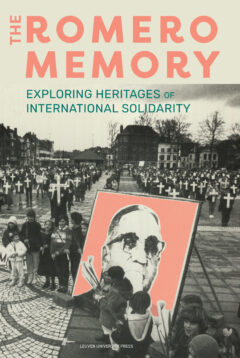 The Romero Memory
Judith Gruber (Editor), Jonas Van Mulder (Editor), Stephan Parmentier (Editor), Veerle Draulans (Editor), Joren Janssens (Editor), Jacques Haers (Editor), Kim Christiaens (Editor),
November 2026

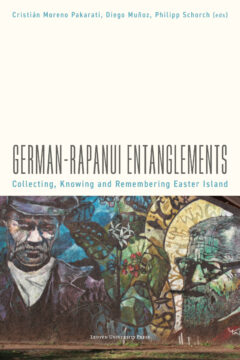 German–Rapanui Entanglements
Cristián Moreno Pakarati (Editor), Diego Muñoz (Editor), Philipp Schorch (Editor),
August 2026
 Cinema in Post-War Belgium
Gertjan Willems (Editor), Bjorn Gabriels (Editor), Bénédicte Rochet (Editor),
May 2026
 Performing Magnetism
Eleonora Paklons (Editor), Kristof Smeyers (Editor), Kurt Vanhoutte (Editor), Hannah Welslau (Editor),
May 2026
 Christian Democracy and the Fall of Communism
Michael Gehler (Editor), Piotr H. Kosicki (Editor), Helmut Wohnout (Editor),
April 2026
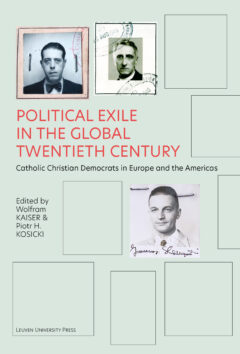 Political Exile in the Global Twentieth Century
Wolfram Kaiser (Editor), Piotr H. Kosicki (Editor),
April 2026
 Cartographies of Catastrophes
Laura Demeter (Editor), Carmen M. Enss (Editor), Piotr Kisiel (Editor), Carol Ludwig (Editor),
February 2026