Exploring women’s stories of work, protest, and power in the medieval Low Countries
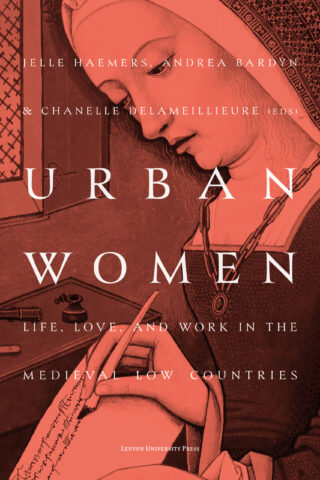
The Middle Ages—a time often cast as a dark period when violence reigned and men dominated society. Women, as the deeply rooted cliché would have it, played scarcely any part. But this book tells a different story, one in which women step forward as the main characters. In the southern Low Countries, townswomen held substantial rights, which they used to conduct business, voice their opinions, and assert their will.
Urban Women presents a different and lesser-known image of the late Middle Ages, from 1250 to 1550. The authors trace the lives of women protesting, marrying, making love, working, and engaging in the daily life of Low Countries towns. In doing so, this book gives voice to wealthy businesswomen, laborers, religious women, criminals, and sex workers, spotlighting the remarkable figures who shaped a “women’s town” within a man’s world.
Acknowledgements
Introduction. A different history of the medieval city
Chapter 1. From girlhood to widowhood: On the rights of women and children
Andrea Bardyn & Jelle Haemers
Chapter 2. Women and marriage: Choice of partner, matrimonial conflicts, and relations
Chanelle Delameillieure
Chapter 3. Industrious women and their life in business
Andrea Bardyn
Chapter 4. Pious women: Beguines and their virtuous lives together
Kim Overlaet
Chapter 5. Working women: women’s professional activities in and outside craft guilds
Nena Vandeweerdt & Jelle Haemers
Chapter 6. “Bad women”: Violence, crime, and rebellion
Jelle Haemers
Chapter 7. Eros and women: Sexuality, consent, and prostitution
Chanelle Delameillieure & Jelle Haemers
Conclusions. Of “wise women” and “witless men”
Primary sources
Literature
About the authors
As sociologist Alison Woodward aptly observed, ‘everyone is anonymous in a town, except for a woman. She is always seen, always treated as…a woman’. Historical analysis can therefore illuminate how this complex relationship between women and urban life emerged and evolved over time. It is precisely in this regard that the volume under review makes a valuable contribution. - Lisa Demets, Journal of Medieval History, 52(1), 150–152. https://doi.org/10.1080/03044181.2026.2613226
Depuis plusieurs décennies, l’histoire des femmes au Moyen Âge connaît un essor considérable. Si ces recherches ont permis de réévaluer leur place dans la société médiévale, elles se sont longtemps concentrées sur les figures les plus en vue – reines, duchesses ou saintes – dont les trajectoires exceptionnelles reflètent des expériences marginales plutôt que représentatives. L’ouvrage recensé s’inscrit dans la continuité de cet intérêt, mais en renouvelle les perspectives. Son ambition est claire : déplacer le regard vers les oubliées de l’historiographie. Les femmes qui y sont étudiées appartiennent à un entre-deux social : ni nobles, ni issues des couches les plus modestes, elles bénéficiaient d’une certaine aisance et d’un petit prestige qui leur permettaient de vivre – et de faire vivre les villes dans lesquelles elles évoluaient. - Ninon Gavage, Moyen Âge, 131 (2025/3-4), https://shs.cairn.info/revue-le-moyen-age-2025-3-page-1101?lang=fr
Frequently Asked Questions
What is "Urban Women" about?
Exploring women's stories of work, protest, and power in the medieval Low Countries
The Middle Ages—a time often cast as a dark period when violence reigned and men dominated society. Women, as the deeply rooted cliché would have it, played scarcely any part. But this book tells a different story, one in which women step forward as the main characters. In the southern Low Countries, townswomen held substantial rights, which they used to conduct business, voice their opinions, and assert their will.
Urban Women presents a different and lesser-known image of the late Middle Ages, from 1250 to 1550. The authors trace the lives of women protesting, marrying, making love, working, and engaging in the daily life of Low Countries towns. In doing so, this book gives voice to wealthy businesswomen, laborers, religious women, criminals, and sex workers, spotlighting the remarkable figures who shaped a “women’s town” within a man’s world.
Who wrote "Urban Women"?
"Urban Women" was written by Kim Overlaet and Nena Vandeweerdt.
Nena Vandeweerdt is a postdoctoral researcher who studies gendered socioeconomic interactions in late medieval and early modern towns. She holds a PhD in History from the KU Leuven and the University of Cantabria. Her work focuses on urban labor markets, everyday life, and the use of digital humanities in historical research.
Who edited "Urban Women"?
"Urban Women" was edited by Jelle Haemers, Andrea Bardyn and Chanelle Delameillieure.
Jelle Haemers is professor of Medieval History at KU Leuven. His research focuses on the social history of the Middle Ages and the urban history of the Low Countries.
Andrea Bardyn (PhD) studies inequalities between men and women in the medieval economy and marital power relations.
Chanelle Delameillieure is lecturer in Medieval History at KU Leuven-KULAK. Her expertise and research focus are on the social and cultural history of the late medieval Low Countries.
What is the Table of Contents for "Urban Women"?
Acknowledgements
Introduction. A different history of the medieval city
Chapter 1. From girlhood to widowhood: On the rights of women and children
Andrea Bardyn & Jelle Haemers
Chapter 2. Women and marriage: Choice of partner, matrimonial conflicts, and relations
Chanelle Delameillieure
Chapter 3. Industrious women and their life in business
Andrea Bardyn
Chapter 4. Pious women: Beguines and their virtuous lives together
Kim Overlaet
Chapter 5. Working women: women’s professional activities in and outside craft guilds
Nena Vandeweerdt & Jelle Haemers
Chapter 6. “Bad women”: Violence, crime, and rebellion
Jelle Haemers
Chapter 7. Eros and women: Sexuality, consent, and prostitution
Chanelle Delameillieure & Jelle Haemers
Conclusions. Of “wise women” and “witless men”
Primary sources
Literature
About the authors
What is the DOI for "Urban Women"?
The Digital Object Identifier (DOI) for "Urban Women" is 10.11116/9789461666369.
Related titles
 Margarete Schütte-Lihotzky and the Architecture of Collective Dissidence, 1918–1989
S.E. Eisterer (Author),
April 2027
 Orality and Scribal Culture in the High Middle Ages
Timothy B. Noone (Author), Mark J. Clark (Author),
November 2026
 Infrastructuring Arrival
Karel Arnaut (Editor), Luce Beeckmans (Editor), Bruno Meeus (Editor),
November 2026

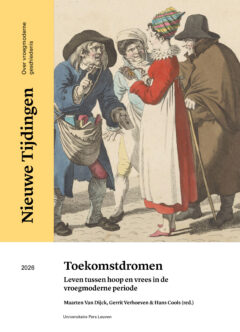 Toekomstdromen
Maarten Van Dijck (Editor), Gerrit Verhoeven (Editor), Hans Cools (Editor),
November 2026
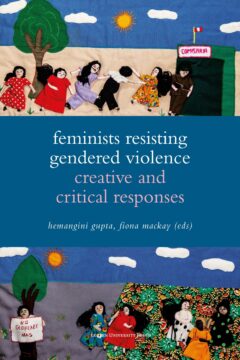 Feminists Resisting Gendered Violence
Hemangini Gupta (Editor), Fiona Mackay (Editor), Jan Breckenridge (Editor), Louise Chappell (Editor), Rachna Mehra (Editor), Rukmini Sen (Editor), Mailin Suchting (Editor),
October 2026
 A City in Practice
Aude Tournaye (Editor), Filip De Boeck (Editor), Picha Collective (Editor),
September 2026
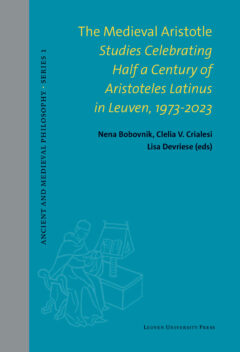 The Medieval Aristotle
Nena Bobovnik (Editor), Clelia V. Crialesi (Editor), Lisa Devriese (Editor),
August 2026
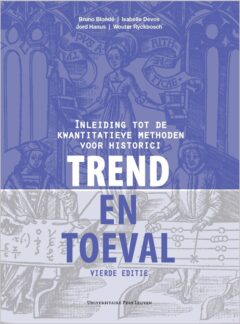 Trend en toeval – vierde editie
Bruno Blondé (Author), Isabelle Devos (Author), Jord Hanus (Author), Wouter Ryckbosch (Author),
August 2026
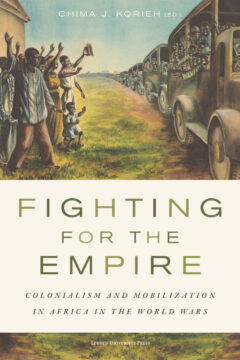
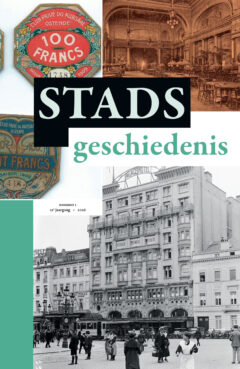
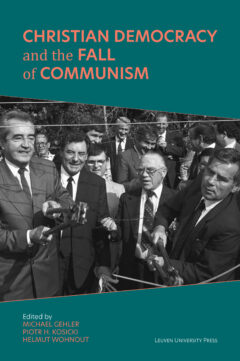 Christian Democracy and the Fall of Communism
Michael Gehler (Editor), Piotr H. Kosicki (Editor), Helmut Wohnout (Editor),
April 2026
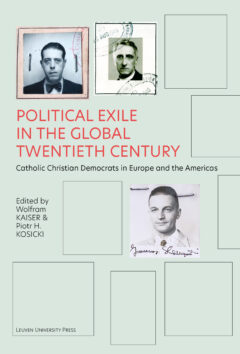 Political Exile in the Global Twentieth Century
Wolfram Kaiser (Editor), Piotr H. Kosicki (Editor),
April 2026
 Brusselse plaatsnamen
Iadine Degryse (Editor), Benjamin Wayens (Editor), Chantal Kesteloot (Editor), Dennis De Vriese (Editor), Matthijs Degraeve (Editor),
April 2026