A Violent History
Power and Conflict in the Congo Basin from the Nineteenth Century to the Present
Giacomo Macola (Author),
Category: African Studies, History, History 1800-present, Postcolonial Studies
Language: English
ISBN: 9789462704510
Publication date: September 3, 2025
€42.00 (including 6% VAT)
Buy NowNumber of pages: 272
Size: 234 x 156 x 13 mm

Stock item: 167102
Standard delivery time for print books:
For Belgium: 5 to 8 working days
For EU: 2 to 3 weeks
For other countries: 4 to 5 weeks
Category: African Studies, History, History 1800-present, Postcolonial Studies
Language: English
ISBN: 9789461666260
Publication date: September 3, 2025
€36.00 (including 6% VAT)
Buy NowNumber of pages: 272
Category: African Studies, History, History 1800-present, Postcolonial Studies
Language: English
ISBN: 9789461666253
Publication date: September 3, 2025
€36.00 (including 6% VAT)
Buy NowNumber of pages: 272
The first long-durée history of large-scale violence in the Congo Basin
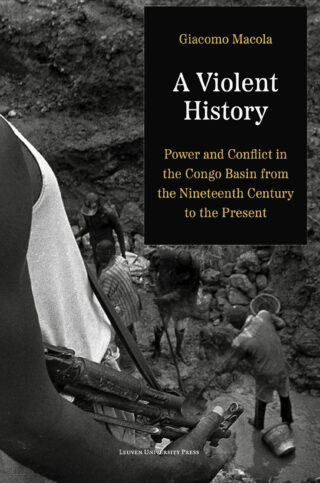
Since the early nineteenth century, political and military violence has played an exceptionally significant role in the territory corresponding to the present-day Democratic Republic of Congo. By emphasising the periodic re-occurrence of “warlordism” and the economy of plunder that characterises it, Giacomo Macola offers new analytical tools to interpret the history of the societies of the Congo Basin over the past two hundred years. In the concluding chapters, the author dwells on more recent events, detailing the collapse of Mobutu’s Zaire, the “Great African War” and the reasons for the continuing armed instability in the east of the country. Supplementing analyses of the contemporary dimension of African conflicts, Macola makes a case for the enduring importance of studying precolonial history.
This book will be made open access within three years of publication thanks to Path to Open, a program developed in partnership between JSTOR, the American Council of Learned Societies (ACLS), University of Michigan Press, and The University of North Carolina Press to bring about equitable access and impact for the entire scholarly community, including authors, researchers, libraries, and university presses around the world. Learn more at https://about.jstor.org/path-to-open/
Maps
Abbreviations
Preface to the English Edition
Acknowledgements
Introduction
Chapter 1. The “Ancien Régime”
1.1 The “equatorial tradition”
1.2 The Luba kingdom
1.3 The Lunda “commonwealth”
Chapter 2. Traders, Raiders and Warlords in the Nineteenth Century
2.1 Long-distance trade networks
2.2 Msiri’s warlord state
2.3 Tippu Tip and the Arab-Swahili of eastern Congo
Chapter 3. The État Indépendant du Congo and the Occupation of the Congo Basin
3.1 The “système domanial”
3.2 The Force Publique
3.3 Van Kerckhoven, the Congo–Arab War and Ngongo Luteta
3.4 Mukanda Bantu and Clément Brasseur
Chapter 4. “Red Rubber”
4.1 The rubber companies
4.2 “Collaborators”: from the waungwana to Lupaka
4.3 A genocide in Congo?
4.4 The Congo reform movement
Chapter 5. The Belgian Congo
5.1 Administrative structures
5.2 The mining sector
5.3 Forced crops and forced labour
5.4 The Pende revolt and the “weapons of the weak”
5.5 The “creation of tribalism”
5.6 Belgian paternalism
Chapter 6. Decolonisation and Secession
6.1 A “precipitous decolonisation”
6.2 The secession of Katanga between neo-colonialism and the Cold War
6.3 The Katangese ideology
6.4 The return of warlordism
Chapter 7. The Rebellions of 1963–1965
7.1 From Pierre Mulele to the Simba
7.2 Internal weaknesses
7.3 Western intervention
Chapter 8. Mobutu’s Kleptocracy
8.1 “Mobutism”, “neo-patrimonialism” and “clientelism”
8.2 E economic and military crisis
8.3 Mobutu and the Cold War
8.4 The failure of the democratic transition
8.5 The collapse of the state and the new warlords
Chapter 9. The Congo and the “Great African War”
9.1 The repercussions of the Rwandan genocide and the “First Congo War”
9.2 Mzee Kabila’s Congo
9.3 The “Second Congo War”
9.4 The war economy
9.5 Military fragmentation and Mayi-Mayi
Epilogue. An Uneasy Present
Notes
Bibliography
Archives
Published primary sources
Secondary sources
Index
Giacomo Macola fills a gap in scholarly literature on Central Africa: linking pre-colonial, colonial and the present times, he unravels the long-term mechanisms producing (extreme) violence in this troubled region. - Guy Vanthemsche, Vrije Universiteit Brussel
'A Violent History' compellingly employs warlordism as an analytical tool to study the history of the Congo Basin over the last 150 years. With this book, Macola shows that the study of the precolonial period is crucial for a full understanding of later developments, including contemporary dynamics. A must read for all historians working on the region and on conflicts in Africa. - Karin Pallaver, University of Bologna
Macola's book represents a fundamental contribution to the understanding of the continuities that characterise the power dynamics in the Congo Basin and that have made it, for over two centuries, one of the most violent areas in the world. - Luca Jourdan, University of Bologna
Originally published in 2021 under the title 'Una storia violenta: Potere e conflitti nel bacino del Congo (XVIII–XXI secolo)', this book confirms Giacomo Macola’s sustained interest in the political and military history of Central Africa. Macola offers an ambitious analysis of violence in the Congo Basin over two centuries, mobilising two key concepts: “warlordism” as a recurrent phenomenon and “economy of plunder” as a structuring logic. These analytical tools aim to shed new light on the history and society of the Congo Basin. - Simplice Ayangma Bonoho, Canadian Journal of African Studies / Revue Canadienne Des Études Africaines, February, 1–2, https://doi.org/10.1080/00083968.2026.2617697
Letztlich bietet Giacomo Macolas Buch »A Violent History« Studierenden, Nachwuchswissenschaftlern und historisch Interessierten eine gute Möglichkeit, sich einen ersten Überblick über die langjährige Konfliktgeschichte der DR Kongo zu verschaffen; aufgrund der jüngsten Konfliktdynamik, in der die M23-Rebellen als eine von mehreren Dutzend nicht-staatlichen kongolesischen Gewaltakteuren Anfang 2025 vermutlich mit ruandischer Unterstützung weite Teile des Ostkongo unter ihre Kontrolle brachten und eine parallele Administration etablierten, ist die Thematik aktueller denn je. Die Lektüre regt ferner dazu an, sich detaillierter mit den unterschiedlichen Facetten dieser – fortwährenden – Konfliktgeschichte zu beschäftigen, die für Prozesse und Strukturen – insbesondere Ausbeutung von Rohstoffen für die Produktion modernster Technologien in Asien, Nordamerika und Westeuropa – weit über diese Region hinaus von Relevanz sind. - Torsten Konopka, Militaergeschichtliche Zeitschrift, vol. 85, no. 1, 2026, pp. 200-203. https://doi.org/10.1515/mgzs-2026-0017
Frequently Asked Questions
What is "A Violent History" about?
The first long-durée history of large-scale violence in the Congo Basin
Since the early nineteenth century, political and military violence has played an exceptionally significant role in the territory corresponding to the present-day Democratic Republic of Congo. By emphasising the periodic re-occurrence of “warlordism” and the economy of plunder that characterises it, Giacomo Macola offers new analytical tools to interpret the history of the societies of the Congo Basin over the past two hundred years. In the concluding chapters, the author dwells on more recent events, detailing the collapse of Mobutu’s Zaire, the “Great African War” and the reasons for the continuing armed instability in the east of the country. Supplementing analyses of the contemporary dimension of African conflicts, Macola makes a case for the enduring importance of studying precolonial history.
This book will be made open access within three years of publication thanks to Path to Open, a program developed in partnership between JSTOR, the American Council of Learned Societies (ACLS), University of Michigan Press, and The University of North Carolina Press to bring about equitable access and impact for the entire scholarly community, including authors, researchers, libraries, and university presses around the world. Learn more at https://about.jstor.org/path-to-open/
Who wrote "A Violent History"?
"A Violent History" was written by Giacomo Macola.
Giacomo Macola is Associate Professor of African History at “La Sapienza” University of Rome. He is a corresponding member of the Académie Royale des Sciences d’Outre-Mer.
What is the Table of Contents for "A Violent History"?
Maps
Abbreviations
Preface to the English Edition
Acknowledgements
Introduction
Chapter 1. The “Ancien Régime”
1.1 The “equatorial tradition”
1.2 The Luba kingdom
1.3 The Lunda “commonwealth”
Chapter 2. Traders, Raiders and Warlords in the Nineteenth Century
2.1 Long-distance trade networks
2.2 Msiri’s warlord state
2.3 Tippu Tip and the Arab-Swahili of eastern Congo
Chapter 3. The État Indépendant du Congo and the Occupation of the Congo Basin
3.1 The “système domanial”
3.2 The Force Publique
3.3 Van Kerckhoven, the Congo–Arab War and Ngongo Luteta
3.4 Mukanda Bantu and Clément Brasseur
Chapter 4. “Red Rubber”
4.1 The rubber companies
4.2 “Collaborators”: from the waungwana to Lupaka
4.3 A genocide in Congo?
4.4 The Congo reform movement
Chapter 5. The Belgian Congo
5.1 Administrative structures
5.2 The mining sector
5.3 Forced crops and forced labour
5.4 The Pende revolt and the “weapons of the weak”
5.5 The “creation of tribalism”
5.6 Belgian paternalism
Chapter 6. Decolonisation and Secession
6.1 A “precipitous decolonisation”
6.2 The secession of Katanga between neo-colonialism and the Cold War
6.3 The Katangese ideology
6.4 The return of warlordism
Chapter 7. The Rebellions of 1963–1965
7.1 From Pierre Mulele to the Simba
7.2 Internal weaknesses
7.3 Western intervention
Chapter 8. Mobutu’s Kleptocracy
8.1 “Mobutism”, “neo-patrimonialism” and “clientelism”
8.2 E economic and military crisis
8.3 Mobutu and the Cold War
8.4 The failure of the democratic transition
8.5 The collapse of the state and the new warlords
Chapter 9. The Congo and the “Great African War”
9.1 The repercussions of the Rwandan genocide and the “First Congo War”
9.2 Mzee Kabila’s Congo
9.3 The “Second Congo War”
9.4 The war economy
9.5 Military fragmentation and Mayi-Mayi
Epilogue. An Uneasy Present
Notes
Bibliography
Archives
Published primary sources
Secondary sources
Index
Related titles
 Margarete Schütte-Lihotzky and the Architecture of Collective Dissidence, 1918–1989
S.E. Eisterer (Author),
April 2027
 Toekomstdromen
Maarten Van Dijck (Editor), Gerrit Verhoeven (Editor), Hans Cools (Editor),
November 2026
 A City in Practice
Aude Tournaye (Editor), Filip De Boeck (Editor), Picha Collective (Editor),
September 2026

 German–Rapanui Entanglements
Cristián Moreno Pakarati (Editor), Diego Muñoz (Editor), Philipp Schorch (Editor),
August 2026
 Trend en toeval – vierde editie
Bruno Blondé (Author), Isabelle Devos (Author), Jord Hanus (Author), Wouter Ryckbosch (Author),
August 2026
 Cinema in Post-War Belgium
Gertjan Willems (Editor), Bjorn Gabriels (Editor), Bénédicte Rochet (Editor),
May 2026
 Performing Magnetism
Eleonora Paklons (Editor), Kristof Smeyers (Editor), Kurt Vanhoutte (Editor), Hannah Welslau (Editor),
May 2026
 Christian Democracy and the Fall of Communism
Michael Gehler (Editor), Piotr H. Kosicki (Editor), Helmut Wohnout (Editor),
April 2026
 Jean Katambayi Mukendi
Johannes Muselaers (Editor), Stéphane Symons (Editor), Anne-Claire Schmitz (Editor), Emma Enderby (Editor),
April 2026
 Political Exile in the Global Twentieth Century
Wolfram Kaiser (Editor), Piotr H. Kosicki (Editor),
April 2026
 Brusselse plaatsnamen
Iadine Degryse (Editor), Benjamin Wayens (Editor), Chantal Kesteloot (Editor), Dennis De Vriese (Editor), Matthijs Degraeve (Editor),
April 2026