


Off-Center
Architectures of Russian and Soviet Imperialism
Da Hyung Jeong (Editor), Markus Lähteenmäki (Editor),

Category: Architecture and Urban Planning, Asian Studies, Postcolonial Studies
Language: English
ISBN: 9789462705562
Publication date: January 20, 2027
€65.00 (including 6% VAT)
COMING SOON
Available to pre-order two weeks before date of publication.
Number of pages: 470
Size: 234 x 156 x mm
Illustrations and other content description:
Illustrated, 60 pages in colour

Funded by: Swiss National Science Foundation
Open Book Collective
Standard delivery time for print books:
For Belgium: 5 to 8 working days
For EU: 2 to 3 weeks
For other countries: 4 to 5 weeks
Category: Architecture and Urban Planning, Asian Studies, Postcolonial Studies
Language: English
ISBN: 9789461668257
Publication date: January 20, 2027
COMING SOON
Number of pages: 470
Illustrations and other content description:
Illustrated, 60 pages in colour
Funded by: Swiss National Science Foundation
Open Book Collective
Category: Architecture and Urban Planning, Asian Studies, Postcolonial Studies
Language: English
ISBN: 9789461668240
Publication date: January 20, 2027
COMING SOON
Number of pages: 470
Illustrations and other content description:
Illustrated, 60 pages in colour
Funded by: Swiss National Science Foundation
Open Book Collective
How architecture and built environments shaped Russian and Soviet imperial power and its lasting legacies.
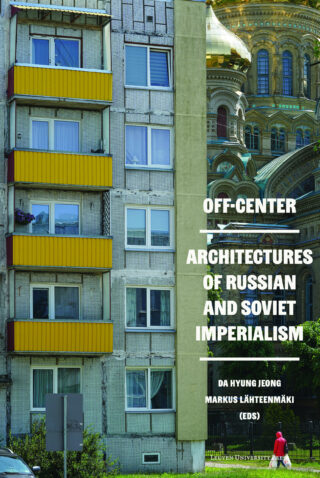
Empire leaves traces in the places people live, work and move through every day. As Russia’s war against Ukraine has returned questions of Russian imperialism to the center of public debate, Off-Center offers the historical background needed to understand the present moment. The book tells the story of Russian and Soviet empire-building through the buildings, streets, settlements and landscapes that made and make imperial rule possible. From Helsinki’s military-engineered urban landscape and Kyiv’s contested religious architecture to the industrialized valleys of Central Asia and model Soviet towns in Uzbekistan, its chapters show how imperial power was built into everyday environments across a vast territory. Instead of focusing on capitals and rulers, it turns to the borderlands and outer regions of the empire, bringing overlooked places and everyday spaces into view. Looking at empire through the built environment reveals how power took shape not only in politics and war, but also in the organization of daily life and the spaces people inhabited. Original, timely and wide-ranging, Off-Center opens a new way of thinking about empire and the worlds it created.
Da Hyung Jeong
Da Hyung Jeong is a historian of post-1945 global architecture and Assistant Professor of Art History at Pennsylvania State University, University Park.
Markus Lähteenmäki
Markus Lähteenmäki is a historian and curator of architecture. He is a postdoctoral researcher at the University of Helsinki and serves as Editor-in-Chief of 'Architectural Histories'.
Maria Taroutina
Andreas Schönle
Ecem Sarıçayır
Nino Chincharauli
Radu Remus Macovei
Alla Vronskaya
Dmitrij Zadorin
Richard Anderson
Marcela Hanáčkova
Kaja Schelker
Ingrid Dobloug Roede
Netta Böök
Nikolai Erofeev
Michał Murawski
Da Hyung Jeong
Markus Lähteenmäki
Off-Center is a vital intervention in the study of Russian, Soviet, and post-Soviet imperialism. - Katherine Zubovich, University at Buffalo SUNY
An incisive and original rethinking of Russian and Soviet empire through the spaces that built it. By shifting the focus to “off center” architectures and everyday spatial regimes, this volume reveals how power was made, staged, and lived. Bold, timely, and methodologically innovative — a book that will reshape how we understand imperial worlds. - Svitlana Shlipchenko, National Academy of Sciences of Ukraine / Kyiv School of Economics
Frequently Asked Questions
What is "Off-Center" about?
How architecture and built environments shaped Russian and Soviet imperial power and its lasting legacies.
Empire leaves traces in the places people live, work and move through every day. As Russia’s war against Ukraine has returned questions of Russian imperialism to the center of public debate, Off-Center offers the historical background needed to understand the present moment. The book tells the story of Russian and Soviet empire-building through the buildings, streets, settlements and landscapes that made and make imperial rule possible. From Helsinki’s military-engineered urban landscape and Kyiv’s contested religious architecture to the industrialized valleys of Central Asia and model Soviet towns in Uzbekistan, its chapters show how imperial power was built into everyday environments across a vast territory. Instead of focusing on capitals and rulers, it turns to the borderlands and outer regions of the empire, bringing overlooked places and everyday spaces into view. Looking at empire through the built environment reveals how power took shape not only in politics and war, but also in the organization of daily life and the spaces people inhabited. Original, timely and wide-ranging, Off-Center opens a new way of thinking about empire and the worlds it created.
Who wrote "Off-Center"?
"Off-Center" was written by Maria Taroutina, Andreas Schönle, Ecem Sarıçayır, Nino Chincharauli, Radu Remus Macovei, Alla Vronskaya, Dmitrij Zadorin, Richard Anderson, Marcela Hanáčkova, Kaja Schelker, Ingrid Dobloug Roede, Netta Böök, Nikolai Erofeev and Michał Murawski.
Who edited "Off-Center"?
"Off-Center" was edited by Da Hyung Jeong and Markus Lähteenmäki.
Da Hyung Jeong is a historian of post-1945 global architecture and Assistant Professor of Art History at Pennsylvania State University, University Park.
Markus Lähteenmäki is a historian and curator of architecture. He is a postdoctoral researcher at the University of Helsinki and serves as Editor-in-Chief of 'Architectural Histories'.
Is "Off-Center" available Open Access?
Yes, "Off-Center" is published Open Access. It is available under a BY-NC-ND license.
Who funded the publication of "Off-Center"?
Publication of "Off-Center" was funded by Swiss National Science Foundation
Open Book Collective
.
What is the DOI for "Off-Center"?
The Digital Object Identifier (DOI) for "Off-Center" is 10.11116/9789461668257.
Related titles
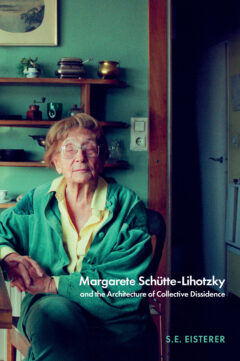 Margarete Schütte-Lihotzky and the Architecture of Collective Dissidence, 1918–1989
S.E. Eisterer (Author),
April 2027
 Collective Trauma and Future Fantasies
Raika Khorshidian (Editor), Birgit Mersmann (Editor), Cathrine Bublatzky (Editor), Julia Stenzel (Editor),
November 2026
 Infrastructuring Arrival
Karel Arnaut (Editor), Luce Beeckmans (Editor), Bruno Meeus (Editor),
November 2026
 German–Rapanui Entanglements
Cristián Moreno Pakarati (Editor), Diego Muñoz (Editor), Philipp Schorch (Editor),
August 2026
 Cartographies of Catastrophes
Laura Demeter (Editor), Carmen M. Enss (Editor), Piotr Kisiel (Editor), Carol Ludwig (Editor),
February 2026
 Comics and the Global South
Andrea Aramburú (Editor), Dibyadyuti Roy (Editor), Joe Sutliff Sanders (Editor),
February 2026
 Architecture & Feminist Critical Theory
Hilde Heynen (Author), Lucía C. Pérez-Moreno (Editor),
November 2025
 Interculturaliteit en de geesteswetenschappen – tweede, herziene editie
Idesbald Goddeeris (Editor), Nadia Lie (Editor), Stefania Marzo (Editor),
September 2025
 Integration Otherwise Inspiration Kit
Luce Beeckmans (Author), Dounia Salamé (Author), Martina Bovo (Author), Mary Hogan (Author),
June 2025
 Violence and Trauma in Contemporary Performance
Sofie de Smet (Editor), Marieke Breyne (Editor), Pedzisai Maedza (Editor), Christel Stalpaert (Editor),
May 2025
 Textures of Power
Florence Bernault (Editor), Benoît Henriet (Editor), Emery Kalema (Editor),
May 2025