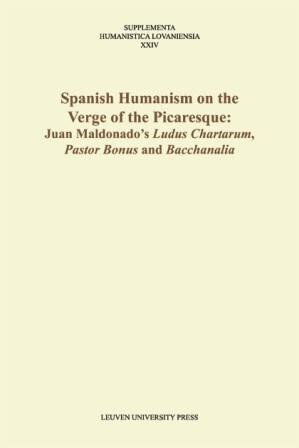
The 16th-century humanist Juan Maldonado in his Latin essays foreshadows the Spanish picaresque. Like Erasmus, with whom he corresponded,Maldonado advocated the use of Latin in a wide-range of activities. Maldonado’s Pastor Bonus, a lengthy open letter to a bishop, reviews in a vivid and satirical style the abuses of the churchmen in his diocese. His ludus chartarum is framed as a colloquium similar to Vives’ on the subject, entertaining while teaching a Latin terminology for card playing. His Bacchanalia, written for student actors, is a spirited play pitting the forces of Lent against those of Bacchus, as in the Libro de buen amor. These works have been edited and translated into English by Warren Smith and Clark Colahan for the first time, with illustrations of scenes from each work, and of 16th-century cards, by Richard Simmons and Caleb Smith.
1. General Introduction to Maldonado’s Life and Works
2. Ludus Chartarum Triumphus: Introduction
3. Ludus: Latin text
4. Ludus: translation
5. Introduction to Pastor Bonus
6. Pastor Bonus: Latin text
7. The Good Shepherd: Translation
8. Juan Maldonado’s Bacchanalia: Latin Text
9. Juan Maldonado’s Bacchanalia: Translation
10. Works Cited
Spanish Humanism on the Verge of the Picaresque is a good example of how Neo-Latin scholars can render important sources accessible to colleagues with limited Latin. Though Spanish is left untranslated, Latin is studiously Englished everywhere, including the introductory material. Pastor Bonus in particular merits even broader circulation, assuming a refinement of the translation. Social and ecclesiastical historians, students of picaresque, and specialists in early sixteenthcentury humanism will find enlightenment nicely salted by macabre diversion in Smith and Colahan's valuable contribution.
Renaissance Quarterly, issue 63.3, Edward V. George, Texas Tech University, Emeritus
Frequently Asked Questions
What is "Spanish Humanism on the Verge of the Picaresque" about?
The 16th-century humanist Juan Maldonado in his Latin essays foreshadows the Spanish picaresque. Like Erasmus, with whom he corresponded,Maldonado advocated the use of Latin in a wide-range of activities. Maldonado’s Pastor Bonus, a lengthy open letter to a bishop, reviews in a vivid and satirical style the abuses of the churchmen in his diocese. His ludus chartarum is framed as a colloquium similar to Vives’ on the subject, entertaining while teaching a Latin terminology for card playing. His Bacchanalia, written for student actors, is a spirited play pitting the forces of Lent against those of Bacchus, as in the Libro de buen amor. These works have been edited and translated into English by Warren Smith and Clark Colahan for the first time, with illustrations of scenes from each work, and of 16th-century cards, by Richard Simmons and Caleb Smith.
Who edited "Spanish Humanism on the Verge of the Picaresque"?
"Spanish Humanism on the Verge of the Picaresque" was edited by Warren Smith and C. Clark.
Warren S. Smith is Professor of Classical Languages at the University of New Mexico, USA.
Clark Colahan is Anderson Professor of Humanities and Professor of Spanish at Whitman College, USA.
Is "Spanish Humanism on the Verge of the Picaresque" part of a series?
Yes, "Spanish Humanism on the Verge of the Picaresque" is part of the "Supplementa Humanistica Lovaniensia" series. It's book 24 in the series.
The volumes published before 2000 are free available online.
What is the Table of Contents for "Spanish Humanism on the Verge of the Picaresque"?
1. General Introduction to Maldonado's Life and Works
2. Ludus Chartarum Triumphus: Introduction
3. Ludus: Latin text
4. Ludus: translation
5. Introduction to Pastor Bonus
6. Pastor Bonus: Latin text
7. The Good Shepherd: Translation
8. Juan Maldonado's Bacchanalia: Latin Text
9. Juan Maldonado's Bacchanalia: Translation
10. Works Cited
Related titles
 Justus Lipsius, Monita et exempla politica / Political Admonitions and Examples
Jan Papy (Editor), Toon Van Houdt (Editor), Marijke Janssens (Editor),
May 2022
 Studies in the Latin Literature and Epigraphy of Italian Fascism
Han Lamers (Editor), Bettina Reitz-Joosse (Editor), Valerio Sanzotta (Editor),
June 2020
 Una lingua morta per letterature vive: il dibattito sul latino come lingua letteraria in età moderna e contemporanea
Valerio Sanzotta (Editor),
January 2020
 John Milton, Epistolarum Familiarium Liber Unus and Uncollected Letters
Estelle Haan (Editor),
October 2019
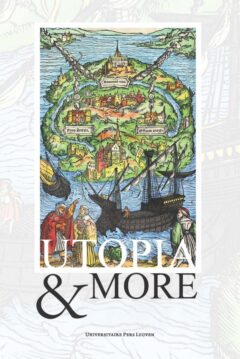 Utopia & More
Dirk Sacré (Editor), Erik De Bom (Editor), Demmy Verbeke (Editor), Gilbert Tournoy (Editor),
October 2016
 A New Sense of the Past: The Scholarship of Biondo Flavio (1392–1463)
Angelo Mazzocco (Editor), Marc Laureys (Editor),
May 2016
 Aulularia and other Inversions of Plautus
Michael Fontaine (), Joannes Burmeister (Author),
July 2015
 La correspondance de Guillaume Budé et Juan Luis Vives
Gilbert Tournoy (Editor), Monique Mund Dopchie (Editor),
June 2015
 Andreae Alciati Contra Vitam Monasticam Epistula – Andrea Alciato’s Letter Against Monastic Life
Dennis Drysdall (Author),
July 2014
 The Art of Arguing in the World of Renaissance Humanism
Marc Laureys (Editor), Roswitha Simons (Editor),
December 2013
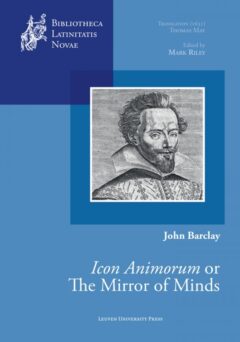 Icon Animorum or The Mirror of Minds
Mark Riley (Editor), John Barclay (Author), Thomas May (Translator),
November 2013
 Neo-Latin Commentaries and the Management of Knowledge in the Late Middle Ages and the Early Modern Period (1400 -1700)
Karl A.E. Enenkel (Editor), Henk Nellen (Editor),
July 2013
 De rationibus quibus homines docti artem Latine colloquendi et ex tempore dicendi saeculis XVI et XVII coluerunt
Terence Tunberg (Author),
March 2013
 The Early Modern Cultures of Neo-Latin Drama
Philip Ford (Editor), Andrew Taylor (Editor),
February 2013
 Scottish Latin Authors in Print up to 1700
Roger Green (Author), Philip Burton (Author), Deborah Ford (Author),
June 2012