


Icon Animorum or The Mirror of Minds
Mark Riley (Editor), John Barclay (Author), Thomas May (Translator),
Series: Bibliotheca Latinitatis Novae
Category: Neo-Latin Studies
Language: English
ISBN: 9789058679451
Publication date: November 6, 2013
€75.00 (including 6% VAT)
Buy NowNumber of pages: 380
Size: 240 x 170 x 30 mm

Stock item: 83405
Standard delivery time for print books:
For Belgium: 5 to 8 working days
For EU: 2 to 3 weeks
For other countries: 4 to 5 weeks
Series: Bibliotheca Latinitatis Novae
Category: Neo-Latin Studies
Language: English
ISBN: 9789461661395
Publication date: November 6, 2013
€56.00 (including 6% VAT)
Buy NowNumber of pages: 380
Original Latin text with English translation on facing pages. In this essay from 1614 the Neo-Latin poet, translator, and commentator John Barclay describes the manners and mores of his European contemporaries. He derives the sources of an individual’s peculiarities of behavior and temperament from the ‘genius’ – the individual character created by each person’s upbringing, time of life, and profession. Barclay likewise describes each nation’s genius, its national character, and provides some of the geographical and historical background from which he claims this genius arose. The essay is a valuable study, not only for the illustration it offers of a pre-Romantic view of Europe, but for a glimpse into the continuities that mark European civilization. The introduction describes the Classical and Renaissance background to Barclay’s work, with a detailed biography of the author. The Latin text reproduces Barclay’s first edition, with the necessary corrections. The English translation (1631) is that of Thomas May, a skillful translator of Vergil, Lucan, and other classical authors, as well as a playwright in the manner of Ben Jonson. The book features illustrations of selected pages from early editions of the text, and includes contemporary portraits of Barclay and May.
This publication is GPRC-labeled (Guaranteed Peer-Reviewed Content).
CONTENTS
List of Illustrations
Preface
Introduction
1 Introduction to John Barclay, Icon Animorum 1614
2 William Barclay
3 Life of John Barclay
4 Antecedents to the Icon Animorum
5 Barclay’s Latin
6 John Barclay’s Place in Literature
7 Thomas May and the English Translation
8 Outline of the Chapters of the Icon Animorum
9 Previous Editions of the Icon Animorum
10Translations
11 Principles of this Edition
Sigla 50
The Mirror of Minds or John Barclay’s Icon Animorum: Text and Translation
Caput I Aetates hominis quattuor: pueritia, adolescentia, aetas virilis, et senectus.
Caput II Saecula paene singula suum genium habere, diversumque a ceteris. Esse praeterea cuilibet regioni proprium spiritum qui animos in certa studia et mores quodammodo adigat. Hos spiritus investigari operae pretium esse
Caput III. Galliae dotes et ingenium incolarum
Caput IV. Britannicae Insulae, in quibus diversi populi, Angli, Scoti, Hiberni
Caput V.Germaniae ritus et Belgii, cui hodie Germaniae inferioris omen
Caput VI. Italia et Italorum indoles
Caput VII. Hispanorum genius, mores
Caput VIII. Hungari, Poloni, Mosci, gentes reliquae ad septentrionem positae
Caput IX. Turcae, Iudaei
Caput X. Praeter patriae indolem, dari cuique mortalium suos affectus atque ingenium. Praecipua investigari posse, non scribi omnia. De ingeniis ad subitos iocos aut sententias valentibus. De aliis qui spontanea eloquentia diffunduntur. De hominibus tardioris lentiorisque prudentiae. Perfectos demum esse qui inter haec duo genera sunt positi. Utrum sint
praestantiores animi qui litteris idonei, an qui administrandis rebus publicis. Delicata ingenia assiduo aut diuturno labori minus apta quam tarda et depressa
Caput XI. De fortibus animis; temerariis, timidis, superbis, sordidis, languidis et reconditis, hilaribus et exertis. De inconstantibus ingeniis, omnia acriter sed non diu volentibus
Caput XII. De animis amori obnoxiis. Hos affectus singulorum temperari et interdum mutari a fortuna et vel splendida vel obscura vitae condicione
Caput XIII. Diversos affectus esse tyrannorum et legitimorum principum. Rursus regum qui successionis iure et eorum qui suffragiis ad regnum perveniunt. De procerum, qui apud principes gratiosi sunt, ingenio
Caput XIV. De studiis Aulicorum. De diversis generibus et affectibus egenorum; itemque divitum
Caput XV. De Magistratibus. De causarum Patronis
Caput XVI. De divinarum scientiarum peritis, deque Praefectis Religionum
Bibliography
Appendices
Index
This is a nicely produced edition of an interesting text, supplemented by an English translation that has considerable literary merit in its own right. The series in which the 'Icon' appears, Bibliotheca Latinitatis novae, is not producing volumes at nearly the rate of, say, The I Tatti Renaissance Library, but I wish we could see more books from them. There are many worthwhile Neo-Latin texts in need of editing!
Craig Kallendorf, Texas A&M University, Neo-Latin News Vol.62
Mark Riley has successfully brought together a good standardized Latin text, a parallel English translation of range and ingenuity, and an erudite introduction. The inclusion of May's translation certainly sets it apart from other parallel Latin texts like Loeb and I Tatti (and this perhaps may disappoint some who wish to see the growth of a standardized Renaissance Latin Library like Loeb), but this edition provides the reader with the necessary tools to enjoy and appreciate the literature and its message (in Latin and/or English). The result should be warmly welcomed and enjoyed.
DAVID M. MCOMISH, University of Glasgow, Renaissance Quarterly 67.4 (Winter 2014)
In Summe bleibt von Rileys Edition der Eindruck eines gelungenen Beitrages zu einem bislang kaum beachteten Text, v.a. aber auch der Eindruck einer Edition, die einen Ansporn zu weiterführenden Auseinandersetzungen mit Barclays Icon Animorum gibt. Isabella Walser, Editionen in der Kritik, 2014
Frequently Asked Questions
What is "Icon Animorum or The Mirror of Minds" about?
Original Latin text with English translation on facing pages. In this essay from 1614 the Neo-Latin poet, translator, and commentator John Barclay describes the manners and mores of his European contemporaries. He derives the sources of an individual's peculiarities of behavior and temperament from the ‘genius' - the individual character created by each person's upbringing, time of life, and profession. Barclay likewise describes each nation's genius, its national character, and provides some of the geographical and historical background from which he claims this genius arose. The essay is a valuable study, not only for the illustration it offers of a pre-Romantic view of Europe, but for a glimpse into the continuities that mark European civilization. The introduction describes the Classical and Renaissance background to Barclay's work, with a detailed biography of the author. The Latin text reproduces Barclay's first edition, with the necessary corrections. The English translation (1631) is that of Thomas May, a skillful translator of Vergil, Lucan, and other classical authors, as well as a playwright in the manner of Ben Jonson. The book features illustrations of selected pages from early editions of the text, and includes contemporary portraits of Barclay and May.
This publication is GPRC-labeled (Guaranteed Peer-Reviewed Content).
Who wrote "Icon Animorum or The Mirror of Minds"?
"Icon Animorum or The Mirror of Minds" was written by John Barclay.
Who edited "Icon Animorum or The Mirror of Minds"?
"Icon Animorum or The Mirror of Minds" was edited by Mark Riley.
Mark Riley is Emeritus Professor of Classics at California State University, Sacramento. He has edited John Barclay's Argenis, as well as several other Neo-Latin texts.
Who translated "Icon Animorum or The Mirror of Minds"?
"Icon Animorum or The Mirror of Minds" was translated by Thomas May.
Is "Icon Animorum or The Mirror of Minds" part of a series?
Yes, "Icon Animorum or The Mirror of Minds" is part of the "Bibliotheca Latinitatis Novae" series.
The series Bibliotheca Latinitatis Novae, previously published by Van Gorcum, offers Latin literature from the later Renaissance and the Early Modern period. By combining each critical Latin text with an English translation, an historical introduction, and notes, Bibliotheca Latinitatis Novae makes texts accessible to specialists and general readers alike.

This series is available on standing order. To sign up for a subscription or for more information, please contact info@lup.be.
The volumes published before 2013 in the Bibliotheca Latinitatis Novae series have been reduced in price to € 25,00 only! Order online or email your order to info@lup.be.
Free backlist ebook available via Google Books
 Politica : six books of politics or political instruction
Justus Lipsius, Jan Hendrik Waszink
2004, Van Gorcum
DOWNLOAD >
Editorial Board
Jan Waszink (editor in chief), Historical Institute of the Polish Academy of Sciences, Warsaw
Christoph Pieper, Leiden University
Grażyna Urban-Godziek, Jagiellonian University Krakow
Dirk van Miert, Huygens Institute for History and Culture of the Netherlands and Utrecht University
Johanna Luggin, Universität Innsbruck
Elena Dahlberg, University of Skövde
Benjamin Plomp, Universität Basel
Advisory board
Maurizio Campanelli, Karl Enenkel, Marianne Pade, Dirk Sacré, Florian Schaffenrath
Proposals
Proposals and enquiries can be sent to Jan Waszink.
Please make use of the submission form to present your manuscript or proposal to our board.
Links & Resources
What is the Table of Contents for "Icon Animorum or The Mirror of Minds"?
CONTENTS
List of Illustrations
Preface
Introduction
1 Introduction to John Barclay, Icon Animorum 1614
2 William Barclay
3 Life of John Barclay
4 Antecedents to the Icon Animorum
5 Barclay's Latin
6 John Barclay's Place in Literature
7 Thomas May and the English Translation
8 Outline of the Chapters of the Icon Animorum
9 Previous Editions of the Icon Animorum
10Translations
11 Principles of this Edition
Sigla 50
The Mirror of Minds or John Barclay's Icon Animorum: Text and Translation
Caput I Aetates hominis quattuor: pueritia, adolescentia, aetas virilis, et senectus.
Caput II Saecula paene singula suum genium habere, diversumque a ceteris. Esse praeterea cuilibet regioni proprium spiritum qui animos in certa studia et mores quodammodo adigat. Hos spiritus investigari operae pretium esse
Caput III. Galliae dotes et ingenium incolarum
Caput IV. Britannicae Insulae, in quibus diversi populi, Angli, Scoti, Hiberni
Caput V.Germaniae ritus et Belgii, cui hodie Germaniae inferioris omen
Caput VI. Italia et Italorum indoles
Caput VII. Hispanorum genius, mores
Caput VIII. Hungari, Poloni, Mosci, gentes reliquae ad septentrionem positae
Caput IX. Turcae, Iudaei
Caput X. Praeter patriae indolem, dari cuique mortalium suos affectus atque ingenium. Praecipua investigari posse, non scribi omnia. De ingeniis ad subitos iocos aut sententias valentibus. De aliis qui spontanea eloquentia diffunduntur. De hominibus tardioris lentiorisque prudentiae. Perfectos demum esse qui inter haec duo genera sunt positi. Utrum sint
praestantiores animi qui litteris idonei, an qui administrandis rebus publicis. Delicata ingenia assiduo aut diuturno labori minus apta quam tarda et depressa
Caput XI. De fortibus animis; temerariis, timidis, superbis, sordidis, languidis et reconditis, hilaribus et exertis. De inconstantibus ingeniis, omnia acriter sed non diu volentibus
Caput XII. De animis amori obnoxiis. Hos affectus singulorum temperari et interdum mutari a fortuna et vel splendida vel obscura vitae condicione
Caput XIII. Diversos affectus esse tyrannorum et legitimorum principum. Rursus regum qui successionis iure et eorum qui suffragiis ad regnum perveniunt. De procerum, qui apud principes gratiosi sunt, ingenio
Caput XIV. De studiis Aulicorum. De diversis generibus et affectibus egenorum; itemque divitum
Caput XV. De Magistratibus. De causarum Patronis
Caput XVI. De divinarum scientiarum peritis, deque Praefectis Religionum
Bibliography
Appendices
Index
What is the DOI for "Icon Animorum or The Mirror of Minds"?
The Digital Object Identifier (DOI) for "Icon Animorum or The Mirror of Minds" is 10.11116/9789461661395.
Related titles

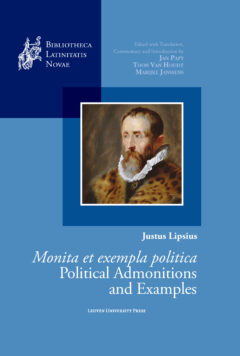 Justus Lipsius, Monita et exempla politica / Political Admonitions and Examples
Jan Papy (Editor), Toon Van Houdt (Editor), Marijke Janssens (Editor),
May 2022
 Studies in the Latin Literature and Epigraphy of Italian Fascism
Han Lamers (Editor), Bettina Reitz-Joosse (Editor), Valerio Sanzotta (Editor),
June 2020
 Una lingua morta per letterature vive: il dibattito sul latino come lingua letteraria in età moderna e contemporanea
Valerio Sanzotta (Editor),
January 2020
 John Milton, Epistolarum Familiarium Liber Unus and Uncollected Letters
Estelle Haan (Editor),
October 2019

 Utopia & More
Dirk Sacré (Editor), Erik De Bom (Editor), Demmy Verbeke (Editor), Gilbert Tournoy (Editor),
October 2016
 A New Sense of the Past: The Scholarship of Biondo Flavio (1392–1463)
Angelo Mazzocco (Editor), Marc Laureys (Editor),
May 2016

 Aulularia and other Inversions of Plautus
Michael Fontaine (), Joannes Burmeister (Author),
July 2015
 La correspondance de Guillaume Budé et Juan Luis Vives
Gilbert Tournoy (Editor), Monique Mund Dopchie (Editor),
June 2015

 Andreae Alciati Contra Vitam Monasticam Epistula – Andrea Alciato’s Letter Against Monastic Life
Dennis Drysdall (Author),
July 2014
 The Art of Arguing in the World of Renaissance Humanism
Marc Laureys (Editor), Roswitha Simons (Editor),
December 2013
 Neo-Latin Commentaries and the Management of Knowledge in the Late Middle Ages and the Early Modern Period (1400 -1700)
Karl A.E. Enenkel (Editor), Henk Nellen (Editor),
July 2013
 De rationibus quibus homines docti artem Latine colloquendi et ex tempore dicendi saeculis XVI et XVII coluerunt
Terence Tunberg (Author),
March 2013
 The Early Modern Cultures of Neo-Latin Drama
Philip Ford (Editor), Andrew Taylor (Editor),
February 2013
 Scottish Latin Authors in Print up to 1700
Roger Green (Author), Philip Burton (Author), Deborah Ford (Author),
June 2012

 Humanistica Lovaniensia, Volume VIII – 2009
Dirk Sacré (Editor), Jan Papy (Editor), Lambert Isebaert (Editor), Monique Mund Dopchie (Editor), Gilbert Tournoy (Editor),
December 2009