

Profound study of one of the most important genres within Humanist scholarship
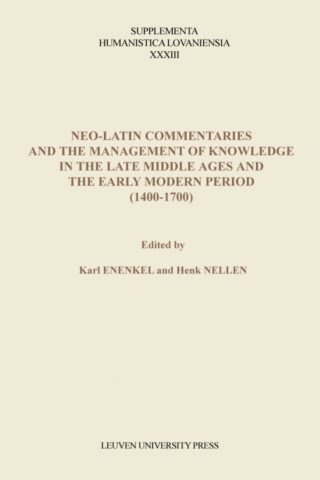
Between 1400 and 1700 the political, religious, intellectual, and even geographic landscape was profoundly changed by the Reformation, Humanism, the rise of empirical science, the invention of printing technology, and the discovery of the New World. The late medieval and early modern intellectuals felt an urgent need to respond to the changes they were involved in, and to come to a revision and re-authorisation of knowledge. They embarked on a scholarly programme of a quality and extent hitherto unknown in the Western world: the whole body of the literature of antiquity, including the Bible, was to be re-edited critically and furnished with commentaries. The Neo-Latin commentary became the most important genre of humanist scholarship. This book sheds light on the various ways in which classical authors and the Bible were commented on, the types of commentary, the commenting strategies that were used to approach different readerships, the various kinds of knowledge that were collected, created, and transmitted, and the usages and reading practices applied to commentaries.
Contributors
K. Enenkel (Westfälische Wilhelms-Universität, Münster), S. de Beer (Leiden University Centre for the Arts in Society), C. Kallendorf (Texas A&M University), C. Pieper (Leiden University Centre for the Arts in Society), M. Pade (Aarhus University), V. Berlincourt (Université de Genève), J. Bloemendal (Huygens Institute for the History of the Netherlands), V. Wels (Berlin), W. J. Zwalve (Institute for the Interdisciplinary Study of the Law, Leiden University), B. H. Stolte (University of Groningen), B. Roling (Institut für Griechische und Lateinische Philologie, Freie Universität Berlin), H. Nellen (Huygens Institute for the History of the Netherlands), J. Touber (Utrecht University)
List of Illustrations
Acknowledgements
Introduction
Neo-Latin Commentaries and the Management of Knowledge
1. The Neo-Latin Commentary (1400-1700): A Forgotten and Misunderstood Genre
2. The increased importance of the commentary and other paratexts in the early modern period
3. The commentary as an open genre. The early modern commentary’s tendency toward emancipation from the source text
4. The kaleidoscopic functions of the early modern commentary
a. The commentary as a means of authorization
b. The commentary as an educational tool at schools and universities
c. Early modern commentaries as encyclopedias of learning
d. Commentaries and textual criticism
e. Commentaries and the cultural history of antiquity (ars antiquitatis)
f. Political commentary
g. Commentaries as stimuli for social cohesion and as polemical platforms
h. Parafrasis as literary exercise
i. Manuscript annotations in printed books
5. The layout of the early modern commentary
6. Indexing
7. Related genres: variae lectiones, dictionarium (dictionary) and encyclopedia
8. The commentary in historical perspective
9. The present volume
96085_Enenkel&Nellen_vw.indd 5 10/06/13 13:10
I. Historical and geographical collections of knowledge
Karl Enenkel (Westfälische Wilhelms-Universität, Münster)
Kommentare als multivalente Wissenssammlungen: Das ‘Fürstenspiegel’-Kommentarwerk Antonio Beccadellis (De dictis et factis Alphonsi Regis Aragonum, 1455), Enea Silvio Piccolominis (1456) und Jakob Spiegels (1537)
Susanna de Beer (Leiden University)
The World Upside Down: The Geographical Revolution in Humanist Commentaries on Pliny’s Natural History and Mela’s De situ orbis (1450-1700)
II. Classical Poetry
Craig Kallendorf (Texas A&M University, College Station)
Virgil and the Ethical Commentary: Philosophy, Commonplaces, and the Structure of Renaissance Knowledge
Christoph Pieper (Leiden University)
Horatius praeceptor eloquentiae. The Ars Poetica in Cristoforo Landino’s Commentary
Marianne Pade (Aarhus University)
Niccolò Perotti’s Cornu copiae: The Commentary as a Repository of Knowledge
Valéry Berlincourt (Université de Genève)
‘Going beyond the Author’: Caspar von Barth’s Observations on the Art of Commentary-Writing and his Use of Exegetical
Digressions
III. Drama
Jan Bloemendal (Huygens Institute for the History of the Netherlands, The Hague)
In the Shadow of Donatus: Observations on Terence and Some of his Early Modern Commentators
Volkhard Wels (Berlin)
Contempt for Commentators: Transformation of the Commentary Tradition in Daniel Heinsius’ Constitutio tragoediae
IV. Law
Willem J. Zwalve (Leiden University)
Text & Commentary: The Legal Middle Ages and the Roman Law Tradition: Justinian’s Const. Omnem and its Medieval
Commentators
Bernard H. Stolte (University of Groningen)
Text and Commentary: Legal Humanism
V. Bible
Bernd Roling (Freie Universität Berlin)
Animalische Sprache und Intelligenz im Schriftkommentar: Bileams Esel in der Bibelkommentierung des Mittelalters und der Neuzeit
Henk Nellen (Huygens Institute for the History of the Netherlands, The Hague)
Bible Commentaries as a Platform for Polemical Debate: Abraham Calovius versus Hugo Grotius
Jetze Touber (Utrecht University)
Philology and Theology: Commenting the Old Testament in the Dutch Republic, 1650-1700
Notes on the Contributors
Index
Collectively, the essays show the commentary genre moving variously, in some cases reaching a saturation point of encyclopedic detail, in others, achieving a reverse commentary in undoing the work of past exegetes. The essays also show, on the one hand, commentaries virtually standing free (''scholars often avoided studying the source text in favor of the commentary'' [27]), on the other hand, as subservient to their source texts. Indeed, the great weight of an authoritative text thwarting the commentator's desire to emend is described in the articles on law by Willem Zwalve and Bernard Stolte. As the editors intended, here is a starting point for detailed study of an understudied genre. This substantive, if not comprehensive, collection is carefully edited and fully annotated, with an index nominum, and contains only a few printing errors (e.g., ''posses'' [253]; ''Bibla'' [452]).
DANIEL J. NODES, Baylor University, Renaissance Quarterly 67.4 (Winter 2014).
This collection amounts to a taxonomy of commentaries and may actually prove more useful than a theory would have been.
David Scott Wilson-Okamura, THE NEO-LATIN NEWS Vol. 63, Nos. 1&2
Frequently Asked Questions
What is "Neo-Latin Commentaries and the Management of Knowledge in the Late Middle Ages and the Early Modern Period (1400 -1700)" about?
Profound study of one of the most important genres within Humanist scholarship
Between 1400 and 1700 the political, religious, intellectual, and even geographic landscape was profoundly changed by the Reformation, Humanism, the rise of empirical science, the invention of printing technology, and the discovery of the New World. The late medieval and early modern intellectuals felt an urgent need to respond to the changes they were involved in, and to come to a revision and re-authorisation of knowledge. They embarked on a scholarly programme of a quality and extent hitherto unknown in the Western world: the whole body of the literature of antiquity, including the Bible, was to be re-edited critically and furnished with commentaries. The Neo-Latin commentary became the most important genre of humanist scholarship. This book sheds light on the various ways in which classical authors and the Bible were commented on, the types of commentary, the commenting strategies that were used to approach different readerships, the various kinds of knowledge that were collected, created, and transmitted, and the usages and reading practices applied to commentaries.
Contributors
K. Enenkel (Westfälische Wilhelms-Universität, Münster), S. de Beer (Leiden University Centre for the Arts in Society), C. Kallendorf (Texas A&M University), C. Pieper (Leiden University Centre for the Arts in Society), M. Pade (Aarhus University), V. Berlincourt (Université de Genève), J. Bloemendal (Huygens Institute for the History of the Netherlands), V. Wels (Berlin), W. J. Zwalve (Institute for the Interdisciplinary Study of the Law, Leiden University), B. H. Stolte (University of Groningen), B. Roling (Institut für Griechische und Lateinische Philologie, Freie Universität Berlin), H. Nellen (Huygens Institute for the History of the Netherlands), J. Touber (Utrecht University)
Who edited "Neo-Latin Commentaries and the Management of Knowledge in the Late Middle Ages and the Early Modern Period (1400 -1700)"?
"Neo-Latin Commentaries and the Management of Knowledge in the Late Middle Ages and the Early Modern Period (1400 -1700)" was edited by Karl A.E. Enenkel and Henk Nellen.
Karl Enenkel is Professor of Latin Philology of the Middle Ages and the Early Modern Period, Westfälische Wilhelms-Universität (WWU), Münster.
Henk Nellen is Research Fellow at the Huygens Institute for the History of the Netherlands and Professor in the History of Ideas in the Early Modern Period at Erasmus University, Rotterdam.
Is "Neo-Latin Commentaries and the Management of Knowledge in the Late Middle Ages and the Early Modern Period (1400 -1700)" part of a series?
Yes, "Neo-Latin Commentaries and the Management of Knowledge in the Late Middle Ages and the Early Modern Period (1400 -1700)" is part of the "Supplementa Humanistica Lovaniensia" series. It's book 33 in the series.
The volumes published before 2000 are free available online.
What is the Table of Contents for "Neo-Latin Commentaries and the Management of Knowledge in the Late Middle Ages and the Early Modern Period (1400 -1700)"?
List of Illustrations
Acknowledgements
Introduction
Neo-Latin Commentaries and the Management of Knowledge
1. The Neo-Latin Commentary (1400-1700): A Forgotten and Misunderstood Genre
2. The increased importance of the commentary and other paratexts in the early modern period
3. The commentary as an open genre. The early modern commentary’s tendency toward emancipation from the source text
4. The kaleidoscopic functions of the early modern commentary
a. The commentary as a means of authorization
b. The commentary as an educational tool at schools and universities
c. Early modern commentaries as encyclopedias of learning
d. Commentaries and textual criticism
e. Commentaries and the cultural history of antiquity (ars antiquitatis)
f. Political commentary
g. Commentaries as stimuli for social cohesion and as polemical platforms
h. Parafrasis as literary exercise
i. Manuscript annotations in printed books
5. The layout of the early modern commentary
6. Indexing
7. Related genres: variae lectiones, dictionarium (dictionary) and encyclopedia
8. The commentary in historical perspective
9. The present volume
96085_Enenkel&Nellen_vw.indd 5 10/06/13 13:10
I. Historical and geographical collections of knowledge
Karl Enenkel (Westfälische Wilhelms-Universität, Münster)
Kommentare als multivalente Wissenssammlungen: Das ‘Fürstenspiegel’-Kommentarwerk Antonio Beccadellis (De dictis et factis Alphonsi Regis Aragonum, 1455), Enea Silvio Piccolominis (1456) und Jakob Spiegels (1537)
Susanna de Beer (Leiden University)
The World Upside Down: The Geographical Revolution in Humanist Commentaries on Pliny’s Natural History and Mela’s De situ orbis (1450-1700)
II. Classical Poetry
Craig Kallendorf (Texas A&M University, College Station)
Virgil and the Ethical Commentary: Philosophy, Commonplaces, and the Structure of Renaissance Knowledge
Christoph Pieper (Leiden University)
Horatius praeceptor eloquentiae. The Ars Poetica in Cristoforo Landino’s Commentary
Marianne Pade (Aarhus University)
Niccolò Perotti’s Cornu copiae: The Commentary as a Repository of Knowledge
Valéry Berlincourt (Université de Genève)
‘Going beyond the Author’: Caspar von Barth’s Observations on the Art of Commentary-Writing and his Use of Exegetical
Digressions
III. Drama
Jan Bloemendal (Huygens Institute for the History of the Netherlands, The Hague)
In the Shadow of Donatus: Observations on Terence and Some of his Early Modern Commentators
Volkhard Wels (Berlin)
Contempt for Commentators: Transformation of the Commentary Tradition in Daniel Heinsius’ Constitutio tragoediae
IV. Law
Willem J. Zwalve (Leiden University)
Text & Commentary: The Legal Middle Ages and the Roman Law Tradition: Justinian’s Const. Omnem and its Medieval
Commentators
Bernard H. Stolte (University of Groningen)
Text and Commentary: Legal Humanism
V. Bible
Bernd Roling (Freie Universität Berlin)
Animalische Sprache und Intelligenz im Schriftkommentar: Bileams Esel in der Bibelkommentierung des Mittelalters und der Neuzeit
Henk Nellen (Huygens Institute for the History of the Netherlands, The Hague)
Bible Commentaries as a Platform for Polemical Debate: Abraham Calovius versus Hugo Grotius
Jetze Touber (Utrecht University)
Philology and Theology: Commenting the Old Testament in the Dutch Republic, 1650-1700
Notes on the Contributors
Index
Related titles
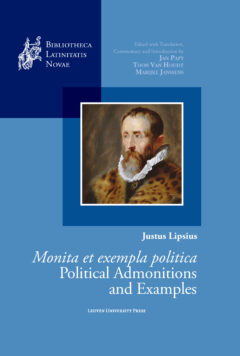 Justus Lipsius, Monita et exempla politica / Political Admonitions and Examples
Jan Papy (Editor), Toon Van Houdt (Editor), Marijke Janssens (Editor),
May 2022
 Studies in the Latin Literature and Epigraphy of Italian Fascism
Han Lamers (Editor), Bettina Reitz-Joosse (Editor), Valerio Sanzotta (Editor),
June 2020
 Una lingua morta per letterature vive: il dibattito sul latino come lingua letteraria in età moderna e contemporanea
Valerio Sanzotta (Editor),
January 2020
 John Milton, Epistolarum Familiarium Liber Unus and Uncollected Letters
Estelle Haan (Editor),
October 2019
 Utopia & More
Dirk Sacré (Editor), Erik De Bom (Editor), Demmy Verbeke (Editor), Gilbert Tournoy (Editor),
October 2016
 A New Sense of the Past: The Scholarship of Biondo Flavio (1392–1463)
Angelo Mazzocco (Editor), Marc Laureys (Editor),
May 2016
 Aulularia and other Inversions of Plautus
Michael Fontaine (), Joannes Burmeister (Author),
July 2015
 La correspondance de Guillaume Budé et Juan Luis Vives
Gilbert Tournoy (Editor), Monique Mund Dopchie (Editor),
June 2015
 Andreae Alciati Contra Vitam Monasticam Epistula – Andrea Alciato’s Letter Against Monastic Life
Dennis Drysdall (Author),
July 2014
 The Art of Arguing in the World of Renaissance Humanism
Marc Laureys (Editor), Roswitha Simons (Editor),
December 2013
 Icon Animorum or The Mirror of Minds
Mark Riley (Editor), John Barclay (Author), Thomas May (Translator),
November 2013
 De rationibus quibus homines docti artem Latine colloquendi et ex tempore dicendi saeculis XVI et XVII coluerunt
Terence Tunberg (Author),
March 2013
 The Early Modern Cultures of Neo-Latin Drama
Philip Ford (Editor), Andrew Taylor (Editor),
February 2013
 Scottish Latin Authors in Print up to 1700
Roger Green (Author), Philip Burton (Author), Deborah Ford (Author),
June 2012

 Humanistica Lovaniensia, Volume VIII – 2009
Dirk Sacré (Editor), Jan Papy (Editor), Lambert Isebaert (Editor), Monique Mund Dopchie (Editor), Gilbert Tournoy (Editor),
December 2009