

In fine, this edition’s strength lies in the way that Haan draws attention to the literary skill on display in Milton’s letters—especially the ones collected in Epistolarum Familiarum Liber Unus. That collection can hardly escape being the centerpiece of such a volume as this, and I expect Haan’s notes to remain valuable for a long time to come. […] I hope that it will draw our collective attention more closely to Milton’s wide-ranging skill as a Latin stylist. Jason A. Kerr, Milton Quarterly (Volume 55, Issue 1), March 2021, https://doi.org/10.1111/milt.12369
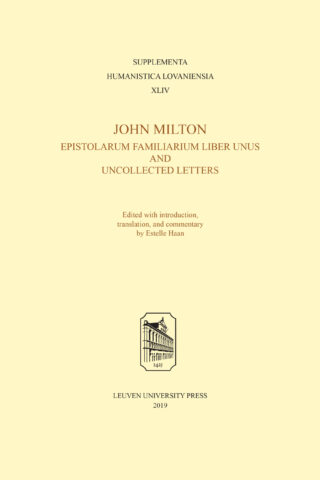
First full-scale edition of John Milton’s Latin and uncollected vernacular lettersJohn Milton holds an impressive place within the rich tradition of neo-Latin epistolography. His Epistolae Familiares and uncollected letters paint an invigorating portrait of the artist as a young man, offering insight into his reading programme, his views on education, friendship, poetry, his relations with continental literati, his blindness, and his role as Latin Secretary. This edition presents a modernised Latin text and a facing English translation, complemented by a detailed introduction and a comprehensive commentary. Situating Milton’s letters in relation to the classical, pedagogical, neo-Latin, and vernacular contexts at the heart of their composition, it presents fresh evidence in regard to Milton’s relationships with the Italian philologist Benedetto Buonmattei, the Greek humanist Leonard Philaras, the radical pastor Jean de Labadie, and the German diplomat Peter Heimbach. It also announces several new discoveries, most notably a manuscript of Henry Oldenburg’s transcription of Ep. Fam. 25. This volume fills an important gap in Milton scholarship, and will prove of particular use to Milton scholars, students, philologists, neo-Latinists, and those interested in the humanist reinvention of the epistolographic tradition.
— Acknowledgement
— Abbreviations
— Editorial Policy
— Introduction1 Milton Among the Epistolographers
2 Milton’s Epistolarum Familiarium Liber Unus 2.1 Portraits of an Artist: St Paul’s School, Cambridge, and Beyond
2.2 The Italian Journey
2.3 After Italy: Pupils and Pedagogues
2.4 Milton’s Foreign Visitors in London
3 Uncollected Latin Letters to Hermann Mylius
4 Uncollected Vernacular Letters
— Epistolarum familiarium liber unusGeneral Headnote
Headnotes, Texts, Translations, Commentaries
Preface: The Printer to the Reader
1 To Thomas Young (26 March 1627)
2 To Alexander Gil (20 May 1630)
3 To Alexander Gil (July 1629)
4 To Thomas Young (21 July 1628)
5 To Alexander Gil (4 December 1634)
6 To Charles Diodati (2 September 1637)
7 To Charles Diodati (23 September 1637)
8 To Benedetto Buonmattei (10 September 1638)
9 To Lucas Holstenius (30 March 1639)
10 To Carlo Dati (21 April 1647)
11 To Hermann Mylius (31 December 1651)
12 To Leonard Philaras (June 1652)
13 To Richard Heath (13 December 1652)
14 To Henry Oldenburg (6 July 1654)
15 To Leonard Philaras (28 September 1654)
16 To Lieuwe van Aitzema (5 February 1655)
17 To Ezekiel Spanheim (24 March 1655)
18 To Henry Oldenburg (25 June 1656)
19 To Richard Jones (21 September 1656)
20 To Peter Heimbach (8 November 1656)
21 To Emery Bigot (24 March 1657)
22 To Richard Jones (c. May 1656)
23 To Henri de Brass (15 July 1657)
24 To Henry Oldenburg (1 August 1657)
25 To Richard Jones (1 August 1657)
26 To Henri de Brass (16 December 1657)
27 To Peter Heimbach (18 December 1657)
28 To Jean de Labadie (27 April 1659)
29 To Henry Oldenburg (20 December 1659)
30 To Richard Jones (20 December 1659)
31 To Peter Heimbach (15 August 1666)
— Epistolae to Hermann MyliusGeneral Headnote
Headnotes, Texts, Translations, Commentaries
1 7 November 1651
2 31 December 1651
3 8 January 1652
4 20 January 1652
5 10 February 1652
6 13 February 1652
7 21 February 1652
— Uncollected vernacular lettersHeadnotes, Texts, and Commentaries
1 To an Unnamed Friend (c. 1633)
(a) Draft 1
(b) Draft 2
2 To Bulstrode Whitelocke (12 February 1652)
3 To John Bradshaw (21 February 1653)
— Appendix: Latin Letters to Milton— Bibliography— Index nominum et locorum— List of Figures
The commentary stands out for me as the greatest achievement of the edition, a triumph of contextualizing. Every person named or place visited is brought to life for Milton’s readers. The research that informed Haan’s earlier work on the Italian academies is deployed and extended, gloriously. [...] I welcome this very full edition with delight. It is always good tothink with, and heuristically to argue with.
John K. Hale, University of Otago, Neo-Latin News Vol. 68, Nos. 1&2
This edition, an impressive work of scholarship, with Latin text and a new English translation on facing pages, includes an Introduction and a detailed commentary on each of the letters, keyed to the Latin text. The edition, which gives a clear, informative account of Milton’s place in the tradition of Neo-Latin poetry and prose, is consistently focused upon the ways in which these Latin and vernacular letters provide a valuable insight into Milton’s career as a poet and Christian humanist, writing in Latin for an international audience. Estelle Haan, who has published widely on bilingualism and the writings in Latin of Marvell and Milton, is probably, along with John Hale, the leading authority on Milton’s Latin poetry and prose, and this edition is admirable in every respect.Warren Chernaik, Modern Language Review, 116 (2021), 15–20
Thanks to Estelle Haan, students and scholars regardless of their linguistic training are now well positioned to appreciate yet another dimension of Milton’s classicism in this accurate, thorough, and accessible edition of his 'Epistolae familiares' and related correspondence. In presenting this material to the world, she and the general editors of 'Supplementa humanistica Lovaniensia' at Leuven University Press have undoubtedly expanded Milton’s “fit audience… though few” (PL 7.31), for which they deserve the gratitude and congratulations of all who love the classics in any language.Michael B. Sullivan, Bryn Mawr Classical Review 2021.03.58
Estelle Haan provides translations that are usefully fastidious [...] The introduction situates them helpfully in the long tradition of classical and Neo-Latin formal epistles, and Haan’s meticulous commentary offers invaluable assistance in orienting the reader to the specificities of Milton’s stylistic choices.
Joseph Loewenstein, SEL Studies in English Literature 1500-1900, Volume 61, Number 1, Winter 2021, pp. 127-177, DOI: https://doi.org/10.1353/sel.2021.0007
Frequently Asked Questions
What is "John Milton, Epistolarum Familiarium Liber Unus and Uncollected Letters" about?
First full-scale edition of John Milton’s Latin and uncollected vernacular lettersJohn Milton holds an impressive place within the rich tradition of neo-Latin epistolography. His Epistolae Familiares and uncollected letters paint an invigorating portrait of the artist as a young man, offering insight into his reading programme, his views on education, friendship, poetry, his relations with continental literati, his blindness, and his role as Latin Secretary. This edition presents a modernised Latin text and a facing English translation, complemented by a detailed introduction and a comprehensive commentary. Situating Milton’s letters in relation to the classical, pedagogical, neo-Latin, and vernacular contexts at the heart of their composition, it presents fresh evidence in regard to Milton’s relationships with the Italian philologist Benedetto Buonmattei, the Greek humanist Leonard Philaras, the radical pastor Jean de Labadie, and the German diplomat Peter Heimbach. It also announces several new discoveries, most notably a manuscript of Henry Oldenburg’s transcription of Ep. Fam. 25. This volume fills an important gap in Milton scholarship, and will prove of particular use to Milton scholars, students, philologists, neo-Latinists, and those interested in the humanist reinvention of the epistolographic tradition.
Who edited "John Milton, Epistolarum Familiarium Liber Unus and Uncollected Letters"?
"John Milton, Epistolarum Familiarium Liber Unus and Uncollected Letters" was edited by Estelle Haan.
Estelle Haan is Professor Emerita of English and Neo-Latin Studies at Queen’s University, Belfast.
Is "John Milton, Epistolarum Familiarium Liber Unus and Uncollected Letters" part of a series?
Yes, "John Milton, Epistolarum Familiarium Liber Unus and Uncollected Letters" is part of the "Supplementa Humanistica Lovaniensia" series. It's book 44 in the series.
The volumes published before 2000 are free available online.
What is the Table of Contents for "John Milton, Epistolarum Familiarium Liber Unus and Uncollected Letters"?
— Acknowledgement
— Abbreviations
— Editorial Policy
— Introduction1 Milton Among the Epistolographers
2 Milton’s Epistolarum Familiarium Liber Unus 2.1 Portraits of an Artist: St Paul’s School, Cambridge, and Beyond
2.2 The Italian Journey
2.3 After Italy: Pupils and Pedagogues
2.4 Milton’s Foreign Visitors in London
3 Uncollected Latin Letters to Hermann Mylius
4 Uncollected Vernacular Letters
— Epistolarum familiarium liber unusGeneral Headnote
Headnotes, Texts, Translations, Commentaries
Preface: The Printer to the Reader
1 To Thomas Young (26 March 1627)
2 To Alexander Gil (20 May 1630)
3 To Alexander Gil (July 1629)
4 To Thomas Young (21 July 1628)
5 To Alexander Gil (4 December 1634)
6 To Charles Diodati (2 September 1637)
7 To Charles Diodati (23 September 1637)
8 To Benedetto Buonmattei (10 September 1638)
9 To Lucas Holstenius (30 March 1639)
10 To Carlo Dati (21 April 1647)
11 To Hermann Mylius (31 December 1651)
12 To Leonard Philaras (June 1652)
13 To Richard Heath (13 December 1652)
14 To Henry Oldenburg (6 July 1654)
15 To Leonard Philaras (28 September 1654)
16 To Lieuwe van Aitzema (5 February 1655)
17 To Ezekiel Spanheim (24 March 1655)
18 To Henry Oldenburg (25 June 1656)
19 To Richard Jones (21 September 1656)
20 To Peter Heimbach (8 November 1656)
21 To Emery Bigot (24 March 1657)
22 To Richard Jones (c. May 1656)
23 To Henri de Brass (15 July 1657)
24 To Henry Oldenburg (1 August 1657)
25 To Richard Jones (1 August 1657)
26 To Henri de Brass (16 December 1657)
27 To Peter Heimbach (18 December 1657)
28 To Jean de Labadie (27 April 1659)
29 To Henry Oldenburg (20 December 1659)
30 To Richard Jones (20 December 1659)
31 To Peter Heimbach (15 August 1666)
— Epistolae to Hermann MyliusGeneral Headnote
Headnotes, Texts, Translations, Commentaries
1 7 November 1651
2 31 December 1651
3 8 January 1652
4 20 January 1652
5 10 February 1652
6 13 February 1652
7 21 February 1652
— Uncollected vernacular lettersHeadnotes, Texts, and Commentaries
1 To an Unnamed Friend (c. 1633)
(a) Draft 1
(b) Draft 2
2 To Bulstrode Whitelocke (12 February 1652)
3 To John Bradshaw (21 February 1653)
— Appendix: Latin Letters to Milton— Bibliography— Index nominum et locorum— List of Figures
Related titles
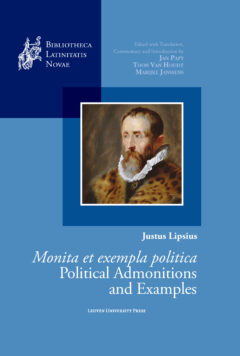 Justus Lipsius, Monita et exempla politica / Political Admonitions and Examples
Jan Papy (Editor), Toon Van Houdt (Editor), Marijke Janssens (Editor),
May 2022
 Studies in the Latin Literature and Epigraphy of Italian Fascism
Han Lamers (Editor), Bettina Reitz-Joosse (Editor), Valerio Sanzotta (Editor),
June 2020
 Una lingua morta per letterature vive: il dibattito sul latino come lingua letteraria in età moderna e contemporanea
Valerio Sanzotta (Editor),
January 2020
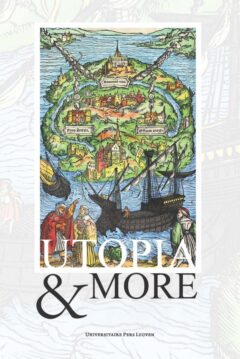 Utopia & More
Dirk Sacré (Editor), Erik De Bom (Editor), Demmy Verbeke (Editor), Gilbert Tournoy (Editor),
October 2016
 A New Sense of the Past: The Scholarship of Biondo Flavio (1392–1463)
Angelo Mazzocco (Editor), Marc Laureys (Editor),
May 2016
 Aulularia and other Inversions of Plautus
Michael Fontaine (), Joannes Burmeister (Author),
July 2015
 La correspondance de Guillaume Budé et Juan Luis Vives
Gilbert Tournoy (Editor), Monique Mund Dopchie (Editor),
June 2015
 Andreae Alciati Contra Vitam Monasticam Epistula – Andrea Alciato’s Letter Against Monastic Life
Dennis Drysdall (Author),
July 2014
 The Art of Arguing in the World of Renaissance Humanism
Marc Laureys (Editor), Roswitha Simons (Editor),
December 2013
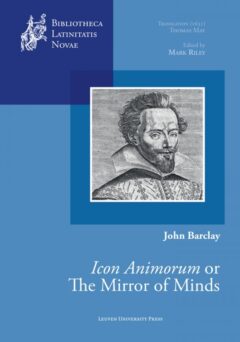 Icon Animorum or The Mirror of Minds
Mark Riley (Editor), John Barclay (Author), Thomas May (Translator),
November 2013
 Neo-Latin Commentaries and the Management of Knowledge in the Late Middle Ages and the Early Modern Period (1400 -1700)
Karl A.E. Enenkel (Editor), Henk Nellen (Editor),
July 2013
 De rationibus quibus homines docti artem Latine colloquendi et ex tempore dicendi saeculis XVI et XVII coluerunt
Terence Tunberg (Author),
March 2013
 The Early Modern Cultures of Neo-Latin Drama
Philip Ford (Editor), Andrew Taylor (Editor),
February 2013
 Scottish Latin Authors in Print up to 1700
Roger Green (Author), Philip Burton (Author), Deborah Ford (Author),
June 2012

 Humanistica Lovaniensia, Volume VIII – 2009
Dirk Sacré (Editor), Jan Papy (Editor), Lambert Isebaert (Editor), Monique Mund Dopchie (Editor), Gilbert Tournoy (Editor),
December 2009