

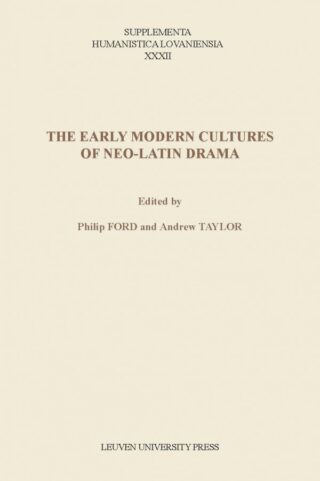
The vitality and power of expression of Neo-Latin Drama
The essays in this collection all illustrate the vitality of Neo-Latin drama in early modern Europe, arising from its productive combination of classical models with deep-rooted vernacular traditions. While the plays were often composed in the context of a school or university setting, the dramatists seldom neglected the need to appeal to a broad audience, including non-Latinists. Yet the use of Latin, and the ambiguity of a plurivocal literary form, allowed the authors of these plays to introduce messages and ideas which could be subversive of the prevailing political and religious authorities. At the same time, humanist colleges, and their Jesuit successors, were quick to see the educational advantages to be derived from staging plays performed by pupils, which had the advantage of acting as powerful advertisements for the schools. Neo-Latin drama in all its forms offered a freedom of expression and form which is rare in other Renaissance literary genres.
Contributors
J. Pascual Barea (Universidad de Cádiz), J. Bloemendal (Huygens Institute, KNAW, The Hague), E. Borza (Université catholique de Louvain), J. De Landtsheer (University of Leuven), A. Eyffinger (Huygens Institute, KNAW, The Hague), C. Ferradou (Université de Provence), S. Knight (University of Leicester), J. Loach (Cardiff University), H. B. Norland (University of Nebraska, Lincoln), V. Coroleu Oberparleiter (University of Salzburg), O. Pédeflous (Paris IV and Institut Thiers), C. Ryan (Merton College, Oxford), M. Verweij (Royal Library of Belgium).
Table of Contents
– Philip Ford and Andrew Taylor, Introduction
– Olivier Pédeflous, Ravisius Textor’s School Drama and its Links to Pedagogical Literature in Early Modern France – Carine Ferradou, George Buchanan’s Sacred Latin Tragedies Baptistes and Iephthes: What Place for Humankind in the Universe?
– Elia Borza, La traduction de tragédies grecques: Alessandro Pazzi de’ Medici et les problèmes liés à la métrique
– Howard B. Norland, John Foxe’s Apocalyptic Comedy, Christus Triumphans
– Jeanine De Landtsheer, Lambertus Schenckelius’s Tragoedia(e) Sanctae Catharinae
– Michiel Verweij, The Terentius Christianus at Work: Cornelius Schonaeus as a Playwright
– Joaquín Pascual Barea, School Progymnasmata and LatinDrama: thesis, refutatio, confirmatio and laus in the Dialogue on the Conception of Our Lady (1578) by the Spanish Jesuit Bartholomaeus Bravo (1553 or 1554-1607)
– Judi Loach, Performing in Latin in Jesuit-run Colleges in Mid- to Late-17th-Century France: Why, and with what Consequences?
– Jan Bloemendal, Similarities, Dissimilarities and Possible Relations Between Early Modern Latin Drama and Drama in the Vernacular
– Cressida Ryan, An Ignoramus about Latin? The Importance of Latin Literatures to George Ruggle’s Ignoramus
– Sarah Knight, ‘Et spes et ratio studiorum in Caesare tantum’: Robert Burton and Patronage
– Veronika Coroleu Oberparleiter, Simon Rettenpacher’s Comedy Votorum discordia
– Arthur Eyffinger, ‘The Unacknowledged Legislators of Mankind’: Greek Playwrights as Moral Guidance to Hugo Grotius’s Social Philosophy
– Index nominum
Frequently Asked Questions
What is "The Early Modern Cultures of Neo-Latin Drama" about?
The vitality and power of expression of Neo-Latin Drama
The essays in this collection all illustrate the vitality of Neo-Latin drama in early modern Europe, arising from its productive combination of classical models with deep-rooted vernacular traditions. While the plays were often composed in the context of a school or university setting, the dramatists seldom neglected the need to appeal to a broad audience, including non-Latinists. Yet the use of Latin, and the ambiguity of a plurivocal literary form, allowed the authors of these plays to introduce messages and ideas which could be subversive of the prevailing political and religious authorities. At the same time, humanist colleges, and their Jesuit successors, were quick to see the educational advantages to be derived from staging plays performed by pupils, which had the advantage of acting as powerful advertisements for the schools. Neo-Latin drama in all its forms offered a freedom of expression and form which is rare in other Renaissance literary genres.
Contributors
J. Pascual Barea (Universidad de Cádiz), J. Bloemendal (Huygens Institute, KNAW, The Hague), E. Borza (Université catholique de Louvain), J. De Landtsheer (University of Leuven), A. Eyffinger (Huygens Institute, KNAW, The Hague), C. Ferradou (Université de Provence), S. Knight (University of Leicester), J. Loach (Cardiff University), H. B. Norland (University of Nebraska, Lincoln), V. Coroleu Oberparleiter (University of Salzburg), O. Pédeflous (Paris IV and Institut Thiers), C. Ryan (Merton College, Oxford), M. Verweij (Royal Library of Belgium).
Who edited "The Early Modern Cultures of Neo-Latin Drama"?
"The Early Modern Cultures of Neo-Latin Drama" was edited by Philip Ford and Andrew Taylor.
Philip Ford was Professor of French and Neo-Latin Literature at the University of Cambridge, a Fellow of the British Academy, Associate of the Belgian Royal Academy, and President of FISIER.
Andrew Taylor is College Lecturer in English at Churchill College, Cambridge, specializing in Tudor literature. He is Secretary of the Society for Neo-Latin Studies and the Cambridge Society for Neo-Latin Studies.
Is "The Early Modern Cultures of Neo-Latin Drama" part of a series?
Yes, "The Early Modern Cultures of Neo-Latin Drama" is part of the "Supplementa Humanistica Lovaniensia" series. It's book 32 in the series.
The volumes published before 2000 are free available online.
What is the Table of Contents for "The Early Modern Cultures of Neo-Latin Drama"?
Table of Contents
- Philip Ford and Andrew Taylor, Introduction
- Olivier Pédeflous, Ravisius Textor's School Drama and its Links to Pedagogical Literature in Early Modern France - Carine Ferradou, George Buchanan's Sacred Latin Tragedies Baptistes and Iephthes: What Place for Humankind in the Universe?
- Elia Borza, La traduction de tragédies grecques: Alessandro Pazzi de' Medici et les problèmes liés à la métrique
- Howard B. Norland, John Foxe's Apocalyptic Comedy, Christus Triumphans
- Jeanine De Landtsheer, Lambertus Schenckelius's Tragoedia(e) Sanctae Catharinae
- Michiel Verweij, The Terentius Christianus at Work: Cornelius Schonaeus as a Playwright
- Joaquín Pascual Barea, School Progymnasmata and LatinDrama: thesis, refutatio, confirmatio and laus in the Dialogue on the Conception of Our Lady (1578) by the Spanish Jesuit Bartholomaeus Bravo (1553 or 1554-1607)
- Judi Loach, Performing in Latin in Jesuit-run Colleges in Mid- to Late-17th-Century France: Why, and with what Consequences?
- Jan Bloemendal, Similarities, Dissimilarities and Possible Relations Between Early Modern Latin Drama and Drama in the Vernacular
- Cressida Ryan, An Ignoramus about Latin? The Importance of Latin Literatures to George Ruggle's Ignoramus
- Sarah Knight, 'Et spes et ratio studiorum in Caesare tantum': Robert Burton and Patronage
- Veronika Coroleu Oberparleiter, Simon Rettenpacher's Comedy Votorum discordia
- Arthur Eyffinger, 'The Unacknowledged Legislators of Mankind': Greek Playwrights as Moral Guidance to Hugo Grotius's Social Philosophy
- Index nominum
What is the DOI for "The Early Modern Cultures of Neo-Latin Drama"?
The Digital Object Identifier (DOI) for "The Early Modern Cultures of Neo-Latin Drama" is 10.11116/9789461661289.
Related titles
 Justus Lipsius, Monita et exempla politica / Political Admonitions and Examples
Jan Papy (Editor), Toon Van Houdt (Editor), Marijke Janssens (Editor),
May 2022
 Studies in the Latin Literature and Epigraphy of Italian Fascism
Han Lamers (Editor), Bettina Reitz-Joosse (Editor), Valerio Sanzotta (Editor),
June 2020
 Una lingua morta per letterature vive: il dibattito sul latino come lingua letteraria in età moderna e contemporanea
Valerio Sanzotta (Editor),
January 2020
 John Milton, Epistolarum Familiarium Liber Unus and Uncollected Letters
Estelle Haan (Editor),
October 2019
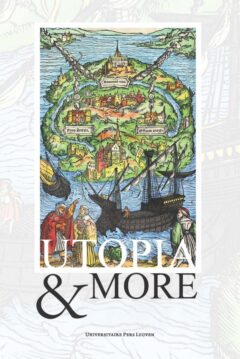 Utopia & More
Dirk Sacré (Editor), Erik De Bom (Editor), Demmy Verbeke (Editor), Gilbert Tournoy (Editor),
October 2016
 A New Sense of the Past: The Scholarship of Biondo Flavio (1392–1463)
Angelo Mazzocco (Editor), Marc Laureys (Editor),
May 2016
 Aulularia and other Inversions of Plautus
Michael Fontaine (), Joannes Burmeister (Author),
July 2015
 La correspondance de Guillaume Budé et Juan Luis Vives
Gilbert Tournoy (Editor), Monique Mund Dopchie (Editor),
June 2015
 Andreae Alciati Contra Vitam Monasticam Epistula – Andrea Alciato’s Letter Against Monastic Life
Dennis Drysdall (Author),
July 2014
 The Art of Arguing in the World of Renaissance Humanism
Marc Laureys (Editor), Roswitha Simons (Editor),
December 2013
 Icon Animorum or The Mirror of Minds
Mark Riley (Editor), John Barclay (Author), Thomas May (Translator),
November 2013
 Neo-Latin Commentaries and the Management of Knowledge in the Late Middle Ages and the Early Modern Period (1400 -1700)
Karl A.E. Enenkel (Editor), Henk Nellen (Editor),
July 2013
 De rationibus quibus homines docti artem Latine colloquendi et ex tempore dicendi saeculis XVI et XVII coluerunt
Terence Tunberg (Author),
March 2013
 Scottish Latin Authors in Print up to 1700
Roger Green (Author), Philip Burton (Author), Deborah Ford (Author),
June 2012

 Humanistica Lovaniensia, Volume VIII – 2009
Dirk Sacré (Editor), Jan Papy (Editor), Lambert Isebaert (Editor), Monique Mund Dopchie (Editor), Gilbert Tournoy (Editor),
December 2009