


Rudolph Agricola: Six Lives and Erasmus’s Testimonies
Fokke Akkerman (Editor),
The Frisian humanist Rudolph Agricola (1443-1485) is rightly famous for single-handedly bringing the Italian Renaissance to the North. Owing to his fascinating personality and many talents, he attracted the love and admiration of his contemporaries and the following generations. As a result, six biographies on Agricola have been preserved. The authors of these lives drew their materials from different sources and wrote their texts independently from each other. Differing vastly in rhetorical aims and methods, they provide us with a vivid image of cultural and intellectual life in the 15th century. Erasmus praised Agricola’s work throughout his writings. No less than fifty testimonies from Erasmus and his correspondents are presented here. This edition of sources supplements the volume of Agricola’s letters (BLN, 2002) and is preceded by a useful survey of all biographical information now at our disposal. Thus it fills a gap in our knowledge about a great man of letters, while correcting a number of persistent misconceptions.
Frequently Asked Questions
What is "Rudolph Agricola: Six Lives and Erasmus’s Testimonies" about?
The Frisian humanist Rudolph Agricola (1443-1485) is rightly famous for single-handedly bringing the Italian Renaissance to the North. Owing to his fascinating personality and many talents, he attracted the love and admiration of his contemporaries and the following generations. As a result, six biographies on Agricola have been preserved. The authors of these lives drew their materials from different sources and wrote their texts independently from each other. Differing vastly in rhetorical aims and methods, they provide us with a vivid image of cultural and intellectual life in the 15th century. Erasmus praised Agricola's work throughout his writings. No less than fifty testimonies from Erasmus and his correspondents are presented here. This edition of sources supplements the volume of Agricola's letters (BLN, 2002) and is preceded by a useful survey of all biographical information now at our disposal. Thus it fills a gap in our knowledge about a great man of letters, while correcting a number of persistent misconceptions.
Who edited "Rudolph Agricola: Six Lives and Erasmus’s Testimonies"?
"Rudolph Agricola: Six Lives and Erasmus’s Testimonies" was edited by Fokke Akkerman.
Is "Rudolph Agricola: Six Lives and Erasmus’s Testimonies" part of a series?
Yes, "Rudolph Agricola: Six Lives and Erasmus’s Testimonies" is part of the "Bibliotheca Latinitatis Novae" series.
The series Bibliotheca Latinitatis Novae, previously published by Van Gorcum, offers Latin literature from the later Renaissance and the Early Modern period. By combining each critical Latin text with an English translation, an historical introduction, and notes, Bibliotheca Latinitatis Novae makes texts accessible to specialists and general readers alike.

This series is available on standing order. To sign up for a subscription or for more information, please contact info@lup.be.
The volumes published before 2013 in the Bibliotheca Latinitatis Novae series have been reduced in price to € 25,00 only! Order online or email your order to info@lup.be.
Free backlist ebook available via Google Books
 Politica : six books of politics or political instruction
Justus Lipsius, Jan Hendrik Waszink
2004, Van Gorcum
DOWNLOAD >
Editorial Board
Jan Waszink (editor in chief), Historical Institute of the Polish Academy of Sciences, Warsaw
Christoph Pieper, Leiden University
Grażyna Urban-Godziek, Jagiellonian University Krakow
Dirk van Miert, Huygens Institute for History and Culture of the Netherlands and Utrecht University
Johanna Luggin, Universität Innsbruck
Elena Dahlberg, University of Skövde
Benjamin Plomp, Universität Basel
Advisory board
Maurizio Campanelli, Karl Enenkel, Marianne Pade, Dirk Sacré, Florian Schaffenrath
Proposals
Proposals and enquiries can be sent to Jan Waszink.
Please make use of the submission form to present your manuscript or proposal to our board.
Links & Resources
Related titles
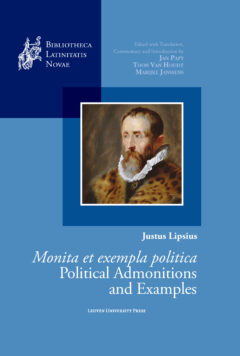 Justus Lipsius, Monita et exempla politica / Political Admonitions and Examples
Jan Papy (Editor), Toon Van Houdt (Editor), Marijke Janssens (Editor),
May 2022
 Studies in the Latin Literature and Epigraphy of Italian Fascism
Han Lamers (Editor), Bettina Reitz-Joosse (Editor), Valerio Sanzotta (Editor),
June 2020
 Una lingua morta per letterature vive: il dibattito sul latino come lingua letteraria in età moderna e contemporanea
Valerio Sanzotta (Editor),
January 2020
 John Milton, Epistolarum Familiarium Liber Unus and Uncollected Letters
Estelle Haan (Editor),
October 2019
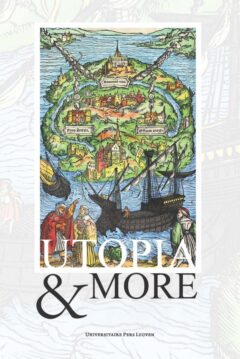 Utopia & More
Dirk Sacré (Editor), Erik De Bom (Editor), Demmy Verbeke (Editor), Gilbert Tournoy (Editor),
October 2016
 A New Sense of the Past: The Scholarship of Biondo Flavio (1392–1463)
Angelo Mazzocco (Editor), Marc Laureys (Editor),
May 2016
 Aulularia and other Inversions of Plautus
Michael Fontaine (), Joannes Burmeister (Author),
July 2015
 La correspondance de Guillaume Budé et Juan Luis Vives
Gilbert Tournoy (Editor), Monique Mund Dopchie (Editor),
June 2015
 Andreae Alciati Contra Vitam Monasticam Epistula – Andrea Alciato’s Letter Against Monastic Life
Dennis Drysdall (Author),
July 2014
 The Art of Arguing in the World of Renaissance Humanism
Marc Laureys (Editor), Roswitha Simons (Editor),
December 2013
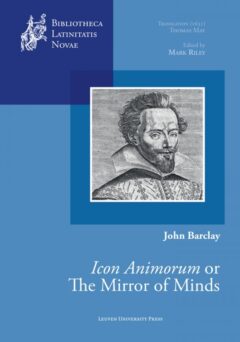 Icon Animorum or The Mirror of Minds
Mark Riley (Editor), John Barclay (Author), Thomas May (Translator),
November 2013
 Neo-Latin Commentaries and the Management of Knowledge in the Late Middle Ages and the Early Modern Period (1400 -1700)
Karl A.E. Enenkel (Editor), Henk Nellen (Editor),
July 2013
 De rationibus quibus homines docti artem Latine colloquendi et ex tempore dicendi saeculis XVI et XVII coluerunt
Terence Tunberg (Author),
March 2013
 The Early Modern Cultures of Neo-Latin Drama
Philip Ford (Editor), Andrew Taylor (Editor),
February 2013
 Scottish Latin Authors in Print up to 1700
Roger Green (Author), Philip Burton (Author), Deborah Ford (Author),
June 2012
 Humanistica Lovaniensia, Volume VIII – 2009
Dirk Sacré (Editor), Jan Papy (Editor), Lambert Isebaert (Editor), Monique Mund Dopchie (Editor), Gilbert Tournoy (Editor),
December 2009