

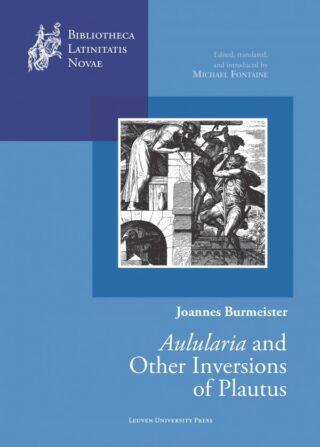
Aulularia and other Inversions of Plautus
Michael Fontaine (), Joannes Burmeister (Author),
Series: Bibliotheca Latinitatis Novae
Category: Neo-Latin Studies
Language: English, German, Latin
ISBN: 9789462700086
Publication date: July 13, 2015
€75.00 (including 6% VAT)
Buy NowSize: 240 x 170 x mm

Stock item: 102696
Standard delivery time for print books:
For Belgium: 5 to 8 working days
For EU: 2 to 3 weeks
For other countries: 4 to 5 weeks
Series: Bibliotheca Latinitatis Novae
Category: Neo-Latin Studies
Language: English, German, Latin
ISBN: 9789461661791
Publication date: July 13, 2015
€56.00 (including 6% VAT)
Buy Now
First critical edition of Burmeister’s newly discovered Aulularia. Joannes Burmeister of Lüneburg (1576–1638) was among the greatest Neo-Latin poets of the German Baroque. His masterpieces, now mostly lost, are Christian ‘inversions’ of the Classical Roman comedies of Plautus. With only minimal changes in language and none in meter, each transforms Plautus’s pagan plays into comedies based on biblical themes. Fascinating in their own right, they also bring back to attention forgotten genres of Renaissance literature. This volume offers the first critical edition of the newly discovered Aulularia (1629), which exists in a sole copy, and the fragments of Mater-Virgo (1621), which adapts Plautus’s Amphitryo to show the Nativity of Jesus. The introduction offers reconstructions of Susanna (based on Casina) and Asinaria (1625), Burmeister’s two lost or unpublished inversions of Plautus. Fontaine also provides the only biography of Burmeister based on archival sources, along with discussions of his inimitable Latinity and the perilous context of war and witch-burning in which Burmeister wrote. Burmeister’s inversions bear witness to the special talent of his age for the creative reworking of Classical literature, such as Monteverdi’s Poppea or Purcell’s Dido and Aeneas, as well as to his tumultuous times, with his views on military abuses in the Thirty Years’ War prefiguring those of Grimmelshausen’s Simplicius Simplicissimus.
This publication is GPRC-labeled (Guaranteed Peer-Review Content).
Illustrations
Acknowledgments
Introduction
1 Burmeister’s Latinity: Inversion, Puns, Spielerei
1.1 Inversion
1.2 Puns and the Isidorian Style
1.3 Spielerei
2 The Life of Burmeister
3 Burmeister’s Works
3.1 Published Works in Chronological Order
3.2 Doubtful, Apocryphal, and Spurious Works
3.3 Assessment of Pre-Plautine Works
3.4 Mater-Virgo (1621)
3.4.1 Sources
3.4.2 Contents
3.5 Susanna/Casina (1622-;1624?)
3.6 Asinaria (1625)
3.7 Aulularia (1629)
3.7.1 The Staging
3.7.2 The Intercalary Scenes
3.7.3 Themes
3.7.4 Anachronisms and Soldiers’ Depredations
3.7.5 Puns in Aulularia
3.7.6 Prosody and Versification
3.7.7 Deficient Verses and Principles of Emendation
4 Principles of this Edition
4.1 Aulularia
4.2 Mater-Virgo
4.3 Quotations from Plautus, the Bible and English Translations
Sigla
Aulularia: Text and Translation
Mater-Virgo: Text and Translation
Appendix: Burmeister’s Laureation Certificate
Bibliography
General Index
Index of Greek Words
Index Locorum Biblicorum
Index Jocorum
Mit diesem Buch ist der Anfang gemacht, einen deutsch-lateinischen Autor aus der Obskurität in die Philologie zu holen.
Ludger JoriàŸen, Germanistik 2015, Band 56, heft 1-2
This very handsomely produced book concludes with a brief bibliography, general index, an index locorum biblicorum and, getting the last word, an index jocorum. But no joke: Fontaine's clean, thorough, and user-friendly edition of a newly discovered script cribbed from Plautus should be an essential acquisition for university libraries with holdings in classical tradition and reception.
Fred Franko, Bryn Mawr Classical Review, March 20, 2016
F. provides his reader with an English translation, where he attempts to imitate the numerous puns; if he does not succeed, he explains the pun in a footnote. The series Bibliotheca Latinitatis Novae can be proud of this volume from a distinguished Plautus expert, presenting an extraordinary piece of reception to their readers. Florian Schaffenrath, Neo-Latin News Vol. 64, Nos. 1&2
Ein abschlieàŸendes Urteil zu Burmeisters Aulularia steht dem Rez., der kein Fachmann für Neulatein ist, nicht zu. Doch darf er F. höchstes Lob für sein ungewöhnlich groàŸes Engagement aussprechen, mit dem er einen ‚verlorenen' Dichter wieder allgemein zugänglich gemacht hat.
Walter Stockert, WIENER STUDIEN, Band 129/2016, 333 -; 365
Alles in allem haben wir es hier mit der mustergültigen Präsentation eines Textes zu tun, an dem jeder Freund lateinischer Poesie seine Freude haben dürfte und der allein schon deswegen eine Neuedition verdient hatte.
Niklas Holzberg, Gymnasium, Band 123 (2016) / Heft 2
Fontaine has resuscitated an exceptionally creative Neo-Latin poet-dramatist and considerably enriched our knowledge of Protestant Latinity in the German empire.
James A. Parente Jr., Renaissance Quarterly, volume 70, nummer 1, Spring 2017
The
interpretation that Fontaine ventures on in the introduction is solid and the
ready access to the texts provided by this volumes will make the works of
Burmeister available for additional scrutiny by subsequent scholars. Overall
this volume is an excellent addition to the Bibliotheca Latinitas Novae and is
useful reading for anyone interested in the reception of Plautine drama.Seth A. Jeppesen, Latomus 76/3, September 2017
Latomus
Frequently Asked Questions
What is "Aulularia and other Inversions of Plautus" about?
First critical edition of Burmeister's newly discovered Aulularia. Joannes Burmeister of Lüneburg (1576–1638) was among the greatest Neo-Latin poets of the German Baroque. His masterpieces, now mostly lost, are Christian ‘inversions’ of the Classical Roman comedies of Plautus. With only minimal changes in language and none in meter, each transforms Plautus’s pagan plays into comedies based on biblical themes. Fascinating in their own right, they also bring back to attention forgotten genres of Renaissance literature. This volume offers the first critical edition of the newly discovered Aulularia (1629), which exists in a sole copy, and the fragments of Mater-Virgo (1621), which adapts Plautus’s Amphitryo to show the Nativity of Jesus. The introduction offers reconstructions of Susanna (based on Casina) and Asinaria (1625), Burmeister's two lost or unpublished inversions of Plautus. Fontaine also provides the only biography of Burmeister based on archival sources, along with discussions of his inimitable Latinity and the perilous context of war and witch-burning in which Burmeister wrote. Burmeister's inversions bear witness to the special talent of his age for the creative reworking of Classical literature, such as Monteverdi's Poppea or Purcell's Dido and Aeneas, as well as to his tumultuous times, with his views on military abuses in the Thirty Years' War prefiguring those of Grimmelshausen's Simplicius Simplicissimus.
This publication is GPRC-labeled (Guaranteed Peer-Review Content).
Who wrote "Aulularia and other Inversions of Plautus"?
"Aulularia and other Inversions of Plautus" was written by Michael Fontaine and Joannes Burmeister.
Michael Fontaine is Associate Professor of Classics at Cornell University.
Is "Aulularia and other Inversions of Plautus" part of a series?
Yes, "Aulularia and other Inversions of Plautus" is part of the "Bibliotheca Latinitatis Novae" series.
The series Bibliotheca Latinitatis Novae, previously published by Van Gorcum, offers Latin literature from the later Renaissance and the Early Modern period. By combining each critical Latin text with an English translation, an historical introduction, and notes, Bibliotheca Latinitatis Novae makes texts accessible to specialists and general readers alike.

This series is available on standing order. To sign up for a subscription or for more information, please contact info@lup.be.
The volumes published before 2013 in the Bibliotheca Latinitatis Novae series have been reduced in price to € 25,00 only! Order online or email your order to info@lup.be.
Free backlist ebook available via Google Books
 Politica : six books of politics or political instruction
Justus Lipsius, Jan Hendrik Waszink
2004, Van Gorcum
DOWNLOAD >
Editorial Board
Jan Waszink (editor in chief), Historical Institute of the Polish Academy of Sciences, Warsaw
Christoph Pieper, Leiden University
Grażyna Urban-Godziek, Jagiellonian University Krakow
Dirk van Miert, Huygens Institute for History and Culture of the Netherlands and Utrecht University
Johanna Luggin, Universität Innsbruck
Elena Dahlberg, University of Skövde
Benjamin Plomp, Universität Basel
Advisory board
Maurizio Campanelli, Karl Enenkel, Marianne Pade, Dirk Sacré, Florian Schaffenrath
Proposals
Proposals and enquiries can be sent to Jan Waszink.
Please make use of the submission form to present your manuscript or proposal to our board.
Links & Resources
What is the Table of Contents for "Aulularia and other Inversions of Plautus"?
Illustrations
Acknowledgments
Introduction
1 Burmeister's Latinity: Inversion, Puns, Spielerei
1.1 Inversion
1.2 Puns and the Isidorian Style
1.3 Spielerei
2 The Life of Burmeister
3 Burmeister's Works
3.1 Published Works in Chronological Order
3.2 Doubtful, Apocryphal, and Spurious Works
3.3 Assessment of Pre-Plautine Works
3.4 Mater-Virgo (1621)
3.4.1 Sources
3.4.2 Contents
3.5 Susanna/Casina (1622-;1624?)
3.6 Asinaria (1625)
3.7 Aulularia (1629)
3.7.1 The Staging
3.7.2 The Intercalary Scenes
3.7.3 Themes
3.7.4 Anachronisms and Soldiers' Depredations
3.7.5 Puns in Aulularia
3.7.6 Prosody and Versification
3.7.7 Deficient Verses and Principles of Emendation
4 Principles of this Edition
4.1 Aulularia
4.2 Mater-Virgo
4.3 Quotations from Plautus, the Bible and English Translations
Sigla
Aulularia: Text and Translation
Mater-Virgo: Text and Translation
Appendix: Burmeister's Laureation Certificate
Bibliography
General Index
Index of Greek Words
Index Locorum Biblicorum
Index Jocorum
Related titles
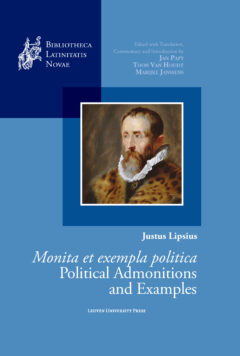 Justus Lipsius, Monita et exempla politica / Political Admonitions and Examples
Jan Papy (Editor), Toon Van Houdt (Editor), Marijke Janssens (Editor),
May 2022
 Studies in the Latin Literature and Epigraphy of Italian Fascism
Han Lamers (Editor), Bettina Reitz-Joosse (Editor), Valerio Sanzotta (Editor),
June 2020
 Una lingua morta per letterature vive: il dibattito sul latino come lingua letteraria in età moderna e contemporanea
Valerio Sanzotta (Editor),
January 2020
 John Milton, Epistolarum Familiarium Liber Unus and Uncollected Letters
Estelle Haan (Editor),
October 2019
 Utopia & More
Dirk Sacré (Editor), Erik De Bom (Editor), Demmy Verbeke (Editor), Gilbert Tournoy (Editor),
October 2016
 A New Sense of the Past: The Scholarship of Biondo Flavio (1392–1463)
Angelo Mazzocco (Editor), Marc Laureys (Editor),
May 2016
 La correspondance de Guillaume Budé et Juan Luis Vives
Gilbert Tournoy (Editor), Monique Mund Dopchie (Editor),
June 2015
 Andreae Alciati Contra Vitam Monasticam Epistula – Andrea Alciato’s Letter Against Monastic Life
Dennis Drysdall (Author),
July 2014
 The Art of Arguing in the World of Renaissance Humanism
Marc Laureys (Editor), Roswitha Simons (Editor),
December 2013
 Icon Animorum or The Mirror of Minds
Mark Riley (Editor), John Barclay (Author), Thomas May (Translator),
November 2013
 Neo-Latin Commentaries and the Management of Knowledge in the Late Middle Ages and the Early Modern Period (1400 -1700)
Karl A.E. Enenkel (Editor), Henk Nellen (Editor),
July 2013
 De rationibus quibus homines docti artem Latine colloquendi et ex tempore dicendi saeculis XVI et XVII coluerunt
Terence Tunberg (Author),
March 2013
 The Early Modern Cultures of Neo-Latin Drama
Philip Ford (Editor), Andrew Taylor (Editor),
February 2013
 Scottish Latin Authors in Print up to 1700
Roger Green (Author), Philip Burton (Author), Deborah Ford (Author),
June 2012

 Humanistica Lovaniensia, Volume VIII – 2009
Dirk Sacré (Editor), Jan Papy (Editor), Lambert Isebaert (Editor), Monique Mund Dopchie (Editor), Gilbert Tournoy (Editor),
December 2009