

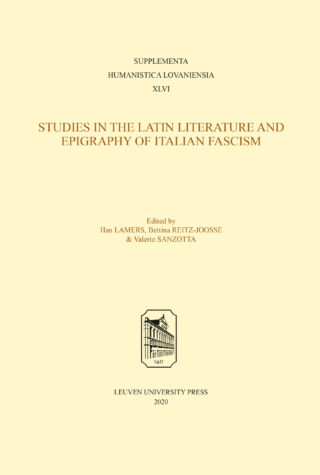
First collected volume dealing with the use of Latin under Fascism
This book deals with the use of Latin as a literary and epigraphic language under Italian Fascism (1922–1943). The myth of Rome lay at the heart of Italian Fascist ideology, and the ancient language of Rome, too, played an important role in the regime’s cultural politics. This collection deepens our understanding of ‘Fascist Latinity’, presents a range of previously little-known material, and opens up a number of new avenues of research. The chapters explore the pivotal role of Latin in constructing a link between ancient Rome and Fascist Italy; the different social and cultural contexts in which Latin texts functioned in the ventennio fascista; and the way in which ‘Fascist Latinity’ relied on, and manipulated, the ‘myth of Rome’ of late nineteenth- and early twentieth-century Italy.
Contributors: William Barton (Ludwig Boltzmann Institute for Neo-Latin Studies), Xavier van Binnebeke (KU Leuven), Paolo Fedeli (Università degli Studi di Bari Aldo Moro), Han Lamers (University of Oslo), Johanna Luggin (Ludwig Boltzmann Institute for Neo-Latin Studies), Antonino Nastasi (Rome), Bettina Reitz-Joosse (University of Groningen), Dirk Sacré (KU Leuven), Valerio Sanzotta (Ludwig Boltzmann Institute for Neo-Latin Studies), Wolfgang Strobl (Toblach).
— List of Illustrations — List of Abbreviations — Han Lamers, Bettina Reitz-Joosse, and Valerio Sanzotta, Introduction: Studies in the Latin Literature and Epigraphy of Italian Fascism — Dirk Sacré, Die neulateinische Literatur in Mussolinis Italien: Eine Einführung — Paolo Fedeli, Uso e abuso della poesia di Orazio nelle odi al Duce e al fascismo — William M. Barton, Pastoral and the Italian Landscape in the ventennio fascista: Natural Themes in the Latin Poetry of F. Sofia Alessio, G. Mazza, and L. Illuminati — Johanna Luggin, Imperium iam tandem Italiae restitutum est. Lateinische Übersetzungen der Reden Mussolinis zum faschistischen Imperium — Wolfgang Strobl, In honorem et memoriam fortissimorum virorum… Zur präfaschistischen und faschistischen Biografie einer Römischen Inschrift — Antonino Nastasi, L’epigrafia in latino negli anni del fascismo. L’uso dei classici tra continuità e fratture — Dirk Sacré, The Certamen Hoeufftianum During the ventennio fascista: An Exploration (With Unpublished Poems by Vittorio Genovesi and Giuseppe Favaro)
Instrumentum bibliographicum — Xavier van Binnebeke, Hoeufft’s Legacy: Neo-Latin Poetry in the Archive of the Certamen PoeticumHoeufftianum (1923-1943) — Bibliography — General Index
Latijnse teksten hielpen Mussolini zijn fascistische gedachtegoed te verankeren
Lofdichten op het fascisme, in het Latijn. Toespraken van Mussolini, vertaald in het Latijn. Inscripties op gevels van gebouwen, in het Latijn. Voor classici Bettina Reitz-Joosse, een Duitse universitair hoofddocent aan de Rijksuniversiteit Groningen, en Han Lamers, een Nederlandse hoogleraar klassieke talen aan de Universiteit van Oslo, is het duidelijk: „Het alom aanwezige Latijn heeft geholpen bij het verankeren van het fascistische gedachtegoed in Italië in het ventennio, de periode van 1922 tot 1943.” Theo Toebosch, nrc.nl, 8 september 2020
This is a well prepared and well executed collection that belongs on the bookshelves of anyone who feels the need to explain the relevance of Neo-Latin studies in the modern period.
Craig Kallendorf, Neo-Latin News, Vol. 69, Nos. 1 & 2., 2021
Frequently Asked Questions
What is "Studies in the Latin Literature and Epigraphy of Italian Fascism" about?
First collected volume dealing with the use of Latin under Fascism
This book deals with the use of Latin as a literary and epigraphic language under Italian Fascism (1922–1943). The myth of Rome lay at the heart of Italian Fascist ideology, and the ancient language of Rome, too, played an important role in the regime’s cultural politics. This collection deepens our understanding of ‘Fascist Latinity’, presents a range of previously little-known material, and opens up a number of new avenues of research. The chapters explore the pivotal role of Latin in constructing a link between ancient Rome and Fascist Italy; the different social and cultural contexts in which Latin texts functioned in the ventennio fascista; and the way in which ‘Fascist Latinity’ relied on, and manipulated, the ‘myth of Rome’ of late nineteenth- and early twentieth-century Italy.
Contributors: William Barton (Ludwig Boltzmann Institute for Neo-Latin Studies), Xavier van Binnebeke (KU Leuven), Paolo Fedeli (Università degli Studi di Bari Aldo Moro), Han Lamers (University of Oslo), Johanna Luggin (Ludwig Boltzmann Institute for Neo-Latin Studies), Antonino Nastasi (Rome), Bettina Reitz-Joosse (University of Groningen), Dirk Sacré (KU Leuven), Valerio Sanzotta (Ludwig Boltzmann Institute for Neo-Latin Studies), Wolfgang Strobl (Toblach).
Who edited "Studies in the Latin Literature and Epigraphy of Italian Fascism"?
"Studies in the Latin Literature and Epigraphy of Italian Fascism" was edited by Han Lamers, Bettina Reitz-Joosse and Valerio Sanzotta.
Han Lamers is professor of Classics at the Department of Philosophy, Classics, and the History of Art and Ideas of the University of Oslo.
Bettina Reitz-Joosse is associate professor of Latin Language and Literature at the University of Groningen.
Valerio Sanzotta is key researcher at the Ludwig Boltzmann Institute for Neo-Latin Studies in Innsbruck.
Is "Studies in the Latin Literature and Epigraphy of Italian Fascism" part of a series?
Yes, "Studies in the Latin Literature and Epigraphy of Italian Fascism" is part of the "Supplementa Humanistica Lovaniensia" series. It's book 46 in the series.
The volumes published before 2000 are free available online.
What is the Table of Contents for "Studies in the Latin Literature and Epigraphy of Italian Fascism"?
— List of Illustrations — List of Abbreviations — Han Lamers, Bettina Reitz-Joosse, and Valerio Sanzotta, Introduction: Studies in the Latin Literature and Epigraphy of Italian Fascism — Dirk Sacré, Die neulateinische Literatur in Mussolinis Italien: Eine Einführung — Paolo Fedeli, Uso e abuso della poesia di Orazio nelle odi al Duce e al fascismo — William M. Barton, Pastoral and the Italian Landscape in the ventennio fascista: Natural Themes in the Latin Poetry of F. Sofia Alessio, G. Mazza, and L. Illuminati — Johanna Luggin, Imperium iam tandem Italiae restitutum est. Lateinische Übersetzungen der Reden Mussolinis zum faschistischen Imperium — Wolfgang Strobl, In honorem et memoriam fortissimorum virorum… Zur präfaschistischen und faschistischen Biografie einer Römischen Inschrift — Antonino Nastasi, L’epigrafia in latino negli anni del fascismo. L’uso dei classici tra continuità e fratture — Dirk Sacré, The Certamen Hoeufftianum During the ventennio fascista: An Exploration (With Unpublished Poems by Vittorio Genovesi and Giuseppe Favaro)
Instrumentum bibliographicum — Xavier van Binnebeke, Hoeufft’s Legacy: Neo-Latin Poetry in the Archive of the Certamen PoeticumHoeufftianum (1923-1943) — Bibliography — General Index
What is the DOI for "Studies in the Latin Literature and Epigraphy of Italian Fascism"?
The Digital Object Identifier (DOI) for "Studies in the Latin Literature and Epigraphy of Italian Fascism" is 10.11116/9789461663122.
Related titles
 Justus Lipsius, Monita et exempla politica / Political Admonitions and Examples
Jan Papy (Editor), Toon Van Houdt (Editor), Marijke Janssens (Editor),
May 2022
 Una lingua morta per letterature vive: il dibattito sul latino come lingua letteraria in età moderna e contemporanea
Valerio Sanzotta (Editor),
January 2020
 John Milton, Epistolarum Familiarium Liber Unus and Uncollected Letters
Estelle Haan (Editor),
October 2019
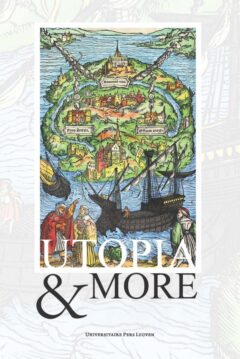 Utopia & More
Dirk Sacré (Editor), Erik De Bom (Editor), Demmy Verbeke (Editor), Gilbert Tournoy (Editor),
October 2016
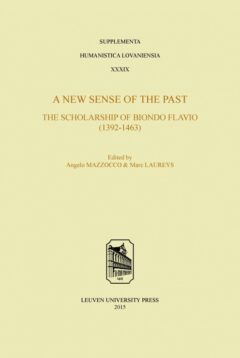 A New Sense of the Past: The Scholarship of Biondo Flavio (1392–1463)
Angelo Mazzocco (Editor), Marc Laureys (Editor),
May 2016
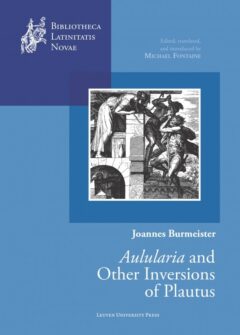 Aulularia and other Inversions of Plautus
Michael Fontaine (), Joannes Burmeister (Author),
July 2015
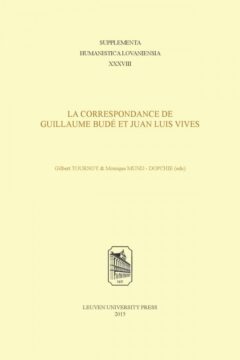 La correspondance de Guillaume Budé et Juan Luis Vives
Gilbert Tournoy (Editor), Monique Mund Dopchie (Editor),
June 2015
 Andreae Alciati Contra Vitam Monasticam Epistula – Andrea Alciato’s Letter Against Monastic Life
Dennis Drysdall (Author),
July 2014
 The Art of Arguing in the World of Renaissance Humanism
Marc Laureys (Editor), Roswitha Simons (Editor),
December 2013
 Icon Animorum or The Mirror of Minds
Mark Riley (Editor), John Barclay (Author), Thomas May (Translator),
November 2013
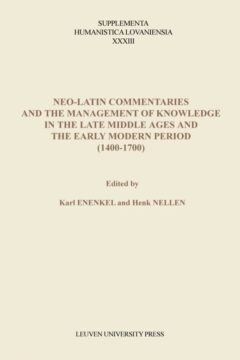 Neo-Latin Commentaries and the Management of Knowledge in the Late Middle Ages and the Early Modern Period (1400 -1700)
Karl A.E. Enenkel (Editor), Henk Nellen (Editor),
July 2013
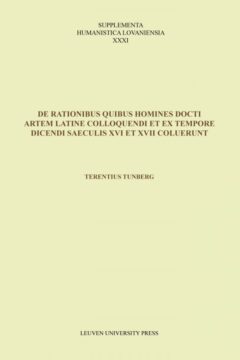 De rationibus quibus homines docti artem Latine colloquendi et ex tempore dicendi saeculis XVI et XVII coluerunt
Terence Tunberg (Author),
March 2013
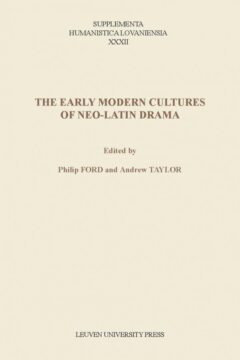 The Early Modern Cultures of Neo-Latin Drama
Philip Ford (Editor), Andrew Taylor (Editor),
February 2013
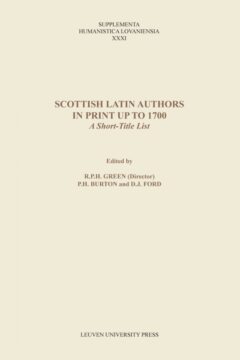 Scottish Latin Authors in Print up to 1700
Roger Green (Author), Philip Burton (Author), Deborah Ford (Author),
June 2012

 Humanistica Lovaniensia, Volume VIII – 2009
Dirk Sacré (Editor), Jan Papy (Editor), Lambert Isebaert (Editor), Monique Mund Dopchie (Editor), Gilbert Tournoy (Editor),
December 2009