

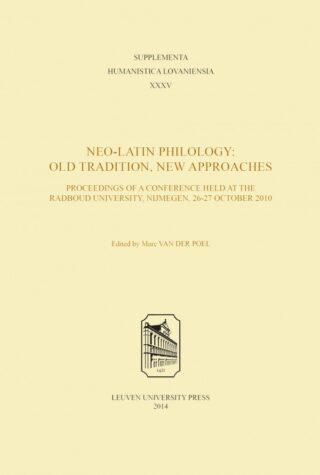
Material Philology and the study of Renaissance Latin literature
Neo-Latin Philology: Old Tradition, New Approaches explores the question whether the approaches developed in the so-called New or Material Philology can be applied to the study of Renaissance Latin literature. Two contributions in this volume focus on theoretical issues, the first presenting a critical assessment of the debate on New Philology in the 1990s, the second providing some guidelines for researchers of the materiality of sources. The remaining seven contributions discuss various ways in which the material presentation in either manuscript or print played a part in the interpretation of a variety of texts, including Basinio of Parma’s Hesperis, Niccolò Perotti’s Cornu copiae, some poems by Janus Secundus, a commentary on Horace’s Ars poetica, Otto Venius’ Emblemata Horatiana, Johann Lauremberg’s play Pompejus Magnus, and the Alithinologia by John Lynch.
Contributors
Haijo Westra (University of Calgary), H. Wayne Storey (Indiana University, Bloomington), Christoph Pieper (Leiden University), Marianne Pade (Academy of Denmark, Rome), David Rijser (University of Amsterdam), Werner J.C.M. Gelderblom (Radboud University Nijmegen), Marc van der Poel (Radboud University Nijmegen), Tom Deneire (Antwerp University Library), Nienke Tjoelker (Ludwig Boltzmann Institute for Neo-Latin Studies, Innsbruck)
CONSPECTUS RERUM
— Marc van der Poel, Introduction
— Haijo J. Westra, What’s in a Name: Old, New, and Material Philology, Textual Scholarship, and Ideology
— H. Wayne Storey, Method, History, and Theory in Material Philology
— Christoph Pieper, In Search of the Marginal Author. The Working Copy of Basinio of Parma’s Hesperis
— Marianne Pade, The Material Fortune of NiccolಠPerotti’s Cornu Copiae in the Fifteenth and Early Sixteenth Centuries
— David Rijser, The Tortuous Path from Anonymity to Authorship: ms bav Vat. Lat. 2742
— Werner J.C.M. Gelderblom, The Materiality of Revision: Manuscript, Print and Revisions in Johannes Secundus’
Poetry
— Marc van der Poel, Venius’ Emblemata Horatiana: Material Fragmentation of a Classical Poet
— Tom Deneire, Antiquarian Latin and the Materiality of Late Humanist Culture:the Case of Johann Lauremberg’s play
Pompejus Magnus (1610)
— Nienke Tjoelker, Reading and Writing in the Early Modern Period: New Philology and the Alithinologia (1664)
— Index nominum
— Notes on the contributors
The authors of these essays agree that material presentation, in manuscript or print, contributes to interpretation, but they argue that the author comes to the fore more clearly in the Renaissance than in the Middle Ages and that the printing press allows for a more stable presentation of both author and text than the codex. In other words, they accept the focus on materiality from the new philology but not the French poststructuralist theory on which it was originally based. This position will not appeal to every reader of these essays, but everyone can, and should, use this collection as a way to think about how the material form in which a text is encountered affects its meaning.
Craig Kallendorf, THE NEO-LATIN NEWS Vol. 63, Nos. 1&2
Frequently Asked Questions
What is "Neo-Latin Philology: Old Tradition, New Approaches" about?
Material Philology and the study of Renaissance Latin literature
Neo-Latin Philology: Old Tradition, New Approaches explores the question whether the approaches developed in the so-called New or Material Philology can be applied to the study of Renaissance Latin literature. Two contributions in this volume focus on theoretical issues, the first presenting a critical assessment of the debate on New Philology in the 1990s, the second providing some guidelines for researchers of the materiality of sources. The remaining seven contributions discuss various ways in which the material presentation in either manuscript or print played a part in the interpretation of a variety of texts, including Basinio of Parma’s Hesperis, Niccolò Perotti's Cornu copiae, some poems by Janus Secundus, a commentary on Horace’s Ars poetica, Otto Venius’ Emblemata Horatiana, Johann Lauremberg's play Pompejus Magnus, and the Alithinologia by John Lynch.
Contributors
Haijo Westra (University of Calgary), H. Wayne Storey (Indiana University, Bloomington), Christoph Pieper (Leiden University), Marianne Pade (Academy of Denmark, Rome), David Rijser (University of Amsterdam), Werner J.C.M. Gelderblom (Radboud University Nijmegen), Marc van der Poel (Radboud University Nijmegen), Tom Deneire (Antwerp University Library), Nienke Tjoelker (Ludwig Boltzmann Institute for Neo-Latin Studies, Innsbruck)
Who edited "Neo-Latin Philology: Old Tradition, New Approaches"?
"Neo-Latin Philology: Old Tradition, New Approaches" was edited by Marc van der Poel.
Marc van der Poel is Professor of Latin at Radboud University Nijmegen.
Is "Neo-Latin Philology: Old Tradition, New Approaches" part of a series?
Yes, "Neo-Latin Philology: Old Tradition, New Approaches" is part of the "Supplementa Humanistica Lovaniensia" series. It's book 35 in the series.
The volumes published before 2000 are free available online.
What is the Table of Contents for "Neo-Latin Philology: Old Tradition, New Approaches"?
CONSPECTUS RERUM
— Marc van der Poel, Introduction
— Haijo J. Westra, What's in a Name: Old, New, and Material Philology, Textual Scholarship, and Ideology
— H. Wayne Storey, Method, History, and Theory in Material Philology
— Christoph Pieper, In Search of the Marginal Author. The Working Copy of Basinio of Parma's Hesperis
— Marianne Pade, The Material Fortune of NiccolಠPerotti's Cornu Copiae in the Fifteenth and Early Sixteenth Centuries
— David Rijser, The Tortuous Path from Anonymity to Authorship: ms bav Vat. Lat. 2742
— Werner J.C.M. Gelderblom, The Materiality of Revision: Manuscript, Print and Revisions in Johannes Secundus'
Poetry
— Marc van der Poel, Venius' Emblemata Horatiana: Material Fragmentation of a Classical Poet
— Tom Deneire, Antiquarian Latin and the Materiality of Late Humanist Culture:the Case of Johann Lauremberg's play
Pompejus Magnus (1610)
— Nienke Tjoelker, Reading and Writing in the Early Modern Period: New Philology and the Alithinologia (1664)
— Index nominum
— Notes on the contributors
Related titles
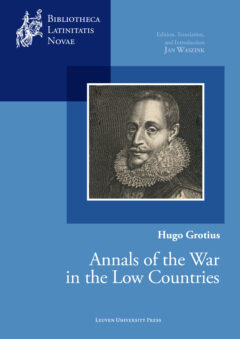
 Justus Lipsius, Monita et exempla politica / Political Admonitions and Examples
Jan Papy (Editor), Toon Van Houdt (Editor), Marijke Janssens (Editor),
May 2022
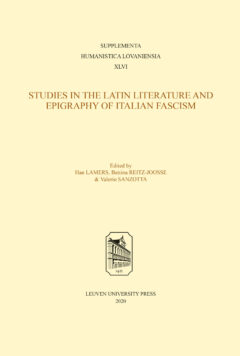 Studies in the Latin Literature and Epigraphy of Italian Fascism
Han Lamers (Editor), Bettina Reitz-Joosse (Editor), Valerio Sanzotta (Editor),
June 2020
 Una lingua morta per letterature vive: il dibattito sul latino come lingua letteraria in età moderna e contemporanea
Valerio Sanzotta (Editor),
January 2020
 John Milton, Epistolarum Familiarium Liber Unus and Uncollected Letters
Estelle Haan (Editor),
October 2019
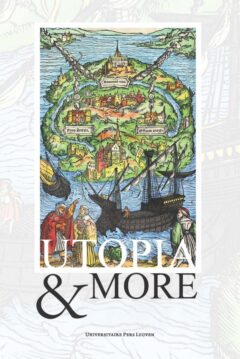 Utopia & More
Dirk Sacré (Editor), Erik De Bom (Editor), Demmy Verbeke (Editor), Gilbert Tournoy (Editor),
October 2016
 A New Sense of the Past: The Scholarship of Biondo Flavio (1392–1463)
Angelo Mazzocco (Editor), Marc Laureys (Editor),
May 2016
 Aulularia and other Inversions of Plautus
Michael Fontaine (), Joannes Burmeister (Author),
July 2015
 La correspondance de Guillaume Budé et Juan Luis Vives
Gilbert Tournoy (Editor), Monique Mund Dopchie (Editor),
June 2015
 Andreae Alciati Contra Vitam Monasticam Epistula – Andrea Alciato’s Letter Against Monastic Life
Dennis Drysdall (Author),
July 2014
 The Art of Arguing in the World of Renaissance Humanism
Marc Laureys (Editor), Roswitha Simons (Editor),
December 2013
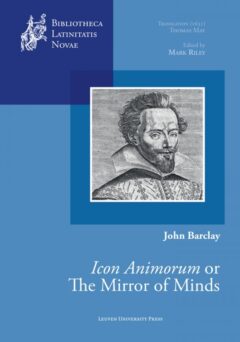 Icon Animorum or The Mirror of Minds
Mark Riley (Editor), John Barclay (Author), Thomas May (Translator),
November 2013
 Neo-Latin Commentaries and the Management of Knowledge in the Late Middle Ages and the Early Modern Period (1400 -1700)
Karl A.E. Enenkel (Editor), Henk Nellen (Editor),
July 2013
 De rationibus quibus homines docti artem Latine colloquendi et ex tempore dicendi saeculis XVI et XVII coluerunt
Terence Tunberg (Author),
March 2013
 The Early Modern Cultures of Neo-Latin Drama
Philip Ford (Editor), Andrew Taylor (Editor),
February 2013
 Scottish Latin Authors in Print up to 1700
Roger Green (Author), Philip Burton (Author), Deborah Ford (Author),
June 2012

 Humanistica Lovaniensia, Volume VIII – 2009
Dirk Sacré (Editor), Jan Papy (Editor), Lambert Isebaert (Editor), Monique Mund Dopchie (Editor), Gilbert Tournoy (Editor),
December 2009