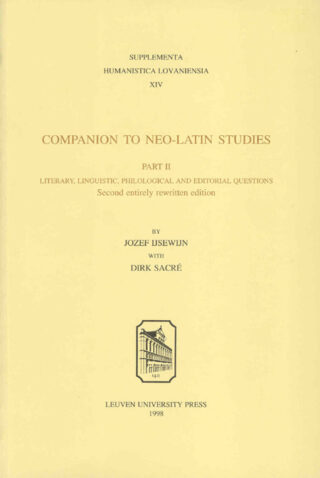
Companion to Neo-Latin Studies
Part II: Literary Linguistic Philological and Editorial Questions
Dirk Sacré (Author), J. IJsewijn (Author),
In 1977 the first edition of the Companion to Neo-Latin Studies appeared. It evidently filled a long-felt lacuna, and was soon out of print. The first part of the second entirely rewritten edition came out in 1990; it consisted in a concise, but comprehensive history of Neo-Latin writings (both literary and scientific) arranged according to geographical and cultural areas (Part I: History and Diffusion of Neo-Latin Literature).
Due to the explosive growth of Neo-Latin studies in the last decades, it took a couple of years to rewrite and to expand the second part. In this volume an attempt is made to cover all the relevant literary forms and genres of Neo-Latin literature; their characteristics and evolution are described and bibliographical aids have been added; the method is descriptive rather than theoretical.
This part is followed by linguistic, philological and editorial questions, discussing the features of Neo-Latin vocabulary, syntax, style, prosody and metre, old and modern editions, etc. A historical survey of Neo-Latin studies concludes the book. Several indexes facilitate access to the varied contents of the work. The two volumes of this Companion form an indispensable and up-to-date introduction to the immense and still largely unexplored field of Neo-Latin literature.
III. Literary genres
-
General aspects
- Ancient Models
- Medieval Survivals
- New Inventions
- Poetry
- Heroic and Didactic Poetry
- Descriptive and Epideictic Poetry (Laudes, Encomia, Silvae etc.)
- Bucolic Poetry
- Satires and Metrical Epistles
- Lyrical Poetry
- Occasional Poetry: Epithalamia, Epicedia, Gratulationes etc.
- Hymns
- Psalms and Other Biblical Paraphrases
- Epigrammatic Poetry
- Fables
- Figure Poems; Acrostichs
- Centones
- Minor Modern Forms of Poetry
- Macaronic Poetry and Prose
- Drama
- The rebirth of Roman Tragedy and Comedy
- The Rediscovery of Greek Drama
- The Mediaeval and Contemporary Contribution
- Characteristics of Neo-Latin Theatre
- Accomplishments of Neo-Latin Theatre
- Latin Drama and the Vernacular
- Literary Prose
- Eloquence: Declamationes, Orationes
- Historiography
- Biography and Autobiography
- Letters
- Dialogues
- Travel Journals and Reports
- Fictional Prose
- Scholarly and Scientific Prose
- Encyclopaedias and Bio-biographical Works
- Typography, Calligraphy, Cryptography
- Pilology and Related Disciplines
- Grammar and Linguistics
- Law (Canon and Civil)
- Theology
- Philosophy, Psychology, Paedagogy, magic
- Political, Social and Economic Sciences
- Arts: Theory, History and Criticism
- Sciences and Medicine
- Journals and Newspapers
- Inscriptions
IV. Language, Style, Prosody and Metrics
-
Language
- Preliminary Remarks
- Vocabulary
- Morphology
- Syntax
- Style
- Latin and the Vernacular
- Prosody and Metrics
- Classical Versification
- Other Forms of Versification
V. Texts and Editions
-
Manuscripts
- Old Printed Texts
- Old Editions
- Catalogues
- Uncatalogued Items
- Reprints
- Microfiches and cd-rom
- Critical Editions
- Editorial Principles
- Spelling and Punctuation
- Commentaries and Related Problems
VI. The Development of Neo-Latin Studies
VII. Corrigenda to Companion, Volume I
Indices
Index Nominum
Index geographicus
Index argumentorum rerumque notabilium
Index codicum manu scriptorum
Index verborum notabilium
Frequently Asked Questions
What is "Companion to Neo-Latin Studies" about?
In 1977 the first edition of the Companion to Neo-Latin Studies appeared. It evidently filled a long-felt lacuna, and was soon out of print. The first part of the second entirely rewritten edition came out in 1990; it consisted in a concise, but comprehensive history of Neo-Latin writings (both literary and scientific) arranged according to geographical and cultural areas (Part I: History and Diffusion of Neo-Latin Literature).
Due to the explosive growth of Neo-Latin studies in the last decades, it took a couple of years to rewrite and to expand the second part. In this volume an attempt is made to cover all the relevant literary forms and genres of Neo-Latin literature; their characteristics and evolution are described and bibliographical aids have been added; the method is descriptive rather than theoretical.
This part is followed by linguistic, philological and editorial questions, discussing the features of Neo-Latin vocabulary, syntax, style, prosody and metre, old and modern editions, etc. A historical survey of Neo-Latin studies concludes the book. Several indexes facilitate access to the varied contents of the work. The two volumes of this Companion form an indispensable and up-to-date introduction to the immense and still largely unexplored field of Neo-Latin literature.
Who wrote "Companion to Neo-Latin Studies"?
"Companion to Neo-Latin Studies" was written by Dirk Sacré and J. IJsewijn.
Dirk Sacré is professor of Latin and Neo-Latin at KU Leuven.
Is "Companion to Neo-Latin Studies" part of a series?
Yes, "Companion to Neo-Latin Studies" is part of the "Supplementa Humanistica Lovaniensia" series. It's book 14 in the series.
The volumes published before 2000 are free available online.
What is the Table of Contents for "Companion to Neo-Latin Studies"?
III. Literary genres
-
General aspects
- Ancient Models
- Medieval Survivals
- New Inventions
- Poetry
- Heroic and Didactic Poetry
- Descriptive and Epideictic Poetry (Laudes, Encomia, Silvae etc.)
- Bucolic Poetry
- Satires and Metrical Epistles
- Lyrical Poetry
- Occasional Poetry: Epithalamia, Epicedia, Gratulationes etc.
- Hymns
- Psalms and Other Biblical Paraphrases
- Epigrammatic Poetry
- Fables
- Figure Poems; Acrostichs
- Centones
- Minor Modern Forms of Poetry
- Macaronic Poetry and Prose
- Drama
- The rebirth of Roman Tragedy and Comedy
- The Rediscovery of Greek Drama
- The Mediaeval and Contemporary Contribution
- Characteristics of Neo-Latin Theatre
- Accomplishments of Neo-Latin Theatre
- Latin Drama and the Vernacular
- Literary Prose
- Eloquence: Declamationes, Orationes
- Historiography
- Biography and Autobiography
- Letters
- Dialogues
- Travel Journals and Reports
- Fictional Prose
- Scholarly and Scientific Prose
- Encyclopaedias and Bio-biographical Works
- Typography, Calligraphy, Cryptography
- Pilology and Related Disciplines
- Grammar and Linguistics
- Law (Canon and Civil)
- Theology
- Philosophy, Psychology, Paedagogy, magic
- Political, Social and Economic Sciences
- Arts: Theory, History and Criticism
- Sciences and Medicine
- Journals and Newspapers
- Inscriptions
IV. Language, Style, Prosody and Metrics
-
Language
- Preliminary Remarks
- Vocabulary
- Morphology
- Syntax
- Style
- Latin and the Vernacular
- Prosody and Metrics
- Classical Versification
- Other Forms of Versification
V. Texts and Editions
Manuscripts
- Old Printed Texts
- Old Editions
- Catalogues
- Uncatalogued Items
- Reprints
- Microfiches and cd-rom
- Critical Editions
- Editorial Principles
- Spelling and Punctuation
- Commentaries and Related Problems
VI. The Development of Neo-Latin Studies
VII. Corrigenda to Companion, Volume I
Indices
Index Nominum
Index geographicus
Index argumentorum rerumque notabilium
Index codicum manu scriptorum
Index verborum notabilium
Related titles
 Justus Lipsius, Monita et exempla politica / Political Admonitions and Examples
Jan Papy (Editor), Toon Van Houdt (Editor), Marijke Janssens (Editor),
May 2022
 Studies in the Latin Literature and Epigraphy of Italian Fascism
Han Lamers (Editor), Bettina Reitz-Joosse (Editor), Valerio Sanzotta (Editor),
June 2020
 Una lingua morta per letterature vive: il dibattito sul latino come lingua letteraria in età moderna e contemporanea
Valerio Sanzotta (Editor),
January 2020
 John Milton, Epistolarum Familiarium Liber Unus and Uncollected Letters
Estelle Haan (Editor),
October 2019
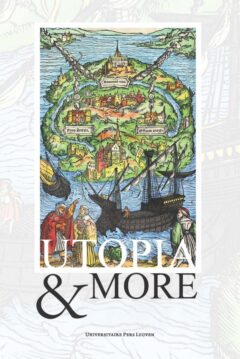 Utopia & More
Dirk Sacré (Editor), Erik De Bom (Editor), Demmy Verbeke (Editor), Gilbert Tournoy (Editor),
October 2016
 A New Sense of the Past: The Scholarship of Biondo Flavio (1392–1463)
Angelo Mazzocco (Editor), Marc Laureys (Editor),
May 2016
 Aulularia and other Inversions of Plautus
Michael Fontaine (), Joannes Burmeister (Author),
July 2015
 La correspondance de Guillaume Budé et Juan Luis Vives
Gilbert Tournoy (Editor), Monique Mund Dopchie (Editor),
June 2015
 Andreae Alciati Contra Vitam Monasticam Epistula – Andrea Alciato’s Letter Against Monastic Life
Dennis Drysdall (Author),
July 2014
 The Art of Arguing in the World of Renaissance Humanism
Marc Laureys (Editor), Roswitha Simons (Editor),
December 2013
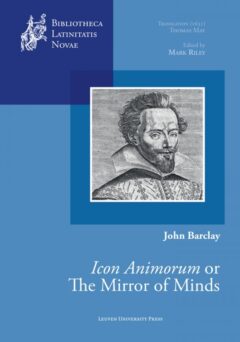 Icon Animorum or The Mirror of Minds
Mark Riley (Editor), John Barclay (Author), Thomas May (Translator),
November 2013
 Neo-Latin Commentaries and the Management of Knowledge in the Late Middle Ages and the Early Modern Period (1400 -1700)
Karl A.E. Enenkel (Editor), Henk Nellen (Editor),
July 2013
 De rationibus quibus homines docti artem Latine colloquendi et ex tempore dicendi saeculis XVI et XVII coluerunt
Terence Tunberg (Author),
March 2013
 The Early Modern Cultures of Neo-Latin Drama
Philip Ford (Editor), Andrew Taylor (Editor),
February 2013
 Scottish Latin Authors in Print up to 1700
Roger Green (Author), Philip Burton (Author), Deborah Ford (Author),
June 2012