Palaeolithic Quarrying Sites in Upper and Middle Egypt
Pierre M. Vermeersch (Author),
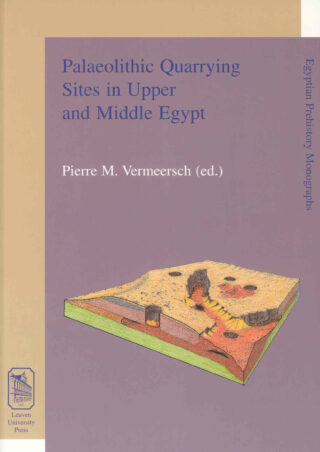
This book is an edited publication of several excavation campaigns in Egypt, oriented towards the understanding of the chert extraction techniques employed by Middle and early Upper Palaeolithic humans in the lower desert of the Egyptian Nile Valley between Tahta and Qena.
It starts with a technical overview of the method of analysis of the lithic assemblages by P. Van Peer.
The chert extraction structures of several Middle Palaeolithic sites and the related lithic assemblages from the sites of Nazlet Khater 1,2 and 3 but also from Beit Allam and Nazlet Safaha 1-5 are studied and illustrated by numerous profiles and artefact drawings by P.M. Vermeersch, P. Van Peer, E. Paulissen and M. Otte. The prehistoric extraction proceeded by cutting trenches into the cobble deposits. The Nubian and the Levallois methods, but also blade technology, were used in the production of the large lithic assemblages. The sites are dated 120-50 ka BP.
The Upper Palaeolithic site Nazlet Khater 4 (by P.M.Vermeersch, E. Paulissen and T. Vanderbeken) is a real mine that was exploited by a system of bell pits and trenches, creating underground galleries from where chert cobbles were extracted. OSL and 14 C dates suggest a time period between 45 and 38 ka BP. A simple technology produced blade blanks. The structures and the assemblage are illustrated by a high number of drawings.
At Nazlet Khater 2, two burials that have been associated with the Upper Palaeolithic mining activities are described in detail. A recent 14C date of 37 ka BP has been obtained on a piece of charcoal from one of the burials. R. Pinhasi relates the results of a biometric study of the affinities of the Nazlet Kather human with other African humans. He points out some archaic features. E. Brünner and G. Manzi discuss the possibilities of the virtual replica of the cranium and the mandible.
S. Stokes and R. Bailey comment on the OSL-dating of Nazlet Safaha and Nazlet Khater 4, whereas A. Gautier studied some non-marine mollucs.
In their conclusions P.M. Vermeersch and P. Van Peer comment on the technological aspects of the assemblages and the different extraction techniques. They point out that the extraction structures are among the oldest well-preserved chert exploitation features from the Old World.
Introduction – P. Vermeersch
-
The Analysis of Middle Palaeolithic Assemblage – P. Van Peer
-
Geomorphology of the Nazlet Khater Area – P. Vermeersch
-
Middle Palaeolithic Chert Quarying at Nazlet Kahter 1 – P. Vermeersch, P. Van Peer, E. Paulissen
-
Middle Palaeolithic Chert Quarying at Nazlet Kahter 2 – P. Vermeersch, P. Van Peer, E. Paulissen
-
Middle Palaeolithic Chert Quarying at Nazlet Kahter 3 – P. Vermeersch, P. Van Peer, E. Paulissen
-
Middle Palaeolithic Chert Quarying at Beit Allam – M. Otte, P. Vermeersch, E. Paulissen, G. Gijselings
-
Chert Quarying in the Nazlet Safaha Area – P. Van Peer, P. Vermeersch, E. Paulissen
-
Nazlet Kahter 4, an Upper Palaeolithic Underground Chert Mine – P. Vermeersch, E. Paulissen, T. Vanderbeken
-
Two Upper Palaeolithic Burials at Nazlet Khater – P. Vermeersch
-
Biometric Study of the Affinities of NK – A Quantitative Analysis of Mandible Dimensions – R. Pinhasi
-
The Virtual Replica of Nazlet Khater, Egypt, Cranium and Mandible – E. Brünner, G. Manzi
-
More Extraction Sites at Nazlet Kahter – P.M. Vermeersch, P. Van Peer
-
OSL-Dating of Nazlet Safaha and Nazlet Khater 4 – S. Stokes, R. Bailey
-
Notes on Some Non Marine Molluscs Collected at Nazlet Khater, Beit Allam and Al Amra – A. Gautier
-
Conclusions on the Palaeolithic Chert Extraction in Egypt – P. Vermeersch, P. Van Peer
-
References
Frequently Asked Questions
What is "Palaeolithic Quarrying Sites in Upper and Middle Egypt" about?
This book is an edited publication of several excavation campaigns in Egypt, oriented towards the understanding of the chert extraction techniques employed by Middle and early Upper Palaeolithic humans in the lower desert of the Egyptian Nile Valley between Tahta and Qena.
It starts with a technical overview of the method of analysis of the lithic assemblages by P. Van Peer.
The chert extraction structures of several Middle Palaeolithic sites and the related lithic assemblages from the sites of Nazlet Khater 1,2 and 3 but also from Beit Allam and Nazlet Safaha 1-5 are studied and illustrated by numerous profiles and artefact drawings by P.M. Vermeersch, P. Van Peer, E. Paulissen and M. Otte. The prehistoric extraction proceeded by cutting trenches into the cobble deposits. The Nubian and the Levallois methods, but also blade technology, were used in the production of the large lithic assemblages. The sites are dated 120-50 ka BP.
The Upper Palaeolithic site Nazlet Khater 4 (by P.M.Vermeersch, E. Paulissen and T. Vanderbeken) is a real mine that was exploited by a system of bell pits and trenches, creating underground galleries from where chert cobbles were extracted. OSL and 14 C dates suggest a time period between 45 and 38 ka BP. A simple technology produced blade blanks. The structures and the assemblage are illustrated by a high number of drawings.
At Nazlet Khater 2, two burials that have been associated with the Upper Palaeolithic mining activities are described in detail. A recent 14C date of 37 ka BP has been obtained on a piece of charcoal from one of the burials. R. Pinhasi relates the results of a biometric study of the affinities of the Nazlet Kather human with other African humans. He points out some archaic features. E. Brünner and G. Manzi discuss the possibilities of the virtual replica of the cranium and the mandible.
S. Stokes and R. Bailey comment on the OSL-dating of Nazlet Safaha and Nazlet Khater 4, whereas A. Gautier studied some non-marine mollucs.
In their conclusions P.M. Vermeersch and P. Van Peer comment on the technological aspects of the assemblages and the different extraction techniques. They point out that the extraction structures are among the oldest well-preserved chert exploitation features from the Old World.
Who wrote "Palaeolithic Quarrying Sites in Upper and Middle Egypt"?
"Palaeolithic Quarrying Sites in Upper and Middle Egypt" was written by Pierre M. Vermeersch.
Pierre Vermeersch is Professor of Prehistory at KU Leuven.
Is "Palaeolithic Quarrying Sites in Upper and Middle Egypt" part of a series?
Yes, "Palaeolithic Quarrying Sites in Upper and Middle Egypt" is part of the "Egyptian Prehistory Monographs" series. It's book 4 in the series.
What is the Table of Contents for "Palaeolithic Quarrying Sites in Upper and Middle Egypt"?
Introduction - P. Vermeersch
The Analysis of Middle Palaeolithic Assemblage - P. Van Peer
Geomorphology of the Nazlet Khater Area - P. Vermeersch
Middle Palaeolithic Chert Quarying at Nazlet Kahter 1 - P. Vermeersch, P. Van Peer, E. Paulissen
Middle Palaeolithic Chert Quarying at Nazlet Kahter 2 - P. Vermeersch, P. Van Peer, E. Paulissen
Middle Palaeolithic Chert Quarying at Nazlet Kahter 3 - P. Vermeersch, P. Van Peer, E. Paulissen
Middle Palaeolithic Chert Quarying at Beit Allam - M. Otte, P. Vermeersch, E. Paulissen, G. Gijselings
Chert Quarying in the Nazlet Safaha Area - P. Van Peer, P. Vermeersch, E. Paulissen
Nazlet Kahter 4, an Upper Palaeolithic Underground Chert Mine - P. Vermeersch, E. Paulissen, T. Vanderbeken
Two Upper Palaeolithic Burials at Nazlet Khater - P. Vermeersch
Biometric Study of the Affinities of NK - A Quantitative Analysis of Mandible Dimensions - R. Pinhasi
The Virtual Replica of Nazlet Khater, Egypt, Cranium and Mandible - E. Brünner, G. Manzi
More Extraction Sites at Nazlet Kahter - P.M. Vermeersch, P. Van Peer
OSL-Dating of Nazlet Safaha and Nazlet Khater 4 - S. Stokes, R. Bailey
Notes on Some Non Marine Molluscs Collected at Nazlet Khater, Beit Allam and Al Amra - A. Gautier
Conclusions on the Palaeolithic Chert Extraction in Egypt - P. Vermeersch, P. Van Peer
References
Related titles
 German–Rapanui Entanglements
Cristián Moreno Pakarati (Editor), Diego Muñoz (Editor), Philipp Schorch (Editor),
August 2026

 Of Goblins and Gods
Andrew J. Shortland (Editor), Victoria Kemp (Editor), Lasse Hermansen Bjørnland (Editor), Patrick Degryse (Editor),
February 2026
 Modern Etruscans
Chiara Zampieri (Editor), Martina Piperno (Editor), Bart Van den Bossche (Editor),
October 2023
 The Elemental Analysis of Glass Beads
Laure Dussubieux (Editor), Heather Walder (Editor),
October 2022

 Mapping Landscapes in Transformation
Thomas Coomans (Editor), Bieke Cattoor (Editor), Krista De Jonge (Editor),
June 2019
 The Lower to Middle Palaeolithic Transition in Northwestern Europe
Ann Van Baelen (Author),
October 2017
 Minoan Earthquakes
Simon Jusseret (Editor), Manuel Sintubin (Editor), Jan Driessen (Preface by),
April 2017
 Handheld XRF for Art and Archaeology (paperback)
Aaron N. Shugar (Editor), Jennifer L. Mass (Editor),
November 2013

 Handheld XRF for Art and Archaeology
Aaron N. Shugar (Editor), Jennifer L. Mass (Editor),
March 2013
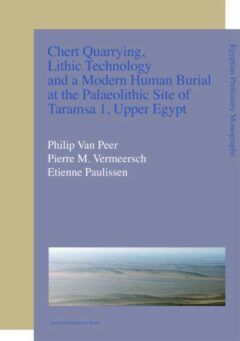 Chert Quarrying, Lithic Technology, and a Modern Human Burial at the Palaeolithic Site of Taramsa 1, Upper Egypt
Philip Van Peer (Author), Pierre M. Vermeersch (Author), Etienne Paulissen (Author),
April 2010
 Isotopes in Vitreous Materials
Patrick Degryse (Editor), Julian Henderson (Editor), Greg Hodgins (Editor),
March 2013
 Etude anthropologique du squelette du Paléolithique supérieur de Nazlet Khater 2 (Egypte)
Isabelle Crevecoeur (Author),
December 2008
 A Holocene Prehistoric Sequence in the Egyptian Red Sea Area: The Tree Shelter
Pierre M. Vermeersch (Editor),
July 2008