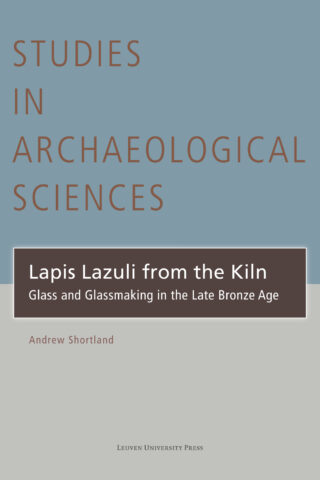
Lapis Lazuli from the Kiln
Glass and Glassmaking in the Late Bronze Age
Andrew J. Shortland (Author),
Lapis Lazuli from the Kiln examines the history of the first glass, from its early sporadic occurrence, through the height of its production in the late second millennium BC, to its disappearance at the end of that millennium. The book draws on an exceptionally wide range of sources including ancient texts detailing recipes and trade in glass, iconographic depictions in tombs and temples, archaeological excavation of the most important sites including Amarna and Qantir, and the description of the glass objects themselves. The area covered includes the heart of glassmaking and use in Egypt and the Near East, as well as those areas were glass might have been traded, i.e. the Levant and the Mycenaean Aegean. The life of the glassmaker, his place in society and relationship to other industries are also considered. The book especially details the use of scientific analysis to provide information for the reconstruction of the history of this glass and highlights the importance of analysis in validating or challenging archaeological and textual interpretations. Although describing the most up to date scientific techniques and interpretations, it is written from a non-technical viewpoint and includes systematic glossaries detailing the technical terminology used as well as the most important sites, object types and periods. The book is designed to be a specific study for the student of archaeology demonstrating the general themes of how scientific analysis can assist in the reconstruction of ancient material culture and the society in which it used.
Table of Contents
List of illustrations
List of color figures
List of tables
1 Introduction
1.1 The structure of glass
1.2 Glassmaking and glass melting
1.3 Glasses and other vitreous materials
2 Introduction to Egypt and the Near East in the Late Bronze Age
2.1 Politics and peoples
2.2 Everyday life
2.3 Crafts and industries
3 The first glass
3.1 Glass before the sixteenth century BC
4 The first regularly produced glass
4.1 Northern Syro-Palestine and Mesopotamia
4.2 Egypt
4.3 Source of the glass
4.4 Towards model for the birth of glassmaking
4.5 After Tuthmosis III – the reign of Amenhotep II
4.6 Analysis and the glass of Tuthmosis III and Amenhotep II
4.7 The first glassmaking workshops
4.8 After Amenhotep II
4.9 Summary of the first glass vessels
5 The Golden Age of glass
5.1 Significant finds of glass
5.2 Nuzi
5.3 Amarna
5.4 Tutankhamen
5.5 Objects of glass in the Late Bronze Age
6 The glass industry and its workshops
6.1 Glassmaking sites
6.2 The organisation of glass workshops
6.3 Qantir
6.4 Other Glass Workshops
6.5 The manufacturing process
6.6 Raw materials
6.7 Technology
6.8 Analysis and the reconstruction of glassmaking
6.9 Glassworking
7 Trade and display
7.1 Value
7.2 Egyptian scenes
7.3 Glass Ingots and Ulu Burun
7.4 Amarna Letters
7.5 Glass in the Levant
7.6 Analysis and the trade in glass
7.7 Aegean and mainland Greece
7.8 Bronze Age Europe
8 The decline in glassmaking
Appendix – Analytical techniques
A.1 Basics
A.2 Scanning Electron Microscope (SEM)
A.3 Microprobe (SEM-WDS)
A.4 Laser Ablation Inductively Coupled Plasma Mass Spectrometry (LA-ICPMS)
A.5 Lead isotope analysis (LIA)
A.6 Strontium isotopic analysis
A.7 Neodymium isotopic analysis
Appendix – Analyses
References
Glossary
Color figures
Andrew J. Shortland
Andrew J. Shortland is Professor of Archaeological Science at Cranfield University, working on the identification and interpretation of material culture from the ancient and historical worlds.
The author presents an outstanding amount of detail and information about the history, the importance, chemical composition, structure and, the utility of glass and glassmaking during the Late Bronze Age in this text. I recommend this text to every archaeology student or anyone interested in glass.
Reviewed by Michael B. Jacobs, Department of Chemistry, Metropolitan State University of Denver
SAS Bulletin, volume 36, number 1, Spring 2013, page 25 >>>
In summary, Lapis Lazuli from the Kiln is a very useful resource, particularly for the student or for those who are new to the material or to the Late Bronze Age, for whom it provides a good introduction to the huge volume of research on glass production in this period. The glossary, images, analytical data and the overview of the subject provided by the text are useful; the integration of analytical, archaeological, historical and linguistic aspects is well managed; and the book is well written and accessible.
Chloë N. Duckworth, Glass News, number 34, July 2013
Frequently Asked Questions
What is "Lapis Lazuli from the Kiln" about?
Lapis Lazuli from the Kiln examines the history of the first glass, from its early sporadic occurrence, through the height of its production in the late second millennium BC, to its disappearance at the end of that millennium. The book draws on an exceptionally wide range of sources including ancient texts detailing recipes and trade in glass, iconographic depictions in tombs and temples, archaeological excavation of the most important sites including Amarna and Qantir, and the description of the glass objects themselves. The area covered includes the heart of glassmaking and use in Egypt and the Near East, as well as those areas were glass might have been traded, i.e. the Levant and the Mycenaean Aegean. The life of the glassmaker, his place in society and relationship to other industries are also considered. The book especially details the use of scientific analysis to provide information for the reconstruction of the history of this glass and highlights the importance of analysis in validating or challenging archaeological and textual interpretations. Although describing the most up to date scientific techniques and interpretations, it is written from a non-technical viewpoint and includes systematic glossaries detailing the technical terminology used as well as the most important sites, object types and periods. The book is designed to be a specific study for the student of archaeology demonstrating the general themes of how scientific analysis can assist in the reconstruction of ancient material culture and the society in which it used.
Who wrote "Lapis Lazuli from the Kiln"?
"Lapis Lazuli from the Kiln" was written by Andrew J. Shortland.
Andrew J. Shortland is Professor of Archaeological Science at Cranfield University, working on the identification and interpretation of material culture from the ancient and historical worlds.
Is "Lapis Lazuli from the Kiln" part of a series?
Yes, "Lapis Lazuli from the Kiln" is part of the "Studies in Archaeological Sciences" series. It's book 2 in the series.
Studies in Archaeological Sciences presents state-of-the-art methodological, technical or material science contributions to Archaeological Sciences. The series aims to reconstruct the integrated story of human and material culture through time and testifies to the necessity of inter- and multidisciplinary research in cultural heritage studies. Studies in Archaeological Sciences aims to publish at least one volume a year and accepts monographs as well as coherent edited volumes in English. Contributions should be set up to be a specialist reference work for a broad audience of academic readers. Manuscript should be 80.000 to 120.000 words in length and may include graphs and tables in black and white. All contributions are submitted to international peer review.

Readership
Researchers and graduate students in fields such as Archaeology, Archaeological Sciences, History, Conservation and Cultural Heritage Studies and Museum Sciences.
Editor-in-Chief
Prof. Patrick Degryse, Centre for Archaeological Sciences, KU Leuven, Belgium
Editorial Board
Prof. Dennis Braeckmans, Department of Archaeological Sciences, Universiteit Leiden, The Netherlands
Prof. Ian Freestone, Institute of Archaeology, University College London, United Kingdom
Dr. Andrew Meek, Department of Scientific Research, The British Museum
Dr. Andrew Shortland, Centre for Archaeological and Forensic Analysis, Cranfield University, United Kingdom
Prof. Manuel Sintubin, Department of Earth & Environmental Sciences, KU Leuven, Belgium
Invitation to future Advisory Board members
Scholars interested to join the Advisory Board of this new series are cordially invited to contact Prof. Patrick Degryse (Editor-in-Chief) or one of the editorial board members.
Proposals
Proposals and inquiries can be sent to to editor-in- chief Patrick Degryse or one of the editorial board members. Please send a preliminary abstract (1-2 pp.) and a short bio. Upon approval of this abstract (average turnaround time of 4 weeks), the full manuscript will be submitted to international peer review. Two peer reviewers will be asked for expert advice, three in case of conflicting reports.
Please make use of the submission form to present your manuscript or proposal to our board.
Authors interested in Open Access can consult the available funding options.
Links & Resources
What is the Table of Contents for "Lapis Lazuli from the Kiln"?
Table of Contents
List of illustrations
List of color figures
List of tables
1 Introduction
1.1 The structure of glass
1.2 Glassmaking and glass melting
1.3 Glasses and other vitreous materials
2 Introduction to Egypt and the Near East in the Late Bronze Age
2.1 Politics and peoples
2.2 Everyday life
2.3 Crafts and industries
3 The first glass
3.1 Glass before the sixteenth century BC
4 The first regularly produced glass
4.1 Northern Syro-Palestine and Mesopotamia
4.2 Egypt
4.3 Source of the glass
4.4 Towards model for the birth of glassmaking
4.5 After Tuthmosis III - the reign of Amenhotep II
4.6 Analysis and the glass of Tuthmosis III and Amenhotep II
4.7 The first glassmaking workshops
4.8 After Amenhotep II
4.9 Summary of the first glass vessels
5 The Golden Age of glass
5.1 Significant finds of glass
5.2 Nuzi
5.3 Amarna
5.4 Tutankhamen
5.5 Objects of glass in the Late Bronze Age
6 The glass industry and its workshops
6.1 Glassmaking sites
6.2 The organisation of glass workshops
6.3 Qantir
6.4 Other Glass Workshops
6.5 The manufacturing process
6.6 Raw materials
6.7 Technology
6.8 Analysis and the reconstruction of glassmaking
6.9 Glassworking
7 Trade and display
7.1 Value
7.2 Egyptian scenes
7.3 Glass Ingots and Ulu Burun
7.4 Amarna Letters
7.5 Glass in the Levant
7.6 Analysis and the trade in glass
7.7 Aegean and mainland Greece
7.8 Bronze Age Europe
8 The decline in glassmaking
Appendix - Analytical techniques
A.1 Basics
A.2 Scanning Electron Microscope (SEM)
A.3 Microprobe (SEM-WDS)
A.4 Laser Ablation Inductively Coupled Plasma Mass Spectrometry (LA-ICPMS)
A.5 Lead isotope analysis (LIA)
A.6 Strontium isotopic analysis
A.7 Neodymium isotopic analysis
Appendix - Analyses
References
Glossary
Color figures
Related titles
 German–Rapanui Entanglements
Cristián Moreno Pakarati (Editor), Diego Muñoz (Editor), Philipp Schorch (Editor),
August 2026

 Of Goblins and Gods
Andrew J. Shortland (Editor), Victoria Kemp (Editor), Lasse Hermansen Bjørnland (Editor), Patrick Degryse (Editor),
February 2026
 Modern Etruscans
Chiara Zampieri (Editor), Martina Piperno (Editor), Bart Van den Bossche (Editor),
October 2023
 The Elemental Analysis of Glass Beads
Laure Dussubieux (Editor), Heather Walder (Editor),
October 2022
 Mapping Landscapes in Transformation
Thomas Coomans (Editor), Bieke Cattoor (Editor), Krista De Jonge (Editor),
June 2019
 The Lower to Middle Palaeolithic Transition in Northwestern Europe
Ann Van Baelen (Author),
October 2017
 Minoan Earthquakes
Simon Jusseret (Editor), Manuel Sintubin (Editor), Jan Driessen (Preface by),
April 2017
 Handheld XRF for Art and Archaeology (paperback)
Aaron N. Shugar (Editor), Jennifer L. Mass (Editor),
November 2013
 Handheld XRF for Art and Archaeology
Aaron N. Shugar (Editor), Jennifer L. Mass (Editor),
March 2013
 Chert Quarrying, Lithic Technology, and a Modern Human Burial at the Palaeolithic Site of Taramsa 1, Upper Egypt
Philip Van Peer (Author), Pierre M. Vermeersch (Author), Etienne Paulissen (Author),
April 2010
 Isotopes in Vitreous Materials
Patrick Degryse (Editor), Julian Henderson (Editor), Greg Hodgins (Editor),
March 2013
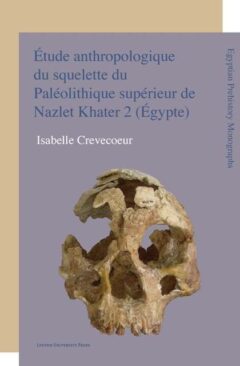 Etude anthropologique du squelette du Paléolithique supérieur de Nazlet Khater 2 (Egypte)
Isabelle Crevecoeur (Author),
December 2008
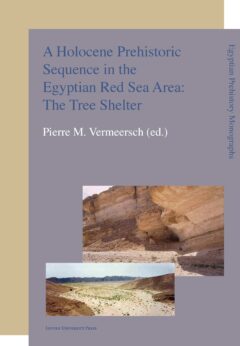 A Holocene Prehistoric Sequence in the Egyptian Red Sea Area: The Tree Shelter
Pierre M. Vermeersch (Editor),
July 2008