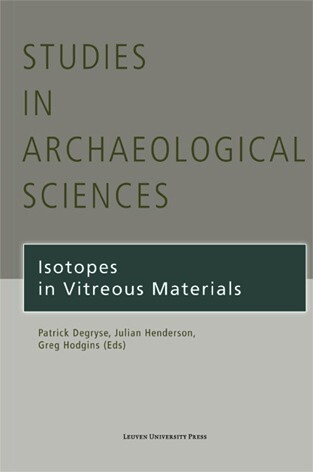
For all archaeological artefactual evidence, the study of the provenance, production technology and trade of raw materials must be based on archaeometry. Whereas the study of the provenance and trade of stone and ceramics is already well advanced, this is not necessarily the case for ancient glass. The nature of the raw materials used and the geographical location of their transformation into artefacts often remain unclear. Currently, these questions are addressed by the use of radiogenic isotope analysis. With the specific information the technique provides, archaeologists can further their understanding of the of ancient glass production, based not only on typo-morphological features but also on exact scientific methods. The book captures the state of the art in this rapidly advancing field. It includes methodological papers on isotope analysis, innovative applications of several isotope systems to current questions in glass and glaze research, and advances in the knowledge of the economy of vitreous materials.
List of Illustrations
List of Tables
P. Degryse, J. Henderson, G. Hodgins, Isotopes in vitreous materials, a state-of-the-art and perspectives
I.C. Freestone, S. Wolf, M. Thirlwall, Isotopic composition of glass from the Levant and the south-eastern Mediterranean Region
P. Degryse, J. Schneider, V. Lauwers, J. Henderson, B. Van Daele, M. Martens, H. Huisman, D. De Muynck, P. Muchez, Neodymium and strontium isotopes in the provenance determination of primary natron glass production
J. Henderson, J. Evans, Y. Barkoudah, The provenance of Syrian plant ash glass: an isotopic approach
A.J. Shortland, The implications of lead isotope analysis for the source of pigments in Late Bronze Age Egyptian vitreous materials
D. Dungworth, P. Degryse, J. Schneider, Kelp in historic glass: the application of strontium isotope analysis
P. Marzo, F. Laborda, J. Pérez-Arantegui, Medieval and postmedieval Hispano-Moresque glazed ceramics: new possibilities of characterization by means of lead isotope ratio determination by Quadrupole ICP-MS 131
M.S. Walton, PLS regression to determine lead isotope ratios of Roman lead glazed ceramics by laser ablation TOF-ICP-MS 145
List of Authors
The Editors
Patrick Degryse
Patrick Degryse is Professor of Archaeometry at KU Leuven, studying the history and use of mineral resources in ancient technology.
Julian Henderson
Julian Henderson is Professor of Archaeological Science at the department of Archaeology, School of Humanities, at the University of Nottingham, UK.
Greg Hodgins
Greg Hodgins is an Assistant Research Scientist and an Assistant Professor of Anthropology at the National Science Foundation - Arizona Accelerator Mass Spectrometry Laboratory, University of Arizona, Tucson, AZ, USA.
This volume is a welcome and needed synthesis of isotopic analyses of inorganic vitreous archaeological materials. Discussions in various chapters on the history of the use of recent isotopic analysis of archaeological materials are very useful and make this book invaluable to scholars and students needing to understand some basics. Provenance, an important question for archaeologists, was adequately addressed in nearly all chapters.
Reviewed by Thomas R. Fenn, School of Anthropology, University of Arizona, Tucson for Journal of Field Archaeology 2011 VOL. 36 NO. 1
This volume is a welcome and needed synthesis of isotopic analyses of inorganic vitreous archaeological materials. Discussions in various chapters on the history of the use of recent isotopic analysis of archaeological materials are very useful and make this book invaluable to scholars and students needing to understand some basics. Provenance, an important question for archaeologists, was adequately addressed in nearly all chapters.
Reviewed by Thomas R. Fenn, School of Anthropology, University of Arizona, Tucson for Journal of Field Archaeology 2011 VOL. 36 NO. 1
Frequently Asked Questions
What is "Isotopes in Vitreous Materials" about?
For all archaeological artefactual evidence, the study of the provenance, production technology and trade of raw materials must be based on archaeometry. Whereas the study of the provenance and trade of stone and ceramics is already well advanced, this is not necessarily the case for ancient glass. The nature of the raw materials used and the geographical location of their transformation into artefacts often remain unclear. Currently, these questions are addressed by the use of radiogenic isotope analysis. With the specific information the technique provides, archaeologists can further their understanding of the of ancient glass production, based not only on typo-morphological features but also on exact scientific methods. The book captures the state of the art in this rapidly advancing field. It includes methodological papers on isotope analysis, innovative applications of several isotope systems to current questions in glass and glaze research, and advances in the knowledge of the economy of vitreous materials.
Who edited "Isotopes in Vitreous Materials"?
"Isotopes in Vitreous Materials" was edited by Patrick Degryse, Julian Henderson and Greg Hodgins.
Patrick Degryse is Professor of Archaeometry at KU Leuven, studying the history and use of mineral resources in ancient technology.
Julian Henderson is Professor of Archaeological Science at the department of Archaeology, School of Humanities, at the University of Nottingham, UK.
Greg Hodgins is an Assistant Research Scientist and an Assistant Professor of Anthropology at the National Science Foundation - Arizona Accelerator Mass Spectrometry Laboratory, University of Arizona, Tucson, AZ, USA.
Is "Isotopes in Vitreous Materials" part of a series?
Yes, "Isotopes in Vitreous Materials" is part of the "Studies in Archaeological Sciences" series. It's book 1 in the series.
Studies in Archaeological Sciences presents state-of-the-art methodological, technical or material science contributions to Archaeological Sciences. The series aims to reconstruct the integrated story of human and material culture through time and testifies to the necessity of inter- and multidisciplinary research in cultural heritage studies. Studies in Archaeological Sciences aims to publish at least one volume a year and accepts monographs as well as coherent edited volumes in English. Contributions should be set up to be a specialist reference work for a broad audience of academic readers. Manuscript should be 80.000 to 120.000 words in length and may include graphs and tables in black and white. All contributions are submitted to international peer review.

Readership
Researchers and graduate students in fields such as Archaeology, Archaeological Sciences, History, Conservation and Cultural Heritage Studies and Museum Sciences.
Editor-in-Chief
Prof. Patrick Degryse, Centre for Archaeological Sciences, KU Leuven, Belgium
Editorial Board
Prof. Dennis Braeckmans, Department of Archaeological Sciences, Universiteit Leiden, The Netherlands
Prof. Ian Freestone, Institute of Archaeology, University College London, United Kingdom
Dr. Andrew Meek, Department of Scientific Research, The British Museum
Dr. Andrew Shortland, Centre for Archaeological and Forensic Analysis, Cranfield University, United Kingdom
Prof. Manuel Sintubin, Department of Earth & Environmental Sciences, KU Leuven, Belgium
Invitation to future Advisory Board members
Scholars interested to join the Advisory Board of this new series are cordially invited to contact Prof. Patrick Degryse (Editor-in-Chief) or one of the editorial board members.
Proposals
Proposals and inquiries can be sent to to editor-in- chief Patrick Degryse or one of the editorial board members. Please send a preliminary abstract (1-2 pp.) and a short bio. Upon approval of this abstract (average turnaround time of 4 weeks), the full manuscript will be submitted to international peer review. Two peer reviewers will be asked for expert advice, three in case of conflicting reports.
Please make use of the submission form to present your manuscript or proposal to our board.
Authors interested in Open Access can consult the available funding options.
Links & Resources
What is the Table of Contents for "Isotopes in Vitreous Materials"?
List of Illustrations
List of Tables
P. Degryse, J. Henderson, G. Hodgins, Isotopes in vitreous materials, a state-of-the-art and perspectives
I.C. Freestone, S. Wolf, M. Thirlwall, Isotopic composition of glass from the Levant and the south-eastern Mediterranean Region
P. Degryse, J. Schneider, V. Lauwers, J. Henderson, B. Van Daele, M. Martens, H. Huisman, D. De Muynck, P. Muchez, Neodymium and strontium isotopes in the provenance determination of primary natron glass production
J. Henderson, J. Evans, Y. Barkoudah, The provenance of Syrian plant ash glass: an isotopic approach
A.J. Shortland, The implications of lead isotope analysis for the source of pigments in Late Bronze Age Egyptian vitreous materials
D. Dungworth, P. Degryse, J. Schneider, Kelp in historic glass: the application of strontium isotope analysis
P. Marzo, F. Laborda, J. Pérez-Arantegui, Medieval and postmedieval Hispano-Moresque glazed ceramics: new possibilities of characterization by means of lead isotope ratio determination by Quadrupole ICP-MS 131
M.S. Walton, PLS regression to determine lead isotope ratios of Roman lead glazed ceramics by laser ablation TOF-ICP-MS 145
List of Authors
The Editors
Related titles
 German–Rapanui Entanglements
Cristián Moreno Pakarati (Editor), Diego Muñoz (Editor), Philipp Schorch (Editor),
August 2026

 Of Goblins and Gods
Andrew J. Shortland (Editor), Victoria Kemp (Editor), Lasse Hermansen Bjørnland (Editor), Patrick Degryse (Editor),
February 2026
 Modern Etruscans
Chiara Zampieri (Editor), Martina Piperno (Editor), Bart Van den Bossche (Editor),
October 2023
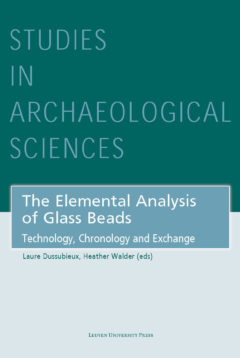 The Elemental Analysis of Glass Beads
Laure Dussubieux (Editor), Heather Walder (Editor),
October 2022
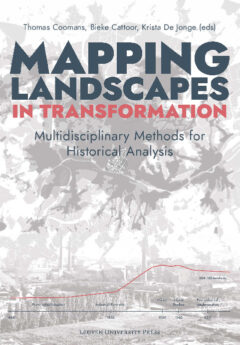 Mapping Landscapes in Transformation
Thomas Coomans (Editor), Bieke Cattoor (Editor), Krista De Jonge (Editor),
June 2019
 The Lower to Middle Palaeolithic Transition in Northwestern Europe
Ann Van Baelen (Author),
October 2017
 Minoan Earthquakes
Simon Jusseret (Editor), Manuel Sintubin (Editor), Jan Driessen (Preface by),
April 2017
 Handheld XRF for Art and Archaeology (paperback)
Aaron N. Shugar (Editor), Jennifer L. Mass (Editor),
November 2013
 Handheld XRF for Art and Archaeology
Aaron N. Shugar (Editor), Jennifer L. Mass (Editor),
March 2013
 Chert Quarrying, Lithic Technology, and a Modern Human Burial at the Palaeolithic Site of Taramsa 1, Upper Egypt
Philip Van Peer (Author), Pierre M. Vermeersch (Author), Etienne Paulissen (Author),
April 2010
 Etude anthropologique du squelette du Paléolithique supérieur de Nazlet Khater 2 (Egypte)
Isabelle Crevecoeur (Author),
December 2008
 A Holocene Prehistoric Sequence in the Egyptian Red Sea Area: The Tree Shelter
Pierre M. Vermeersch (Editor),
July 2008