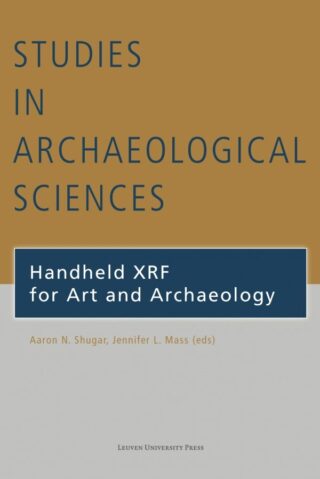
Handheld XRF for Art and Archaeology (paperback)
Aaron N. Shugar (Editor), Jennifer L. Mass (Editor),
Applications, possibilities, and limitations of handheld XRF in art conservation and archaeology.
Over the last decade the technique of X-ray fluorescence has evolved, from dependence on laboratory-based standalone units to field use of portable and lightweight handheld devices. These portable instruments have given researchers in art conservation and archaeology the opportunity to study a broad range of materials with greater accessibility and flexibility than ever before. This volume focuses specifically on the applications, possibilities, and limitations of handheld XRF in art conservation and archaeology. The papers deal with experimental methodologies, protocols, and possibilities of handheld XRF analysis in dealing with the complexity of materials encountered in this research.
Table of Contents
List of illustrations
List of tables
Chapter 1
Introduction
Aaron N. Shugar and Jennifer L. Mass
Chapter 2
Handheld X-ray fluorescence analysis of Renaissance bronzes: Practical approaches to quantification and acquisition
Dylan Smith
Chapter 3
Application of a handheld XRF spectrometer in research and identification of photographs
Dusan C. Stulik and Art Kaplan
Chapter 4
Handheld XRF for the examination of paintings: proper use and limitations
Chris McGlinchey
Chapter 5
XRF analysis of manuscript illuminations
K. Trentelman, C. Schmidt Patterson and N. Turner
Chapter 6
XRF analysis of historical paper in open books
Tim Barrett, Robert Shannon, Jennifer Wade and Joseph Lang
Chapter 7
Quantitative non-destructive analysis of historic silver alloys: X-ray fluorescence approaches and challenges
Jennifer Mass and Catherine Matsen
Chapter 8
The analysis of porcelain using handheld and portable X-ray fluorescence spectrometers
Aniko Bezur and Francesca Casadio
Chapter 9
Handheld XRF use in the identification of heavy metal pesticides in ethnographic collections
Aaron N. Shugar and P. Jane Sirois
Chapter 10
Using handheld XRF to aid in phasing, locus comparisons, and material homogeneity assessment at an archaeological excavation
Mary Kate Donais and David George
Chapter 11
Handheld XRF elemental analysis of archaeological sediments: some examples from Mesoamerica
Hector Neff, Barbara Voorhies and Federico Paredes Umana
Chapter 12
X-Ray fluorescence of obsidian: approaches to calibration and the analysis of small samples
Jeffrey R. Ferguson
Chapter 13
Handheld XRF analysis of Maya ceramics: a pilot study presenting issues related to quantification and calibration
Jim J. Aimers, Dori J. Farthing and Aaron N. Shugar
Chapter 14
Glass analysis utilizing handheld X-ray fluorescence
Bruce Kaiser and Aaron Shugar
List of contributors
The editors
Frequently Asked Questions
What is "Handheld XRF for Art and Archaeology (paperback)" about?
Applications, possibilities, and limitations of handheld XRF in art conservation and archaeology.
Over the last decade the technique of X-ray fluorescence has evolved, from dependence on laboratory-based standalone units to field use of portable and lightweight handheld devices. These portable instruments have given researchers in art conservation and archaeology the opportunity to study a broad range of materials with greater accessibility and flexibility than ever before. This volume focuses specifically on the applications, possibilities, and limitations of handheld XRF in art conservation and archaeology. The papers deal with experimental methodologies, protocols, and possibilities of handheld XRF analysis in dealing with the complexity of materials encountered in this research.
Who edited "Handheld XRF for Art and Archaeology (paperback)"?
"Handheld XRF for Art and Archaeology (paperback)" was edited by Aaron N. Shugar and Jennifer L. Mass.
Aaron N. Shugar is an Associate Professor of Art Conservation Science at Buffalo State College, Buffalo, New York and is on the graduate faculty at the University of Toronto.
Jennifer L. Mass is a Senior Scientist in the Scientific Research and Analysis Laboratory in the Conservation Department at Winterthur Museum, Winterthur, Delaware and teaches in the Winterthur/University of Delaware Master's Degree Program in Art Conservation.
Is "Handheld XRF for Art and Archaeology (paperback)" part of a series?
Yes, "Handheld XRF for Art and Archaeology (paperback)" is part of the "Studies in Archaeological Sciences" series. It's book 3 in the series.
Studies in Archaeological Sciences presents state-of-the-art methodological, technical or material science contributions to Archaeological Sciences. The series aims to reconstruct the integrated story of human and material culture through time and testifies to the necessity of inter- and multidisciplinary research in cultural heritage studies. Studies in Archaeological Sciences aims to publish at least one volume a year and accepts monographs as well as coherent edited volumes in English. Contributions should be set up to be a specialist reference work for a broad audience of academic readers. Manuscript should be 80.000 to 120.000 words in length and may include graphs and tables in black and white. All contributions are submitted to international peer review.

Readership
Researchers and graduate students in fields such as Archaeology, Archaeological Sciences, History, Conservation and Cultural Heritage Studies and Museum Sciences.
Editor-in-Chief
Prof. Patrick Degryse, Centre for Archaeological Sciences, KU Leuven, Belgium
Editorial Board
Prof. Dennis Braeckmans, Department of Archaeological Sciences, Universiteit Leiden, The Netherlands
Prof. Ian Freestone, Institute of Archaeology, University College London, United Kingdom
Dr. Andrew Meek, Department of Scientific Research, The British Museum
Dr. Andrew Shortland, Centre for Archaeological and Forensic Analysis, Cranfield University, United Kingdom
Prof. Manuel Sintubin, Department of Earth & Environmental Sciences, KU Leuven, Belgium
Invitation to future Advisory Board members
Scholars interested to join the Advisory Board of this new series are cordially invited to contact Prof. Patrick Degryse (Editor-in-Chief) or one of the editorial board members.
Proposals
Proposals and inquiries can be sent to to editor-in- chief Patrick Degryse or one of the editorial board members. Please send a preliminary abstract (1-2 pp.) and a short bio. Upon approval of this abstract (average turnaround time of 4 weeks), the full manuscript will be submitted to international peer review. Two peer reviewers will be asked for expert advice, three in case of conflicting reports.
Please make use of the submission form to present your manuscript or proposal to our board.
Authors interested in Open Access can consult the available funding options.
Links & Resources
What is the Table of Contents for "Handheld XRF for Art and Archaeology (paperback)"?
Table of Contents
List of illustrations
List of tables
Chapter 1
Introduction
Aaron N. Shugar and Jennifer L. Mass
Chapter 2
Handheld X-ray fluorescence analysis of Renaissance bronzes: Practical approaches to quantification and acquisition
Dylan Smith
Chapter 3
Application of a handheld XRF spectrometer in research and identification of photographs
Dusan C. Stulik and Art Kaplan
Chapter 4
Handheld XRF for the examination of paintings: proper use and limitations
Chris McGlinchey
Chapter 5
XRF analysis of manuscript illuminations
K. Trentelman, C. Schmidt Patterson and N. Turner
Chapter 6
XRF analysis of historical paper in open books
Tim Barrett, Robert Shannon, Jennifer Wade and Joseph Lang
Chapter 7
Quantitative non-destructive analysis of historic silver alloys: X-ray fluorescence approaches and challenges
Jennifer Mass and Catherine Matsen
Chapter 8
The analysis of porcelain using handheld and portable X-ray fluorescence spectrometers
Aniko Bezur and Francesca Casadio
Chapter 9
Handheld XRF use in the identification of heavy metal pesticides in ethnographic collections
Aaron N. Shugar and P. Jane Sirois
Chapter 10
Using handheld XRF to aid in phasing, locus comparisons, and material homogeneity assessment at an archaeological excavation
Mary Kate Donais and David George
Chapter 11
Handheld XRF elemental analysis of archaeological sediments: some examples from Mesoamerica
Hector Neff, Barbara Voorhies and Federico Paredes Umana
Chapter 12
X-Ray fluorescence of obsidian: approaches to calibration and the analysis of small samples
Jeffrey R. Ferguson
Chapter 13
Handheld XRF analysis of Maya ceramics: a pilot study presenting issues related to quantification and calibration
Jim J. Aimers, Dori J. Farthing and Aaron N. Shugar
Chapter 14
Glass analysis utilizing handheld X-ray fluorescence
Bruce Kaiser and Aaron Shugar
List of contributors
The editors
Related titles
 Collective Trauma and Future Fantasies
Raika Khorshidian (Editor), Birgit Mersmann (Editor), Cathrine Bublatzky (Editor), Julia Stenzel (Editor),
November 2026

 Feminists Resisting Gendered Violence
Hemangini Gupta (Editor), Fiona Mackay (Editor), Jan Breckenridge (Editor), Louise Chappell (Editor), Rachna Mehra (Editor), Rukmini Sen (Editor), Mailin Suchting (Editor),
October 2026

 A City in Practice
Aude Tournaye (Editor), Filip De Boeck (Editor), Picha Collective (Editor),
September 2026
 Ecologies of Photography in the American West
Monica Bravo (Editor), Carolin Görgen (Editor),
September 2026
 German–Rapanui Entanglements
Cristián Moreno Pakarati (Editor), Diego Muñoz (Editor), Philipp Schorch (Editor),
August 2026
 Jean Katambayi Mukendi
Johannes Muselaers (Editor), Stéphane Symons (Editor), Anne-Claire Schmitz (Editor), Emma Enderby (Editor),
April 2026
 Nomadic Camera
Burcu Dogramaci (Editor), Winfried Gerling (Editor), Jens Jäger (Editor), Birgit Mersmann (Editor),
March 2026
 Of Goblins and Gods
Andrew J. Shortland (Editor), Victoria Kemp (Editor), Lasse Hermansen Bjørnland (Editor), Patrick Degryse (Editor),
February 2026

 Entangled Art Histories
Valérie Mavridorakis (Editor), Alexander Streitberger (Editor), Hilde Van Gelder (Editor), Erik Verhagen (Editor),
October 2025
 Moral Seascapes
Jonathan Stafford (Editor), Henning Trüper (Editor), Burkhardt Wolf (Editor),
November 2024