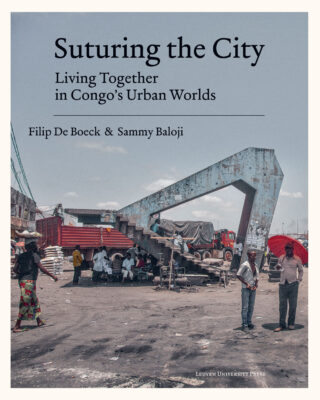
An ethnographic and photographic investigation into the complex meanings of living in Congo’s urban worlds today.
Focusing upon the ‘urban now’, a moment suspended between lingering precolonial references, the broken dreams of a colonial past, and the not yet realised promises of neoliberal futures, this book provides an ethnographic and photographic investigation of the complex meanings of living – and living together – in Congo’s urban worlds today.
The authors, anthropologist Filip De Boeck and photographer Sammy Baloji, take the reader on a tour of specific urban sites in Kinshasa and beyond. In their detailed analysis these sites emerge as suturing points in which the possibilities of collective urban action and dreams of a shared future continue to be explored.
Reprint of Suturing the City: Living Together in Congo’s Urban Worlds, Filip De Boeck, Sammy Baloji (Autograph 2016)
-
Preface: Suturing the City. Living Together in Congo’s Urban Worlds
-
The Last Post. Congo, (Post-)colonialism and Urban Tales of Unrest
-
The Urban Politics of Syncopation
-
Mountains I: Pic Sörensen
-
Corpus Vile. Death and Expendable Youth in Kinshasa
-
Mountains II: Pungulume
-
‘Illuminating the Hole’: Kinshasa’s Makeovers between Dream and Reality
-
Ngaliema’s Revenge. Urban Expansion, Chiefs and The Politics of Land
-
Coda: Occupation and the Politics of (Co-)Presence
Notes
References
Index
Index of Illustrations
Map of Kinshasa
Filip De Boeck
Filip De Boeck is Professor of Anthropology at KU Leuven, whose research explores urban life, art, and imagination in Central Africa, particularly in the Democratic Republic of Congo.
Sammy Baloji
Sammy Baloji is a visual artist based in Brussels and Lubumbashi. His work has been exhibited and published internationally.
‘This brilliant collaboration between an anthropologist and a photographer has resulted in not only a handsome volume that does justice to word and image alike, but also something far more important – a beautifully successful balance between thoughtful ethnography, thought-provoking and appropriate theory, and a visual essay that sensitively and imaginatively investigates its themes rather than just illustrating them.’ - Christopher Morton, University of Oxford
‘Suturing the City is a vivid image for the kind of attentive, careful but also painful practices which bring a city into existence. It is a specific place of urban becoming, and a particular collaboration from which this urban anthropological photo-book stems.’ - Abdoumaliq Simone, The University of Sheffield
In 'Suturing the City: Living Together in Congo’s Urban Worlds', Filip DeBoeck and Sammy Baloji generate an analysis that stretches our thinking about urban life. LSE’s Kate Dawson calls this book an important reference for anyone interested in urban life. - https://blogs.lse.ac.uk/africaatlse/2016/10/21/book-review-suturing-the-city-living-together-in-congos-urban-worlds-by-filip-de-boeck-and-sammy-baloji/
This brilliant collaboration between an anthropologist and a photographer has resulted in not only a handsome volume that does justice to word and image alike, but also something far more important – a beautifully successful balance between thoughtful ethnography, thought-provoking and appropriate theory, and a visual essay that sensitively and imaginatively investigates its themes rather than just illustrating them. - Christopher Morton, Africa: The Journal of the International African Institute, vol. 88 no. 4, 2018, p. 891-892. https://muse.jhu.edu/article/715777
Filip de Boeck explores his deep knowledge of Congolese life and, together with Sammy Baloji, leads us through a major exploration of Congo’s colonial and postcolonial realities. As a major anthropological work, this book is built around specific insights that become allegories of social challenges. - Carvalho C. ILLUMINATING URBAN LIVES, African Studies Review. 2019;62(3):174-178. https://doi.org/10.1017/asr.2019.32
'Suturing the City' confirms de Boeck's place as a leading urban scholar, demonstrating how to combine rigorous academic theorizing with lively and accessible prose. Unlike many works that suffer from the compulsion to keep up with the newest theoretical fad and are little more than recycled jargon, this is a solid and much needed monograph that will undoubtedly stand the test of time. - Kacper Pobłocki, International Journal of Urban and Regional Research, 41: 375-376. https://doi.org/10.1111/1468-2427.12477
The ever-enriching quality of African urban studies is partly the result of the achievements and influence of this volume, the republication of which will surely find it the new audiences it deserves. - Miles Larmer, Journal of Urban Affairs, February, 1–2. https://doi.org/10.1080/07352166.2026.2616182
Frequently Asked Questions
What is "Suturing the City" about?
An ethnographic and photographic investigation into the complex meanings of living in Congo's urban worlds today.
Focusing upon the ‘urban now’, a moment suspended between lingering precolonial references, the broken dreams of a colonial past, and the not yet realised promises of neoliberal futures, this book provides an ethnographic and photographic investigation of the complex meanings of living – and living together – in Congo’s urban worlds today.
The authors, anthropologist Filip De Boeck and photographer Sammy Baloji, take the reader on a tour of specific urban sites in Kinshasa and beyond. In their detailed analysis these sites emerge as suturing points in which the possibilities of collective urban action and dreams of a shared future continue to be explored.
Reprint of Suturing the City: Living Together in Congo’s Urban Worlds, Filip De Boeck, Sammy Baloji (Autograph 2016)
Who wrote "Suturing the City"?
"Suturing the City" was written by Filip De Boeck and Sammy Baloji.
Filip De Boeck is Professor of Anthropology at KU Leuven, whose research explores urban life, art, and imagination in Central Africa, particularly in the Democratic Republic of Congo.
Sammy Baloji is a visual artist based in Brussels and Lubumbashi. His work has been exhibited and published internationally.
What is the Table of Contents for "Suturing the City"?
-
Preface: Suturing the City. Living Together in Congo’s Urban Worlds
-
The Last Post. Congo, (Post-)colonialism and Urban Tales of Unrest
-
The Urban Politics of Syncopation
-
Mountains I: Pic Sörensen
-
Corpus Vile. Death and Expendable Youth in Kinshasa
-
Mountains II: Pungulume
-
‘Illuminating the Hole’: Kinshasa’s Makeovers between Dream and Reality
-
Ngaliema’s Revenge. Urban Expansion, Chiefs and The Politics of Land
-
Coda: Occupation and the Politics of (Co-)Presence
Notes
References
Index
Index of Illustrations
Map of Kinshasa
Related titles
 Margarete Schütte-Lihotzky and the Architecture of Collective Dissidence, 1918–1989
S.E. Eisterer (Author),
April 2027
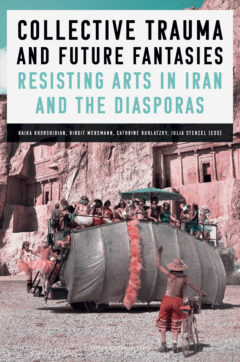 Collective Trauma and Future Fantasies
Raika Khorshidian (Editor), Birgit Mersmann (Editor), Cathrine Bublatzky (Editor), Julia Stenzel (Editor),
November 2026

 Infrastructuring Arrival
Karel Arnaut (Editor), Luce Beeckmans (Editor), Bruno Meeus (Editor),
November 2026
 Feminists Resisting Gendered Violence
Hemangini Gupta (Editor), Fiona Mackay (Editor), Jan Breckenridge (Editor), Louise Chappell (Editor), Rachna Mehra (Editor), Rukmini Sen (Editor), Mailin Suchting (Editor),
October 2026

 A City in Practice
Aude Tournaye (Editor), Filip De Boeck (Editor), Picha Collective (Editor),
September 2026
 Ecologies of Photography in the American West
Monica Bravo (Editor), Carolin Görgen (Editor),
September 2026
 German–Rapanui Entanglements
Cristián Moreno Pakarati (Editor), Diego Muñoz (Editor), Philipp Schorch (Editor),
August 2026
 Jean Katambayi Mukendi
Johannes Muselaers (Editor), Stéphane Symons (Editor), Anne-Claire Schmitz (Editor), Emma Enderby (Editor),
April 2026
 Brusselse plaatsnamen
Iadine Degryse (Editor), Benjamin Wayens (Editor), Chantal Kesteloot (Editor), Dennis De Vriese (Editor), Matthijs Degraeve (Editor),
April 2026
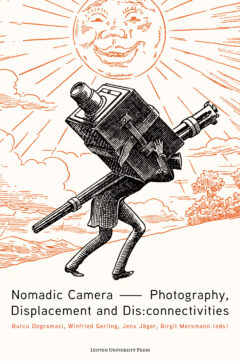 Nomadic Camera
Burcu Dogramaci (Editor), Winfried Gerling (Editor), Jens Jäger (Editor), Birgit Mersmann (Editor),
March 2026
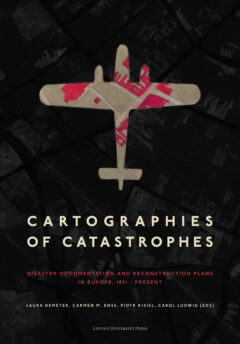 Cartographies of Catastrophes
Laura Demeter (Editor), Carmen M. Enss (Editor), Piotr Kisiel (Editor), Carol Ludwig (Editor),
February 2026
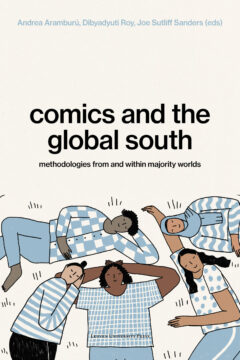 Comics and the Global South
Andrea Aramburú (Editor), Dibyadyuti Roy (Editor), Joe Sutliff Sanders (Editor),
February 2026