

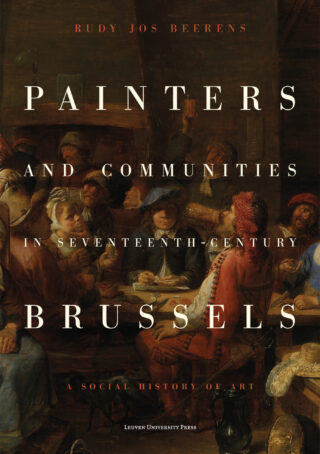

Painters and Communities in Seventeenth-Century Brussels
A Social History of Art
Rudy Jos Beerens (Author),

Category: Art, History, History 1500-1800
Language: English
ISBN: 9789462704282
Publication date: September 30, 2024
€49.00 (including 6% VAT)
Buy NowNumber of pages: 300
Size: 244 x 170 x mm
Number of illustrations: 50
Illustrations and other content description:
Illustrated, full colour

Funded by: KU Leuven Fund for Fair Open Access
RKD - Nederlands Instituut voor Kunstgeschiedenis
Project Cornelia
Stock item: 162325
Standard delivery time for print books:
For Belgium: 5 to 8 working days
For EU: 2 to 3 weeks
For other countries: 4 to 5 weeks
Category: Art, History, History 1500-1800
Language: English
ISBN: 9789461665997
Publication date: December 5, 2024
Download Free EpubNumber of pages: 300
Number of illustrations: 50
Illustrations and other content description:
Illustrated, full colour
Funded by: KU Leuven Fund for Fair Open Access
RKD - Nederlands Instituut voor Kunstgeschiedenis
Project Cornelia
Category: Art, History, History 1500-1800
Language: English
ISBN: 9789461665980
Publication date: September 17, 2024
Download Free PDFNumber of pages: 300
Number of illustrations: 50
Illustrations and other content description:
Illustrated, full colour
Funded by: KU Leuven Fund for Fair Open Access
RKD - Nederlands Instituut voor Kunstgeschiedenis
Project Cornelia
Innovative exploration of the Brussels Baroque and the social dimensions of art production.
In seventeenth-century Brussels, the careers of painters were shaped not only by their artistic talents but also by the communities to which they belonged. This book explores the intricate relationship between the social structures and artistic production of the 353 painters who became masters in the Brussels Guild of Painters, Goldbeaters, and Stained-Glass Makers between 1599 and 1706. This innovative study combines quantitative digital analysis with detailed qualitative case studies, offering a novel approach to the social history of art. By examining the various communities in which these artists operated, this book provides new insights into how early modern painters — both in Brussels and beyond — created their art, earned a living, and navigated the complexities of urban life. Painters and Communities in Seventeenth-Century Brussels also presents the first overview of the Brussels Baroque, with extensive biographical lists of the city’s master painters.
LIST OF FIGURES
LIST OF TABLES
ACKNOWLEDGEMENTS
INTRODUCTION
PART I THE THREE PLACES OF LIVING
CHAPTER 1. THE FIRST PLACE: THE FAMILY AND KINSHIP PATTERNS OF BRUSSELS’ PAINTERS
1.1 The Early Modern Family of Painters in Art History
1.2 Brussels in the Seventeenth Century
1.3 Marriage Patterns and Independent Households
1.4 Occupational Continuity
1.5 Spiritual Kinship: Godparents and Marriage Witnesses
1.6 Conclusion
CHAPTER 2. THE SECOND PLACE: BRUSSELS’ PAINTERS AND THE LOCAL GUILD OF PAINTERS, GOLDBEATERS, AND STAINED-GLASS MAKERS
2.1 A Social Approach to the History of Guilds in the Southern Netherlands
2.2 The Brussels Guild of Painters, Goldbeaters, and Stained-Glass Makers During the Seventeenth Century
2.3 The Guild’s Conditions of Membership and Increasing Openness to Outsiders
2.4 Social Mobility Within the Guild
2.5 Occupational Ties and Information Flows
2.6 Conclusion
CHAPTER 3. THE THIRD PLACE: THE SOCIAL LIFE OF BRUSSELS’ PAINTERS BEYOND HOME AND WORK
3.1 The ‘Third Place’ in the Early Modern Southern Netherlands
3.2 Public Houses
3.3 Chambers of Rhetoric
3.4 Confraternities
3.5 Parishes and Neighbourhoods
3.6 Conclusion
PART II THE THREE PLACES OF PAINTING
CHAPTER 4. PAINTING FOR THE COURT: A FAMILY OF PAINTERS AT THE START OF THE SEVENTEENTH CENTURY
4.1 Brussels’ Painters and the Archdukes’ Patronage
4.2 The Noveliers Family of Painters
4.3 The Noveliers Family’s Privileged Position at the Court
4.4 The Noveliers Family’s Activities Outside the Court
4.5 Conclusion
CHAPTER 5. PAINTING FOR THE MARKET: THE SONIAN FOREST DEPICTED AROUND THE MID-SEVENTEENTH CENTURY
5.1 The Sonian Forest Painters in Art-Historical Literature
5.2 The Growing Demand for Native Landscapes
5.3 The Sonian Forest Painters’ Network
5.4 Collaborations
5.5 Conclusion
CHAPTER 6. PAINTING FOR THE TAPESTRY INDUSTRY: THE CO-PRODUCTION OF TAPESTRY CARTOONS AT THE END OF THE SEVENTEENTH CENTURY
6.1 The Increasing Interest in Brussels’ Tapestry Designers and Cartoon Painters
6.2 Adapting to a Changing Taste
6.3 Designing and Painting Tapestry Cartoons
6.4 The Importance of Spatial Proximity
6.5 Conclusion
GENERAL CONCLUSION
APPENDICES
NOTES
SOURCES AND BIBLIOGRAPHY
Desde luego, la tesis y planteamiento de Beerens en esta monografía sienta las bases para seguir indagando en la historia social y las interrelaciones entre profesionales que vanmás allá de una cuestión de gusto o cercanía. La comprensión de una escuela artística está vinculada a sus figuras másrepresentativas, pero tiene una importante base en las relaciones que se establecen entre los talleres, las familias y la estructura social de una ciudad y un momento histórico. - Ana Diéguez Rodríguez, Philostrato. Revista De Historia Y Arte, n.º 17 (junio):91-93. https://philostrato.revistahistoriayarte.es/index.php/moll/article/view/594.
Frequently Asked Questions
What is "Painters and Communities in Seventeenth-Century Brussels" about?
Innovative exploration of the Brussels Baroque and the social dimensions of art production.
In seventeenth-century Brussels, the careers of painters were shaped not only by their artistic talents but also by the communities to which they belonged. This book explores the intricate relationship between the social structures and artistic production of the 353 painters who became masters in the Brussels Guild of Painters, Goldbeaters, and Stained-Glass Makers between 1599 and 1706. This innovative study combines quantitative digital analysis with detailed qualitative case studies, offering a novel approach to the social history of art. By examining the various communities in which these artists operated, this book provides new insights into how early modern painters — both in Brussels and beyond — created their art, earned a living, and navigated the complexities of urban life. Painters and Communities in Seventeenth-Century Brussels also presents the first overview of the Brussels Baroque, with extensive biographical lists of the city’s master painters.
Who wrote "Painters and Communities in Seventeenth-Century Brussels"?
"Painters and Communities in Seventeenth-Century Brussels" was written by Rudy Jos Beerens.
Rudy Jos Beerens, PhD, is an art historian and curator at the RKD — Netherlands Institute for Art History in The Hague.
Is "Painters and Communities in Seventeenth-Century Brussels" available Open Access?
Yes, "Painters and Communities in Seventeenth-Century Brussels" is published Open Access. It is available under a BY-NC-ND license.
Who funded the publication of "Painters and Communities in Seventeenth-Century Brussels"?
Publication of "Painters and Communities in Seventeenth-Century Brussels" was funded by KU Leuven Fund for Fair Open Access
RKD - Nederlands Instituut voor Kunstgeschiedenis
Project Cornelia
.
What is the Table of Contents for "Painters and Communities in Seventeenth-Century Brussels"?
LIST OF FIGURES
LIST OF TABLES
ACKNOWLEDGEMENTS
INTRODUCTION
PART I THE THREE PLACES OF LIVING
CHAPTER 1. THE FIRST PLACE: THE FAMILY AND KINSHIP PATTERNS OF BRUSSELS’ PAINTERS
1.1 The Early Modern Family of Painters in Art History
1.2 Brussels in the Seventeenth Century
1.3 Marriage Patterns and Independent Households
1.4 Occupational Continuity
1.5 Spiritual Kinship: Godparents and Marriage Witnesses
1.6 Conclusion
CHAPTER 2. THE SECOND PLACE: BRUSSELS’ PAINTERS AND THE LOCAL GUILD OF PAINTERS, GOLDBEATERS, AND STAINED-GLASS MAKERS
2.1 A Social Approach to the History of Guilds in the Southern Netherlands
2.2 The Brussels Guild of Painters, Goldbeaters, and Stained-Glass Makers During the Seventeenth Century
2.3 The Guild’s Conditions of Membership and Increasing Openness to Outsiders
2.4 Social Mobility Within the Guild
2.5 Occupational Ties and Information Flows
2.6 Conclusion
CHAPTER 3. THE THIRD PLACE: THE SOCIAL LIFE OF BRUSSELS’ PAINTERS BEYOND HOME AND WORK
3.1 The ‘Third Place’ in the Early Modern Southern Netherlands
3.2 Public Houses
3.3 Chambers of Rhetoric
3.4 Confraternities
3.5 Parishes and Neighbourhoods
3.6 Conclusion
PART II THE THREE PLACES OF PAINTING
CHAPTER 4. PAINTING FOR THE COURT: A FAMILY OF PAINTERS AT THE START OF THE SEVENTEENTH CENTURY
4.1 Brussels’ Painters and the Archdukes’ Patronage
4.2 The Noveliers Family of Painters
4.3 The Noveliers Family’s Privileged Position at the Court
4.4 The Noveliers Family’s Activities Outside the Court
4.5 Conclusion
CHAPTER 5. PAINTING FOR THE MARKET: THE SONIAN FOREST DEPICTED AROUND THE MID-SEVENTEENTH CENTURY
5.1 The Sonian Forest Painters in Art-Historical Literature
5.2 The Growing Demand for Native Landscapes
5.3 The Sonian Forest Painters’ Network
5.4 Collaborations
5.5 Conclusion
CHAPTER 6. PAINTING FOR THE TAPESTRY INDUSTRY: THE CO-PRODUCTION OF TAPESTRY CARTOONS AT THE END OF THE SEVENTEENTH CENTURY
6.1 The Increasing Interest in Brussels’ Tapestry Designers and Cartoon Painters
6.2 Adapting to a Changing Taste
6.3 Designing and Painting Tapestry Cartoons
6.4 The Importance of Spatial Proximity
6.5 Conclusion
GENERAL CONCLUSION
APPENDICES
NOTES
SOURCES AND BIBLIOGRAPHY
Related titles
 Collective Trauma and Future Fantasies
Raika Khorshidian (Editor), Birgit Mersmann (Editor), Cathrine Bublatzky (Editor), Julia Stenzel (Editor),
November 2026
 Toekomstdromen
Maarten Van Dijck (Editor), Gerrit Verhoeven (Editor), Hans Cools (Editor),
November 2026
 Feminists Resisting Gendered Violence
Hemangini Gupta (Editor), Fiona Mackay (Editor), Jan Breckenridge (Editor), Louise Chappell (Editor), Rachna Mehra (Editor), Rukmini Sen (Editor), Mailin Suchting (Editor),
October 2026
 A City in Practice
Aude Tournaye (Editor), Filip De Boeck (Editor), Picha Collective (Editor),
September 2026
 Ecologies of Photography in the American West
Monica Bravo (Editor), Carolin Görgen (Editor),
September 2026
 Trend en toeval – vierde editie
Bruno Blondé (Author), Isabelle Devos (Author), Jord Hanus (Author), Wouter Ryckbosch (Author),
August 2026
 Christian Democracy and the Fall of Communism
Michael Gehler (Editor), Piotr H. Kosicki (Editor), Helmut Wohnout (Editor),
April 2026
 Jean Katambayi Mukendi
Johannes Muselaers (Editor), Stéphane Symons (Editor), Anne-Claire Schmitz (Editor), Emma Enderby (Editor),
April 2026
 Political Exile in the Global Twentieth Century
Wolfram Kaiser (Editor), Piotr H. Kosicki (Editor),
April 2026
 Brusselse plaatsnamen
Iadine Degryse (Editor), Benjamin Wayens (Editor), Chantal Kesteloot (Editor), Dennis De Vriese (Editor), Matthijs Degraeve (Editor),
April 2026
 Nomadic Camera
Burcu Dogramaci (Editor), Winfried Gerling (Editor), Jens Jäger (Editor), Birgit Mersmann (Editor),
March 2026
 Cartographies of Catastrophes
Laura Demeter (Editor), Carmen M. Enss (Editor), Piotr Kisiel (Editor), Carol Ludwig (Editor),
February 2026