

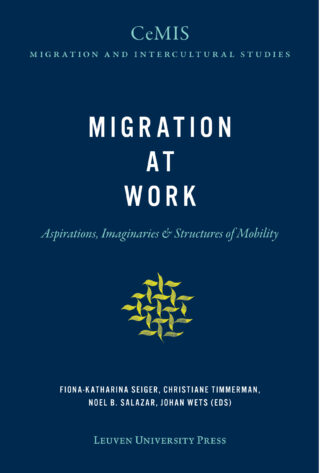

Migration at Work
Aspirations, Imaginaries & Structures of Mobility
Fiona-Katharina Seiger (Editor), Christiane Timmerman (Editor), Noel B. Salazar (Editor), Johan Wets (Editor),

Series: CeMIS Migration and Intercultural Studies 5
Category: Diversity and Equity Studies, Gender Studies, Migration Studies, Social Science
Language: English
ISBN: 9789462702400
Publication date: September 24, 2020
€19.50 (including 6% VAT)
Buy NowNumber of pages: 194
Size: 234 x 156 x 10 mm

Funded by: FWO
KU Leuven Fund for Fair Open Access
Erasmus Universiteit Rotterdam
Stock item: 137336
Standard delivery time for print books:
For Belgium: 5 to 8 working days
For EU: 2 to 3 weeks
For other countries: 4 to 5 weeks
Series: CeMIS Migration and Intercultural Studies 5
Category: Diversity and Equity Studies, Gender Studies, Migration Studies, Social Science
Language: English
ISBN: 9789461663443
Publication date: September 24, 2020
Download Free EpubNumber of pages: 194
Funded by: FWO
KU Leuven Fund for Fair Open Access
Erasmus Universiteit Rotterdam
Series: CeMIS Migration and Intercultural Studies 5
Category: Diversity and Equity Studies, Gender Studies, Migration Studies, Social Science
Language: English
ISBN: 9789461663450
Publication date: September 28, 2020
Download Free PDFNumber of pages: 194
Funded by: FWO
KU Leuven Fund for Fair Open Access
Erasmus Universiteit Rotterdam
Migration and Labour Mobility
The willingness to migrate in search of employment is in itself insufficient to compel anyone to move. The dynamics of labour mobility are heavily influenced by the opportunities perceived and the imaginaries held by both employers and regulating authorities in relation to migrant labour. This volume offers a multidisciplinary approach to the study of the structures and imaginaries underlying various forms of mobility. Based on research conducted in different geographical contexts, including the European Union, Turkey, and South Africa, and tackling the experiences and aspirations of migrants from various parts of the globe, the chapters comprised in this volume analyse labour-related mobilities from two distinct yet intertwined vantage points: the role of structures and regimes of mobility on the one hand, and aspirations as well as migrant imaginaries on the other. Migration at Work thus aims to draw cross-contextual parallels by addressing the role played by opportunities in mobilising people, how structures enable, sustain, and change different forms of mobility, and how imaginaries fuel labour migration and vice versa. In doing so, this volume also aims to tackle the interrelationships between imaginaries driving migration and shaping “regimes of mobility”, as well as how the former play out in different contexts, shaping internal and cross-border migration.
Based on empirical research in various fields, this collection provides valuable scholarship and evidence on current processes of migration and mobility.
Contributors: Iratxe Aristegui (University of Deusto), Deniz Berfin Ayaydin (CEMESO), Maria Luisa Di Martino (University of Deusto), Iraklis Dimitriadis (University of Milan), Russell King (University of Sussex / Malmö University), Aija Lulle (University of Louborough), Concepción Maiztegui-Oñate (University of Deusto), Faith Mkwananzi (University of the Free State), Christine Moderbacher (Max Planck Institute for Social Anthropology), Alice Ncube (University of the Free State), Noel B. Salazar (KU Leuven), Fiona-Katharina Seiger (Erasmus University Rotterdam), Joana de Sousa Ribeiro (University of Coimbra), Mirjam Wajsberg (Radboud University), Johan Wets (KU Leuven)
Ebook available in Open Access.
This publication is GPRC-labeled (Guaranteed Peer-Reviewed Content).
IntroductionFiona-Katharina Seiger, Noel B. Salazar and Johan Wets
Part I: Projects, structures and regimes of labour mobility
Temporary Labour Migrants from Latvia Negotiate Return Trips for Care: Distributing Resources Across Borders Aija Lulle
Regulatory Regimes and (Infra-)Structuring Emancipation Dynamics: The Case of Health Workers’ Migration Joana de Sousa Ribeiro
Gendered Labour Migration in South Africa: A Capability Approach Lens Alice Ncube & Faith Mkwananzi
“I am not moving life, but life moves me.” Experiences of Intra-EU Im/Mobility among West African Migrants Mirjam Wajsberg
Part II: Labour migration, imaginaries and aspirations
Balancing Personal Aspirations, Family Expectations and Job Matching: “Migratory Career” Reconstruction Among Highly Educated Women in the Basque Country Maria Luisa Di Martino, Concha Maiztegui and Iratxe Aristegui
“Working there is amazing, but life here is better”: Imaginaries of Onward Migration Destinations Among Albanian Migrant Construction Workers in Italy and Greece Iraklis Dimitriadis
“Welcome to my waiting room! Please, take a seat!”: On Future-Imaginaries being Shattered and Postponed Christine Moderbacher
Found a Nanny and Lived Happily Ever After: The Representations of Filipina Nannies on Human Resources Agency Websites in Turkey Deniz Ayaydin
Afterword: Changing Work, Changing MigrationsRussell King
Frequently Asked Questions
What is "Migration at Work" about?
Migration and Labour Mobility
The willingness to migrate in search of employment is in itself insufficient to compel anyone to move. The dynamics of labour mobility are heavily influenced by the opportunities perceived and the imaginaries held by both employers and regulating authorities in relation to migrant labour. This volume offers a multidisciplinary approach to the study of the structures and imaginaries underlying various forms of mobility. Based on research conducted in different geographical contexts, including the European Union, Turkey, and South Africa, and tackling the experiences and aspirations of migrants from various parts of the globe, the chapters comprised in this volume analyse labour-related mobilities from two distinct yet intertwined vantage points: the role of structures and regimes of mobility on the one hand, and aspirations as well as migrant imaginaries on the other. Migration at Work thus aims to draw cross-contextual parallels by addressing the role played by opportunities in mobilising people, how structures enable, sustain, and change different forms of mobility, and how imaginaries fuel labour migration and vice versa. In doing so, this volume also aims to tackle the interrelationships between imaginaries driving migration and shaping “regimes of mobility”, as well as how the former play out in different contexts, shaping internal and cross-border migration.
Based on empirical research in various fields, this collection provides valuable scholarship and evidence on current processes of migration and mobility.
Contributors: Iratxe Aristegui (University of Deusto), Deniz Berfin Ayaydin (CEMESO), Maria Luisa Di Martino (University of Deusto), Iraklis Dimitriadis (University of Milan), Russell King (University of Sussex / Malmö University), Aija Lulle (University of Louborough), Concepción Maiztegui-Oñate (University of Deusto), Faith Mkwananzi (University of the Free State), Christine Moderbacher (Max Planck Institute for Social Anthropology), Alice Ncube (University of the Free State), Noel B. Salazar (KU Leuven), Fiona-Katharina Seiger (Erasmus University Rotterdam), Joana de Sousa Ribeiro (University of Coimbra), Mirjam Wajsberg (Radboud University), Johan Wets (KU Leuven)
Ebook available in Open Access.
This publication is GPRC-labeled (Guaranteed Peer-Reviewed Content).
Who edited "Migration at Work"?
"Migration at Work" was edited by Fiona-Katharina Seiger, Christiane Timmerman, Noel B. Salazar and Johan Wets.
Fiona-Katharina Seiger is a sociologist by training who has worked with women, children, and youth in Japan and the Philippines. She holds a PhD from the National University of Singapore.
Christiane Timmerman (†) was professor of anthropology and director of the Center for Migration and Intercultural Studies (CeMIS) at the University of Antwerp.
Noel B. Salazar is research professor in anthropology at KU Leuven.
Johan Wets (PhD social sciences) is migration research manager at the Research Institute for Work and Society (HIVA), an interdisciplinary research institute from the University of Leuven, Belgium (KU Leuven).
Is "Migration at Work" part of a series?
Yes, "Migration at Work" is part of the "CeMIS Migration and Intercultural Studies" series. It's book 5 in the series.
Editors: Lore van Praag, An Daems
CeMIS Migration and Intercultural Studies is published in collaboration with the Centre for Migration and Intercultural Studies and focuses on two major areas of research:
- International migration / Migration and Development
- Integration and social cohesion

In association with

About CeMIS
The Centre for Migration and Intercultural Studies (CeMIS) was founded in 2005 at the University of Antwerp, at the initiative of a group of researchers who were working together within the framework of the Antwerp Centre for Migrant Studies.
CeMIS is an interdisciplinary research centre that has received national and international praise for its work. The centre conducts research as well as providing education and other academic services relating to migration, integration, and intercultural themes in various social fields, including education, the labour market, welfare, family, health, and law.
Collaborating with civil society, policymakers, and other academic partners, the research centre addresses the challenges arising from migration and intercultural life in today’s society.
CeMIS seeks to provide an open and pluralistic research platform that fosters collaboration between society and academia.
For more information about CeMIS, please visit https://www.uantwerpen.be/en/rg/cemis/
Series board
Lore Van Praag (University of Antwerp), Dirk Vanheule (University of Antwerp), Noel Clycq (University of Antwerp), Sunčica Vujić (University of Antwerp), Paul Van Royen (University of Antwerp), Godfried Engbersen (Erasmus University Rotterdam), Kevin Smets (University of Antwerp /Vrije Universiteit Brussel), Hilde Greefs (University of Antwerp), François Levrau (Centre Pieter Gillis/ University of Antwerp)
Is "Migration at Work" available Open Access?
Yes, "Migration at Work" is published Open Access. It is available under a BY-NC-ND license.
Who funded the publication of "Migration at Work"?
Publication of "Migration at Work" was funded by FWO
KU Leuven Fund for Fair Open Access
Erasmus Universiteit Rotterdam
.
What is the Table of Contents for "Migration at Work"?
IntroductionFiona-Katharina Seiger, Noel B. Salazar and Johan Wets
Part I: Projects, structures and regimes of labour mobility
Temporary Labour Migrants from Latvia Negotiate Return Trips for Care: Distributing Resources Across Borders Aija Lulle
Regulatory Regimes and (Infra-)Structuring Emancipation Dynamics: The Case of Health Workers’ Migration Joana de Sousa Ribeiro
Gendered Labour Migration in South Africa: A Capability Approach Lens Alice Ncube & Faith Mkwananzi
“I am not moving life, but life moves me.” Experiences of Intra-EU Im/Mobility among West African Migrants Mirjam Wajsberg
Part II: Labour migration, imaginaries and aspirations
Balancing Personal Aspirations, Family Expectations and Job Matching: “Migratory Career” Reconstruction Among Highly Educated Women in the Basque Country Maria Luisa Di Martino, Concha Maiztegui and Iratxe Aristegui
“Working there is amazing, but life here is better”: Imaginaries of Onward Migration Destinations Among Albanian Migrant Construction Workers in Italy and Greece Iraklis Dimitriadis
“Welcome to my waiting room! Please, take a seat!”: On Future-Imaginaries being Shattered and Postponed Christine Moderbacher
Found a Nanny and Lived Happily Ever After: The Representations of Filipina Nannies on Human Resources Agency Websites in Turkey Deniz Ayaydin
Afterword: Changing Work, Changing MigrationsRussell King
Related titles
 Margarete Schütte-Lihotzky and the Architecture of Collective Dissidence, 1918–1989
S.E. Eisterer (Author),
April 2027

 The Romero Memory
Judith Gruber (Editor), Jonas Van Mulder (Editor), Stephan Parmentier (Editor), Veerle Draulans (Editor), Joren Janssens (Editor), Jacques Haers (Editor), Kim Christiaens (Editor),
December 2026
 Infrastructuring Arrival
Karel Arnaut (Editor), Luce Beeckmans (Editor), Bruno Meeus (Editor),
November 2026
 Feminists Resisting Gendered Violence
Hemangini Gupta (Editor), Fiona Mackay (Editor), Jan Breckenridge (Editor), Louise Chappell (Editor), Rachna Mehra (Editor), Rukmini Sen (Editor), Mailin Suchting (Editor),
October 2026
 German–Rapanui Entanglements
Cristián Moreno Pakarati (Editor), Diego Muñoz (Editor), Philipp Schorch (Editor),
August 2026


 Nomadic Camera
Burcu Dogramaci (Editor), Winfried Gerling (Editor), Jens Jäger (Editor), Birgit Mersmann (Editor),
March 2026
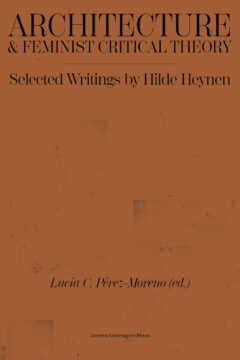 Architecture & Feminist Critical Theory
Hilde Heynen (Author), Lucía C. Pérez-Moreno (Editor),
November 2025
 Teaching About the Violent Past
Line Kuppens (Author), Justin Sheria Nfundiko (Author),
October 2025
 Interculturaliteit en de geesteswetenschappen – tweede, herziene editie
Idesbald Goddeeris (Editor), Nadia Lie (Editor), Stefania Marzo (Editor),
September 2025