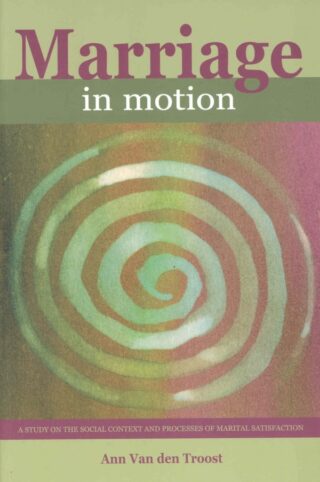
Marriage in Motion
A study on the social context and processes of marital satisfaction
Ann Van den Troost (Author),
About 40 years after the onset of the so-called second demographic transition, Marriage in Motion examines the underlying processes and correlates of spouses’ satisfaction with marriage. Among other things, this transition has been characterized by an upward trend of divorces turning marriage into a vulnerable institution. It is, therefore, of utmost importance to gain insight in the features of longer-term marriages. The present study is directed towards the generation that instigated the quantitative and qualitative changes in the private sphere. Using longitudinal data of a representative sample of married husbands and wives in the Netherlands, Marriage in Motion tackles several issues that are relevant to contemporary marital life. How do economic and cultural factors affect spousal marital satisfaction? What role does communication play in understanding husbands and wives’ satisfaction with marriage? How do parenting experiences spill over to the spousal system? What are the implications of masculine and feminine self-definitions on partners’ evaluation of marriage? The elaboration of these and other related questions offer the reader a broad picture of the role of gender, communication, parenting and individuals’ socioeconomic position in understanding spousal marital experiences.
Introduction
PART I: SOCIAL BACKGROUND AND RESEARCH AGENDA
1. Marriage and Partnership in a Changing Social Landscape
1.1. Demographical Issues
1.2. Theoretical Issues
1.3. Gender Issues
1.4. Conclusion
2. Towards a Research Design for Marital Satisfaction
2.1. Impetus of the Study
2.2. Research Questions
2.3. Structure of this Study
3. Method
3.1. Dutch Panel Data
3.2. Procedure
3.3. Selection and Characteristics of the Married Sub-sample
3.4. Validation of the Sample and Missings Cases
PART II: THE STUDY
4. The Dutch Marital Satisfaction and Communication Questionnaire: A Validation Study
4.1. Introduction
4.2. Research Aim
4.3. Study 1
4.4. Study 2
4.5. Study 3
4.6. Discussion
5. The Relationship between Communication and Marital Satisfaction. A Cross-Lagged Panel Analysis
5.1. Introduction
5.2. Method
5.3. Results
5.4. Discussion
6. Effects of Spousal Economic and Cultural Characteristics on Marital Satisfaction
6.1. Introduction
6.2. Theoretical and Empirical Background
6.3. Present Study and Hypotheses
6.4. Study Design
6.5. Method
6.6. Results
6.7. Conclusion and Discussion
7. Social Position, Gender Role Identity and Marital Satisfaction
7.1. Introduction
7.2. Empirical Background
7.3. Present Study and Hypotheses
7.4. Method
7.5. Results
7.6. Discussion
8. Associations between Gender Characteristics and Marital Outcomes. A Test of Identity Theory in Established Marriages
8.1. Introduction
8.2. Present Study
8.3. Method
8.4. Results
8.5. Discussion
9. Marital Relationships and Parenting Experiences in Established Marriages. Short-Term and Long-Term Interrelationships
9.1. Introduction
9.2. Short-Term Relationships Between Parenting Experiences and Marital Relationships
9.3. Long-Term Relationships Between Parenting Experiences and Marital Satisfaction
9.4. Present Study
9.5. Method
9.6. Results
9.7. Discussion and Conclusion
PART III: CONCLUSION AND IMPLICATIONS
10. Central Findings and Reflections
10.1. Introduction
10.2. Central Findings Recapitulated and Reconsidered
10.3. Concluding Reflections: Strengths, Unresolved Issues and Future Directions
10.4. Marriage in Motion: Final Reflection
References
Frequently Asked Questions
What is "Marriage in Motion" about?
About 40 years after the onset of the so-called second demographic transition, Marriage in Motion examines the underlying processes and correlates of spouses' satisfaction with marriage. Among other things, this transition has been characterized by an upward trend of divorces turning marriage into a vulnerable institution. It is, therefore, of utmost importance to gain insight in the features of longer-term marriages. The present study is directed towards the generation that instigated the quantitative and qualitative changes in the private sphere. Using longitudinal data of a representative sample of married husbands and wives in the Netherlands, Marriage in Motion tackles several issues that are relevant to contemporary marital life. How do economic and cultural factors affect spousal marital satisfaction? What role does communication play in understanding husbands and wives' satisfaction with marriage? How do parenting experiences spill over to the spousal system? What are the implications of masculine and feminine self-definitions on partners' evaluation of marriage? The elaboration of these and other related questions offer the reader a broad picture of the role of gender, communication, parenting and individuals' socioeconomic position in understanding spousal marital experiences.
Who wrote "Marriage in Motion"?
"Marriage in Motion" was written by Ann Van den Troost.
Is "Marriage in Motion" part of a series?
Yes, "Marriage in Motion" is part of the "Sociologie Vandaag / Sociology Today" series. It's book 10 in the series.
What is the Table of Contents for "Marriage in Motion"?
Introduction
PART I: SOCIAL BACKGROUND AND RESEARCH AGENDA
1. Marriage and Partnership in a Changing Social Landscape
1.1. Demographical Issues
1.2. Theoretical Issues
1.3. Gender Issues
1.4. Conclusion
2. Towards a Research Design for Marital Satisfaction
2.1. Impetus of the Study
2.2. Research Questions
2.3. Structure of this Study
3. Method
3.1. Dutch Panel Data
3.2. Procedure
3.3. Selection and Characteristics of the Married Sub-sample
3.4. Validation of the Sample and Missings Cases
PART II: THE STUDY
4. The Dutch Marital Satisfaction and Communication Questionnaire: A Validation Study
4.1. Introduction
4.2. Research Aim
4.3. Study 1
4.4. Study 2
4.5. Study 3
4.6. Discussion
5. The Relationship between Communication and Marital Satisfaction. A Cross-Lagged Panel Analysis
5.1. Introduction
5.2. Method
5.3. Results
5.4. Discussion
6. Effects of Spousal Economic and Cultural Characteristics on Marital Satisfaction
6.1. Introduction
6.2. Theoretical and Empirical Background
6.3. Present Study and Hypotheses
6.4. Study Design
6.5. Method
6.6. Results
6.7. Conclusion and Discussion
7. Social Position, Gender Role Identity and Marital Satisfaction
7.1. Introduction
7.2. Empirical Background
7.3. Present Study and Hypotheses
7.4. Method
7.5. Results
7.6. Discussion
8. Associations between Gender Characteristics and Marital Outcomes. A Test of Identity Theory in Established Marriages
8.1. Introduction
8.2. Present Study
8.3. Method
8.4. Results
8.5. Discussion
9. Marital Relationships and Parenting Experiences in Established Marriages. Short-Term and Long-Term Interrelationships
9.1. Introduction
9.2. Short-Term Relationships Between Parenting Experiences and Marital Relationships
9.3. Long-Term Relationships Between Parenting Experiences and Marital Satisfaction
9.4. Present Study
9.5. Method
9.6. Results
9.7. Discussion and Conclusion
PART III: CONCLUSION AND IMPLICATIONS
10. Central Findings and Reflections
10.1. Introduction
10.2. Central Findings Recapitulated and Reconsidered
10.3. Concluding Reflections: Strengths, Unresolved Issues and Future Directions
10.4. Marriage in Motion: Final Reflection
References
Related titles

 The Romero Memory
Judith Gruber (Editor), Jonas Van Mulder (Editor), Stephan Parmentier (Editor), Veerle Draulans (Editor), Joren Janssens (Editor), Jacques Haers (Editor), Kim Christiaens (Editor),
November 2026
 Infrastructuring Arrival
Karel Arnaut (Editor), Luce Beeckmans (Editor), Bruno Meeus (Editor),
November 2026

 Feminists Resisting Gendered Violence
Hemangini Gupta (Editor), Fiona Mackay (Editor), Jan Breckenridge (Editor), Louise Chappell (Editor), Rachna Mehra (Editor), Rukmini Sen (Editor), Mailin Suchting (Editor),
October 2026
 German–Rapanui Entanglements
Cristián Moreno Pakarati (Editor), Diego Muñoz (Editor), Philipp Schorch (Editor),
August 2026

 Teaching About the Violent Past
Line Kuppens (Author), Justin Sheria Nfundiko (Author),
October 2025
 Integration Otherwise Inspiration Kit
Luce Beeckmans (Author), Dounia Salamé (Author), Martina Bovo (Author), Mary Hogan (Author),
June 2025
 Newcomers Navigating the Welfare State
Hanne Vandermeerschen (Editor), Elsa Mescoli (Editor), Jean-Michel Lafleur (Editor), Peter De Cuyper (Editor),
December 2023

 Islamophobia as a Form of Radicalisation
Leen d’Haenens (Editor), Abdelwahed Mekki-Berrada (Editor),
March 2023
 Exploring the Transnational Neighbourhood
Stephan Ehrig (Editor), Britta C. Jung (Editor), Gad Schaffer (Editor),
October 2022