

Gender and Migration
A Gender-Sensitive Approach to Migration Dynamics
Christiane Timmerman (Editor), Maria Lucinda Fonseca (Editor), Lore Van Praag (Editor), Sónia Pereira (Editor),
Series: CeMIS Migration and Intercultural Studies 3
Category: Gender Studies, Migration Studies, Social Science
Language: English
ISBN: 9789462701632
Publication date: November 26, 2018
€59.00 (including 6% VAT)
Buy NowNumber of pages: 268
Size: 234 x 156 x 15 mm
Number of illustrations: 20
Illustrations and other content description:
grafieken (7) en tabellen (16)

Stock item: 125231
Standard delivery time for print books:
For Belgium: 5 to 8 working days
For EU: 2 to 3 weeks
For other countries: 4 to 5 weeks
Series: CeMIS Migration and Intercultural Studies 3
Category: Gender Studies, Migration Studies, Social Science
Language: English
ISBN: 9789461662651
Publication date: November 26, 2018
€44.00 (including 6% VAT)
Buy NowNumber of pages: 268
Number of illustrations: 20
Illustrations and other content description:
grafieken (7) en tabellen (16)
The impact of gender on migration processes
Considering the dynamic and reciprocal relationship between gender relations and migration, the contributions in this book approach migration dynamics from a gender-sensitive perspective. Bringing together insights from various fields of study, it is demonstrated how processes of social change occur differently in distinct life domains, over time, and across countries and/or regions, influencing the relationship between gender and migration. Detailed analysis by regions, countries, and types of migration reveals a strong variation regarding levels and features of female and male migration. This approach enables us to grasp the distinct ways in which gender roles, perceptions, and relations, each embedded in a particular cultural, geographical, and socioeconomic context, affect migration dynamics. Hence, this volume demonstrates that gender matters at each stage of the migration process. In its entirety, Gender and Migration gives evidence of the unequivocal impact of gender and gendered structures, both at a micro and macro level, upon migrant’s lives and of migration on gender dynamics.
This publication is GPRC-labeled (Guaranteed Peer-Reviewed Content).
Contributors: Marianna Bacci Tamburlini (Universidade de Lisboa), Milena Belloni (University of Antwerp), Kitti Baracsi (University of Pécs), Kamila Fiałkowska (University of Warsaw), Hilde Greefs (University of Antwerp), Kenneth Hemmerechts (Vrije Universiteit Brussel), Alexandra Parrs (University of Antwerp), Ferruccio Pastore (Forum Internazionale ed Europeo di Ricerche sull’Immigrazione FIERI Torino), Alina Poghosyan (Institute of Archaeology and Ethnography of the National Academy of Sciences of Armenia), Ilse Ruyssen (Ghent University), Sara Salomone (Ghent University and UNU-CRIS), Romina Seminario Luna (Lausanne University), Christiane Timmerman (University of Antwerp), Lore Van Praag (University of Antwerp), Thomas Verbruggen (University of Antwerp), Zeynep Zümer Batur (University of Antwerp)
Introduction
Part I: Gendered structures and relations 1. Labour migration from South Caucasus: A lost chance for women’s empowerment Alina Poghosyan
2. ‘Marriage of convenience’ regulations in Portugal: Gendered constructions of (il)legality Marianna Bacci Tamburlini
3. Immigration controls creating highly skilled precarious workers: South American migrant women’s and men’s professional trajectories in the care and academic sectors Romina Seminario Luna
4. Cyber space: a refuge for hegemonic masculinity among Polish migrants in the UK Kamila Fiałkowska
5. Future: Nowhere? – Stories of young Roma girls from Neapolitan peripheries Kitti Baracsi
Part II: Migration trajectories: Origins and destinations 6. Gender discrimination as a driver of female migration 149 Ilse Ruyssen and Sara Salomone
7. Foreign domestic servants in Antwerp: A comparative regional approach on female migration trajectories to nineteenth-century European cities Thomas Verbruggen and Hilde Greefs
8. The vulnerable refugee woman, from Damascus to Brussels 195 Alexandra Parrs
9. Women in Mediterranean asylum flows: Current scenario and ways forward Milena Belloni, Ferruccio Pastore and Christiane Timmerman
10. Gendered migration aspirations in Turkey: The importance of the ‘culture of migration’ Christiane Timmerman, Zeynep Zümer Batur and Lore Van Praag
Conclusion
About the authors
Frequently Asked Questions
What is "Gender and Migration" about?
The impact of gender on migration processes
Considering the dynamic and reciprocal relationship between gender relations and migration, the contributions in this book approach migration dynamics from a gender-sensitive perspective. Bringing together insights from various fields of study, it is demonstrated how processes of social change occur differently in distinct life domains, over time, and across countries and/or regions, influencing the relationship between gender and migration. Detailed analysis by regions, countries, and types of migration reveals a strong variation regarding levels and features of female and male migration. This approach enables us to grasp the distinct ways in which gender roles, perceptions, and relations, each embedded in a particular cultural, geographical, and socioeconomic context, affect migration dynamics. Hence, this volume demonstrates that gender matters at each stage of the migration process. In its entirety, Gender and Migration gives evidence of the unequivocal impact of gender and gendered structures, both at a micro and macro level, upon migrant’s lives and of migration on gender dynamics.
This publication is GPRC-labeled (Guaranteed Peer-Reviewed Content).
Contributors: Marianna Bacci Tamburlini (Universidade de Lisboa), Milena Belloni (University of Antwerp), Kitti Baracsi (University of Pécs), Kamila Fiałkowska (University of Warsaw), Hilde Greefs (University of Antwerp), Kenneth Hemmerechts (Vrije Universiteit Brussel), Alexandra Parrs (University of Antwerp), Ferruccio Pastore (Forum Internazionale ed Europeo di Ricerche sull'Immigrazione FIERI Torino), Alina Poghosyan (Institute of Archaeology and Ethnography of the National Academy of Sciences of Armenia), Ilse Ruyssen (Ghent University), Sara Salomone (Ghent University and UNU-CRIS), Romina Seminario Luna (Lausanne University), Christiane Timmerman (University of Antwerp), Lore Van Praag (University of Antwerp), Thomas Verbruggen (University of Antwerp), Zeynep Zümer Batur (University of Antwerp)
Who edited "Gender and Migration"?
"Gender and Migration" was edited by Christiane Timmerman, Maria Lucinda Fonseca, Lore Van Praag and Sónia Pereira.
Christiane Timmerman (†) was professor of anthropology and director of the Center for Migration and Intercultural Studies (CeMIS) at the University of Antwerp.
Maria Lucinda Fonseca is Professor and President of the Institute of Geography and Spatial Planning (IGOT) at the Universidade de Lisboa and scientific coordinator of the research group MIGRARE – Migration, Spaces and Societies at the Centre for Geographical Studies (CEG) at the same institution.
Lore Van Praag is the director of the Centre for Migration and Intercultural Studies at the University of Antwerp.
Sónia Pereira is postdoctoral researcher at the Institute of Geography and Spatial Planning (IGOT) at the Universidade de Lisboa.
Is "Gender and Migration" part of a series?
Yes, "Gender and Migration" is part of the "CeMIS Migration and Intercultural Studies" series. It's book 3 in the series.
Editors: Lore van Praag, An Daems
CeMIS Migration and Intercultural Studies is published in collaboration with the Centre for Migration and Intercultural Studies and focuses on two major areas of research:
- International migration / Migration and Development
- Integration and social cohesion

In association with

About CeMIS
The Centre for Migration and Intercultural Studies (CeMIS) was founded in 2005 at the University of Antwerp, at the initiative of a group of researchers who were working together within the framework of the Antwerp Centre for Migrant Studies.
CeMIS is an interdisciplinary research centre that has received national and international praise for its work. The centre conducts research as well as providing education and other academic services relating to migration, integration, and intercultural themes in various social fields, including education, the labour market, welfare, family, health, and law.
Collaborating with civil society, policymakers, and other academic partners, the research centre addresses the challenges arising from migration and intercultural life in today’s society.
CeMIS seeks to provide an open and pluralistic research platform that fosters collaboration between society and academia.
For more information about CeMIS, please visit https://www.uantwerpen.be/en/rg/cemis/
Series board
Lore Van Praag (University of Antwerp), Dirk Vanheule (University of Antwerp), Noel Clycq (University of Antwerp), Sunčica Vujić (University of Antwerp), Paul Van Royen (University of Antwerp), Godfried Engbersen (Erasmus University Rotterdam), Kevin Smets (University of Antwerp /Vrije Universiteit Brussel), Hilde Greefs (University of Antwerp), François Levrau (Centre Pieter Gillis/ University of Antwerp)
What is the Table of Contents for "Gender and Migration"?
Introduction
Part I: Gendered structures and relations 1. Labour migration from South Caucasus: A lost chance for women’s empowerment Alina Poghosyan
2. ‘Marriage of convenience’ regulations in Portugal: Gendered constructions of (il)legality Marianna Bacci Tamburlini
3. Immigration controls creating highly skilled precarious workers: South American migrant women’s and men’s professional trajectories in the care and academic sectors Romina Seminario Luna
4. Cyber space: a refuge for hegemonic masculinity among Polish migrants in the UK Kamila Fiałkowska
5. Future: Nowhere? – Stories of young Roma girls from Neapolitan peripheries Kitti Baracsi
Part II: Migration trajectories: Origins and destinations 6. Gender discrimination as a driver of female migration 149 Ilse Ruyssen and Sara Salomone
7. Foreign domestic servants in Antwerp: A comparative regional approach on female migration trajectories to nineteenth-century European cities Thomas Verbruggen and Hilde Greefs
8. The vulnerable refugee woman, from Damascus to Brussels 195 Alexandra Parrs
9. Women in Mediterranean asylum flows: Current scenario and ways forward Milena Belloni, Ferruccio Pastore and Christiane Timmerman
10. Gendered migration aspirations in Turkey: The importance of the ‘culture of migration’ Christiane Timmerman, Zeynep Zümer Batur and Lore Van Praag
Conclusion
About the authors
What is the DOI for "Gender and Migration"?
The Digital Object Identifier (DOI) for "Gender and Migration" is 10.11116/9789461662651.
Related titles
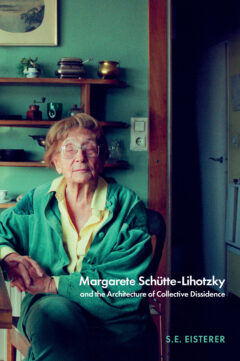 Margarete Schütte-Lihotzky and the Architecture of Collective Dissidence, 1918–1989
S.E. Eisterer (Author),
April 2027

 The Romero Memory
Judith Gruber (Editor), Jonas Van Mulder (Editor), Stephan Parmentier (Editor), Veerle Draulans (Editor), Joren Janssens (Editor), Jacques Haers (Editor), Kim Christiaens (Editor),
December 2026

 Infrastructuring Arrival
Karel Arnaut (Editor), Luce Beeckmans (Editor), Bruno Meeus (Editor),
November 2026
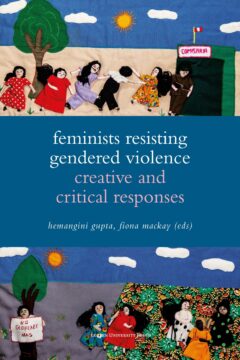 Feminists Resisting Gendered Violence
Hemangini Gupta (Editor), Fiona Mackay (Editor), Jan Breckenridge (Editor), Louise Chappell (Editor), Rachna Mehra (Editor), Rukmini Sen (Editor), Mailin Suchting (Editor),
October 2026
 German–Rapanui Entanglements
Cristián Moreno Pakarati (Editor), Diego Muñoz (Editor), Philipp Schorch (Editor),
August 2026


 Nomadic Camera
Burcu Dogramaci (Editor), Winfried Gerling (Editor), Jens Jäger (Editor), Birgit Mersmann (Editor),
March 2026
 Architecture & Feminist Critical Theory
Hilde Heynen (Author), Lucía C. Pérez-Moreno (Editor),
November 2025
 Teaching About the Violent Past
Line Kuppens (Author), Justin Sheria Nfundiko (Author),
October 2025
 Interculturaliteit en de geesteswetenschappen – tweede, herziene editie
Idesbald Goddeeris (Editor), Nadia Lie (Editor), Stefania Marzo (Editor),
September 2025
 Integration Otherwise Inspiration Kit
Luce Beeckmans (Author), Dounia Salamé (Author), Martina Bovo (Author), Mary Hogan (Author),
June 2025