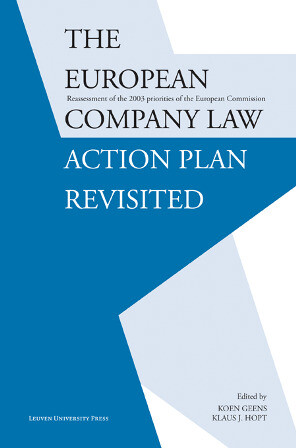
The harmonisation of company law has always been on the agenda of the European Union. Besides the protection of third parties affected by business transactions, the founders had two other objectives: first, promoting freedom of establishment, and second, preventing the abuse of such freedom. In fact, the fear of the Netherlands becoming the ‘Delaware of Europe’ (in terms of competition among Member States) seemed real, until, ironically, at the beginning of the 21st century, it was the privilege of the Dutch (and the Danish) state to fail in making the abuse argument before the European Court of Justice. The Court was apparently at ease since comparative law research had shown that the U.S. model of state competition was more fruitful than harmful: Delaware had, among U.S states, developed the most sophisticated corporate law, and nurtured the country’s most experienced company law judges. Therefore the Commission felt ready to refocus its company law strategy. On the basis of the so-called Winter Group Report, it wrote its Company Law Action Plan, which was issued on 21 May 2003. Now, six years later, a revisit is appropriate. In this volume researchers of the Jan Ronse Institute for Company law of the Katholieke Universiteit Leuven present five papers on the main priorities of the Action Plan: capital and creditor protection, corporate governance, one share one vote, financial reporting, and corporate mobility. The book also includes responses and ensuing discussions by reputed European company law experts. The conclusion of the book is written by Jaap Winter.
Table of Content
Preface by K. Geens and K.J. Hopt
The European Company Law Action Plan Revisited: An Introduction by K.J. Hopt
I. Reforming Legal Capital: Harmonisation or Fragmentation of Creditor Protection?
Paper by J.M. Nelissen Grade and M. Wauters
Response by J. Rickford
Discussion (Chair D. Martin)
II. Corporate Governance in a European Perspective
Paper by H. Laga and F. Parrein
Response by E. Wymeersch
Discussion (Chair P. Davies)
III. One Share One Vote: Fairness, Efficiency and EU Harmonisation Revisited
Paper by K. Geens and C. Clottens
Response by J.M. Garrido Garcia
Discussion (Chair P. Montagnon)
IV. Belgian and European Accounting Law 30 years after the Fourth EC Directive. A route planner in a landscape scattered with (a growing number of) crossroads
Paper by K. Van Hulle and F. Hellemans
Response by H. Beckman and Peter Van der Zanden
Discussion (Chair H. Olivier)
V. Corporate Mobility
Paper by M. Wyckaert and F. Jenné
Response by L. Timmerman
Discussion (Chair J. Meyers)
Transcript of Panel Debate
The European Union’s Involvement in Company Law and Corporate Governance
Conclusion by J. Winter
Frequently Asked Questions
What is "The European Company Law Action Plan Revisited" about?
The harmonisation of company law has always been on the agenda of the European Union. Besides the protection of third parties affected by business transactions, the founders had two other objectives: first, promoting freedom of establishment, and second, preventing the abuse of such freedom. In fact, the fear of the Netherlands becoming the ‘Delaware of Europe’ (in terms of competition among Member States) seemed real, until, ironically, at the beginning of the 21st century, it was the privilege of the Dutch (and the Danish) state to fail in making the abuse argument before the European Court of Justice. The Court was apparently at ease since comparative law research had shown that the U.S. model of state competition was more fruitful than harmful: Delaware had, among U.S states, developed the most sophisticated corporate law, and nurtured the country’s most experienced company law judges. Therefore the Commission felt ready to refocus its company law strategy. On the basis of the so-called Winter Group Report, it wrote its Company Law Action Plan, which was issued on 21 May 2003. Now, six years later, a revisit is appropriate. In this volume researchers of the Jan Ronse Institute for Company law of the Katholieke Universiteit Leuven present five papers on the main priorities of the Action Plan: capital and creditor protection, corporate governance, one share one vote, financial reporting, and corporate mobility. The book also includes responses and ensuing discussions by reputed European company law experts. The conclusion of the book is written by Jaap Winter.
Who edited "The European Company Law Action Plan Revisited"?
"The European Company Law Action Plan Revisited" was edited by Koen Geens and Klaus J. Hopt.
Koen Geens is Professor of Company and Financial Law, Director of the Jan Ronse Institute for Company Law at KU Leuven, and a member of the Belgian Corporate Governance Commission.
Klaus J. Hopt is Professor of Law and former Director of the Max Planck Institute for Comparative and International Private Law in Hamburg, and a member of the High Level Group of Company Law Experts of the European Commission.
What is the Table of Contents for "The European Company Law Action Plan Revisited"?
Table of Content
Preface by K. Geens and K.J. Hopt
The European Company Law Action Plan Revisited: An Introduction by K.J. Hopt
I. Reforming Legal Capital: Harmonisation or Fragmentation of Creditor Protection?
Paper by J.M. Nelissen Grade and M. Wauters
Response by J. Rickford
Discussion (Chair D. Martin)
II. Corporate Governance in a European Perspective
Paper by H. Laga and F. Parrein
Response by E. Wymeersch
Discussion (Chair P. Davies)
III. One Share One Vote: Fairness, Efficiency and EU Harmonisation Revisited
Paper by K. Geens and C. Clottens
Response by J.M. Garrido Garcia
Discussion (Chair P. Montagnon)
IV. Belgian and European Accounting Law 30 years after the Fourth EC Directive. A route planner in a landscape scattered with (a growing number of) crossroads
Paper by K. Van Hulle and F. Hellemans
Response by H. Beckman and Peter Van der Zanden
Discussion (Chair H. Olivier)
V. Corporate Mobility
Paper by M. Wyckaert and F. Jenné
Response by L. Timmerman
Discussion (Chair J. Meyers)
Transcript of Panel Debate
The European Union's Involvement in Company Law and Corporate Governance
Conclusion by J. Winter
Related titles

 The Impact of Human Rights Prosecutions
Ulrike Capdepón (Editor), Rosario Figari Layús (Editor),
November 2020
 Waarheidsvinding en adviesverlening bij rampen
Jeroen Maesschalck (Editor), Stephan Parmentier (Editor), D. Van Daele (Editor), Jolynn Debacker (Editor), Lore Mergaerts (Editor),
November 2014
 Het beleid van de jeugdmagistraat
Marieke Franssens (Author), Johan Put (Author), Johan Deklerck (Author),
March 2013

 The Sparking Discipline of Criminology
Stephan Parmentier (Editor), Lode Walgrave (Editor), Ivo Aertsen (Editor), Jeroen Maesschalck (Editor), Letizia Paoli (Editor),
December 2011
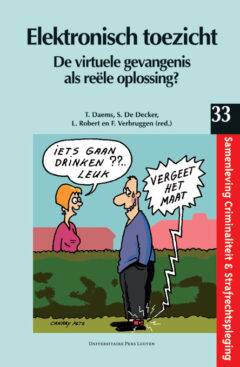 Elektronisch toezicht
Tom Daems (Editor), Stef De Decker (Editor), Luc Robert (Editor), Frank Verbruggen (Editor),
October 2009
 Gerechtelijke geestelijke gezondheidszorg: wetenschap, beleid en praktijk
Frank Hutsebaut (Author), Geert Vervaeke (Editor), Johan Goethals (Editor),
March 2006
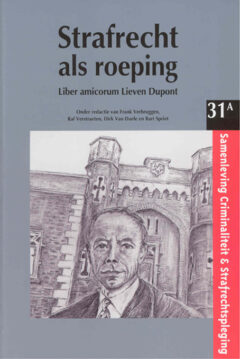 Strafrecht als roeping
Frank Verbruggen (Editor), Raf Verstraeten (Editor), D. Van Daele (Editor), Bart Spriet (Author),
September 2005
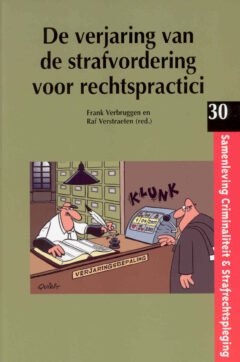 De verjaring van de strafvordering voor rechtspractici
Frank Verbruggen (Editor), Raf Verstraeten (Editor),
September 2005
 Vennootschappen en rechtspersonen: Stand van zaken
Luc Weyts (Editor), Christoph Castelein (Editor), Eline Goovaerts (Editor),
February 2005
 Current Developments in European Integration. Financial Services/Transport Policy
Stef Proost (Author), Jules Stuyck (Author), Evelyne Terryn (Author), Dirk Heremans (Author),
November 2004

 Actuele thema’s uit het strafrecht en de criminologie
D. Van Daele (Editor), Ingrid Van Welzenis (Editor),
March 2004