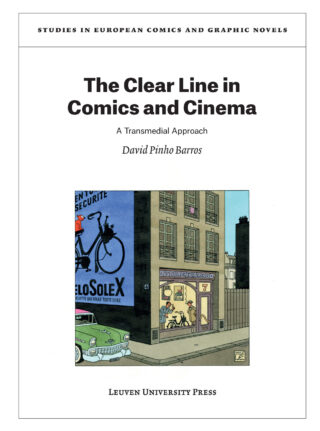

The Clear Line in Comics and Cinema
A Transmedial Approach
David Pinho Barros (Author),

Series: Studies in European Comics and Graphic Novels 10
Category: Literature
Language: English
ISBN: 9789462703209
Publication date: July 4, 2022
€59.50 (including 6% VAT)
Buy NowNumber of pages: 266
Size: 230 x 170 x 17 mm
Number of illustrations: 50
Illustrations and other content description:
Illustrated with colour section

Funded by: Open Book Collective
Stock item: 148978
Standard delivery time for print books:
For Belgium: 5 to 8 working days
For EU: 2 to 3 weeks
For other countries: 4 to 5 weeks
Series: Studies in European Comics and Graphic Novels 10
Category: Literature
Language: English
ISBN: 9789461667311
Publication date: September 30, 2025
Download Free PDFNumber of pages: 266
Number of illustrations: 50
Illustrations and other content description:
Illustrated with colour section
Funded by: Open Book Collective
Historical and theoretical analysis of the “clear line” style in comics and cinema
The “clear line”, a term coined in 1977 by Dutch essayist and artist Joost Swarte, has become shorthand in the field of comics studies for the style originally developed by Hergé and the École de Bruxelles. It refers to certain storytelling strategies that generate a deceptively simple, lucid and hygienic narration: in Philippe Marion’s words, it is a style “made out of light, fluidity and limpid clarity”.
By cataloguing and critically analysing clear line comics from historical and theoretical perspectives, this book offers a new outlook on the development of the style in the 20th and 21st centuries, especially focused on the context of the European bande dessinée. In addition, it pioneeringly expands the concept of “clear line” to other artistic domains by introducing and defending its transmedial use, which is particularly relevant for the understanding of the oeuvres of certain filmmakers of the 20th century working in the postwar period, such as Yasujirô Ozu in Japan, Jacques Tati in France and Frank Tashlin in the United States. The Clear Line in Comics and Cinema is therefore a key theoretical work for both bande dessinée enthusiasts and comics scholars, as well as a fundamental contribution to present-day film studies and transmedial narratology.
This publication is GPRC-labeled (Guaranteed Peer-Reviewed Content).
Acknowledgements
Introduction
Part One: Clear Line Comics
Opening remarks
Chapter 1: Hergé’s clear line
From Totor to Tintin: Trace and narrative as constraints
The clear line finds its Oriental history
The clear line facing new formats
Chapter 2: The clear line of the École de Bruxelles
Edgar P. Jacobs’s naturalist clear line
Between individuality and standardisation: Jacques Martin, Bob De Moor and Roger Leloup
Chapter 3: The clear line after Tintin et les Picaros
The postmodernist clear line: From Tante Leny presenteert! to (À Suivre)
The neoclassical clear line: From Professor Palmboom to Blake and Mortimer 2.0
Philip, Francis and friends: Contemporary parodies and pastiches of the clear line
Closing remarks
Part Two: Clear Line Cinema
Opening remarks
Chapter 4: Cinema as a graphic-verbal medium
Film’s media combination: A theoretical perspective
Film’s media combination: An analytical perspective
Film’s media combination: A stylistic perspective
Chapter 5: Clear line cinema
“Dire juste”: Density, simplicity and stylisation in cinema
A few directions for a history of clear line cinema, from Louis Lumière to Wes Anderson
Closing remarks
Part Three: Case Studies
Opening remarks 153
Chapter 6: Yasujirô Ozu
Ozu’s clear line frame composition and storytelling strategies
Red teapot, yellow teacup: Clear line colouring in Ozu’s late films
Chapter 7: Jacques Tati
This fits here, that fits there: The clear line in the Hulot comedies
Minimal sounds for maximal effects: Remarks on Tati’s clear line soundscapes
Chapter 8: Frank Tashlin
Tashlin’s clear line ink: Comics, advertisements and animation
The clear line at the service of comedy in Tashlin’s feature films
Closing remarks
For a transmedial use of the concept of “clear line”: A conclusion
Sources
Notes
Perfect boek voor iedereen die bereid is zich wat meer te verdiepen in de negende kunst en voor iedereen die wel eens verrast wil worden door een schrijver die je af en toe even wat anders en beter laat kijken naar strips en films. Een aanrader.Holly Moors, Moors
Magazine, dinsdag 20 september
Frequently Asked Questions
What is "The Clear Line in Comics and Cinema" about?
Historical and theoretical analysis of the “clear line” style in comics and cinema
The “clear line”, a term coined in 1977 by Dutch essayist and artist Joost Swarte, has become shorthand in the field of comics studies for the style originally developed by Hergé and the École de Bruxelles. It refers to certain storytelling strategies that generate a deceptively simple, lucid and hygienic narration: in Philippe Marion’s words, it is a style “made out of light, fluidity and limpid clarity”.
By cataloguing and critically analysing clear line comics from historical and theoretical perspectives, this book offers a new outlook on the development of the style in the 20th and 21st centuries, especially focused on the context of the European bande dessinée. In addition, it pioneeringly expands the concept of “clear line” to other artistic domains by introducing and defending its transmedial use, which is particularly relevant for the understanding of the oeuvres of certain filmmakers of the 20th century working in the postwar period, such as Yasujirô Ozu in Japan, Jacques Tati in France and Frank Tashlin in the United States. The Clear Line in Comics and Cinema is therefore a key theoretical work for both bande dessinée enthusiasts and comics scholars, as well as a fundamental contribution to present-day film studies and transmedial narratology.
This publication is GPRC-labeled (Guaranteed Peer-Reviewed Content).
Who wrote "The Clear Line in Comics and Cinema"?
"The Clear Line in Comics and Cinema" was written by David Pinho Barros.
David Pinho Barros is a researcher, curator and assistant professor of literary, cultural and interart studies at the Faculty of Arts and Humanities of the University of Porto.
Is "The Clear Line in Comics and Cinema" part of a series?
Yes, "The Clear Line in Comics and Cinema" is part of the "Studies in European Comics and Graphic Novels" series. It's book 10 in the series.
Studies in European Comics and Graphic Novels presents state-of-the-art contributions on comics and graphic novels. The series publishes research on European comics and graphic novels and aims at stimulating scholarship on European BDs. It includes titles from scholars working in different disciplines, such as history, literary criticism, literary theory, art history, and visual studies. Typical themes to be addressed will comprise European graphic novels and comics in historical context; gender and other social identity analysis; theorizations; and detailed case studies or wider surveys. The series publishes monographs and collections for university-level researchers and ambitions to advance knowledge of this still relatively under-discussed subject.

All volumes will be published in English, but the comics and graphic novels under investigation will be of any European language and from any European culture. Like graphic novels and comics, Europe itself is hard to define, and the approach for the series will be open and not overly prescriptive.
Series editors
Jan Baetens, KU Leuven
Hugo Frey, University of Chichester
Maaheen Ahmed, Ghent University
Editorial Board
The editorial board is composed of leading scholars from literature, visual arts, and historical studies:
Bart Beaty (University of Calgary)
Christopher Pizzino (University of Georgia)
Ann Miller (University of Leicester).
Proposals
Proposals and enquiries can be sent to the series editors.
Please make use of the submission form to present your manuscript or proposal to our board.
Authors interested in Open Access can consult the available funding options.
Links & Resources
Is "The Clear Line in Comics and Cinema" available Open Access?
Yes, "The Clear Line in Comics and Cinema" is published Open Access. It is available under a BY-NC-ND license.
Who funded the publication of "The Clear Line in Comics and Cinema"?
Publication of "The Clear Line in Comics and Cinema" was funded by Open Book Collective
.
What is the Table of Contents for "The Clear Line in Comics and Cinema"?
Acknowledgements
Introduction
Part One: Clear Line Comics
Opening remarks
Chapter 1: Hergé’s clear line
From Totor to Tintin: Trace and narrative as constraints
The clear line finds its Oriental history
The clear line facing new formats
Chapter 2: The clear line of the École de Bruxelles
Edgar P. Jacobs’s naturalist clear line
Between individuality and standardisation: Jacques Martin, Bob De Moor and Roger Leloup
Chapter 3: The clear line after Tintin et les Picaros
The postmodernist clear line: From Tante Leny presenteert! to (À Suivre)
The neoclassical clear line: From Professor Palmboom to Blake and Mortimer 2.0
Philip, Francis and friends: Contemporary parodies and pastiches of the clear line
Closing remarks
Part Two: Clear Line Cinema
Opening remarks
Chapter 4: Cinema as a graphic-verbal medium
Film’s media combination: A theoretical perspective
Film’s media combination: An analytical perspective
Film’s media combination: A stylistic perspective
Chapter 5: Clear line cinema
“Dire juste”: Density, simplicity and stylisation in cinema
A few directions for a history of clear line cinema, from Louis Lumière to Wes Anderson
Closing remarks
Part Three: Case Studies
Opening remarks 153
Chapter 6: Yasujirô Ozu
Ozu’s clear line frame composition and storytelling strategies
Red teapot, yellow teacup: Clear line colouring in Ozu’s late films
Chapter 7: Jacques Tati
This fits here, that fits there: The clear line in the Hulot comedies
Minimal sounds for maximal effects: Remarks on Tati’s clear line soundscapes
Chapter 8: Frank Tashlin
Tashlin’s clear line ink: Comics, advertisements and animation
The clear line at the service of comedy in Tashlin’s feature films
Closing remarks
For a transmedial use of the concept of “clear line”: A conclusion
Sources
Notes
What is the DOI for "The Clear Line in Comics and Cinema"?
The Digital Object Identifier (DOI) for "The Clear Line in Comics and Cinema" is 10.11116/9789461667311.
Related titles
 Feminists Resisting Gendered Violence
Hemangini Gupta (Editor), Fiona Mackay (Editor), Jan Breckenridge (Editor), Louise Chappell (Editor), Rachna Mehra (Editor), Rukmini Sen (Editor), Mailin Suchting (Editor),
October 2026
 Affect in Translation and Interpreting
Sofía Monzón (Editor), Lucie Spezzatti (Editor), Elisabeth Goemans (Editor),
May 2026
 Research Methods in Literary Reception Studies
Jeroen Dera (Editor), Anne Oerlemans (Editor), Frederik Van Dam (Editor),
May 2026
 Comics and the Global South
Andrea Aramburú (Editor), Dibyadyuti Roy (Editor), Joe Sutliff Sanders (Editor),
February 2026
 Situatedness and Performativity
Raquel Pacheco Aguilar (Editor), Marie-France Guénette (Editor),
November 2025
 Transfer Thinking in Translation Studies
Maud Gonne (Editor), Klaartje Merrigan (Editor), Reine Meylaerts (Editor), Heleen van Gerwen (Editor),
September 2025
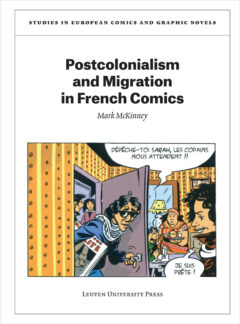
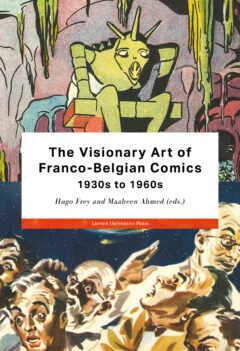 The Visionary Art of Franco-Belgian Comics, 1930s to 1960s
Hugo Frey (Editor), Maaheen Ahmed (Editor),
September 2025
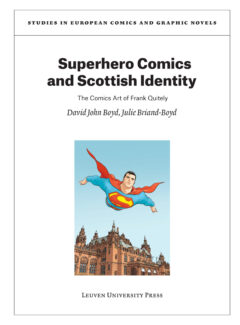 Superhero Comics and Scottish Identity
David John Boyd (Author), Julie Briand-Boyd (Author),
July 2025
 European Literatures of Military Occupation
Matthias Buschmeier (Editor), Jeanne E. Glesener (Editor),
October 2024
 Beyond the Translator’s Invisibility
Peter J. Freeth (Editor), Rafael Treviño (Editor),
September 2025
 Alles verandert altijd – Herziene editie
Lieven D'hulst (Editor), Chris Van de Poel (Editor),
December 2023
 Modern Etruscans
Chiara Zampieri (Editor), Martina Piperno (Editor), Bart Van den Bossche (Editor),
October 2023