
European Literatures of Military Occupation
Shared Experience, Shifting Boundaries, and Aesthetic Affections
Matthias Buschmeier (Editor), Jeanne E. Glesener (Editor),

Category: Literature
Language: English
ISBN: 9789462704077
Publication date: June 25, 2024
€37.00 (including 6% VAT)
Buy NowNumber of pages: 360
Size: 234 x 156 x 21 mm

Funded by: KU Leuven Fund for Fair Open Access
Universität Bielefeld
Universität Luxemburg
Stock item: 161063
Standard delivery time for print books:
For Belgium: 5 to 8 working days
For EU: 2 to 3 weeks
For other countries: 4 to 5 weeks
Category: Literature
Language: English
ISBN: 9789461665911
Publication date: October 15, 2024
Download Free EpubNumber of pages: 360
Funded by: KU Leuven Fund for Fair Open Access
Universität Bielefeld
Universität Luxemburg
Category: Literature
Language: English
ISBN: 9789461665546
Publication date: June 14, 2024
Download Free PDFNumber of pages: 360
Funded by: KU Leuven Fund for Fair Open Access
Universität Bielefeld
Universität Luxemburg
Occupation literature: a new perspective on European identities
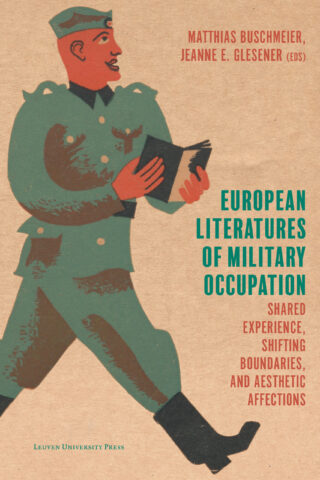
What does it mean to live under occupation? How does it shape the culture and identities of European nations? How does it affect the way we write and read literature? These are fundamental questions that set the stage for an in-depth exploration. Focusing on the literary works of writers from various European countries that were occupied by Nazi Germany, the Soviet Union or the Allies during and after World War II, the contributions in this edited volume seek to unravel the complex interplay between historical circumstances and literary expression. Centered on the concept of occupation literature as a genre in its own right, differentiating it from ‘war literature’, the book navigates this subtle distinction, drawing connections with the Holocaust novel and extending the timeframe beyond Nazi occupation.
European Literatures of Military Occupation argues that the multifaceted experiences of occupation have played a pivotal role in shaping European identities. Moreover, the volume links European identities to the experience of occupation by unveiling the complex and diverse ways in which writers respond to historical and political circumstances. Introducing the concept of ‘affective realism’ and exploring its intersection with the occupation novel, the book provides nuanced insights into the intricate relationship between history, identity, and literature. It combines theoretical perspectives relevant to researchers in the humanities with detailed case studies, generating a truly interdisciplinary perspective, enriched by a strong transnational dimension, creating a cohesive narrative that intervenes innovatively in the fields of literary, cultural, and historical criticism.
Ebook available in Open Access.
This publication is GPRC-labeled (Guaranteed Peer-Reviewed Content).
Contributors: Klaus-Michael Bogdal (Bielefeld University), Jan Andres (Bielefeld University), Benedikts Kalnačs (University of Latvia), Stefan Laffin (Leibnitz University of Hannover), Daniela Lieb (Centre national de littérature, Luxembourg), Atinati Mamatsashvil (Ilia State University), Christopher Meid (University of Freiburg), Aleksandar Momčilović (independent scholar), Jeroen Olyslaegers (independent literary author), Joanna Rzepa (University of Essex), Sandra Schell (Heidelberg University), Meinolf Schumacher (Bielefeld University), Stefanie Siess (Heidelberg University)
Acknowledgments
European Literatures of Military Occupation: An Introduction to the Topic and Terminology of the Genre
Matthias Buschmeier
PART 1 LITERATURE AND THE WORLD: OCCUPATION AS A EUROPEAN EXPERIENCE
Introduction to Part 1
Jeanne E. Glesener
Chapter 1. SCARS. Writing on Occupation: The Reality Effect of Narrative and Psychogeographical Space, or The Case of Wil
Jeroen Olyslaegers
Chapter 2. Affective Realism: The Literature of Occupation through Regions and Ages − Vercors’ Le Silence de la mer (1942), Willem Frederik Hermans’ De donkere kamer van Damokles (1958), and Cătălin Mihuleac’s America de peste pogrom (2014)
Matthias Buschmeier
PART 2 CULTURAL SPACES OF OCCUPATION
Introduction to Part 2
Jeanne E. Glesener
Chapter 3. Military Occupation as Tourism? Griechenland. Ein Buch aus dem Kriege (1942) and Ölberge, Weinberge (1953) by Erhart Kästner
Christopher Meid
Chapter 4. Banished from an Occupied Exile: Rudolf Borchardt’s Anabasis Fragment (1944)
Jan Andres
Chapter 5. German Writers as Occupiers and Occupied: Franco-German Representations in the Works of Felix Hartlaub (1940–1941) and Tami Oelfken (1945–1955)
Stefanie Siess
Chapter 6. Literary Representations of Occupied Cities: Tbilisi, Paris, and Luxembourg
Atinati Mamatsashvili
Chapter 7. Semantics of Occupation(s) in Pierre Grégoire’s Europäische Suite Trilogy: Catholicism, Anticommunism, and the Idea of Luxembourgish Exceptionalism
Daniela Lieb
PART 3 WRITING UNDER/AGAINST OCCUPATION: STRATEGIES OF RESISTANCE AND PROPAGANDA
Introduction to Part 3
Jeanne E. Glesener
Chapter 8. Setting the Stage for an Immediate Historicization? Early Sense-Making of the Allied Occupation of Italy between Fictionalized Accounts, War Novels, and Propaganda (1943–1947)
Stefan Laffin
Chapter 9. Literature from Below: Literary Competitions in Serbia (1941–1945) and in the Protectorate of Bohemia and Moravia (1939–1945)
Aleksandar Momčilović
Chapter 10. Translating Occupied Poland into English, 1939–1955
Joanna Rzepa
Chapter 11. How to Handle the New Occupiers? Margret Boveri’s Amerikafibel für erwachsene Deutsche: Ein Versuch, Unverstandenes zu erklären (1946)
Sandra Schell
PART 4 REMEMBERING OCCUPATION
Introduction to Part 4
Jeanne E. Glesener
Chapter 12. “It was over. Düsseldorf was dead”—Narratives of a Renewed Occupation
Klaus-Michael Bogdal
Chapter 13. Reflections on Twentieth-Century Military Occupations in Latvian and Estonian Novels
Benedikts Kalnačs
Chapter 14. Occupied by Comrades? The Concealed Story of the Soviet Military Presence in Mecklenburg and Western Pomerania after 1945 in Uwe Johnson’s Jahrestage (1970–1983)
Meinolf Schumacher
List of Contributors
Matthias Buschmeier
Matthias Buschmeier is an associate professor (Akademischer Direktor) for German Literature in the European Context at Bielefeld University.
Jeanne E. Glesener
Jeanne E. Glesener is an associate professor in Luxembourgish Literature at Université du Luxembourg.
European Literatures of Military Occupation, 1938-55 establishes ‘occupation literature’ as a distinct generic category. Rather than fighters, as does the war novel, occupation literature portrays civilians entangled in complex and often ambivalent relationships with the invader. The volume makes a bold claim that it is indeed the experience of occupation that forms the basis for European identity. It therefore becomes an important intervention at the time when Brexit and the widespread rise of populism have put in jeopardy the shared sense of Europeanness, while the war in Ukraine has reminded Europeans of the importance of unity and solidarity in the face of external threats. - Prof. Helena Duffy - University of Wroclaw
War is back in Europe, and, less noticed, so is occupation. This volume reminds us how World War II occupations have been represented in literature. Very timely and important! - Tatjana Tönsmeyer, Bergische Universität Wuppertal
Frequently Asked Questions
What is "European Literatures of Military Occupation" about?
Occupation literature: a new perspective on European identities
What does it mean to live under occupation? How does it shape the culture and identities of European nations? How does it affect the way we write and read literature? These are fundamental questions that set the stage for an in-depth exploration. Focusing on the literary works of writers from various European countries that were occupied by Nazi Germany, the Soviet Union or the Allies during and after World War II, the contributions in this edited volume seek to unravel the complex interplay between historical circumstances and literary expression. Centered on the concept of occupation literature as a genre in its own right, differentiating it from 'war literature', the book navigates this subtle distinction, drawing connections with the Holocaust novel and extending the timeframe beyond Nazi occupation.
European Literatures of Military Occupation argues that the multifaceted experiences of occupation have played a pivotal role in shaping European identities. Moreover, the volume links European identities to the experience of occupation by unveiling the complex and diverse ways in which writers respond to historical and political circumstances. Introducing the concept of 'affective realism' and exploring its intersection with the occupation novel, the book provides nuanced insights into the intricate relationship between history, identity, and literature. It combines theoretical perspectives relevant to researchers in the humanities with detailed case studies, generating a truly interdisciplinary perspective, enriched by a strong transnational dimension, creating a cohesive narrative that intervenes innovatively in the fields of literary, cultural, and historical criticism.
Ebook available in Open Access.
This publication is GPRC-labeled (Guaranteed Peer-Reviewed Content).
Contributors: Klaus-Michael Bogdal (Bielefeld University), Jan Andres (Bielefeld University), Benedikts Kalnačs (University of Latvia), Stefan Laffin (Leibnitz University of Hannover), Daniela Lieb (Centre national de littérature, Luxembourg), Atinati Mamatsashvil (Ilia State University), Christopher Meid (University of Freiburg), Aleksandar Momčilović (independent scholar), Jeroen Olyslaegers (independent literary author), Joanna Rzepa (University of Essex), Sandra Schell (Heidelberg University), Meinolf Schumacher (Bielefeld University), Stefanie Siess (Heidelberg University)
Who edited "European Literatures of Military Occupation"?
"European Literatures of Military Occupation" was edited by Matthias Buschmeier and Jeanne E. Glesener.
Matthias Buschmeier is an associate professor (Akademischer Direktor) for German Literature in the European Context at Bielefeld University.
Jeanne E. Glesener is an associate professor in Luxembourgish Literature at Université du Luxembourg.
Is "European Literatures of Military Occupation" available Open Access?
Yes, "European Literatures of Military Occupation" is published Open Access. It is available under a BY-NC-ND license.
Who funded the publication of "European Literatures of Military Occupation"?
Publication of "European Literatures of Military Occupation" was funded by KU Leuven Fund for Fair Open Access
Universität Bielefeld
Universität Luxemburg
.
What is the Table of Contents for "European Literatures of Military Occupation"?
Acknowledgments
European Literatures of Military Occupation: An Introduction to the Topic and Terminology of the Genre
Matthias Buschmeier
PART 1 LITERATURE AND THE WORLD: OCCUPATION AS A EUROPEAN EXPERIENCE
Introduction to Part 1
Jeanne E. Glesener
Chapter 1. SCARS. Writing on Occupation: The Reality Effect of Narrative and Psychogeographical Space, or The Case of Wil
Jeroen Olyslaegers
Chapter 2. Affective Realism: The Literature of Occupation through Regions and Ages − Vercors’ Le Silence de la mer (1942), Willem Frederik Hermans’ De donkere kamer van Damokles (1958), and Cătălin Mihuleac’s America de peste pogrom (2014)
Matthias Buschmeier
PART 2 CULTURAL SPACES OF OCCUPATION
Introduction to Part 2
Jeanne E. Glesener
Chapter 3. Military Occupation as Tourism? Griechenland. Ein Buch aus dem Kriege (1942) and Ölberge, Weinberge (1953) by Erhart Kästner
Christopher Meid
Chapter 4. Banished from an Occupied Exile: Rudolf Borchardt’s Anabasis Fragment (1944)
Jan Andres
Chapter 5. German Writers as Occupiers and Occupied: Franco-German Representations in the Works of Felix Hartlaub (1940–1941) and Tami Oelfken (1945–1955)
Stefanie Siess
Chapter 6. Literary Representations of Occupied Cities: Tbilisi, Paris, and Luxembourg
Atinati Mamatsashvili
Chapter 7. Semantics of Occupation(s) in Pierre Grégoire’s Europäische Suite Trilogy: Catholicism, Anticommunism, and the Idea of Luxembourgish Exceptionalism
Daniela Lieb
PART 3 WRITING UNDER/AGAINST OCCUPATION: STRATEGIES OF RESISTANCE AND PROPAGANDA
Introduction to Part 3
Jeanne E. Glesener
Chapter 8. Setting the Stage for an Immediate Historicization? Early Sense-Making of the Allied Occupation of Italy between Fictionalized Accounts, War Novels, and Propaganda (1943–1947)
Stefan Laffin
Chapter 9. Literature from Below: Literary Competitions in Serbia (1941–1945) and in the Protectorate of Bohemia and Moravia (1939–1945)
Aleksandar Momčilović
Chapter 10. Translating Occupied Poland into English, 1939–1955
Joanna Rzepa
Chapter 11. How to Handle the New Occupiers? Margret Boveri’s Amerikafibel für erwachsene Deutsche: Ein Versuch, Unverstandenes zu erklären (1946)
Sandra Schell
PART 4 REMEMBERING OCCUPATION
Introduction to Part 4
Jeanne E. Glesener
Chapter 12. “It was over. Düsseldorf was dead”—Narratives of a Renewed Occupation
Klaus-Michael Bogdal
Chapter 13. Reflections on Twentieth-Century Military Occupations in Latvian and Estonian Novels
Benedikts Kalnačs
Chapter 14. Occupied by Comrades? The Concealed Story of the Soviet Military Presence in Mecklenburg and Western Pomerania after 1945 in Uwe Johnson’s Jahrestage (1970–1983)
Meinolf Schumacher
List of Contributors
What is the DOI for "European Literatures of Military Occupation"?
The Digital Object Identifier (DOI) for "European Literatures of Military Occupation" is 10.11116/9789461665546.
Related titles
 Feminists Resisting Gendered Violence
Hemangini Gupta (Editor), Fiona Mackay (Editor), Jan Breckenridge (Editor), Louise Chappell (Editor), Rachna Mehra (Editor), Rukmini Sen (Editor), Mailin Suchting (Editor),
October 2026
 Affect in Translation and Interpreting
Sofía Monzón (Editor), Lucie Spezzatti (Editor), Elisabeth Goemans (Editor),
May 2026
 Research Methods in Literary Reception Studies
Jeroen Dera (Editor), Anne Oerlemans (Editor), Frederik Van Dam (Editor),
May 2026
 Comics and the Global South
Andrea Aramburú (Editor), Dibyadyuti Roy (Editor), Joe Sutliff Sanders (Editor),
February 2026
 Situatedness and Performativity
Raquel Pacheco Aguilar (Editor), Marie-France Guénette (Editor),
November 2025
 Transfer Thinking in Translation Studies
Maud Gonne (Editor), Klaartje Merrigan (Editor), Reine Meylaerts (Editor), Heleen van Gerwen (Editor),
September 2025
 The Visionary Art of Franco-Belgian Comics, 1930s to 1960s
Hugo Frey (Editor), Maaheen Ahmed (Editor),
September 2025
 Superhero Comics and Scottish Identity
David John Boyd (Author), Julie Briand-Boyd (Author),
July 2025
 Beyond the Translator’s Invisibility
Peter J. Freeth (Editor), Rafael Treviño (Editor),
September 2025
 Alles verandert altijd – Herziene editie
Lieven D'hulst (Editor), Chris Van de Poel (Editor),
December 2023
 Modern Etruscans
Chiara Zampieri (Editor), Martina Piperno (Editor), Bart Van den Bossche (Editor),
October 2023