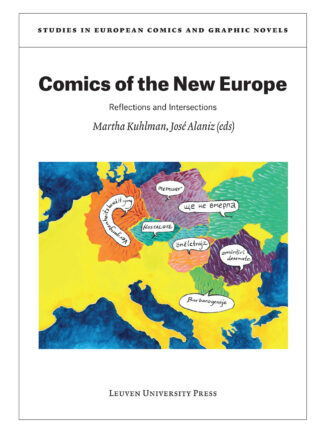

Comics of the New Europe
Reflections and Intersections
Martha Kuhlman (Editor), José Alaniz (Editor),

Series: Studies in European Comics and Graphic Novels 7
Category: Literature, Media and Visual Culture
Language: English
ISBN: 9789462702127
Publication date: April 21, 2020
€59.50 (including 6% VAT)
Buy NowNumber of pages: 290
Size: 230 x 170 x 18 mm
Number of illustrations: 41
Illustrations and other content description:
18 color images, 23 b&w images

Funded by: Knowledge Unlatched
Stock item: 134524
Standard delivery time for print books:
For Belgium: 5 to 8 working days
For EU: 2 to 3 weeks
For other countries: 4 to 5 weeks
Series: Studies in European Comics and Graphic Novels 7
Category: Literature, Media and Visual Culture
Language: English
ISBN: 9789461665270
Publication date: May 2, 2023
Download Free PDFNumber of pages: 290
Number of illustrations: 41
Illustrations and other content description:
18 color images, 23 b&w images
Funded by: Knowledge Unlatched
A new generation of European cartoonists
Bringing together the work of an array of North American and European scholars, this collection highlights a previously unexamined area within global comics studies. It analyses comics from countries formerly behind the Iron Curtain like East Germany, Poland, Czech Republic, Hungary, Romania, Yugoslavia, and Ukraine, given their shared history of WWII and communism. In addition to situating these graphic narratives in their national and subnational contexts, Comics of the New Europe pays particular attention to transnational connections along the common themes of nostalgia, memoir, and life under communism. The essays offer insights into a new generation of European cartoonists that looks forward, inspired and informed by traditions from Franco-Belgian and American comics, and back, as they use the medium of comics to reexamine and reevaluate not only their national pasts and respective comics traditions but also their own post-1989 identities and experiences.
Contributors: Max Bledstein (University of Winnipeg), Dragana Obradović (University of Toronto), Aleksandra Sekulić (University of Arts in Belgrade), Pavel Kořínek (Institute of Czech Literature, Czech Academy of Sciences in Prague), Martin Foret (Palacký University), Michael Scholz (Uppsala University), Sean Eedy (Carleton University), Elizabeth Nijdam (University of British Columbia), Ewa Stańczyk (University of Amsterdam), Eszter Szép (Eötvös Loránd University)
This publication is GPRC-labeled (Guaranteed Peer-Reviewed Content).
General Introduction: Comics of the ‘New’ Europe Martha Kuhlman, José Alaniz
Part 1: The Former Yugoslav States
Un-Drawn Experience: Visualizing Trauma in Aleksandar Zograf’s Regards from Serbia
Max Bledstein
Filial Estrangement and Figurative Mourning in the Work of Nina Bunjevac
Dragana Obradović
Reality Check Through the Historical Avant-garde: Danilo Milošev Wostok
Aleksandra Sekulić
Part 2: Czechoslovakia/the Czech Republic
Facets of Nostalgia: Text-centric Longing in Comics and Graphic Novels by Pavel Čech
Pavel Kořínek
The Avant-Garde Aesthetic of Vojtěch Mašek
Martha Kuhlman
Regardless of Context: Graphic Novels with the Faceless (and Homelandless) Hero of Branko Jelinek
Martin Foret
Part 3: Germany
Co-Opting Childhood and Obscuring Ideology in Mosaik von Hannes Hegen, 1959-1974
Sean Eedy
Images of Spies and Counter Spies in East German Comics
Michael F. Scholz
Towards a Graphic Historicity: Authenticity and Photography in the German Graphic Novel
Elizabeth “Biz” Nijdam
Part 4: Poland, Ukraine, Romania, Hungary
Women, Feminism and Polish Comic Books: Frąś/Hagedorn’s Totalnie nie nostalgia
Ewa Stańczyk
Igor Baranko and National Precarity in Post-Soviet Ukrainian Comics
José Alaniz
The Autobiographical Mode in Post-Communist Romanian Comics:
Everyday Life in Brynjar Åbel Bandlien’s Strîmb Living and Andreea Chirică’s The Year of the Pioneer
Mihaela Precup
Avatars and Iteration in Contemporary Hungarian Autobiographical Comics
Eszter Szép
Acknowledgments
About the authors
Index
Carefully edited by two specialists of comics culture and Slavic culture with a longtime interest in the margins
of Western culture, this collection on the comics culture of Central and Eastern Europe (that is the countries
that have progressively joined the EU after the fall of the Berlin Wall) is much more than an eye-opener. The
book does not only disclose a wide range of a virtually “unknown” production (and why not confess that I felt
ashamed of my own ignorance as a European scholar after reading Comics of the New Europe?), it also offers a
new insight of the very meaning of making and reading comics in cultural, economic, political and ideological
contexts that are sometimes very different from what we take for granted. Jan Baetens, IMAGE
[&] NARRATIVE, Vol. 22, No.1 (2021)
Altogether, this volume represents a very welcome and stimulating introduction to comics production in a region that has been overlooked by critics. [...] this collection does represent an intriguing and novel exploration of new areas of study for comics scholarship. The introduction makes clear that the editors “consider this book an open invitation for further research” (13). It can only be hoped that their call will find receptive ears, and that some at least of the obviously worthwhile works they discuss will also find suitable publishers in the “old” Europe or North America.Vittorio Frigerio, Paradoxa, No. 32, 2021
Frequently Asked Questions
What is "Comics of the New Europe" about?
A new generation of European cartoonists
Bringing together the work of an array of North American and European scholars, this collection highlights a previously unexamined area within global comics studies. It analyses comics from countries formerly behind the Iron Curtain like East Germany, Poland, Czech Republic, Hungary, Romania, Yugoslavia, and Ukraine, given their shared history of WWII and communism. In addition to situating these graphic narratives in their national and subnational contexts, Comics of the New Europe pays particular attention to transnational connections along the common themes of nostalgia, memoir, and life under communism. The essays offer insights into a new generation of European cartoonists that looks forward, inspired and informed by traditions from Franco-Belgian and American comics, and back, as they use the medium of comics to reexamine and reevaluate not only their national pasts and respective comics traditions but also their own post-1989 identities and experiences.
Contributors: Max Bledstein (University of Winnipeg), Dragana Obradović (University of Toronto), Aleksandra Sekulić (University of Arts in Belgrade), Pavel Kořínek (Institute of Czech Literature, Czech Academy of Sciences in Prague), Martin Foret (Palacký University), Michael Scholz (Uppsala University), Sean Eedy (Carleton University), Elizabeth Nijdam (University of British Columbia), Ewa Stańczyk (University of Amsterdam), Eszter Szép (Eötvös Loránd University)
This publication is GPRC-labeled (Guaranteed Peer-Reviewed Content).
Who edited "Comics of the New Europe"?
"Comics of the New Europe" was edited by Martha Kuhlman and José Alaniz.
Martha Kuhlman is professor of Comparative Literature in the Department of English and Cultural Studies at Bryant University.
José Alaniz is professor in the Department of Slavic Languages and Literatures and in the Department of Comparative Literature at the University of Washington, Seattle.
Is "Comics of the New Europe" part of a series?
Yes, "Comics of the New Europe" is part of the "Studies in European Comics and Graphic Novels" series. It's book 7 in the series.
Studies in European Comics and Graphic Novels presents state-of-the-art contributions on comics and graphic novels. The series publishes research on European comics and graphic novels and aims at stimulating scholarship on European BDs. It includes titles from scholars working in different disciplines, such as history, literary criticism, literary theory, art history, and visual studies. Typical themes to be addressed will comprise European graphic novels and comics in historical context; gender and other social identity analysis; theorizations; and detailed case studies or wider surveys. The series publishes monographs and collections for university-level researchers and ambitions to advance knowledge of this still relatively under-discussed subject.

All volumes will be published in English, but the comics and graphic novels under investigation will be of any European language and from any European culture. Like graphic novels and comics, Europe itself is hard to define, and the approach for the series will be open and not overly prescriptive.
Series editors
Jan Baetens, KU Leuven
Hugo Frey, University of Chichester
Maaheen Ahmed, Ghent University
Editorial Board
The editorial board is composed of leading scholars from literature, visual arts, and historical studies:
Bart Beaty (University of Calgary)
Christopher Pizzino (University of Georgia)
Ann Miller (University of Leicester).
Proposals
Proposals and enquiries can be sent to the series editors.
Please make use of the submission form to present your manuscript or proposal to our board.
Authors interested in Open Access can consult the available funding options.
Links & Resources
Is "Comics of the New Europe" available Open Access?
Yes, "Comics of the New Europe" is published Open Access. It is available under a BY-NC-ND license.
Who funded the publication of "Comics of the New Europe"?
Publication of "Comics of the New Europe" was funded by Knowledge Unlatched
.
What is the Table of Contents for "Comics of the New Europe"?
General Introduction: Comics of the 'New' Europe Martha Kuhlman, José Alaniz
Part 1: The Former Yugoslav States
Un-Drawn Experience: Visualizing Trauma in Aleksandar Zograf’s Regards from Serbia
Max Bledstein
Filial Estrangement and Figurative Mourning in the Work of Nina Bunjevac
Dragana Obradović
Reality Check Through the Historical Avant-garde: Danilo Milošev Wostok
Aleksandra Sekulić
Part 2: Czechoslovakia/the Czech Republic
Facets of Nostalgia: Text-centric Longing in Comics and Graphic Novels by Pavel Čech
Pavel Kořínek
The Avant-Garde Aesthetic of Vojtěch Mašek
Martha Kuhlman
Regardless of Context: Graphic Novels with the Faceless (and Homelandless) Hero of Branko Jelinek
Martin Foret
Part 3: Germany
Co-Opting Childhood and Obscuring Ideology in Mosaik von Hannes Hegen, 1959-1974
Sean Eedy
Images of Spies and Counter Spies in East German Comics
Michael F. Scholz
Towards a Graphic Historicity: Authenticity and Photography in the German Graphic Novel
Elizabeth “Biz” Nijdam
Part 4: Poland, Ukraine, Romania, Hungary
Women, Feminism and Polish Comic Books: Frąś/Hagedorn’s Totalnie nie nostalgia
Ewa Stańczyk
Igor Baranko and National Precarity in Post-Soviet Ukrainian Comics
José Alaniz
The Autobiographical Mode in Post-Communist Romanian Comics:
Everyday Life in Brynjar Åbel Bandlien’s Strîmb Living and Andreea Chirică’s The Year of the Pioneer
Mihaela Precup
Avatars and Iteration in Contemporary Hungarian Autobiographical Comics
Eszter Szép
Acknowledgments
About the authors
Index
Related titles

 Feminists Resisting Gendered Violence
Hemangini Gupta (Editor), Fiona Mackay (Editor), Jan Breckenridge (Editor), Louise Chappell (Editor), Rachna Mehra (Editor), Rukmini Sen (Editor), Mailin Suchting (Editor),
October 2026

 Affect in Translation and Interpreting
Sofía Monzón (Editor), Lucie Spezzatti (Editor), Elisabeth Goemans (Editor),
May 2026
 Research Methods in Literary Reception Studies
Jeroen Dera (Editor), Anne Oerlemans (Editor), Frederik Van Dam (Editor),
May 2026
 Cinema in Post-War Belgium
Gertjan Willems (Editor), Bjorn Gabriels (Editor), Bénédicte Rochet (Editor),
May 2026
 Performing Magnetism
Eleonora Paklons (Editor), Kristof Smeyers (Editor), Kurt Vanhoutte (Editor), Hannah Welslau (Editor),
May 2026
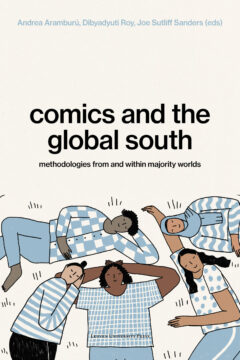 Comics and the Global South
Andrea Aramburú (Editor), Dibyadyuti Roy (Editor), Joe Sutliff Sanders (Editor),
February 2026
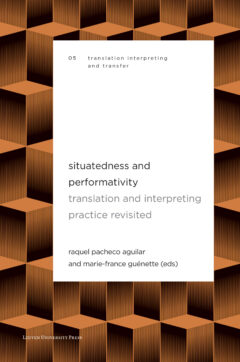 Situatedness and Performativity
Raquel Pacheco Aguilar (Editor), Marie-France Guénette (Editor),
November 2025
 Transfer Thinking in Translation Studies
Maud Gonne (Editor), Klaartje Merrigan (Editor), Reine Meylaerts (Editor), Heleen van Gerwen (Editor),
September 2025

 The Visionary Art of Franco-Belgian Comics, 1930s to 1960s
Hugo Frey (Editor), Maaheen Ahmed (Editor),
September 2025
 Superhero Comics and Scottish Identity
David John Boyd (Author), Julie Briand-Boyd (Author),
July 2025
 Violence and Trauma in Contemporary Performance
Sofie de Smet (Editor), Marieke Breyne (Editor), Pedzisai Maedza (Editor), Christel Stalpaert (Editor),
May 2025