

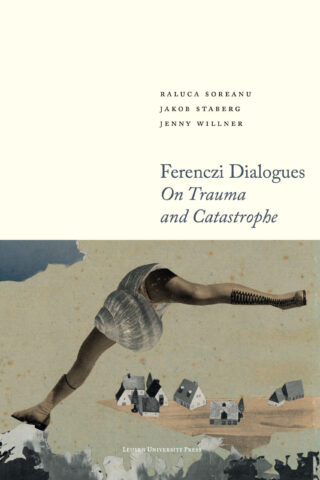

Ferenczi Dialogues
On Trauma and Catastrophe
Raluca Soreanu (Author), Jakob Staberg (Author), Jenny Willner (Author),

Series: Figures of the Unconscious 19
Category: Literature, Psychoanalysis
Language: English
ISBN: 9789462703520
Publication date: February 14, 2023
€49.50 (including 6% VAT)
Buy NowNumber of pages: 256
Size: 234 x 156 x 14 mm

Funded by: Path to Open
Stock item: 152666
Standard delivery time for print books:
For Belgium: 5 to 8 working days
For EU: 2 to 3 weeks
For other countries: 4 to 5 weeks
Series: Figures of the Unconscious 19
Category: Literature, Psychoanalysis
Language: English
ISBN: 9789461667557
Publication date: January 15, 2026
Download Free EpubNumber of pages: 256
Funded by: Path to Open
Series: Figures of the Unconscious 19
Category: Literature, Psychoanalysis
Language: English
ISBN: 9789461664860
Publication date: October 2, 2023
Download Free PDFNumber of pages: 256
Funded by: Path to Open
Contemporary reading of Sándor Ferenczi’s trauma theory
Ferenczi Dialogues presents the contribution of Sándor Ferenczi to a psychoanalytic theory of trauma and discusses the philosophical, political and clinical implications of Ferenczi’s thinking. To a far greater extent than Freud, Sándor Ferenczi centered his psychoanalytic thought around trauma.
Ferenczi’s work pluralizes the notion of catastrophe, as being both destructive and a turning point. This book addresses Ferenczi’s work in terms of thinking in times of crises, by considering contemporary situations in constellation with various scenes from the past: the outbreak of the First World War, the crisis of psychoanalysis as an institution, the disastrous final encounter between Ferenczi and Freud, the rise of Fascism and National Socialism, and the impending exile of the founding members of the psychoanalytic movement. Against this backdrop, the authors show how Ferenczi’s late work outlines a new metapsychology of fragments. Ferenczi Dialogues situates the legacy of Ferenczi within the broad interdisciplinary landscape of the social sciences, literary theory, psychoanalytic theory, and clinical practice, and highlights Ferenczi’s relevance for contemporary philosophical discussions in poststructuralism, feminism and new materialism.
This publication is GPRC-labeled (Guaranteed Peer-Reviewed Content).
This book has been made open access within three years of publication thanks to Path to Open, a program developed in partnership between JSTOR, the American Council of Learned Societies (ACLS), University of Michigan Press, and The University of North Carolina Press to bring about equitable access and impact for the entire scholarly community, including authors, researchers, libraries, and university presses around the world. Learn more at https://about.jstor.org/path-to-open/
Foreword by Adrienne Harris
Reading Ferenczi
A Pirouette Backwards in Seven-League Boots
An Introduction by Jenny Willner, Jakob Staberg and Raluca Soreanu
Cuts Through the Contemporary Scene
Ferenczi Dialogues – an Outline
The Seven Threads of the ‘Ferenczi Revival’
PART 1
Instead of Language: Confusion
Sigmund Freud / Sándor Ferenczi
Jakob Staberg
Ferenczi in the Psychoanalytic Milieu
Transference
Trauma
The Domain of Dreams
A Painful Encounter
‘Too much of the father’: A Schreberian Pre-History
Response to Jakob Staberg, by Jenny Willner
The Tactile Eye and Queer Spectrality
Response to Jakob Staberg, by Raluca Soreanu
PART 2
Catastrophes and Genitality
Ferenczi’s Thalassa and the Politics of Bioanalysis
Jenny Willner
Freud’s Theory of Sexuality Meets Popular Darwinism in a Soldiers’ Library
The Fish-Orgy: Wilhelm Bölsche’s Herrings and Ferenczi’s Thalassa
Weltanschauung: Fetishistic Disavowal in Popular Darwinism
Neurotic Evolution: Bioanalysis vs. Biologism
Heroic Organs, Hysteric Organs: The Method of Bioanalysis
The Politics of Bioanalysis
Reading Against the Grain: On How Organs Crave Interpretation
Response to Jenny Willner, by Jakob Staberg
What Does an Organ Do?
Response to Jenny Willner, by Raluca Soreanu
PART 3
Catastrophe and the Creativity of Fragments
Toward a Phenomenology of the Scene of Trauma
Raluca Soreanu
A Frame: On Ferenczi’s Model of Memory
Repetition
Scene
Regression
The Dream of Fragments in The Clinical Diary
On the Identification with the Aggressor
Moment 1: Paralysis
Moment 2: Dematerialisation
Moment 3: Traumatic Imitation
Moment 4: Guilt
Moment 5: Getting Beside Oneself
Moment 6: Traumatic Progression
Moment 7: Autotomy
Moment 8: Neo-Formations
Moment 9: Orpha
Moment 10: Reconstruction
There is Hope for Life in Fragments: Thinking with Ferenczi’s Images
Response to Raluca Soreanu, by Jenny Willner
Toward an Eventful Psychoanalysis
Response to Raluca Soreanu, by Jakob Staberg
Bibliography
About the Authors
Index
ERRATUM: The name of Peter Rudnytsky is misspelled on page 16 (fn. 33) and on page 224 as “Peter Rudnitsky” instead of “Peter Rudnytsky.”
The book makes important contributions towards bringing to light S. Ferenczi's {::}reflections on trauma and catastrophe. This author's unique way of thinking and working {::}clinically on these themes was not properly valued for long decades in the history of {::}psychoanalysis. With this, the book also contributes to paying off a symbolic debt that {::}*the history of psychoanalysis owes to the rich legacy of S. Ferenczi.
*Rafael Alves Lima, Universidade de São Paulo (USP)
The interdisciplinarity and the format of dialogue among this threesome has produced a powerful work – in regard to psychoanalytic theory, its history and to the history and importance of Sándor Ferenczi.
Adrienne Harris, New York University (NYU)
Ferenczi Dialogues marks a new phase in the recovery and rearticulation of Ferenczi’s work. The book does for Ferenczi what was done for and by Freud right from the start, which is to recognize the implied upheaval which psychoanalytic work potentially introduces into all the surrounding disciplines – because it brings with it a new way of thinking, not just within its own ‘local domain’ but for all attempts to render human experience. - Matt ffytche, American Journal of Psychoanalysis (2024). https://doi.org/10.1057/s11231-024-09460-y
Soreanu, Staberg and Willner provide a book that is rich and thought-provoking and restores Ferenczi to a place of significance in clinical psychoanalytic theorizing. They examine Ferenczi’s thinking in ways that counter Freud and expand upon his concepts. The book provides perspectives that challenge conventional psychoanalytic notions as it frames the fragmentation from, and responses to, trauma in creative ways that can provide more growth-oriented approaches for clinicians. - John Pellitteri, Journal of Analytical Psychology, April 2025, Volume 70, Issue 2, https://doi.org/10.1111/1468-5922.13073
Frequently Asked Questions
What is "Ferenczi Dialogues" about?
Contemporary reading of Sándor Ferenczi’s trauma theory
Ferenczi Dialogues presents the contribution of Sándor Ferenczi to a psychoanalytic theory of trauma and discusses the philosophical, political and clinical implications of Ferenczi’s thinking. To a far greater extent than Freud, Sándor Ferenczi centered his psychoanalytic thought around trauma.
Ferenczi's work pluralizes the notion of catastrophe, as being both destructive and a turning point. This book addresses Ferenczi’s work in terms of thinking in times of crises, by considering contemporary situations in constellation with various scenes from the past: the outbreak of the First World War, the crisis of psychoanalysis as an institution, the disastrous final encounter between Ferenczi and Freud, the rise of Fascism and National Socialism, and the impending exile of the founding members of the psychoanalytic movement. Against this backdrop, the authors show how Ferenczi's late work outlines a new metapsychology of fragments. Ferenczi Dialogues situates the legacy of Ferenczi within the broad interdisciplinary landscape of the social sciences, literary theory, psychoanalytic theory, and clinical practice, and highlights Ferenczi’s relevance for contemporary philosophical discussions in poststructuralism, feminism and new materialism.
This publication is GPRC-labeled (Guaranteed Peer-Reviewed Content).
This book has been made open access within three years of publication thanks to Path to Open, a program developed in partnership between JSTOR, the American Council of Learned Societies (ACLS), University of Michigan Press, and The University of North Carolina Press to bring about equitable access and impact for the entire scholarly community, including authors, researchers, libraries, and university presses around the world. Learn more at https://about.jstor.org/path-to-open/
Who wrote "Ferenczi Dialogues"?
"Ferenczi Dialogues" was written by Raluca Soreanu, Jakob Staberg and Jenny Willner.
Raluca Soreanu is a psychoanalyst, member of Círculo Psicanalítico do Rio de Janeiro, and professor in Psychoanalytic Studies at the Department of Psychosocial and Psychoanalytic Studies, University of Essex.
Jakob Staberg is a practicing psychoanalyst and psychotherapist, and member of the International Psychoanalytical Association. He is Assistant Professor for Comparative Literature and Lecturer in Aesthetics at Södertörn, University South of Stockholm.
Jenny Willner is assistant professor at the Department for Comparative Literature, Ludwig Maximilian University of Munich.
Is "Ferenczi Dialogues" part of a series?
Yes, "Ferenczi Dialogues" is part of the "Figures of the Unconscious" series. It's book 19 in the series.
In collaboration with the International Society for Psychoanalysis and Philosophy (SIPP-ISPP).


The peer-reviewed book series Figures of the Unconscious was founded in 2001 and provides a platform for exchange at the intersection of philosophy and psychoanalysis. Psychoanalysis occupies a crucial position within contemporary philosophical thinking and many analysts are influenced by philosophical approaches.
Both philosophy and psychoanalysis are concerned with the nature of the subject, questions of knowledge and epistemology, sexuality, life and death, ethical issues, alterity, and the subject’s manifold relationships to the other - to other human and non-human beings and to its environment.
We welcome manuscripts in the areas and at the intersections of
- the history of psychoanalysis and Freudian thought
- the exploration of psychoanalytic concepts and the development of theories
- the research and development of the psychoanalytic movement
- psychoanalytic and philosophical concepts and ideas
- psychoanalysis, gender and queer studies
- interdisciplinary approaches that combine psychoanalysis with other scientific disciplines
- current developments in psychoanalytic approaches
- ethical approaches in psychoanalysis
- epistemological debates
Editors-in-Chief
Beatriz Santos (Université de Paris)
Herman Westerink (Radboud University)
Esther Hutfless (Sigmund Freud University Linz)
Editorial board
Jeff Bloechl (Boston College)
Advisory Board
Jozef Corveleyn (KU Leuven)
Monique David-Ménard (Université de Paris)
Rodrigo De La Fabián (Universidad Diego Portales, Santiago de Chile)
Jens De Vleminck (Leuven)
Eran Dorfman (University of Tel Aviv)
Laurie Laufer (Université de Paris)
Elissa Marder (Emory University, Atlanta)
Claire Nioche (Université Paris XIII)
Vladimir Safatle (Universidade de São Paulo)
Charles Shepherdson (State University of New York at Albany)
Guillaume Silbertin Blanc (Université Paris 8)
Raluca Soreanu (University of Essex)
Celine Surprenant (Paris)
Antônio Teixeira (Universidade Federal de Minas Gerais)
Johan Van Der Walt (University of Luxemburg)
Wilfried Ver Eecke (Georgetown University)
Proposals
The board accepts manuscripts for review from both members and non-members of the SIPP-ISPP. These can be either monographs or edited volumes, provided they align with the aims and scope of the series.
Proposals and enquiries can be sent to the series editors-in-chief.
Please make use of the submission form to present your manuscript or proposal to our board.
Authors interested in Open Access can consult the available funding options.
Links & Resources
Is "Ferenczi Dialogues" available Open Access?
Yes, "Ferenczi Dialogues" is published Open Access. It is available under a BY-NC-ND license.
Who funded the publication of "Ferenczi Dialogues"?
Publication of "Ferenczi Dialogues" was funded by Path to Open
.
What is the Table of Contents for "Ferenczi Dialogues"?
Foreword by Adrienne Harris
Reading Ferenczi
A Pirouette Backwards in Seven-League Boots
An Introduction by Jenny Willner, Jakob Staberg and Raluca Soreanu
Cuts Through the Contemporary Scene
Ferenczi Dialogues – an Outline
The Seven Threads of the ‘Ferenczi Revival’
PART 1
Instead of Language: Confusion
Sigmund Freud / Sándor Ferenczi
Jakob Staberg
Ferenczi in the Psychoanalytic Milieu
Transference
Trauma
The Domain of Dreams
A Painful Encounter
‘Too much of the father’: A Schreberian Pre-History
Response to Jakob Staberg, by Jenny Willner
The Tactile Eye and Queer Spectrality
Response to Jakob Staberg, by Raluca Soreanu
PART 2
Catastrophes and Genitality
Ferenczi’s Thalassa and the Politics of Bioanalysis
Jenny Willner
Freud’s Theory of Sexuality Meets Popular Darwinism in a Soldiers’ Library
The Fish-Orgy: Wilhelm Bölsche’s Herrings and Ferenczi’s Thalassa
Weltanschauung: Fetishistic Disavowal in Popular Darwinism
Neurotic Evolution: Bioanalysis vs. Biologism
Heroic Organs, Hysteric Organs: The Method of Bioanalysis
The Politics of Bioanalysis
Reading Against the Grain: On How Organs Crave Interpretation
Response to Jenny Willner, by Jakob Staberg
What Does an Organ Do?
Response to Jenny Willner, by Raluca Soreanu
PART 3
Catastrophe and the Creativity of Fragments
Toward a Phenomenology of the Scene of Trauma
Raluca Soreanu
A Frame: On Ferenczi’s Model of Memory
Repetition
Scene
Regression
The Dream of Fragments in The Clinical Diary
On the Identification with the Aggressor
Moment 1: Paralysis
Moment 2: Dematerialisation
Moment 3: Traumatic Imitation
Moment 4: Guilt
Moment 5: Getting Beside Oneself
Moment 6: Traumatic Progression
Moment 7: Autotomy
Moment 8: Neo-Formations
Moment 9: Orpha
Moment 10: Reconstruction
There is Hope for Life in Fragments: Thinking with Ferenczi’s Images
Response to Raluca Soreanu, by Jenny Willner
Toward an Eventful Psychoanalysis
Response to Raluca Soreanu, by Jakob Staberg
Bibliography
About the Authors
Index
ERRATUM: The name of Peter Rudnytsky is misspelled on page 16 (fn. 33) and on page 224 as “Peter Rudnitsky” instead of “Peter Rudnytsky.”
What is the DOI for "Ferenczi Dialogues"?
The Digital Object Identifier (DOI) for "Ferenczi Dialogues" is 10.11116/9789461664860.
Related titles


 Psychoanalysis on Borders, Limits and Beyond
Yianna Ioannou (Editor), Izzy Powis (Editor), Sinziana Ravini (Editor), Léa Silveira (Editor), Jamieson Webster (Editor),
November 2026
 Feminists Resisting Gendered Violence
Hemangini Gupta (Editor), Fiona Mackay (Editor), Jan Breckenridge (Editor), Louise Chappell (Editor), Rachna Mehra (Editor), Rukmini Sen (Editor), Mailin Suchting (Editor),
October 2026
 Affect in Translation and Interpreting
Sofía Monzón (Editor), Lucie Spezzatti (Editor), Elisabeth Goemans (Editor),
May 2026
 Research Methods in Literary Reception Studies
Jeroen Dera (Editor), Anne Oerlemans (Editor), Frederik Van Dam (Editor),
May 2026
 Comics and the Global South
Andrea Aramburú (Editor), Dibyadyuti Roy (Editor), Joe Sutliff Sanders (Editor),
February 2026

 Situatedness and Performativity
Raquel Pacheco Aguilar (Editor), Marie-France Guénette (Editor),
November 2025
 Transfer Thinking in Translation Studies
Maud Gonne (Editor), Klaartje Merrigan (Editor), Reine Meylaerts (Editor), Heleen van Gerwen (Editor),
September 2025
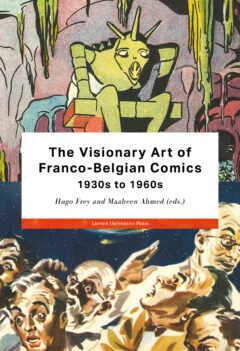 The Visionary Art of Franco-Belgian Comics, 1930s to 1960s
Hugo Frey (Editor), Maaheen Ahmed (Editor),
September 2025
 Seduction, Drive and Repetition
Herman Westerink (Author), Philippe Van Haute (Author),
September 2025
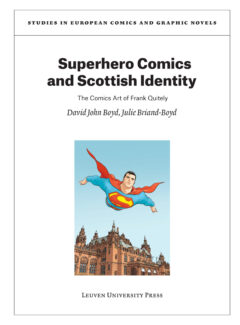 Superhero Comics and Scottish Identity
David John Boyd (Author), Julie Briand-Boyd (Author),
July 2025
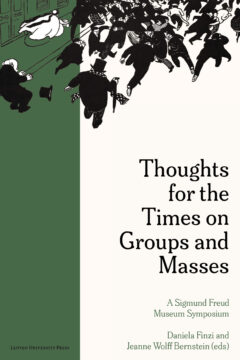 Thoughts for the Times on Groups and Masses
Daniela Finzi (Editor), Jeanne Wolff Bernstein (Editor),
January 2025
 Towards the Limits of Freudian Thinking
Herman Westerink (Editor), Jenny Willner (Editor), Philippe Van Haute (Editor),
August 2024
 European Literatures of Military Occupation
Matthias Buschmeier (Editor), Jeanne E. Glesener (Editor),
October 2024
 Truth and Suffering
Paulo Beer (Author), Nelson da Silva Júnior (Preface by), Renata Takatu (Translator),
March 2024