

Dance as Intermedial Translation
Moving Across Page, Stage, Canvas
Vanessa Montesi (Author),
Series: Translation, Interpreting and Mediation 10
Category: Artistic Practice, Literature, Media and Visual Culture, Translation Studies
Language: English
ISBN: 9789462704398
Publication date: September 16, 2024
€59.00 (including 6% VAT)
Buy NowNumber of pages: 320
Size: 234 x 156 x 17 mm
Number of illustrations: 31
Illustrations and other content description:
31 black & white illustrations

Stock item: 162052
Standard delivery time for print books:
For Belgium: 5 to 8 working days
For EU: 2 to 3 weeks
For other countries: 4 to 5 weeks
Series: Translation, Interpreting and Mediation 10
Category: Artistic Practice, Literature, Media and Visual Culture, Translation Studies
Language: English
ISBN: 9789461665904
Publication date: October 15, 2024
€50.00 (including 6% VAT)
Buy NowNumber of pages: 320
Number of illustrations: 31
Illustrations and other content description:
31 black & white illustrations
Series: Translation, Interpreting and Mediation 10
Category: Artistic Practice, Literature, Media and Visual Culture, Translation Studies
Language: English
ISBN: 9789461665898
Publication date: September 16, 2024
€50.00 (including 6% VAT)
Buy NowNumber of pages: 320
Number of illustrations: 31
Illustrations and other content description:
31 black & white illustrations
Innovative perspective to the meaningful import of body and materiality in the translation process, a focal point of recent literature in Translation Studies
This book is situated in the breach opened up by recent debates on inherited notions of text, language, and translation that followed the emergence of new technologies. It examines two works of contemporary dance, Marie Chouinard’s Jérôme Bosch: Le Jardin des Délices (2016) and Mathieu Geffré’s Froth on the Daydream (2018), as examples of intermedial translation. Conceptualising translation through the lens of theatrical dance allows us to see the translation process as a creative, corporeal, and political practice of negotiating human and non-human agencies, deeply intertwined with issues of memory and struggles over representation. Drawing on a wide range of theoretical debates from translation theory, dance studies, cultural theory, gender studies, postcolonialism, art history, cognitive linguistics, multimodality, film studies, and memory studies, as well as on concrete examples of performative works, the book charts a course for the development of dance translation as a legitimate, if still under-researched, subfield of translation studies.
This publication is GPRC-labeled (Guaranteed Peer-Reviewed Content).
This book will be made open access within three years of publication thanks to Path to Open, a program developed in partnership between JSTOR, the American Council of Learned Societies (ACLS), University of Michigan Press, and The University of North Carolina Press to bring about equitable access and impact for the entire scholarly community, including authors, researchers, libraries, and university presses around the world. Learn more at https://about.jstor.org/path-to-open/
List of Figures
List of Text Boxes
List of Tables
Acknowledgements
Prelude: Setting Words in Motion
Three Anecdotes…
…and an Introduction
OFFSTAGE
1.Stretching
Ways of Stretching
What about Dance?
Theoretical Grounding: Multimodal Social Semiotics and Intermediality
2.Rehearsing
Dance and the Visual Arts
Dance and Language
Dance and Literature
Dance and Translation
Transition
TROIS COUPS
3.What’s in a Name?
O’, Be Some Other Name!
‘Tis but thy Name that is my Enemy!
What’s in a Name?
Deny thy Father, and Refuse thy Name
4.Words Written in the Air: Dance as Ephemeral Writing
How Can We Know the Dancer from the Dance?
We Need to Know the Dancer from the Dance
Can We Know the Dancer from the Dance?
Why Should We Know the Dancer from the Dance?
5.Translated/Translating Bodies and the Translator’s Embodied Dramaturgy
The Dancer’s Embodied Dramaturgy
Translated Bodies
The Translator’s Embodied Dramaturgy
Interlude
Methodology and Methods
Embodied Ethnography and Embodied Writing
PERFORMING
6.Translational Agency in Jérôme Bosch: Le Jardin des Délices
Jérôme Bosch: Le Jardin des Délices (2016)
Political Agency in Dance and Translation
7.Distributed Agency in Jérôme Bosch: Le Jardin des Délices
Translating the Painting into Somatic Sensations
Distributed Agency
Spatial and Discursive Framings: The Garden of Earthly Delights at the Gallery of Nassau
Spatial and Discursive Framings: Jérôme Bosch: Le Jardin des Délices at the CCB
8.Translation and Memory in Froth on the Daydream (2018)
Translation and Memory Studies
Boris Vian: Living and Writing in the Translation Zone
Translation History of L’Écume des Jours
Froth on the Daydream (2018): Offstage
Froth on the Daydream (2018): Performing
9.Translations and Memories of L’Écume des Jours
Cracks in the color-blind image of Paris: Belmont’s L’Écume des Jours (1967)
Performing the Imaginative West in Late Soviet Russia: Denisov’s Chloé (1981)
From Surrealism to Magic(al) Realism: Gô Rijû’s Kuroe (2001)
Performing the Materiality of Bodies and Graphic Line: Preteseille’s L’Écume d’Écume des Jours (2005)
Inheriting French Surrealist Cinema: Michel Gondry’s Mood Indigo (2013)
After the Tide Has Gone, What Remains? Translation and/as Memory
Postlude: Unwinding
Three Anecdotes…
…and a Conclusion
Appendixes
Notes
References
"A very original and daring work, which grapples with some of the most complex theoretical questions currently animating Translation Studies, and applies them, in a compelling way, to the study of theatrical dance." - Karen Bennett, NOVA University of Lisbon – School of Social Sciences and Humanities (NOVA FCSH)
"Dance as Intermedial Translation is a truly transdisciplinary achievement and a compelling reading. Mobilizing a carefully orchestrated corps-à-corps with intermedial theatrical dance, the book refigures the concepts of ‘translation’, ‘text’ and ‘language’ as situated embodied practices, showing how they matter, materialize and create in ways that can contribute to foster socio-political agency. Structured as a “choreo-dramatization” of research, Montesi’s writing style embodies a methodological choice that corresponds to a strong epistemological stance, one of increasing relevance in many contemporary research fields in the human and social sciences: the commitment to assert the complicated affective social and material economies of research-making, research-writing, research-performing and research-sharing." - Paula Caspão, Centre for Theatre Studies, Lisbon University
"This book is a welcome addition to the field, further expanding translation studies into the realm of the stage. The literature is copious, enabling Montesi to challenge the founding questions of the field of translation studies. Focussing on case studies, Montesi is able to illustrate your aims with passion, enthusiasm and detail, rightly encouraging the field to expand, to consider all the art forms and all forms of communication, here asserting the need to consider the movements between page, stage and canvas." - Helen Julia Minors, York St John University
"An original and very meaningful contribution to translation studies by setting up a mutually enhancing cross-disciplinary dialogue with the field of dance studies." - Dirk Delabastita, University of Namur
"Vanessa Montesi’s book Moving Across Page, Stage, Canvas: Theatrical dance as a form of intermedial translation addresses the fascinating topic of transfer of creative meaning from a multimodal variety of texts into the medium of theatrical dance. As such it fits into an increasing number of recent publications on embodiment in general and the embodied nature of translation in particular. This text, therefore, is a timely addition to the field, offering as it does a rich variety of case studies." - Mary Wardle, Sapienza University of Rome
Frequently Asked Questions
What is "Dance as Intermedial Translation" about?
Innovative perspective to the meaningful import of body and materiality in the translation process, a focal point of recent literature in Translation Studies
This book is situated in the breach opened up by recent debates on inherited notions of text, language, and translation that followed the emergence of new technologies. It examines two works of contemporary dance, Marie Chouinard’s Jérôme Bosch: Le Jardin des Délices (2016) and Mathieu Geffré’s Froth on the Daydream (2018), as examples of intermedial translation. Conceptualising translation through the lens of theatrical dance allows us to see the translation process as a creative, corporeal, and political practice of negotiating human and non-human agencies, deeply intertwined with issues of memory and struggles over representation. Drawing on a wide range of theoretical debates from translation theory, dance studies, cultural theory, gender studies, postcolonialism, art history, cognitive linguistics, multimodality, film studies, and memory studies, as well as on concrete examples of performative works, the book charts a course for the development of dance translation as a legitimate, if still under-researched, subfield of translation studies.
This publication is GPRC-labeled (Guaranteed Peer-Reviewed Content).
This book will be made open access within three years of publication thanks to Path to Open, a program developed in partnership between JSTOR, the American Council of Learned Societies (ACLS), University of Michigan Press, and The University of North Carolina Press to bring about equitable access and impact for the entire scholarly community, including authors, researchers, libraries, and university presses around the world. Learn more at https://about.jstor.org/path-to-open/
Who wrote "Dance as Intermedial Translation"?
"Dance as Intermedial Translation" was written by Vanessa Montesi.
Vanessa Montesi is a HE Lecturer in Dance Studies at Dance City/University of Sunderland, a member of the Centre for Comparative Studies (University of Lisbon), and a trustee at Company of Others.
Is "Dance as Intermedial Translation" part of a series?
Yes, "Dance as Intermedial Translation" is part of the "Translation, Interpreting and Mediation" series. It's book 10 in the series.

Translation, Interpreting and Mediation
Mission statement
Championing a broad and transversal approach to the study of translational phenomena, Translation, Interpreting and Mediation (TIME) is a book series for monographs and edited volumes that explore translation as a pervasive social practice connecting spaces and collectivities through complex forms of resemiotization and mediation. The series transcends traditional notions of translation as the decoding and recoding of semantic invariants and embraces an expansive understanding of translational agency. It aims to provide a venue for theoretical and methodological innovations at the disciplinary frontiers where translation is pervasive and essential but seldom fully understood or acknowledged. The series welcomes different perspectives on translation, interpreting and mediation, interfacing with a variety of areas of study, including sociology, literature, linguistics, cognition, politics, law, history, communication, multimodality, ecology, technology, cultural production and digital humanities (among others). The series draws inspiration from the collective expertise of CETRA (Centre for Translation Studies), its institutional home at KU Leuven.
All volumes in the series are double peer reviewed.
For questions, please contact the series editors.
Series editors
Jack McMartin (KU Leuven)
Sara Ramos Pinto (University of Leeds)
Peter J. Freeth (University of Warwick)
Editorial board
Núria Codina Solà (KU Leuven)
Lieven D’hulst (KU Leuven)
Deborah Giustini (Hamad Bin Khalifa University)
Gabriel González Núñez (University of Texas Rio Grande Valley)
Bei Hu (National University of Singapore)
Akiko Sakamoto (Kansai University)
Advisory board
Brian Baer (Kent State University)
Pieter Boulogne (KU Leuven)
Lynne Bowker (University of Laval)
Elke Brems (KU Leuven)
Leo Tak-hung Chan (Lingnan University, Hong Kong)
Antoon Cox (KU Leuven)
Michael Cronin (Trinity College Dublin)
Dilek Dizdar (Johannes Gutenberg-Universität Mainz)
Yves Gambier (University of Turku)
Maud Gonne (University of Liège)
Arnt Lykke Jakobsen (Copenhagen Business School)
Haidee Kotze (Utrecht University)
Kaisa Koskinen (Tampere University)
Kobus Marais (University of the Free State)
Reine Meylaerts (KU Leuven)
Joss Moorkens (Dublin City University)
Jemina Napier (Heriot-Watt University)
Franz Pöchhacker (University of Vienna)
Hanna Risku (University of Vienna)
Diana Roig Sanz (Universitat Oberta de Catalunya)
Heidi Salaets (KU Leuven)
Christina Schäffner (Aston University)
Luc van Doorslaer (University of Tartu / KU Leuven)
Proposals
Proposals and enquiries can be sent to the series editors.
Please make use of the submission form to present the full manuscript to our board.
Authors interested in Open Access can consult the available funding options.
Links & Resources
What is the Table of Contents for "Dance as Intermedial Translation"?
List of Figures
List of Text Boxes
List of Tables
Acknowledgements
Prelude: Setting Words in Motion
Three Anecdotes…
…and an Introduction
OFFSTAGE
1.Stretching
Ways of Stretching
What about Dance?
Theoretical Grounding: Multimodal Social Semiotics and Intermediality
2.Rehearsing
Dance and the Visual Arts
Dance and Language
Dance and Literature
Dance and Translation
Transition
TROIS COUPS
3.What’s in a Name?
O’, Be Some Other Name!
‘Tis but thy Name that is my Enemy!
What’s in a Name?
Deny thy Father, and Refuse thy Name
4.Words Written in the Air: Dance as Ephemeral Writing
How Can We Know the Dancer from the Dance?
We Need to Know the Dancer from the Dance
Can We Know the Dancer from the Dance?
Why Should We Know the Dancer from the Dance?
5.Translated/Translating Bodies and the Translator’s Embodied Dramaturgy
The Dancer’s Embodied Dramaturgy
Translated Bodies
The Translator’s Embodied Dramaturgy
Interlude
Methodology and Methods
Embodied Ethnography and Embodied Writing
PERFORMING
6.Translational Agency in Jérôme Bosch: Le Jardin des Délices
Jérôme Bosch: Le Jardin des Délices (2016)
Political Agency in Dance and Translation
7.Distributed Agency in Jérôme Bosch: Le Jardin des Délices
Translating the Painting into Somatic Sensations
Distributed Agency
Spatial and Discursive Framings: The Garden of Earthly Delights at the Gallery of Nassau
Spatial and Discursive Framings: Jérôme Bosch: Le Jardin des Délices at the CCB
8.Translation and Memory in Froth on the Daydream (2018)
Translation and Memory Studies
Boris Vian: Living and Writing in the Translation Zone
Translation History of L’Écume des Jours
Froth on the Daydream (2018): Offstage
Froth on the Daydream (2018): Performing
9.Translations and Memories of L’Écume des Jours
Cracks in the color-blind image of Paris: Belmont’s L’Écume des Jours (1967)
Performing the Imaginative West in Late Soviet Russia: Denisov’s Chloé (1981)
From Surrealism to Magic(al) Realism: Gô Rijû’s Kuroe (2001)
Performing the Materiality of Bodies and Graphic Line: Preteseille’s L’Écume d’Écume des Jours (2005)
Inheriting French Surrealist Cinema: Michel Gondry’s Mood Indigo (2013)
After the Tide Has Gone, What Remains? Translation and/as Memory
Postlude: Unwinding
Three Anecdotes…
…and a Conclusion
Appendixes
Notes
References
Related titles


 Collective Trauma and Future Fantasies
Raika Khorshidian (Editor), Birgit Mersmann (Editor), Cathrine Bublatzky (Editor), Julia Stenzel (Editor),
November 2026


 Feminists Resisting Gendered Violence
Hemangini Gupta (Editor), Fiona Mackay (Editor), Jan Breckenridge (Editor), Louise Chappell (Editor), Rachna Mehra (Editor), Rukmini Sen (Editor), Mailin Suchting (Editor),
October 2026

 Affect in Translation and Interpreting
Sofía Monzón (Editor), Lucie Spezzatti (Editor), Elisabeth Goemans (Editor),
May 2026
 Research Methods in Literary Reception Studies
Jeroen Dera (Editor), Anne Oerlemans (Editor), Frederik Van Dam (Editor),
May 2026
 Cinema in Post-War Belgium
Gertjan Willems (Editor), Bjorn Gabriels (Editor), Bénédicte Rochet (Editor),
May 2026
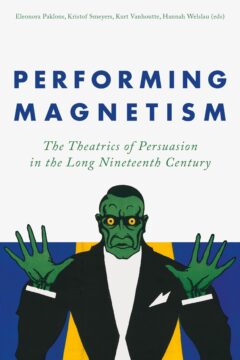 Performing Magnetism
Eleonora Paklons (Editor), Kristof Smeyers (Editor), Kurt Vanhoutte (Editor), Hannah Welslau (Editor),
May 2026
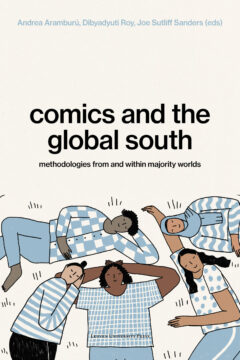 Comics and the Global South
Andrea Aramburú (Editor), Dibyadyuti Roy (Editor), Joe Sutliff Sanders (Editor),
February 2026
 Situatedness and Performativity
Raquel Pacheco Aguilar (Editor), Marie-France Guénette (Editor),
November 2025
 Transfer Thinking in Translation Studies
Maud Gonne (Editor), Klaartje Merrigan (Editor), Reine Meylaerts (Editor), Heleen van Gerwen (Editor),
September 2025
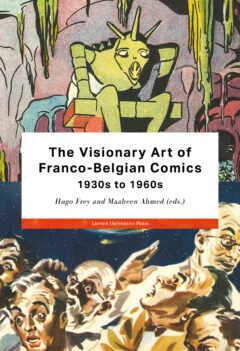 The Visionary Art of Franco-Belgian Comics, 1930s to 1960s
Hugo Frey (Editor), Maaheen Ahmed (Editor),
September 2025

 Superhero Comics and Scottish Identity
David John Boyd (Author), Julie Briand-Boyd (Author),
July 2025
 Violence and Trauma in Contemporary Performance
Sofie de Smet (Editor), Marieke Breyne (Editor), Pedzisai Maedza (Editor), Christel Stalpaert (Editor),
May 2025