

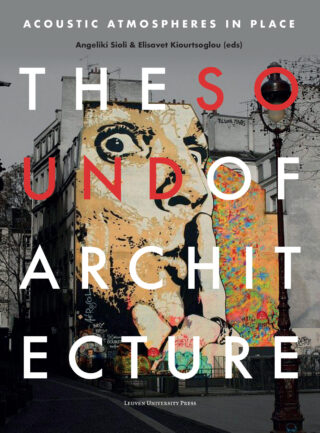

The Sound of Architecture
Acoustic Atmospheres in Place
Angeliki Sioli (Editor), Elisavet Kiourtsoglou (Editor),

Category: Architecture and Urban Planning, Media and Visual Culture, Music, Science, Engineering and Technology, Urban Studies
Language: English
ISBN: 9789462703216
Publication date: May 18, 2022
€45.50 (including 6% VAT)
Buy NowNumber of pages: 304
Size: 230 x 170 x 15 mm
Number of illustrations: 55
Illustrations and other content description:
Illustrated with colour section of 16 pp.

Funded by: TU Delft
Stock item: 148422
Standard delivery time for print books:
For Belgium: 5 to 8 working days
For EU: 2 to 3 weeks
For other countries: 4 to 5 weeks
Category: Architecture and Urban Planning, Media and Visual Culture, Music, Science, Engineering and Technology, Urban Studies
Language: English
ISBN: 9789461666420
Publication date: March 31, 2025
Download Free EpubNumber of pages: 304
Number of illustrations: 55
Illustrations and other content description:
Illustrated with colour section of 16 pp.
Funded by: TU Delft
Category: Architecture and Urban Planning, Media and Visual Culture, Music, Science, Engineering and Technology, Urban Studies
Language: English
ISBN: 9789461666307
Publication date: March 26, 2025
Download Free PDFNumber of pages: 304
Number of illustrations: 55
Illustrations and other content description:
Illustrated with colour section of 16 pp.
Funded by: TU Delft
How sound and its atmospheres transform architecture
Acoustic atmospheres can be fleeting, elusive, or short-lived. Sometimes they are constant, but more often they change from one moment to the next, forming distinct impressions each time we visit certain places. Stable or dynamic, acoustic atmospheres have a powerful effect on our spatial experience, sometimes even more so than architecture itself. This book explores the acoustic atmospheres of diverse architectural environments, in terms of scale, program, location, or historic period—providing an overview of how acoustic atmospheres are created, perceived, experienced, and visualized. The contributors explore how sound and its atmospheres transform architecture and space. Their essays demonstrate that sound is a tangible element in the design and staging of atmospheres and that it should become a central part of the spatial explorations of architects, designers, and urban planners.
The Sound of Architecture will be of interest to architectural historians, theorists, students, and practicing architects, who will discover how acoustic atmospheres can be created without complex and specialized engineering. It will also be of value to scholars working in the field of history of emotions, as it offers evocative descriptions of acoustic atmospheres from diverse cultures and time periods.
Contributors: Anna Ulrikke Andersen (University of Oxford), Timothy Carey (Independent Scholar), Ricardo L. Castro (McGill University), Joseph L. Clarke (University of Toronto), Carlotta Darò (ENSA Paris-Malaquais), Michael de Beer (Independent Scholar), James Deaville (Carleton University), Ross K. Elfline (Carleton College), Clemens Finkelstein (Princeton University), Federica Goffi (Carleton University), Klaske Havik (TU Delft), Paul Holmquist (Louisiana State University), Pamela Jordan (University of Amsterdam), Elisavet Kiourtsoglou (University of Thessaly), Alberto Pérez-Gómez (McGill University), Cécile Regnault (Lyon School of Architecture), Angeliki Sioli (TU Delft), Karen Van Lengen (University of Virginia), Michael Windover (Carleton University).
This publication is GPRC-labeled (Guaranteed Peer-Reviewed Content).
Acknowledgements Angeliki Sioli and Elisavet Kiourtsoglou
Introduction 01. Atmospheres that Touch Angeliki Sioli and Elisavet Kiourtsoglou
Section #01: Room Vibrations 02. Listening with Christian Norberg-Schulz: Sonic Experience and Music Theory in his Writings Anna Ulrikke Andersen 03. Setting the Tone in Early 20th-century North American Living Rooms: The Parlor Piano Michael Windover and James Deaville 04. Playing to the Room: The Recording Studio as Instrument Timothy Carey 05. Vibe, c. 1969: The Technicity of Operative Ambience in Jimi Hendrix’s Electric Lady Studios Clemens Finkelstein 06. Resonant Rooms as Tuning Forks: Architectural Implications of Sound Art Ross K. Elfline
Section #02: Building Pitches 07. The Happiness of the World at its Birth: Acoustic Atmosphere in the ‘General Effect’ of Ledoux’s Theater of Besançon Paul Holmquist 08. Acoustics at 1:10: Miniaturizing Atmosphere Carlotta Darò 09. The Electronic Campanile at Ronchamp Joseph L. Clarke 10. Chromesthesia and the Multiverse of Listening in Music and Architecture: Luigi Nono in Collaboration with Renzo Piano Federica Goffi 11. Tools of Immersion: Drawing the Acoustic Atmosphere of the Philips Pavilion Elisavet Kiourtsoglou
Section #03: City Tunes 12. The Instrumentarium of Kircher: Premises of a Universal Phonurgy Cécile Regnault 13. Dissolving in the Air: Mrs. Dalloway’s Sonorous Modern London Angeliki Sioli 14. Lacrimae Rerum and Tears of Memory: Sonic Encounters in the Public Realm Karen Van Lengen 15. The Border between Sound and Silence: Sonic Preservation at the Berlin Wall Pamela Jordan 16. Listen and Write! Addressing Urban Soundscapes in Architectural Education Klaske Havik and Michael de Beer
Echoes 17. On Atmospheres and Other Difficulties: A Conversation with Alberto Pérez-Gómez Angeliki Sioli 18. Places where Silence is Eloquent Ricardo L. Castro
About the Editors About the Authors List of illustrations Bibliography Index Color Plates
Angeliki Sioli
Angeliki Sioli is assistant professor at the Department of Architecture, TU Delft.
Elisavet Kiourtsoglou
Elisavet Kiourtsoglou is assistant professor at the Department of Culture, Creative Media and Industries, University of Thessaly.
Akoestische sferen kunnen vluchtig, ongrijpbaar of van korte duur zijn. Soms zijn ze constant, maar vaker veranderen ze van het ene moment op het andere en vormen ze verschillende indrukken elke keer dat we bepaalde plaatsen bezoeken. Stabiel of dynamisch, akoestische sferen hebben een krachtig effect op onze ruimtelijke beleving, soms zelfs meer dan de architectuur zelf. Dit boek verkent de akoestische sferen van diverse architecturale omgevingen, in termen van schaal, functie, locatie of historische periode, en biedt een overzicht van hoe akoestische sferen worden gecreëerd, waargenomen, ervaren en gevisualiseerd.
Michel Dutrieue, Stretto, juli 2022
Muziek en architectuur hebben van alles met elkaar te maken. Muziek heeft een vorm (die soms wordt beschreven in termen ontleend aan de architectuur) en de klank en betekenis van muziek zijn niet los te denken van de plaats en ruimte waarin muziek tot klinken komt. De akoestiek van concertzalen is waarschijnlijk het meest bestudeerde aspect van deze relatie. Dit boek raakt daaraan, maar heeft een ander doel. In vijftien hoofdstukken, een inleiding en twee reflecties wil een groep van auteurs een beeld geven van de verscheidenheid van het onderwerp in de loop der eeuwen. Als de inleiding van de samenstellers bedoeld is als een poging tot synthese, dan is de bindende factor het inzicht dat de relaties veel hechter en talrijker zijn dan gedacht en dat dit geen conclusie is van recent onderzoek maar een inzicht van eeuwen. Het boek geeft daarnaast een uitvoerige literatuurlijst en een reeks welkome illustraties.
Emanuel Overbeeke , OpusKlassiek, januari 2023
The range of materials, approaches and topics covered in this edited volume is impressive. It has certainly put forward a future agenda and deserves to be read widely. Ebrahimi, S. H., Emotions: History, Culture, Society, 7(1), 190-192. doi: https://doi.org/10.1163/2208522x-02010197
Frequently Asked Questions
What is "The Sound of Architecture" about?
How sound and its atmospheres transform architecture
Acoustic atmospheres can be fleeting, elusive, or short-lived. Sometimes they are constant, but more often they change from one moment to the next, forming distinct impressions each time we visit certain places. Stable or dynamic, acoustic atmospheres have a powerful effect on our spatial experience, sometimes even more so than architecture itself. This book explores the acoustic atmospheres of diverse architectural environments, in terms of scale, program, location, or historic period—providing an overview of how acoustic atmospheres are created, perceived, experienced, and visualized. The contributors explore how sound and its atmospheres transform architecture and space. Their essays demonstrate that sound is a tangible element in the design and staging of atmospheres and that it should become a central part of the spatial explorations of architects, designers, and urban planners.
The Sound of Architecture will be of interest to architectural historians, theorists, students, and practicing architects, who will discover how acoustic atmospheres can be created without complex and specialized engineering. It will also be of value to scholars working in the field of history of emotions, as it offers evocative descriptions of acoustic atmospheres from diverse cultures and time periods.
Contributors: Anna Ulrikke Andersen (University of Oxford), Timothy Carey (Independent Scholar), Ricardo L. Castro (McGill University), Joseph L. Clarke (University of Toronto), Carlotta Darò (ENSA Paris-Malaquais), Michael de Beer (Independent Scholar), James Deaville (Carleton University), Ross K. Elfline (Carleton College), Clemens Finkelstein (Princeton University), Federica Goffi (Carleton University), Klaske Havik (TU Delft), Paul Holmquist (Louisiana State University), Pamela Jordan (University of Amsterdam), Elisavet Kiourtsoglou (University of Thessaly), Alberto Pérez-Gómez (McGill University), Cécile Regnault (Lyon School of Architecture), Angeliki Sioli (TU Delft), Karen Van Lengen (University of Virginia), Michael Windover (Carleton University).
This publication is GPRC-labeled (Guaranteed Peer-Reviewed Content).
Who edited "The Sound of Architecture"?
"The Sound of Architecture" was edited by Angeliki Sioli and Elisavet Kiourtsoglou.
Angeliki Sioli is assistant professor at the Department of Architecture, TU Delft.
Elisavet Kiourtsoglou is assistant professor at the Department of Culture, Creative Media and Industries, University of Thessaly.
Is "The Sound of Architecture" available Open Access?
Yes, "The Sound of Architecture" is published Open Access. It is available under a BY license.
Who funded the publication of "The Sound of Architecture"?
Publication of "The Sound of Architecture" was funded by TU Delft
.
What is the Table of Contents for "The Sound of Architecture"?
Acknowledgements Angeliki Sioli and Elisavet Kiourtsoglou
Introduction 01. Atmospheres that Touch Angeliki Sioli and Elisavet Kiourtsoglou
Section #01: Room Vibrations 02. Listening with Christian Norberg-Schulz: Sonic Experience and Music Theory in his Writings Anna Ulrikke Andersen 03. Setting the Tone in Early 20th-century North American Living Rooms: The Parlor Piano Michael Windover and James Deaville 04. Playing to the Room: The Recording Studio as Instrument Timothy Carey 05. Vibe, c. 1969: The Technicity of Operative Ambience in Jimi Hendrix’s Electric Lady Studios Clemens Finkelstein 06. Resonant Rooms as Tuning Forks: Architectural Implications of Sound Art Ross K. Elfline
Section #02: Building Pitches 07. The Happiness of the World at its Birth: Acoustic Atmosphere in the ‘General Effect’ of Ledoux’s Theater of Besançon Paul Holmquist 08. Acoustics at 1:10: Miniaturizing Atmosphere Carlotta Darò 09. The Electronic Campanile at Ronchamp Joseph L. Clarke 10. Chromesthesia and the Multiverse of Listening in Music and Architecture: Luigi Nono in Collaboration with Renzo Piano Federica Goffi 11. Tools of Immersion: Drawing the Acoustic Atmosphere of the Philips Pavilion Elisavet Kiourtsoglou
Section #03: City Tunes 12. The Instrumentarium of Kircher: Premises of a Universal Phonurgy Cécile Regnault 13. Dissolving in the Air: Mrs. Dalloway’s Sonorous Modern London Angeliki Sioli 14. Lacrimae Rerum and Tears of Memory: Sonic Encounters in the Public Realm Karen Van Lengen 15. The Border between Sound and Silence: Sonic Preservation at the Berlin Wall Pamela Jordan 16. Listen and Write! Addressing Urban Soundscapes in Architectural Education Klaske Havik and Michael de Beer
Echoes 17. On Atmospheres and Other Difficulties: A Conversation with Alberto Pérez-Gómez Angeliki Sioli 18. Places where Silence is Eloquent Ricardo L. Castro
About the Editors About the Authors List of illustrations Bibliography Index Color Plates
Related titles
 Margarete Schütte-Lihotzky and the Architecture of Collective Dissidence, 1918–1989
S.E. Eisterer (Author),
April 2027
 Franz Schreker. Der Schmied von Gent
Pieter Bergé (Editor), Steven Vande Moortele (Author), Martijn Vincken (Author),
February 2027
 The Book of Requiems, 1815–1900
John Koslovsky (Editor), Steven Vande Moortele (Editor),
December 2026

 Infrastructuring Arrival
Karel Arnaut (Editor), Luce Beeckmans (Editor), Bruno Meeus (Editor),
November 2026

 Feminists Resisting Gendered Violence
Hemangini Gupta (Editor), Fiona Mackay (Editor), Jan Breckenridge (Editor), Louise Chappell (Editor), Rachna Mehra (Editor), Rukmini Sen (Editor), Mailin Suchting (Editor),
October 2026

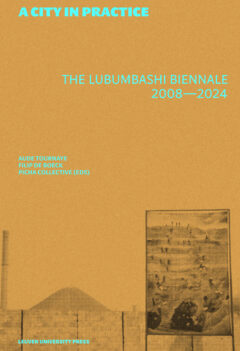 A City in Practice
Aude Tournaye (Editor), Filip De Boeck (Editor), Picha Collective (Editor),
September 2026
 Cinema in Post-War Belgium
Gertjan Willems (Editor), Bjorn Gabriels (Editor), Bénédicte Rochet (Editor),
May 2026
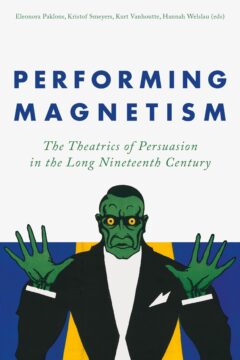 Performing Magnetism
Eleonora Paklons (Editor), Kristof Smeyers (Editor), Kurt Vanhoutte (Editor), Hannah Welslau (Editor),
May 2026
 Brusselse plaatsnamen
Iadine Degryse (Editor), Benjamin Wayens (Editor), Chantal Kesteloot (Editor), Dennis De Vriese (Editor), Matthijs Degraeve (Editor),
April 2026
 Characterisation of Fermented Grain-based Raw Materials and Foods
Arno G. B. Wouters (Editor), Yamina De Bondt (Editor), Kati Katina (Editor), Christophe M. Courtin (Editor),
February 2026
 Cartographies of Catastrophes
Laura Demeter (Editor), Carmen M. Enss (Editor), Piotr Kisiel (Editor), Carol Ludwig (Editor),
February 2026
 Comics and the Global South
Andrea Aramburú (Editor), Dibyadyuti Roy (Editor), Joe Sutliff Sanders (Editor),
February 2026