Urban Culture and the Modern City
Hungarian Case Studies
Ágnes Györke (Editor), Tamás Juhász (Editor),
Category: Art, Literature, Media and Visual Culture, Urban Studies
Language: English
ISBN: 9789462703940
Publication date: February 27, 2024
€59.50 (including 6% VAT)
Buy NowNumber of pages: 330
Size: 234 x 156 x mm
Number of illustrations: 28

Funded by: Path to Open
Stock item: 159097
Standard delivery time for print books:
For Belgium: 5 to 8 working days
For EU: 2 to 3 weeks
For other countries: 4 to 5 weeks
Category: Art, Literature, Media and Visual Culture, Urban Studies
Language: English
ISBN: 9789461665393
Publication date: February 27, 2024
€51.00 (including 6% VAT)
Buy NowNumber of pages: 330
Number of illustrations: 28
Funded by: Path to Open
Hungarian urban culture in the 20th and the 21st centuries.
When consulting key works on urban studies, the absence of Central and Eastern European towns is striking. Cities such as Vienna, Budapest, Prague, and Trieste, where such notable figures as Freud, Ferenczi, Kafka, and Joyce lived and worked, are rarely studied in a translocal framework, as if Central and Eastern Europe were still a blind spot of European modernity. This volume expands the scope of literary urban studies by focusing on Budapest and Hungarian small towns, offering in-depth analyses of the intriguing link between literature, the arts, and material culture in the 20th and 21st centuries. The case studies situate Hungarian urban culture within the global flow of ideas as they explore the period of modernism, the mid-century, and the post-1989 era in a context that moves well beyond the borders of the country.
Contributors: Árpád Bak (University of Leeds), Éva Federmayer (Eötvös Loránd University), Magdolna Gucsa (Eötvös Loránd University / ÉHESS), Ágnes Györke (Károli Gáspár University), Ferenc Hörcher (Eötvös József Research Centre), Tamás Juhász (Károli Gáspár University), György Kalmár (University of Debrecen), László Munteán (Radboud University), Ágnes Klára Papp (Károli Gáspár University), Márta Pellérdi (Pázmány Péter Catholic University), Eszter Ureczky (University of Debrecen).
This publication is GPRC-labeled (Guaranteed Peer-Reviewed Content).
This book will be made open access within three years of publication thanks to Path to Open, a program developed in partnership between JSTOR, the American Council of Learned Societies (ACLS), University of Michigan Press, and The University of North Carolina Press to bring about equitable access and impact for the entire scholarly community, including authors, researchers, libraries, and university presses around the world. Learn more at https://about.jstor.org/path-to-open/
Listen to an interview with Ágnes Györke and Tamás Juhász at New Books Network: https://newbooksnetwork.com/urban-culture-and-the-modern-city
Acknowledgements
Introduction. The Modern City in Hungarian Culture: Translocal Interventions
Ágnes Györke and Tamás Juhász
PART I THE EARLY TWENTIETH CENTURY: LITERATURE, PAINTING AND THE CITY
Chapter 1. ‘You’ll Never Walk Alone’: Ferenc Molnár’s Budapest in Liliom and The Guardsman
Márta Pellérdi
Chapter 2. City in the Land: Nationalism, Technology and Celebrity Culture in Gyula Krúdy’s Primadonna
Tamás Juhász
Chapter 3. Small-town Poetics: The Provincial Small Town as the Counterpoint of Metropolis in Dezső Kosztolányi’s Skylark
Ágnes Klára Papp
Chapter 4. ‘Métèques’ and the Central Powers of ‘Montparnasse’: Emil Szittya and the École de Paris
Magdolna Gucsa
PART II PERSPECTIVES ON THE MID-CENTURY: PUBLIC ART AND THE NOVEL
Chapter 5. Place, Space, Gender and Narrative Agency in Margit Kaffka’s Colours and Years (1911, 1912) and Magda Szabó’s The Fawn (1959)
Éva Federmayer
Chapter 6. Told and Untold Histories of Oppression: Hungarian Romani Composer János Bihari’s Memory Sites in Budapest under State Socialism
Árpád Bak
Chapter 7. Small-town Civility and the Concept of Liberty in Géza Ottlik’s Opus Magnum
Ferenc Hörcher
PART III REFLECTIONS ON THE CONTEMPORARY CITY: MATERIAL, LITERARY, AND VISUAL CULTURES
Chapter 8. Surface Matters: An Archaeology of the Arrow Cross in Budapest’s Façades
László Munteán
Chapter 9. Budapest in Noémi Szécsi’s The Finno-Ugrian Vampire: The Grand and the Peripheral
Ágnes Györke
Chapter 10. Three Postcards of Budapest: Paradigms of the Urban Imaginary in Post-communist Hungarian Cinema
György Kalmár
Chapter 11. Old City: Ageist Crime and Transgenerational Care in Kristóf Deák’s The Grandson (2022)
Eszter Ureczky
Notes on Contributors
Index
Ágnes Györke
Ágnes Györke is associate professor at Károli Gáspár University’s Department of Literary and Cultural Studies in English and principal investigator of the Cosmopolitan Ethics and the Modern City research group.
Tamás Juhász
Tamás Juhász is associate professor at Károli Gáspár University where he teaches modern British and American literature, cultural theory and Central European film.
In conclusion, this volume fulfils the promise we are so tuned to see carried out; it does the work of positing Hungarian literary and artworks into a larger theoretical and cultural context. In general, it does even more: this volume, which is surely to become a work of reference in the field of spatial studies and Hungarian literary or cultural studies, shows how, contrary to political and economic differences, Hungary and Western Europe formed a unified whole in most parts of the 20th century. This book establishes this link between Hungary and the West as they developed parallelly in structures of modern urban and rural culture as well as its artistic representation. - Ágnes Harasztos, Freeside Europe Online Academic Journal, Issue 15, 2024, http://www.doi.org/10.51313/Freeside-2024-09
By all means, the eleven chapters in this volume offer a remarkable contribution to urban studies, inviting its readership to reflect on the intersections of national identity, memory, and the urban experience. In so doing, the book might generate further critical conversations about both personal and collective histories, as well as their implications for the present and the future, empowering readers to dive critically into the urban narratives that have influenced Central and Eastern European cultures. - David Szoke, Central European Cultures 4 (2):112-19. https://doi.org/10.47075/CEC.2024-2.07
The volume’s contributions aim to provide cultural representations of Budapest and Hungarian towns within a translocal analytical framework, thereby highlighting localto- local connections (p. 10). This approach is incredibly valuable for a global audience of the book who are likely unfamiliar with local Hungarian culture. By exploring different historical periods and analysing the cultural connections between urban locations in Hungary and those beyond its border, the book offers a deeper understanding of Central and Eastern European modernity before and after the cataclysmic world wars. This approach addresses a significant gap in research – the disconnect between Hungarian and English-speaking art and literature – largely a legacy of the Iron Curtain. - Patkós, G., Urban Studies, 62(2), 429-432. https://doi.org/10.1177/00420980241309830
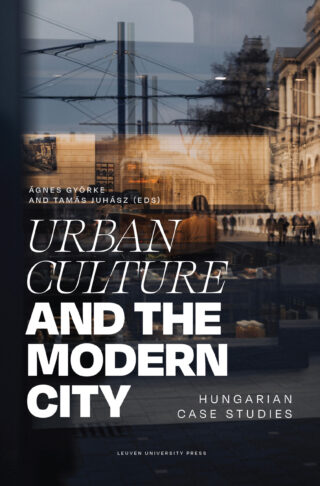
Through these case studies, the book not only explores Hungarian culture using the methods and theoretical foundations of urban studies but also reflects how con-temporary researchers perceive their country’s cultural, social, and political issues, along with their historical roots. Like its cover, the book presents a layered image of Hungarian history, where the new and the old, the observer and the observed, coexist simultaneously. - Tamás Kisantal, The AnaChronisT, Vol. 23 (2025), https://doi.org/10.53720/ZRPD4868
What renders this volume particularly valuable to historians is its interdisciplinary orientation that expands the study of history through the inclusion of artistic media. Representations of urban spaces in the arts, though often fictionalized, reflect not only the internal dynamics of artistic works but also the wider socio-political realities of the periods in which they are set. [...] The collection’s value lies in its methodological breadth, showing how artistic represen-tations of urban space can reflect broader socio-political realities. Taken together, the eleven essays convincingly demonstrate that European urban culture cannot be fully understood without engaging with the Hungarian experience — an experience deeply interwoven with that of Western Europe, yet also quite distinct. - Katalin Palkóné Tabi, Zeitschrift für Ostmitteleuropa-Forschung, 75 (3): 497-98. https://doi.org/10.25627/202675311854
Taken together, the chapters in this book provide a coherent overview of representations of the Hungarian city in literature, theater, and cinema. This book will act as an important future reference work for scholars working on the 20th and 21st century Hungarian city. And it reminds scholars unfamiliar with Hungarian urban culture of the vast range of urban phenomena that remain underrepresented in academic literature in English.Lieven Ameel, Tampere University
Frequently Asked Questions
What is "Urban Culture and the Modern City" about?
Hungarian urban culture in the 20th and the 21st centuries.
When consulting key works on urban studies, the absence of Central and Eastern European towns is striking. Cities such as Vienna, Budapest, Prague, and Trieste, where such notable figures as Freud, Ferenczi, Kafka, and Joyce lived and worked, are rarely studied in a translocal framework, as if Central and Eastern Europe were still a blind spot of European modernity. This volume expands the scope of literary urban studies by focusing on Budapest and Hungarian small towns, offering in-depth analyses of the intriguing link between literature, the arts, and material culture in the 20th and 21st centuries. The case studies situate Hungarian urban culture within the global flow of ideas as they explore the period of modernism, the mid-century, and the post-1989 era in a context that moves well beyond the borders of the country.
Contributors: Árpád Bak (University of Leeds), Éva Federmayer (Eötvös Loránd University), Magdolna Gucsa (Eötvös Loránd University / ÉHESS), Ágnes Györke (Károli Gáspár University), Ferenc Hörcher (Eötvös József Research Centre), Tamás Juhász (Károli Gáspár University), György Kalmár (University of Debrecen), László Munteán (Radboud University), Ágnes Klára Papp (Károli Gáspár University), Márta Pellérdi (Pázmány Péter Catholic University), Eszter Ureczky (University of Debrecen).
This publication is GPRC-labeled (Guaranteed Peer-Reviewed Content).
This book will be made open access within three years of publication thanks to Path to Open, a program developed in partnership between JSTOR, the American Council of Learned Societies (ACLS), University of Michigan Press, and The University of North Carolina Press to bring about equitable access and impact for the entire scholarly community, including authors, researchers, libraries, and university presses around the world. Learn more at https://about.jstor.org/path-to-open/
Listen to an interview with Ágnes Györke and Tamás Juhász at New Books Network: https://newbooksnetwork.com/urban-culture-and-the-modern-city
Who edited "Urban Culture and the Modern City"?
"Urban Culture and the Modern City" was edited by Ágnes Györke and Tamás Juhász.
Ágnes Györke is associate professor at Károli Gáspár University’s Department of Literary and Cultural Studies in English and principal investigator of the Cosmopolitan Ethics and the Modern City research group.
Tamás Juhász is associate professor at Károli Gáspár University where he teaches modern British and American literature, cultural theory and Central European film.
Who funded the publication of "Urban Culture and the Modern City"?
Publication of "Urban Culture and the Modern City" was funded by Path to Open
.
What is the Table of Contents for "Urban Culture and the Modern City"?
Acknowledgements
Introduction. The Modern City in Hungarian Culture: Translocal Interventions
Ágnes Györke and Tamás Juhász
PART I THE EARLY TWENTIETH CENTURY: LITERATURE, PAINTING AND THE CITY
Chapter 1. ‘You’ll Never Walk Alone’: Ferenc Molnár’s Budapest in Liliom and The Guardsman
Márta Pellérdi
Chapter 2. City in the Land: Nationalism, Technology and Celebrity Culture in Gyula Krúdy’s Primadonna
Tamás Juhász
Chapter 3. Small-town Poetics: The Provincial Small Town as the Counterpoint of Metropolis in Dezső Kosztolányi’s Skylark
Ágnes Klára Papp
Chapter 4. ‘Métèques’ and the Central Powers of ‘Montparnasse’: Emil Szittya and the École de Paris
Magdolna Gucsa
PART II PERSPECTIVES ON THE MID-CENTURY: PUBLIC ART AND THE NOVEL
Chapter 5. Place, Space, Gender and Narrative Agency in Margit Kaffka’s Colours and Years (1911, 1912) and Magda Szabó’s The Fawn (1959)
Éva Federmayer
Chapter 6. Told and Untold Histories of Oppression: Hungarian Romani Composer János Bihari’s Memory Sites in Budapest under State Socialism
Árpád Bak
Chapter 7. Small-town Civility and the Concept of Liberty in Géza Ottlik’s Opus Magnum
Ferenc Hörcher
PART III REFLECTIONS ON THE CONTEMPORARY CITY: MATERIAL, LITERARY, AND VISUAL CULTURES
Chapter 8. Surface Matters: An Archaeology of the Arrow Cross in Budapest’s Façades
László Munteán
Chapter 9. Budapest in Noémi Szécsi’s The Finno-Ugrian Vampire: The Grand and the Peripheral
Ágnes Györke
Chapter 10. Three Postcards of Budapest: Paradigms of the Urban Imaginary in Post-communist Hungarian Cinema
György Kalmár
Chapter 11. Old City: Ageist Crime and Transgenerational Care in Kristóf Deák’s The Grandson (2022)
Eszter Ureczky
Notes on Contributors
Index
Related titles
 Margarete Schütte-Lihotzky and the Architecture of Collective Dissidence, 1918–1989
S.E. Eisterer (Author),
April 2027
 Collective Trauma and Future Fantasies
Raika Khorshidian (Editor), Birgit Mersmann (Editor), Cathrine Bublatzky (Editor), Julia Stenzel (Editor),
November 2026

 Infrastructuring Arrival
Karel Arnaut (Editor), Luce Beeckmans (Editor), Bruno Meeus (Editor),
November 2026
 Feminists Resisting Gendered Violence
Hemangini Gupta (Editor), Fiona Mackay (Editor), Jan Breckenridge (Editor), Louise Chappell (Editor), Rachna Mehra (Editor), Rukmini Sen (Editor), Mailin Suchting (Editor),
October 2026
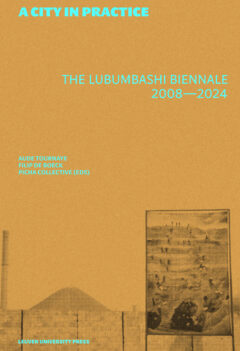 A City in Practice
Aude Tournaye (Editor), Filip De Boeck (Editor), Picha Collective (Editor),
September 2026
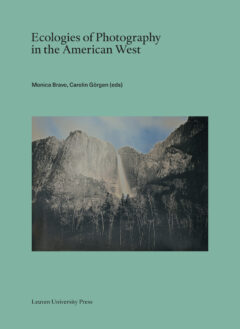 Ecologies of Photography in the American West
Monica Bravo (Editor), Carolin Görgen (Editor),
September 2026
 Affect in Translation and Interpreting
Sofía Monzón (Editor), Lucie Spezzatti (Editor), Elisabeth Goemans (Editor),
May 2026
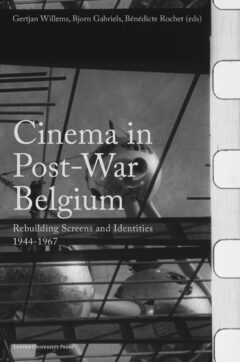 Cinema in Post-War Belgium
Gertjan Willems (Editor), Bjorn Gabriels (Editor), Bénédicte Rochet (Editor),
May 2026
 Research Methods in Literary Reception Studies
Jeroen Dera (Editor), Anne Oerlemans (Editor), Frederik Van Dam (Editor),
May 2026
 Performing Magnetism
Eleonora Paklons (Editor), Kristof Smeyers (Editor), Kurt Vanhoutte (Editor), Hannah Welslau (Editor),
May 2026
 Jean Katambayi Mukendi
Johannes Muselaers (Editor), Stéphane Symons (Editor), Anne-Claire Schmitz (Editor), Emma Enderby (Editor),
April 2026
 Brusselse plaatsnamen
Iadine Degryse (Editor), Benjamin Wayens (Editor), Chantal Kesteloot (Editor), Dennis De Vriese (Editor), Matthijs Degraeve (Editor),
April 2026
 Nomadic Camera
Burcu Dogramaci (Editor), Winfried Gerling (Editor), Jens Jäger (Editor), Birgit Mersmann (Editor),
March 2026
 Cartographies of Catastrophes
Laura Demeter (Editor), Carmen M. Enss (Editor), Piotr Kisiel (Editor), Carol Ludwig (Editor),
February 2026
 Comics and the Global South
Andrea Aramburú (Editor), Dibyadyuti Roy (Editor), Joe Sutliff Sanders (Editor),
February 2026