

Radicalisation
A Marginal Phenomenon or a Mirror to Society?
Noel Clycq (Editor), Christiane Timmerman (Editor), Dirk Vanheule (Editor), Rut Van Caudenberg (Editor), Stiene Ravn (Editor),
Series: CeMIS Migration and Intercultural Studies 4
Category: Diversity and Equity Studies, Migration Studies, Social Science
Language: English
ISBN: 9789462701588
Publication date: February 8, 2019
€55.00 (including 6% VAT)
Buy NowNumber of pages: 250
Size: 234 x 156 x 14 mm
Number of illustrations: 23
Illustrations and other content description:
7 graphs and 16 tables

Stock item: 126376
Standard delivery time for print books:
For Belgium: 5 to 8 working days
For EU: 2 to 3 weeks
For other countries: 4 to 5 weeks
Series: CeMIS Migration and Intercultural Studies 4
Category: Diversity and Equity Studies, Migration Studies, Social Science
Language: English
ISBN: 9789461662736
Publication date: February 8, 2019
€41.00 (including 6% VAT)
Buy NowNumber of pages: 250
Number of illustrations: 23
Illustrations and other content description:
7 graphs and 16 tables
Vital insights into the complex nature of the concept of radicalisation
Radicalisation is a topical and a much-discussed concept in current European societies. Its use in policy and societal discourses, such as media coverage and educational contexts, is very sensitive. This thought-provoking collection of essays critically addresses the topic of radicalisation from different angles, combining discipline-specific insights from the fields of sociology, philosophy, history, religious studies, and media studies, with new empirical data.
The authors step away from readily available explanations and rethink the notion of ‘the radical’. Rather than merely focusing on individuals or ideologies, they advocate for a contextual perspective that allows to consider the complex interaction between individuals, groups, and institutions, both at a national and international level. Radicalisation: A Marginal Phenomenon, or a Mirror to Society? provides the reader not only with much-needed knowledge of the complex nature of the concept of radicalisation, but also offers insights into the various ways radicalisation processes can be triggered, prevented, or addressed.
This publication is GPRC-labeled (Guaranteed Peer-Reviewed Content).
Contributors
Contributors: Rik Coolsaet (Ghent University), Stiene Ravn (University of Antwerp), Tom Sauer (University of Antwerp), Jessika Soors (KU Leuven), François Levrau (University of Antwerp), Janiv Stamberger (University of Antwerp), Ward Nouwen (University of Antwerp), Rut Van Caudenberg (University of Antwerp), Noel Clycq (University of Antwerp), Thomas Frissen (KU Leuven), Kevin Smets (Vrije Universiteit Brussel / University of Antwerp), Leen d’Haenens (KU Leuven), Kristof Verfaillie (Vrije Universiteit Brussel), Sofie De Kimpe (Vrije Universiteit Brussel), Marc Cools (Vrije Universiteit Brussel), Karel Van Nieuwenhuyse (KU Leuven)
Preface Rik Coolsaet
Introduction Noel Clycq, Christiane Timmerman, Dirk Vanheule, Rut Van Caudenberg and Stiene Ravn
1. Rethinking radicalisation: Addressing the lack of a contextual perspective in the dominant narratives on radicalisation Stiene Ravn, Rik Coolsaet and Tom Sauer
2. Al-walāʾ wa-l-barāʾ: Back to the roots of a contemporary dogma Jessika Soors
3. “Here I stand; I cannot do otherwise” – A philosophical analysis of the terrorist love of death François Levrau
4. Modern Jewish politics and radical activism: a case study Janiv Stamberger
5. The role of religiosity in students’ perceptions of student-teacher relations, school belonging and valuing of education Ward Nouwen, Rut Van Caudenberg and Noel Clycq
6. The cumulative role of different types of media in the radicalisation puzzle Thomas Frissen, Kevin Smets and Leen d’Haenens
7. Counter-terrorism policing and the prevention paradox Kristof Verfaillie, Sofie De Kimpe and Marc Cools
8. Going beyond Eurocentric us-them thinking in history education: Multiperspectivity as a tool against radicalisation and for a better intercultural understanding Karel Van Nieuwenhuyse
ConclusionNoel Clycq, Christiane Timmerman, Dirk Vanheule,Rut Van Caudenberg and Stiene Ravn
About the authors
Frequently Asked Questions
What is "Radicalisation" about?
Vital insights into the complex nature of the concept of radicalisation
Radicalisation is a topical and a much-discussed concept in current European societies. Its use in policy and societal discourses, such as media coverage and educational contexts, is very sensitive. This thought-provoking collection of essays critically addresses the topic of radicalisation from different angles, combining discipline-specific insights from the fields of sociology, philosophy, history, religious studies, and media studies, with new empirical data.
The authors step away from readily available explanations and rethink the notion of ‘the radical’. Rather than merely focusing on individuals or ideologies, they advocate for a contextual perspective that allows to consider the complex interaction between individuals, groups, and institutions, both at a national and international level. Radicalisation: A Marginal Phenomenon, or a Mirror to Society? provides the reader not only with much-needed knowledge of the complex nature of the concept of radicalisation, but also offers insights into the various ways radicalisation processes can be triggered, prevented, or addressed.
This publication is GPRC-labeled (Guaranteed Peer-Reviewed Content).
Contributors
Contributors: Rik Coolsaet (Ghent University), Stiene Ravn (University of Antwerp), Tom Sauer (University of Antwerp), Jessika Soors (KU Leuven), François Levrau (University of Antwerp), Janiv Stamberger (University of Antwerp), Ward Nouwen (University of Antwerp), Rut Van Caudenberg (University of Antwerp), Noel Clycq (University of Antwerp), Thomas Frissen (KU Leuven), Kevin Smets (Vrije Universiteit Brussel / University of Antwerp), Leen d’Haenens (KU Leuven), Kristof Verfaillie (Vrije Universiteit Brussel), Sofie De Kimpe (Vrije Universiteit Brussel), Marc Cools (Vrije Universiteit Brussel), Karel Van Nieuwenhuyse (KU Leuven)
Who edited "Radicalisation"?
"Radicalisation" was edited by Noel Clycq, Christiane Timmerman, Dirk Vanheule, Rut Van Caudenberg and Stiene Ravn.
Noel Clycq is research professor at the research group Edubron of the department of Training and Education Studies at the University of Antwerp. He studies issues of diversity and identity and the governance of learning in an era of globalization.
Christiane Timmerman (†) was professor of anthropology and director of the Center for Migration and Intercultural Studies (CeMIS) at the University of Antwerp.
Dirk Vanheule is professor of law, dean of the Faculty of Law, and chairperson of CeMIS at the University of Antwerp.
Rut Van Caudenberg is a joint PhD candidate at the Centre for Migration and Intercultural Studies, University of Antwerp, and at the Department of Social and Cultural Anthropology, Universitat Autònoma de Barcelona.
Stiene Ravn is a PhD researcher at the Centre for Migration and Intercultural Studies (CeMIS) at the University of Antwerp.
Is "Radicalisation" part of a series?
Yes, "Radicalisation" is part of the "CeMIS Migration and Intercultural Studies" series. It's book 4 in the series.
Editors: Lore van Praag, An Daems
CeMIS Migration and Intercultural Studies is published in collaboration with the Centre for Migration and Intercultural Studies and focuses on two major areas of research:
- International migration / Migration and Development
- Integration and social cohesion

In association with

About CeMIS
The Centre for Migration and Intercultural Studies (CeMIS) was founded in 2005 at the University of Antwerp, at the initiative of a group of researchers who were working together within the framework of the Antwerp Centre for Migrant Studies.
CeMIS is an interdisciplinary research centre that has received national and international praise for its work. The centre conducts research as well as providing education and other academic services relating to migration, integration, and intercultural themes in various social fields, including education, the labour market, welfare, family, health, and law.
Collaborating with civil society, policymakers, and other academic partners, the research centre addresses the challenges arising from migration and intercultural life in today’s society.
CeMIS seeks to provide an open and pluralistic research platform that fosters collaboration between society and academia.
For more information about CeMIS, please visit https://www.uantwerpen.be/en/rg/cemis/
Series board
Lore Van Praag (University of Antwerp), Dirk Vanheule (University of Antwerp), Noel Clycq (University of Antwerp), Sunčica Vujić (University of Antwerp), Paul Van Royen (University of Antwerp), Godfried Engbersen (Erasmus University Rotterdam), Kevin Smets (University of Antwerp /Vrije Universiteit Brussel), Hilde Greefs (University of Antwerp), François Levrau (Centre Pieter Gillis/ University of Antwerp)
What is the Table of Contents for "Radicalisation"?
Preface Rik Coolsaet
Introduction Noel Clycq, Christiane Timmerman, Dirk Vanheule, Rut Van Caudenberg and Stiene Ravn
1. Rethinking radicalisation: Addressing the lack of a contextual perspective in the dominant narratives on radicalisation Stiene Ravn, Rik Coolsaet and Tom Sauer
2. Al-walāʾ wa-l-barāʾ: Back to the roots of a contemporary dogma Jessika Soors
3. “Here I stand; I cannot do otherwise” – A philosophical analysis of the terrorist love of death François Levrau
4. Modern Jewish politics and radical activism: a case study Janiv Stamberger
5. The role of religiosity in students’ perceptions of student-teacher relations, school belonging and valuing of education Ward Nouwen, Rut Van Caudenberg and Noel Clycq
6. The cumulative role of different types of media in the radicalisation puzzle Thomas Frissen, Kevin Smets and Leen d’Haenens
7. Counter-terrorism policing and the prevention paradox Kristof Verfaillie, Sofie De Kimpe and Marc Cools
8. Going beyond Eurocentric us-them thinking in history education: Multiperspectivity as a tool against radicalisation and for a better intercultural understanding Karel Van Nieuwenhuyse
ConclusionNoel Clycq, Christiane Timmerman, Dirk Vanheule,Rut Van Caudenberg and Stiene Ravn
About the authors
What is the DOI for "Radicalisation"?
The Digital Object Identifier (DOI) for "Radicalisation" is 10.11116/9789461662736.
Related titles

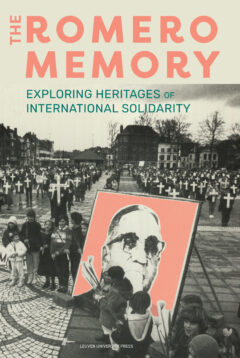 The Romero Memory
Judith Gruber (Editor), Jonas Van Mulder (Editor), Stephan Parmentier (Editor), Veerle Draulans (Editor), Joren Janssens (Editor), Jacques Haers (Editor), Kim Christiaens (Editor),
December 2026

 Infrastructuring Arrival
Karel Arnaut (Editor), Luce Beeckmans (Editor), Bruno Meeus (Editor),
November 2026
 Feminists Resisting Gendered Violence
Hemangini Gupta (Editor), Fiona Mackay (Editor), Jan Breckenridge (Editor), Louise Chappell (Editor), Rachna Mehra (Editor), Rukmini Sen (Editor), Mailin Suchting (Editor),
October 2026
 German–Rapanui Entanglements
Cristián Moreno Pakarati (Editor), Diego Muñoz (Editor), Philipp Schorch (Editor),
August 2026
 Nomadic Camera
Burcu Dogramaci (Editor), Winfried Gerling (Editor), Jens Jäger (Editor), Birgit Mersmann (Editor),
March 2026
 Teaching About the Violent Past
Line Kuppens (Author), Justin Sheria Nfundiko (Author),
October 2025
 Interculturaliteit en de geesteswetenschappen – tweede, herziene editie
Idesbald Goddeeris (Editor), Nadia Lie (Editor), Stefania Marzo (Editor),
September 2025
 Integration Otherwise Inspiration Kit
Luce Beeckmans (Author), Dounia Salamé (Author), Martina Bovo (Author), Mary Hogan (Author),
June 2025

 Textures of Power
Florence Bernault (Editor), Benoît Henriet (Editor), Emery Kalema (Editor),
May 2025
 Architectures of Resistance
Angeliki Sioli (Editor), Nishat Awan (Editor), Kristopher Palagi (Editor),
August 2024