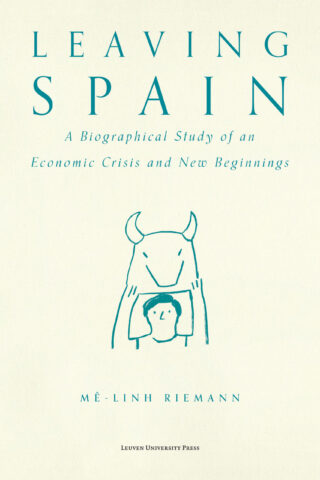

Leaving Spain
A Biographical Study of an Economic Crisis and New Beginnings
Mê-Linh Riemann (Author),

Category: Migration Studies
Language: English
ISBN: 9789462703285
Publication date: April 7, 2022
€25.50 (including 6% VAT)
Buy NowNumber of pages: 320
Size: 234 x 156 x 12 mm

Funded by: KU Leuven Fund for Fair Open Access
Stiftung der Deutschen Wirtschaft (sdw)
Cambridge Commonwealth European and International Trust
Stock item: 147732
Standard delivery time for print books:
For Belgium: 5 to 8 working days
For EU: 2 to 3 weeks
For other countries: 4 to 5 weeks
Category: Migration Studies
Language: English
ISBN: 9789461664501
Publication date: April 7, 2022
Download Free EpubNumber of pages: 320
Funded by: KU Leuven Fund for Fair Open Access
Stiftung der Deutschen Wirtschaft (sdw)
Cambridge Commonwealth European and International Trust
Category: Migration Studies
Language: English
ISBN: 9789461664495
Publication date: April 7, 2022
Download Free PDFNumber of pages: 320
Funded by: KU Leuven Fund for Fair Open Access
Stiftung der Deutschen Wirtschaft (sdw)
Cambridge Commonwealth European and International Trust
Life histories and experiences of Spanish migrants
Since the beginning of the economic crisis of 2008, Spain, like other southern European countries, has witnessed a mass departure of mostly young people looking for opportunities abroad. Leaving Spain is based on 58 autobiographical narrative interviews with recent Spanish migrants who went to the UK and Germany, and sometimes returned. By presenting a combination of in-depth case studies and comparative analyses, the author demonstrates the potential of biographical research and narrative analysis in studying contemporary Europe, including its overlapping crises. The scope of the sociological study is not limited to examining how those who left Spain experienced single phases of their migration. Instead, it focuses on the significance of migration projects in the context of their life histories and how they make sense of these experiences in retrospect.
This book will not only be of great interest to social scientists and students in different disciplines and interdisciplinary studies such as sociology, anthropology, human geography, European studies, education, and social work, but also to professionals, European and national policy makers, and those interested in learning more about migrants’ experiences, perspectives, and (often invisible) contributions.
Ebook available in Open Access.
This publication is GPRC-labeled (Guaranteed Peer-Reviewed Content).
Acknowledgements
1. Introduction
2. Mapping the Field
Phases of EU mobility: a timeline
Zooming in on the Spanish case
Taking on a biographical perspective
3. Biographical Case Studies
Adam Sanchez
María Navarro
Mateo López
Where to go from here?
4. Time to go?
‘Going abroad’ in the context of one’s academic training
Withstanding a collective mood of demoralisation
Trying to overcome a prolonged period of dependency and stagnation
Trying to cope with or escape from a trajectory of suffering
In search of professional recognition and adequate pay
Acquiring foreign language skills in order to gain a competitive advantage
5. On Studying and Working Abroad
Exchange programmes as pathways into a long-term stay
Alternatives to wage labour
‘Unskilled’ labour?
Skilled labour
Voluntary work
6. A Web of Social Relationships
On working to maintain personal ties to Spain
The emergence of new social relationships in the receiving society
Spaces of transition
Perceived barriers in everyday interactions
7. Established-Outsider Relations in Times of Brexit
The case of Diego
Looking beyond the single case
A note on the recent political developments
8. An Uneasy Homecoming
Returning as an answer to what?
Moving ‘back’: expectations vs. reality
9. Conclusion
A brief overview of my findings
Addressing different audiences
Looking back and looking ahead
10. Methodological Appendix
A note on biographical research
The autobiographical narrative interview and procedures of sequential analysis
The history of my field research
Data overview
Consent form
Notes
References
Index
In a debated field such as migration, the work of Mê-Linh Riemann is very important in showing which conditions can actually lead to the migration of young middle-class educated people, the conditions they find upon arrival, how they find work, learn the local language, associate with others, eventually decide to return or continue on abroad. I would definitely use this text in my courses on biographical research, migration studies, and qualitative-interpretive methods, for undergraduate, graduate and PhD students.Lena Inowlocki, Goethe-Universität Frankfurt am Main
Leaving Spain
fills in a huge blank in the knowledge we have of the phenomenon under study
and is very valuable for the originality of its research project's design as
well as for the rigor of its analyses. The case studies are wonderfully human,
the analysis is mostly formulated in accessible language, the writing is clear and
convincing.Daniel Bertaux
This is a lovely book, full of very rich stories. I particularly appreciate that the specific research questions guiding the main empirical chapters emerged out of three biographical case studies. In other words, people’s lives come first and analysis follows. It is a novel way of exploring how the macro takes shape in the micro. - Karen O’Reilly, Loughborough University
Frequently Asked Questions
What is "Leaving Spain" about?
Life histories and experiences of Spanish migrants
Since the beginning of the economic crisis of 2008, Spain, like other southern European countries, has witnessed a mass departure of mostly young people looking for opportunities abroad. Leaving Spain is based on 58 autobiographical narrative interviews with recent Spanish migrants who went to the UK and Germany, and sometimes returned. By presenting a combination of in-depth case studies and comparative analyses, the author demonstrates the potential of biographical research and narrative analysis in studying contemporary Europe, including its overlapping crises. The scope of the sociological study is not limited to examining how those who left Spain experienced single phases of their migration. Instead, it focuses on the significance of migration projects in the context of their life histories and how they make sense of these experiences in retrospect.
This book will not only be of great interest to social scientists and students in different disciplines and interdisciplinary studies such as sociology, anthropology, human geography, European studies, education, and social work, but also to professionals, European and national policy makers, and those interested in learning more about migrants’ experiences, perspectives, and (often invisible) contributions.
Ebook available in Open Access.
This publication is GPRC-labeled (Guaranteed Peer-Reviewed Content).
Who wrote "Leaving Spain"?
"Leaving Spain" was written by Mê-Linh Riemann.
Mê-Linh Riemann is a post-doctoral researcher at the Centre for Sociological Research at KU Leuven. She previously completed her PhD at the University of Cambridge.
Is "Leaving Spain" available Open Access?
Yes, "Leaving Spain" is published Open Access. It is available under a BY-NC-ND license.
Who funded the publication of "Leaving Spain"?
Publication of "Leaving Spain" was funded by KU Leuven Fund for Fair Open Access
Stiftung der Deutschen Wirtschaft (sdw)
Cambridge Commonwealth European and International Trust
.
What is the Table of Contents for "Leaving Spain"?
Acknowledgements
1. Introduction
2. Mapping the Field
Phases of EU mobility: a timeline
Zooming in on the Spanish case
Taking on a biographical perspective
3. Biographical Case Studies
Adam Sanchez
María Navarro
Mateo López
Where to go from here?
4. Time to go?
‘Going abroad’ in the context of one’s academic training
Withstanding a collective mood of demoralisation
Trying to overcome a prolonged period of dependency and stagnation
Trying to cope with or escape from a trajectory of suffering
In search of professional recognition and adequate pay
Acquiring foreign language skills in order to gain a competitive advantage
5. On Studying and Working Abroad
Exchange programmes as pathways into a long-term stay
Alternatives to wage labour
‘Unskilled’ labour?
Skilled labour
Voluntary work
6. A Web of Social Relationships
On working to maintain personal ties to Spain
The emergence of new social relationships in the receiving society
Spaces of transition
Perceived barriers in everyday interactions
7. Established-Outsider Relations in Times of Brexit
The case of Diego
Looking beyond the single case
A note on the recent political developments
8. An Uneasy Homecoming
Returning as an answer to what?
Moving ‘back’: expectations vs. reality
9. Conclusion
A brief overview of my findings
Addressing different audiences
Looking back and looking ahead
10. Methodological Appendix
A note on biographical research
The autobiographical narrative interview and procedures of sequential analysis
The history of my field research
Data overview
Consent form
Notes
References
Index
Related titles
 Infrastructuring Arrival
Karel Arnaut (Editor), Luce Beeckmans (Editor), Bruno Meeus (Editor),
November 2026
 Nomadic Camera
Burcu Dogramaci (Editor), Winfried Gerling (Editor), Jens Jäger (Editor), Birgit Mersmann (Editor),
March 2026
 Interculturaliteit en de geesteswetenschappen – tweede, herziene editie
Idesbald Goddeeris (Editor), Nadia Lie (Editor), Stefania Marzo (Editor),
September 2025
 Integration Otherwise Inspiration Kit
Luce Beeckmans (Author), Dounia Salamé (Author), Martina Bovo (Author), Mary Hogan (Author),
June 2025
 Architectures of Resistance
Angeliki Sioli (Editor), Nishat Awan (Editor), Kristopher Palagi (Editor),
August 2024
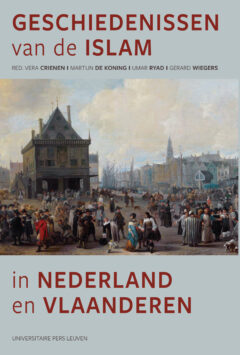 Geschiedenissen van de islam in Nederland en Vlaanderen
Vera Crienen (Editor), Martijn de Koning (Editor), Umar Ryad (Editor), Gerard Wiegers (Editor),
May 2024
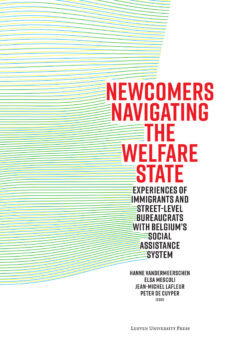 Newcomers Navigating the Welfare State
Hanne Vandermeerschen (Editor), Elsa Mescoli (Editor), Jean-Michel Lafleur (Editor), Peter De Cuyper (Editor),
December 2023
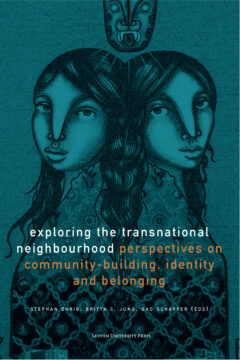 Exploring the Transnational Neighbourhood
Stephan Ehrig (Editor), Britta C. Jung (Editor), Gad Schaffer (Editor),
October 2022
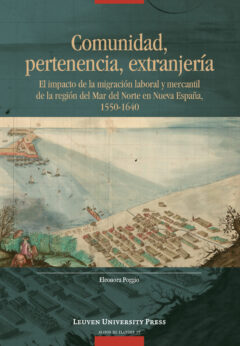
 Making Home(s) in Displacement
Luce Beeckmans (Editor), Alessandra Gola (Editor), Ashika Singh (Editor), Hilde Heynen (Editor),
January 2022

 Migration at Work
Fiona-Katharina Seiger (Editor), Christiane Timmerman (Editor), Noel B. Salazar (Editor), Johan Wets (Editor),
September 2020
 Arrival Cities
Burcu Dogramaci (Editor), Mareike Hetschold (Editor), Laura Karp Lugo (Editor), Rachel Lee (Editor), Helene Roth (Editor),
September 2020