

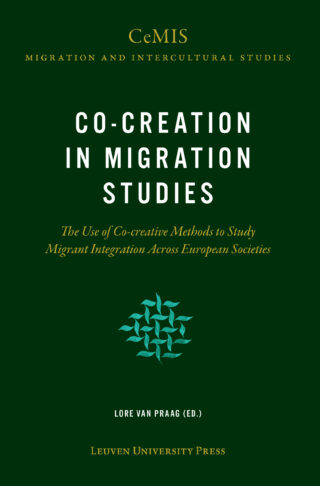
Co-creation in Migration Studies
The Use of Co-creative Methods to Study Migrant Integration Across European Societies
Lore Van Praag (Editor),
Series: CeMIS Migration and Intercultural Studies
Category: Diversity and Equity Studies, Migration Studies, Policy, Governance and Public Administration, Social Science
Language: English
ISBN: 9789462702882
Publication date: October 5, 2021
€59.50 (including 6% VAT)
Buy NowNumber of pages: 296
Size: 234 x 156 x 16 mm

Stock item: 144218
Standard delivery time for print books:
For Belgium: 5 to 8 working days
For EU: 2 to 3 weeks
For other countries: 4 to 5 weeks
Series: CeMIS Migration and Intercultural Studies
Category: Diversity and Equity Studies, Migration Studies, Policy, Governance and Public Administration, Social Science
Language: English
ISBN: 9789461664013
Publication date: October 5, 2021
€45.00 (including 6% VAT)
Buy NowNumber of pages: 296
Challenges and pitfalls of co-creative methods applied to migration studies
Co-creative methods are increasingly used to understand and facilitate integration processes of migrants in immigrant societies. This volume aims to contribute to the debates on the ways in which co-creative methods may advance migrant integration. More specifically, the contributions investigate how co-creative research strategies can provide insights into how integration processes into various domains of immigrant society (e.g. language learning, housing, employment) are shaped, and how they can contribute to policy making and new policy practices. Because co-creative methods are relatively new approaches to research and policy making, the authors evaluate and demonstrate the pitfalls and benefits of using them. Starting with a theoretical and methodological overview of co-creative methods, empirical chapters document and critically assess ongoing research experiences and studies to incorporate co-creative methods in academic research across Europe.
Co-creation in Migration Studies analyses the use of co-creative methods in migrant research and policy making, reflects upon the conditions required to successfully implement these methods, and offers new insights and recommendations for future research and policy making practices.
Contributors: Chloë Angé (Université Libre de Bruxelles), Maria Amata Garito (International Telematic University), Hanne Apers (University of Antwerp), Maurizio Bergamaschi (University of Bologna), Ingrid Breckner (HafenCity University Hamburg), Fidel C.T. Budy (Sheffield Hallam University), Alessandro Caforio (International Telematic University), Teresa Carlone (University of Bologna), Emanuela Dal Zotto (University of Pavia and Milan University), Rianne Dekker (Utrecht University School of Governance), Valentina Fusari (University of Pavia), Karin Geuijen (Utrecht University School of Governance), Karen Latricia Hough (Sheffield Hallam University), Sara Lembrechts (Ghent University), Marie Malchow (HafenCity University Hamburg), Carolina Mudan Marelli (University of Bologna), Jörg Rainer Noennig (HafenCity University Hamburg), Caroline Oliver (University College London), Alessandro Pollini (International Telematic University), Andrea Rea (Université Libre de Bruxelles), Lena Richter (Radboud University Nijmegen), Yara Abdel Samad (Sheffield Hallam University), Rosa Thoneick (HafenCity University Hamburg), Lore Van Praag (University of Antwerp), Ellen Van Vooren (Children’s Rights Knowledge Centre)
This publication is GPRC-labeled (Guaranteed Peer-Reviewed Content).
Prelude Lore Van Praag
Introduction to the use of co-creative research methods in migration studies Hanne Apers, Lena Richter and Lore Van Praag
Part I: The use of co-creative methodologies in academic research
The use of co-creative methods for the development of local policy implementation with migrant newcomers in the MICADO project in Antwerp Hanne Apers and Lore Van Praag
Co-creation and decision-making processes with migrants: some evidence from the MICADO co-creation experience in Bologna Maurizio Bergamaschi, Teresa Carlone and Carolina Mudan Marelli
Complex arrival procedures as a challenge in migration studies: a comparative analysis of quantitative and qualitative methodologies within migration research Rosa Thoneick, Marie Malchow, Ingrid Breckner and Jörg Noennig
Design-driven co-creation for migrants’ integration in European Cities: REBUILD project Maria Amata Garito, Alessandro Pollini and Alessandro Caforio
Generating self-esteem and fostering social recognition: co-creating innovative practices for newcomers’ integration in Brussels Chloë Angé and Andrea Rea
ICT Enabled Public Services for Migration (MIICT): how co-creative practices advanced migrants’ integration in the EU 169 Fidel C. T. Budy, Karen Latricia Hough and Yara Abdel Samad
Part II: The use of co-creative research methods in policymaking
Co-creating asylum reception in a living lab: learning from the experiences of refugees and locals Rianne Dekker, Karin Geuijen and Caroline Oliver
How can universities commit to designing and implementing inclusive practices for forced migrants? Emanuela Dal Zotto and Valentina Fusari
Involving children and young people in policymaking: a children’s rights-based approach to co-creative practice in REFLECTOR 247 Ellen Van Vooren and Sara Lembrechts
ConclusionLore Van Praag
About the Authors
Frequently Asked Questions
What is "Co-creation in Migration Studies" about?
Challenges and pitfalls of co-creative methods applied to migration studies
Co-creative methods are increasingly used to understand and facilitate integration processes of migrants in immigrant societies. This volume aims to contribute to the debates on the ways in which co-creative methods may advance migrant integration. More specifically, the contributions investigate how co-creative research strategies can provide insights into how integration processes into various domains of immigrant society (e.g. language learning, housing, employment) are shaped, and how they can contribute to policy making and new policy practices. Because co-creative methods are relatively new approaches to research and policy making, the authors evaluate and demonstrate the pitfalls and benefits of using them. Starting with a theoretical and methodological overview of co-creative methods, empirical chapters document and critically assess ongoing research experiences and studies to incorporate co-creative methods in academic research across Europe.
Co-creation in Migration Studies analyses the use of co-creative methods in migrant research and policy making, reflects upon the conditions required to successfully implement these methods, and offers new insights and recommendations for future research and policy making practices.
Contributors: Chloë Angé (Université Libre de Bruxelles), Maria Amata Garito (International Telematic University), Hanne Apers (University of Antwerp), Maurizio Bergamaschi (University of Bologna), Ingrid Breckner (HafenCity University Hamburg), Fidel C.T. Budy (Sheffield Hallam University), Alessandro Caforio (International Telematic University), Teresa Carlone (University of Bologna), Emanuela Dal Zotto (University of Pavia and Milan University), Rianne Dekker (Utrecht University School of Governance), Valentina Fusari (University of Pavia), Karin Geuijen (Utrecht University School of Governance), Karen Latricia Hough (Sheffield Hallam University), Sara Lembrechts (Ghent University), Marie Malchow (HafenCity University Hamburg), Carolina Mudan Marelli (University of Bologna), Jörg Rainer Noennig (HafenCity University Hamburg), Caroline Oliver (University College London), Alessandro Pollini (International Telematic University), Andrea Rea (Université Libre de Bruxelles), Lena Richter (Radboud University Nijmegen), Yara Abdel Samad (Sheffield Hallam University), Rosa Thoneick (HafenCity University Hamburg), Lore Van Praag (University of Antwerp), Ellen Van Vooren (Children’s Rights Knowledge Centre)
This publication is GPRC-labeled (Guaranteed Peer-Reviewed Content).
Who edited "Co-creation in Migration Studies"?
"Co-creation in Migration Studies" was edited by Lore Van Praag.
Lore Van Praag is the director of the Centre for Migration and Intercultural Studies at the University of Antwerp.
Is "Co-creation in Migration Studies" part of a series?
Yes, "Co-creation in Migration Studies" is part of the "CeMIS Migration and Intercultural Studies" series.
Editors: Lore van Praag, An Daems
CeMIS Migration and Intercultural Studies is published in collaboration with the Centre for Migration and Intercultural Studies and focuses on two major areas of research:
- International migration / Migration and Development
- Integration and social cohesion

In association with

About CeMIS
The Centre for Migration and Intercultural Studies (CeMIS) was founded in 2005 at the University of Antwerp, at the initiative of a group of researchers who were working together within the framework of the Antwerp Centre for Migrant Studies.
CeMIS is an interdisciplinary research centre that has received national and international praise for its work. The centre conducts research as well as providing education and other academic services relating to migration, integration, and intercultural themes in various social fields, including education, the labour market, welfare, family, health, and law.
Collaborating with civil society, policymakers, and other academic partners, the research centre addresses the challenges arising from migration and intercultural life in today’s society.
CeMIS seeks to provide an open and pluralistic research platform that fosters collaboration between society and academia.
For more information about CeMIS, please visit https://www.uantwerpen.be/en/rg/cemis/
Series board
Lore Van Praag (University of Antwerp), Dirk Vanheule (University of Antwerp), Noel Clycq (University of Antwerp), Sunčica Vujić (University of Antwerp), Paul Van Royen (University of Antwerp), Godfried Engbersen (Erasmus University Rotterdam), Kevin Smets (University of Antwerp /Vrije Universiteit Brussel), Hilde Greefs (University of Antwerp), François Levrau (Centre Pieter Gillis/ University of Antwerp)
What is the Table of Contents for "Co-creation in Migration Studies"?
Prelude Lore Van Praag
Introduction to the use of co-creative research methods in migration studies Hanne Apers, Lena Richter and Lore Van Praag
Part I: The use of co-creative methodologies in academic research
The use of co-creative methods for the development of local policy implementation with migrant newcomers in the MICADO project in Antwerp Hanne Apers and Lore Van Praag
Co-creation and decision-making processes with migrants: some evidence from the MICADO co-creation experience in Bologna Maurizio Bergamaschi, Teresa Carlone and Carolina Mudan Marelli
Complex arrival procedures as a challenge in migration studies: a comparative analysis of quantitative and qualitative methodologies within migration research Rosa Thoneick, Marie Malchow, Ingrid Breckner and Jörg Noennig
Design-driven co-creation for migrants’ integration in European Cities: REBUILD project Maria Amata Garito, Alessandro Pollini and Alessandro Caforio
Generating self-esteem and fostering social recognition: co-creating innovative practices for newcomers’ integration in Brussels Chloë Angé and Andrea Rea
ICT Enabled Public Services for Migration (MIICT): how co-creative practices advanced migrants’ integration in the EU 169 Fidel C. T. Budy, Karen Latricia Hough and Yara Abdel Samad
Part II: The use of co-creative research methods in policymaking
Co-creating asylum reception in a living lab: learning from the experiences of refugees and locals Rianne Dekker, Karin Geuijen and Caroline Oliver
How can universities commit to designing and implementing inclusive practices for forced migrants? Emanuela Dal Zotto and Valentina Fusari
Involving children and young people in policymaking: a children’s rights-based approach to co-creative practice in REFLECTOR 247 Ellen Van Vooren and Sara Lembrechts
ConclusionLore Van Praag
About the Authors
Related titles
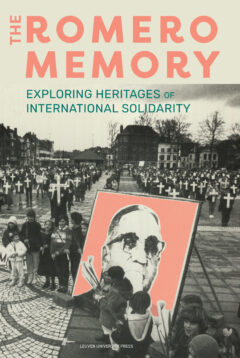 The Romero Memory
Judith Gruber (Editor), Jonas Van Mulder (Editor), Stephan Parmentier (Editor), Veerle Draulans (Editor), Joren Janssens (Editor), Jacques Haers (Editor), Kim Christiaens (Editor),
November 2026

 Infrastructuring Arrival
Karel Arnaut (Editor), Luce Beeckmans (Editor), Bruno Meeus (Editor),
November 2026
 Digital Citizenship
Peter van Baalen (Editor), Selin Gerlek (Editor), Jakko Kemper (Editor), Halil Can Kurban (Editor), Marina Tulin (Editor),
October 2026
 Feminists Resisting Gendered Violence
Hemangini Gupta (Editor), Fiona Mackay (Editor), Jan Breckenridge (Editor), Louise Chappell (Editor), Rachna Mehra (Editor), Rukmini Sen (Editor), Mailin Suchting (Editor),
October 2026
 German–Rapanui Entanglements
Cristián Moreno Pakarati (Editor), Diego Muñoz (Editor), Philipp Schorch (Editor),
August 2026
 Brusselse plaatsnamen
Iadine Degryse (Editor), Benjamin Wayens (Editor), Chantal Kesteloot (Editor), Dennis De Vriese (Editor), Matthijs Degraeve (Editor),
April 2026
 Nomadic Camera
Burcu Dogramaci (Editor), Winfried Gerling (Editor), Jens Jäger (Editor), Birgit Mersmann (Editor),
March 2026
 Teaching About the Violent Past
Line Kuppens (Author), Justin Sheria Nfundiko (Author),
October 2025
 Interculturaliteit en de geesteswetenschappen – tweede, herziene editie
Idesbald Goddeeris (Editor), Nadia Lie (Editor), Stefania Marzo (Editor),
September 2025
 Integration Otherwise Inspiration Kit
Luce Beeckmans (Author), Dounia Salamé (Author), Martina Bovo (Author), Mary Hogan (Author),
June 2025