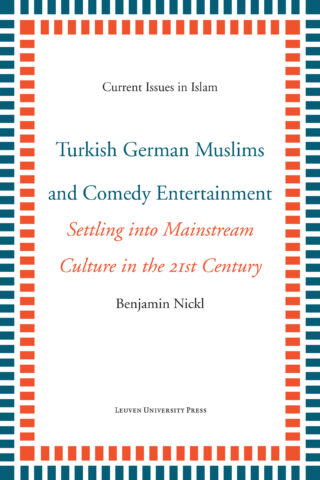

Turkish German Muslims and Comedy Entertainment
Settling into Mainstream Culture in the 21st Century
Benjamin Nickl (Author),

Series: Current Issues in Islam 7
Category: Diversity and Equity Studies, Media and Visual Culture, Migration Studies, Religion, Social Science
Language: English
ISBN: 9789462702387
Publication date: October 28, 2020
€23.50 (including 6% VAT)
Buy NowNumber of pages: 217
Size: 234 x 156 x 12 mm

Funded by: KU Leuven Fund for Fair Open Access
The University of Sydney
The Popular Culture Association of Australia and New Zealand
Stock item: 137913
Standard delivery time for print books:
For Belgium: 5 to 8 working days
For EU: 2 to 3 weeks
For other countries: 4 to 5 weeks
Series: Current Issues in Islam 7
Category: Diversity and Equity Studies, Media and Visual Culture, Migration Studies, Religion, Social Science
Language: English
ISBN: 9789461663412
Publication date: October 28, 2020
Download Free EpubNumber of pages: 217
Funded by: KU Leuven Fund for Fair Open Access
The University of Sydney
The Popular Culture Association of Australia and New Zealand
Series: Current Issues in Islam 7
Category: Diversity and Equity Studies, Media and Visual Culture, Migration Studies, Religion, Social Science
Language: English
ISBN: 9789461663429
Publication date: October 28, 2020
Download Free PDFNumber of pages: 217
Funded by: KU Leuven Fund for Fair Open Access
The University of Sydney
The Popular Culture Association of Australia and New Zealand
Turkish German comedy culture and the lived realities of Turkish Muslims in Germany
Comedy entertainment is a powerful arena for serious public engagement with questions of German national identity and Turkish German migration. The German majority society and its largest labour migrant community have been asking for decades what it means to be German and what it means for Turkish Germans, Muslims of the second and third generations, to call Germany their home. Benjamin Nickl examines through the social pragmatics of humour the dynamics that underpin these questions in the still-evolving popular culture space of German mainstream humour in the 21st century. The first book-length study on the topic to combine close readings of film, television, literary and online comedy, and transnational culture studies, Turkish German Muslims and Comedy Entertainment presents the argument that Turkish German humour has moved from margin to mainstream by intervening in cultural incompatibility and Islamophobia discourse.
Ebook available in Open Access.
This publication is GPRC-labeled (Guaranteed Peer-Reviewed Content).
Preface
INTRODUCTION Finding a Voice of Their Own
CHAPTER I Germanness, Othering and Ethnic Comedy
CHAPTER II
Clash Films
CHAPTER II
Television Narratives of Ottoman Invasion and Cohabitation
CHAPTER IV Bridget Jones’s Halal Diary
CHAPTER V Funny Online Kanakism
CHAPTER VI
Settling into “Post-Migrant” Mainstream Culture
CONCLUSION European Muslims’ Issues: Turkish German Comedy in a Global Entertainment and Identity Politics Framework
Notes References
Frequently Asked Questions
What is "Turkish German Muslims and Comedy Entertainment" about?
Turkish German comedy culture and the lived realities of Turkish Muslims in Germany
Comedy entertainment is a powerful arena for serious public engagement with questions of German national identity and Turkish German migration. The German majority society and its largest labour migrant community have been asking for decades what it means to be German and what it means for Turkish Germans, Muslims of the second and third generations, to call Germany their home. Benjamin Nickl examines through the social pragmatics of humour the dynamics that underpin these questions in the still-evolving popular culture space of German mainstream humour in the 21st century. The first book-length study on the topic to combine close readings of film, television, literary and online comedy, and transnational culture studies, Turkish German Muslims and Comedy Entertainment presents the argument that Turkish German humour has moved from margin to mainstream by intervening in cultural incompatibility and Islamophobia discourse.
Ebook available in Open Access.
This publication is GPRC-labeled (Guaranteed Peer-Reviewed Content).
Who wrote "Turkish German Muslims and Comedy Entertainment"?
"Turkish German Muslims and Comedy Entertainment" was written by Benjamin Nickl.
Benjamin Nickl is researcher in transnational pop culture studies and lectures in the School of Languages and Cultures at the University of Sydney.
Is "Turkish German Muslims and Comedy Entertainment" part of a series?
Yes, "Turkish German Muslims and Comedy Entertainment" is part of the "Current Issues in Islam" series. It's book 7 in the series.


The publications in the series provide insight into the daily life and major developments within intercultural and interreligious settings where Islam features as an important dynamic. They bring original, well-researched, and critical appraisals that aim to contribute to the on-going academic debate in this field as well as providing insights to policymakers and stakeholders working to develop and deliver new ideas for social cohesion and peaceful community relations.
Editorial board
Is "Turkish German Muslims and Comedy Entertainment" available Open Access?
Yes, "Turkish German Muslims and Comedy Entertainment" is published Open Access. It is available under a BY-NC-ND license.
Who funded the publication of "Turkish German Muslims and Comedy Entertainment"?
Publication of "Turkish German Muslims and Comedy Entertainment" was funded by KU Leuven Fund for Fair Open Access
The University of Sydney
The Popular Culture Association of Australia and New Zealand
.
What is the Table of Contents for "Turkish German Muslims and Comedy Entertainment"?
Preface
INTRODUCTION Finding a Voice of Their Own
CHAPTER I Germanness, Othering and Ethnic Comedy
CHAPTER II
Clash Films
CHAPTER II
Television Narratives of Ottoman Invasion and Cohabitation
CHAPTER IV Bridget Jones’s Halal Diary
CHAPTER V Funny Online Kanakism
CHAPTER VI
Settling into “Post-Migrant” Mainstream Culture
CONCLUSION European Muslims’ Issues: Turkish German Comedy in a Global Entertainment and Identity Politics Framework
Notes References
Related titles


 The Romero Memory
Judith Gruber (Editor), Jonas Van Mulder (Editor), Stephan Parmentier (Editor), Veerle Draulans (Editor), Joren Janssens (Editor), Jacques Haers (Editor), Kim Christiaens (Editor),
December 2026


 Infrastructuring Arrival
Karel Arnaut (Editor), Luce Beeckmans (Editor), Bruno Meeus (Editor),
November 2026
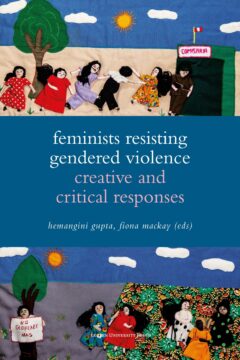 Feminists Resisting Gendered Violence
Hemangini Gupta (Editor), Fiona Mackay (Editor), Jan Breckenridge (Editor), Louise Chappell (Editor), Rachna Mehra (Editor), Rukmini Sen (Editor), Mailin Suchting (Editor),
October 2026
 German–Rapanui Entanglements
Cristián Moreno Pakarati (Editor), Diego Muñoz (Editor), Philipp Schorch (Editor),
August 2026
 Cinema in Post-War Belgium
Gertjan Willems (Editor), Bjorn Gabriels (Editor), Bénédicte Rochet (Editor),
May 2026
 Performing Magnetism
Eleonora Paklons (Editor), Kristof Smeyers (Editor), Kurt Vanhoutte (Editor), Hannah Welslau (Editor),
May 2026

 Nomadic Camera
Burcu Dogramaci (Editor), Winfried Gerling (Editor), Jens Jäger (Editor), Birgit Mersmann (Editor),
March 2026
 Comics and the Global South
Andrea Aramburú (Editor), Dibyadyuti Roy (Editor), Joe Sutliff Sanders (Editor),
February 2026