Artists’ vital role in shaping nonviolent resistance in Iran
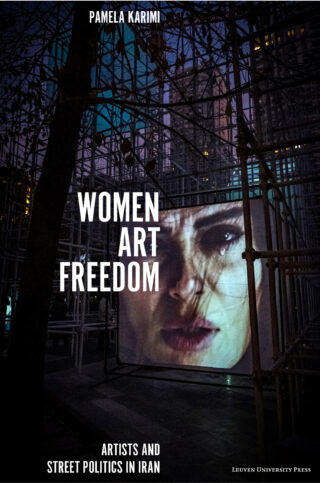
Women, Art, Freedom offers an insightful look at the 2022 Woman, Life, Freedom uprising in Iran, sparked by the tragic murder of Jina Mahsa Amini at the hands of the “morality police” for violating hijab rules. Beyond its feminist undertones and the remarkable courage of the young protesters, what sets this uprising apart from previous ones is the abundant and diverse art it has inspired. This book, rather than merely analyzing the artworks that garnered attention on social media platforms, brings to light lesser-known grassroots artistic movements that played a crucial role within their immediate local communities. Engaging with primarily Iran-based artists, it uncovers their role in shaping guerrilla interventions and street occupations and in articulating distinct forms of peaceful civil disobedience. By drawing on a broad spectrum of historical and theoretical sources, this book further reveals the origins and inspirations of Iran’s protest art. Focusing mainly on the interconnections between the public sphere, women’s bodies, and feminist viewpoints, Women, Art, Freedom underscores the vital role of artists in championing global justice and equality.
This book will be made open access within three years of publication thanks to Path to Open, a program developed in partnership between JSTOR, the American Council of Learned Societies (ACLS), University of Michigan Press, and The University of North Carolina Press to bring about equitable access and impact for the entire scholarly community, including authors, researchers, libraries, and university presses around the world. Learn more at https://about.jstor.org/path-to-open/
One of the best new Women in Art books – BookAuthority
Listen to an interview with Pamela Karimi at New Books Network
9 Introduction
Act One
45 Parading the Body on Sidewalks
Act Two
69 Hiding in Plain Sight
Act Three
93 Staging Citywide Protest Props
Act Four
113 Reclaiming Old Themes for New Protest Arts
Act Five
133 Reenacting Street Battles
Act Six
155 Documenting Urban Unrest
Act Seven
175 Camouflaging Defiant Words
Act Eight
199 Clashing with Faith in Broad Daylight
Act Nine
219 Opposing Art with Art in Cityscapes
Act Ten
237 Forecasting the Future
263 Coda
271 Notes
285 Select Bibliography
289 Index
ERRATUM : An error is noted in attributing a typographic work to Reza Abedini. While he also promoted the same style, the example cited on pages 179-180 was created by Bijan Seifouri.
Pamela Karimi
Pamela Karimi is an associate professor of history of art and architecture at Cornell University. Her expertise lies primarily in the art, architecture and visual culture of the modern and contemporary Middle East. She is the author of Domesticity and Consumer Culture in Iran: Interior Revolutions of the Modern Era (2013) and Alternative Iran: Contemporary Art and Critical Spatial Practice (2022).
Women, Art, Freedom probes every term of its title to document and theorize the aesthetics of rebellion in Iran. Karimi’s terrific book explores the nuances of language, color, calligraphy, graffiti, performance, artistic precedents, and gender identity as she takes up the current movement, finding art to be crucial to parafeminist imaginaries around the globe. - Caroline Jones, Massachusetts Institute of Technology
Women, Art, Freedom offers a most compelling argument on how performative art and activism join hands in promoting a political posture of resistance. It spotlights through a deft analysis of a mass of data and evidence that is extraordinarily difficult to locate and gather, the unfolding of the uprisings that followed the murder of Jina Mahsa Amini on 16 September 2022. Taking its cue from Woman, Life, Freedom, the title by which a woman led revolution took place in Iran —and which should not be seen as either completed or concluded— Karimi makes a persuasive case for equating Life and Art and for the ways activism spilled through performative street art, documented and disseminated through social media, has helped create a lifeline for the young and courageous women, and men, in Iran to make life liveable in the face of beatings, imprisonment, and killings. Here is a book about art as a tool to inflict political and social change, to expose injustice, and to find reason to dream. - Sussan Babaie, The Courtauld Institute of Art, University of London
“What if we view street activities not as organic, evolving phenomena but as calculated efforts to challenge and subvert the state rules governing street dynamics?” Pamela Karimi asks in Women, Art, Freedom: Artists and Street Politics in Iran, her study of work that has emerged from the protest movement of the similar name that began in 2022. — JSTOR Daily, 9 April 2025, JSTOR Daily — Iran: Creativity in the Aftermath of Uprising
'Women, Art, Freedom' offers a valuable perspective on how artists have been at the forefront of this movement for change. Now, more than two years after the uprising and in view of the current situation in Iran – where wearing the hijab is even more surveilled in public, where many activists have been punished, lost their lives or remain in prison – it is impossible to predict what direction dissident art will take. What Karimi’s study ultimately demonstrates is that, even in the face of a grim political reality, activist art in Iran has continually reinvented itself for decades, embracing new and creative forms of resistance. In the end, her book stands as a powerful (and hopeful) reminder of the enduring resilience of artistic expression. - Verena Straub, 21: Inquiries into Art, History, and the Visual, 6(2), 291–295. https://doi.org/10.11588/xxi.2025.2.111303
'Woman, Art, Freedom' stands out among recent publications on Iranian contemporary art by foregrounding political art, an area often intentionally sidelined by state narratives and market logics. Karimi offers a rare study that also takes on an activist role, urgently documenting practices only two years after the uprising, before many of their records risk disappearance or censorship. - Hossein Eyalati, Art and Politics in Iranian Art: On Pamela Karimi’s Woman, Art, Freedom, Kaarnamaa Journal of Art History and Criticism, vol. 8, no. 4, Winter 2025. https://www.kaarnamaa.com/single-post/nmk-karimi-25
Frequently Asked Questions
What is "Women, Art, Freedom" about?
Artists' vital role in shaping nonviolent resistance in Iran
Women, Art, Freedom offers an insightful look at the 2022 Woman, Life, Freedom uprising in Iran, sparked by the tragic murder of Jina Mahsa Amini at the hands of the "morality police" for violating hijab rules. Beyond its feminist undertones and the remarkable courage of the young protesters, what sets this uprising apart from previous ones is the abundant and diverse art it has inspired. This book, rather than merely analyzing the artworks that garnered attention on social media platforms, brings to light lesser-known grassroots artistic movements that played a crucial role within their immediate local communities. Engaging with primarily Iran-based artists, it uncovers their role in shaping guerrilla interventions and street occupations and in articulating distinct forms of peaceful civil disobedience. By drawing on a broad spectrum of historical and theoretical sources, this book further reveals the origins and inspirations of Iran’s protest art. Focusing mainly on the interconnections between the public sphere, women’s bodies, and feminist viewpoints, Women, Art, Freedom underscores the vital role of artists in championing global justice and equality.
This book will be made open access within three years of publication thanks to Path to Open, a program developed in partnership between JSTOR, the American Council of Learned Societies (ACLS), University of Michigan Press, and The University of North Carolina Press to bring about equitable access and impact for the entire scholarly community, including authors, researchers, libraries, and university presses around the world. Learn more at https://about.jstor.org/path-to-open/
One of the best new Women in Art books – BookAuthority
Listen to an interview with Pamela Karimi at New Books Network
Who wrote "Women, Art, Freedom"?
"Women, Art, Freedom" was written by Pamela Karimi.
Pamela Karimi is an associate professor of history of art and architecture at Cornell University. Her expertise lies primarily in the art, architecture and visual culture of the modern and contemporary Middle East. She is the author of Domesticity and Consumer Culture in Iran: Interior Revolutions of the Modern Era (2013) and Alternative Iran: Contemporary Art and Critical Spatial Practice (2022).
What is the Table of Contents for "Women, Art, Freedom"?
9 Introduction
Act One
45 Parading the Body on Sidewalks
Act Two
69 Hiding in Plain Sight
Act Three
93 Staging Citywide Protest Props
Act Four
113 Reclaiming Old Themes for New Protest Arts
Act Five
133 Reenacting Street Battles
Act Six
155 Documenting Urban Unrest
Act Seven
175 Camouflaging Defiant Words
Act Eight
199 Clashing with Faith in Broad Daylight
Act Nine
219 Opposing Art with Art in Cityscapes
Act Ten
237 Forecasting the Future
263 Coda
271 Notes
285 Select Bibliography
289 Index
ERRATUM : An error is noted in attributing a typographic work to Reza Abedini. While he also promoted the same style, the example cited on pages 179-180 was created by Bijan Seifouri.
Related titles
 Margarete Schütte-Lihotzky and the Architecture of Collective Dissidence, 1918–1989
S.E. Eisterer (Author),
April 2027
 Collective Trauma and Future Fantasies
Raika Khorshidian (Editor), Birgit Mersmann (Editor), Cathrine Bublatzky (Editor), Julia Stenzel (Editor),
November 2026

 Feminists Resisting Gendered Violence
Hemangini Gupta (Editor), Fiona Mackay (Editor), Jan Breckenridge (Editor), Louise Chappell (Editor), Rachna Mehra (Editor), Rukmini Sen (Editor), Mailin Suchting (Editor),
October 2026
 A City in Practice
Aude Tournaye (Editor), Filip De Boeck (Editor), Picha Collective (Editor),
September 2026
 Ecologies of Photography in the American West
Monica Bravo (Editor), Carolin Görgen (Editor),
September 2026
 Jean Katambayi Mukendi
Johannes Muselaers (Editor), Stéphane Symons (Editor), Anne-Claire Schmitz (Editor), Emma Enderby (Editor),
April 2026
 Nomadic Camera
Burcu Dogramaci (Editor), Winfried Gerling (Editor), Jens Jäger (Editor), Birgit Mersmann (Editor),
March 2026
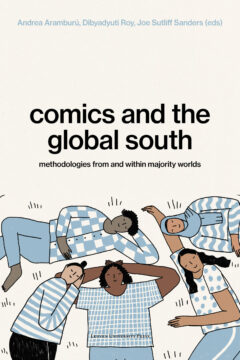 Comics and the Global South
Andrea Aramburú (Editor), Dibyadyuti Roy (Editor), Joe Sutliff Sanders (Editor),
February 2026
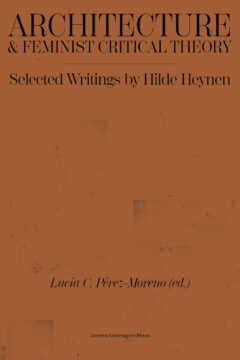 Architecture & Feminist Critical Theory
Hilde Heynen (Author), Lucía C. Pérez-Moreno (Editor),
November 2025
 Entangled Art Histories
Valérie Mavridorakis (Editor), Alexander Streitberger (Editor), Hilde Van Gelder (Editor), Erik Verhagen (Editor),
October 2025