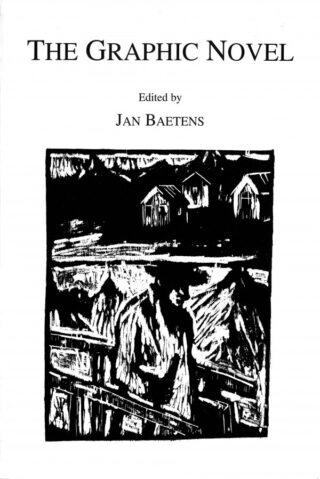
The Graphic Novel
Jan Baetens (Author),
The essays collected in this volume were first presented at the international and interdisciplinary conference on the Graphic Novel hosted by the Institute for Cultural Studies (University of Leuven) on 12-13 May 2000.
Actually, the issues discusses by the conference are twofold. Firstly, that of trauma representation, an issue escaping by definition from any imaginable specific field. Secondly, that of a wide range of topics concerning the concept of ‘visual narrative’, an issue which can only be studied by comparing as many media and practices as possible.
The essays of this volume are grouped here in two major parts, their focus depending on either a more general topic or on a very specific graphic author. The first part of the book, “Violence and trauma in the Graphic Novel”, opens with a certain number of reflections on the representation of violence in literary and visual graphic novels, and continues with a whole set of close readings of graphic novels by Art Spiegelman (“Maus” I and II) and Jacques Tardi (whose masterwork “C’était la guerre des tranchées” is still waiting for its complete English translation). The second part of the book presents in the first place a survey of the current graphic novel production, and insists sharply on the great diversity of the range in the various ‘continental’ traditions (for instance underground ‘comix’, and feminist comics, high-art graphic novels, critical superheroes-fiction) whose separation is nowadays increasingly difficult to maintain. It continues and ends with a set of theoretical interventions where not only the reciprocal influences of national and international traditions, but also those between genres and media are strongly forwarded, the emphasis being here mainly on problems concerning ways of looking and positions of spectatorship.
Introduction
Part 1
Trauma and Violence Representation in the Graphic Novel
Section A
Laurie Kaplan
Over the Top in the Aftermath of The Great War: two Novels, Too Graphic
James Reibman
Fredric Wertham, Spiegelman’s Maus, and Representations of the Holocaust
Ed Tan
The Telling Face in Comic Strip and Graphic Novel
Section B
Sue Vice
“It’s about time”: the Chronotope of the Holocaust in Art Spiegelman’s Maus
Ole Frahm
“These papers had too many memories. So I burned them”. Genealogical Rememberance in Art Spiegelman’s Maus. A Survivor’s Tale
Gene Kannenberg Jr.
“I looked Just Like Rudolph Valentino”: Identity and Representation in Maus
Anke Gilleir
“Et il n’y eut plus d’espoir”. On Fiction and History in Jacques Tardi’s Les Aventures Extraordinaires d’Adèle Blanc-Sec
Michael Hein
What Haunts a Soldier’s Mind: Monsters, Demons and the Lost Trenches of Memory. Representations of Combat Trauma in the Works of Jacques Tardi
Part II
Contemporary Graphic Novels and Practices
Section A
Marni Sandweiss
Redrawing the West: Jack Jackson’s Comanche Moon
Heike Elisabeth Jüngst
Carol Lay’s Joy Ride: How to Become Yourself By Being Someone Else
Jeffrey Lewis
The Dual Nature of Apocalypse in Watchmen
Jean-Louis Tilleuil
Narrative Specularity and Sociocritical Stakes in the Contemporary French-Speaking Comic Strip Production
Libbie McQuillan
Texte, Image, Récit: The Textual Worlds of Benoît Peeters
Section B
Mario Saraceni
Relatedness: Aspects of Textual Connectivity in Comics
Jack Post
Hypertextual Experiences of World War I
Patrick Maynard
The Time It Takes
Jan Baetens
Jan Baetens is professor of Literature and Cultural Studies at KU Leuven.
Frequently Asked Questions
What is "The Graphic Novel" about?
The essays collected in this volume were first presented at the international and interdisciplinary conference on the Graphic Novel hosted by the Institute for Cultural Studies (University of Leuven) on 12-13 May 2000.
Actually, the issues discusses by the conference are twofold. Firstly, that of trauma representation, an issue escaping by definition from any imaginable specific field. Secondly, that of a wide range of topics concerning the concept of 'visual narrative', an issue which can only be studied by comparing as many media and practices as possible.
The essays of this volume are grouped here in two major parts, their focus depending on either a more general topic or on a very specific graphic author. The first part of the book, "Violence and trauma in the Graphic Novel", opens with a certain number of reflections on the representation of violence in literary and visual graphic novels, and continues with a whole set of close readings of graphic novels by Art Spiegelman ("Maus" I and II) and Jacques Tardi (whose masterwork "C'était la guerre des tranchées" is still waiting for its complete English translation). The second part of the book presents in the first place a survey of the current graphic novel production, and insists sharply on the great diversity of the range in the various 'continental' traditions (for instance underground 'comix', and feminist comics, high-art graphic novels, critical superheroes-fiction) whose separation is nowadays increasingly difficult to maintain. It continues and ends with a set of theoretical interventions where not only the reciprocal influences of national and international traditions, but also those between genres and media are strongly forwarded, the emphasis being here mainly on problems concerning ways of looking and positions of spectatorship.
Who wrote "The Graphic Novel"?
"The Graphic Novel" was written by Jan Baetens.
Jan Baetens is professor of Literature and Cultural Studies at KU Leuven.
Is "The Graphic Novel" part of a series?
Yes, "The Graphic Novel" is part of the "Symbolae Facultatis Litterarum Lovaniensis - Series D: Litteraria" series. It's book 13 in the series.
What is the Table of Contents for "The Graphic Novel"?
Introduction
Part 1
Trauma and Violence Representation in the Graphic Novel
Section A
Laurie Kaplan
Over the Top in the Aftermath of The Great War: two Novels, Too Graphic
James Reibman
Fredric Wertham, Spiegelman's Maus, and Representations of the Holocaust
Ed Tan
The Telling Face in Comic Strip and Graphic Novel
Section B
Sue Vice
"It's about time": the Chronotope of the Holocaust in Art Spiegelman's Maus
Ole Frahm
"These papers had too many memories. So I burned them". Genealogical Rememberance in Art Spiegelman's Maus. A Survivor's Tale
Gene Kannenberg Jr.
"I looked Just Like Rudolph Valentino": Identity and Representation in Maus
Anke Gilleir
"Et il n'y eut plus d'espoir". On Fiction and History in Jacques Tardi's Les Aventures Extraordinaires d'Adèle Blanc-Sec
Michael Hein
What Haunts a Soldier's Mind: Monsters, Demons and the Lost Trenches of Memory. Representations of Combat Trauma in the Works of Jacques Tardi
Part II
Contemporary Graphic Novels and Practices
Section A
Marni Sandweiss
Redrawing the West: Jack Jackson's Comanche Moon
Heike Elisabeth Jüngst
Carol Lay's Joy Ride: How to Become Yourself By Being Someone Else
Jeffrey Lewis
The Dual Nature of Apocalypse in Watchmen
Jean-Louis Tilleuil
Narrative Specularity and Sociocritical Stakes in the Contemporary French-Speaking Comic Strip Production
Libbie McQuillan
Texte, Image, Récit: The Textual Worlds of Benoît Peeters
Section B
Mario Saraceni
Relatedness: Aspects of Textual Connectivity in Comics
Jack Post
Hypertextual Experiences of World War I
Patrick Maynard
The Time It Takes
Related titles

 Collective Trauma and Future Fantasies
Raika Khorshidian (Editor), Birgit Mersmann (Editor), Cathrine Bublatzky (Editor), Julia Stenzel (Editor),
November 2026

 Feminists Resisting Gendered Violence
Hemangini Gupta (Editor), Fiona Mackay (Editor), Jan Breckenridge (Editor), Louise Chappell (Editor), Rachna Mehra (Editor), Rukmini Sen (Editor), Mailin Suchting (Editor),
October 2026

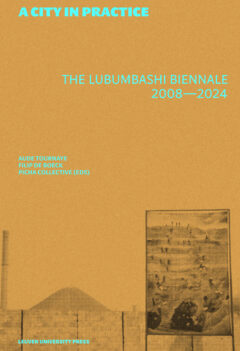 A City in Practice
Aude Tournaye (Editor), Filip De Boeck (Editor), Picha Collective (Editor),
September 2026
 Ecologies of Photography in the American West
Monica Bravo (Editor), Carolin Görgen (Editor),
September 2026
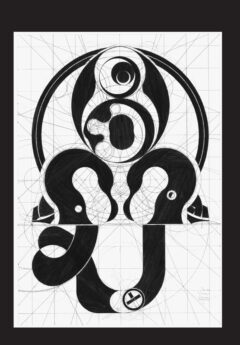 Jean Katambayi Mukendi
Johannes Muselaers (Editor), Stéphane Symons (Editor), Anne-Claire Schmitz (Editor), Emma Enderby (Editor),
April 2026
 Nomadic Camera
Burcu Dogramaci (Editor), Winfried Gerling (Editor), Jens Jäger (Editor), Birgit Mersmann (Editor),
March 2026


 Entangled Art Histories
Valérie Mavridorakis (Editor), Alexander Streitberger (Editor), Hilde Van Gelder (Editor), Erik Verhagen (Editor),
October 2025


 Moral Seascapes
Jonathan Stafford (Editor), Henning Trüper (Editor), Burkhardt Wolf (Editor),
November 2024



 Architectures of Resistance
Angeliki Sioli (Editor), Nishat Awan (Editor), Kristopher Palagi (Editor),
August 2024