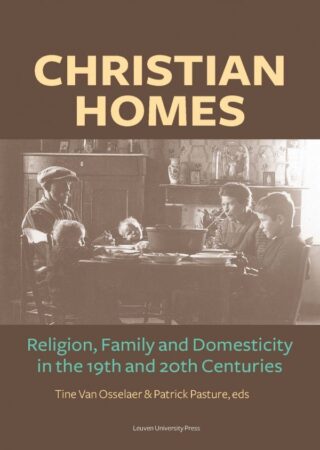
Christian Homes
Religion, Family and Domesticity in the 19th and 20th Centuries
Tine Van Osselaer (Editor), Patrick Pasture (Editor),
Series: KADOC-Studies on Religion, Culture and Society 14
Category: Gender Studies, History, History 1800-present, Religion
Language: English
ISBN: 9789462700185
Publication date: September 29, 2014
€39.50 (including 6% VAT)
Buy NowSize: 238 x 170 x mm

Stock item: 92009
Standard delivery time for print books:
For Belgium: 5 to 8 working days
For EU: 2 to 3 weeks
For other countries: 4 to 5 weeks
Series: KADOC-Studies on Religion, Culture and Society 14
Category: Gender Studies, History, History 1800-present, Religion
Language: English
ISBN: 9789461662101
Publication date: September 29, 2014
€29.50 (including 6% VAT)
Buy Now
Christian ideas on family, religion, and the home in the nineteenth and twentieth centuries The cult of domesticity has often been linked to the privatization of religion and the idealisation of the motherly ideal of the ‘angel in the house’. This book revisits the Christian home of the nineteenth and twentieth centuries and sheds new light on the stereotypical distinction between the private and public spheres and their inhabitants. Emphasizing the importance of patriarchal domesticity during the period and the frequent blurring of boundaries between the Christian home and modern society, the case studies included in this volume call for a more nuanced understanding of nineteenth- and twentieth-century Christian ideas on family, religion, and the home.
This publication is GPRC-labeled (Guaranteed Peer-Reviewed Content).
CONTENTS
Religion, Family and Domesticity in the Nineteenth and Twentieth Centuries An introduction Tine Van Osselaer
Masculinity, Religiousness and the Domestic Sphere in the German-speaking World around 1900 Bernhard Schneider
The Household of the Pastor An Exponent of Christian Manliness Alexander Maurits
Gender, Family Life and Religious Identity in Nineteenth Century Ultramontane Aristocracy The Example of the House of Arenberg Bertrand Goujon
Making the Charitable Man Catholic Masculinities in Nineteenth-Century France Matthieu Brejon de Lavergnée
Stigmatic Cults and Pilgrimage The Convergence of Private and Public Faith Paula Kane
At Home at War for Christ Domesticity and American Christianity in Europe’s Great War Jonathan H. Ebel
From the Angel of the Household to the Female Apostles of the Twentieth Century Magali Della Sudda
Home is where the Heart is The Sacred Heart Devotion in Catholic Families in Interwar Belgium Tine Van Osselaer
Gatherings at the Family Table Transformations in Christology and Popular Religiosity in Twentieth-Century English Catholicism, 1945-1980 Alana Harris
Bibliography Contributors Colophon
Tine Van Osselaer
Tine Van Osselaer is research professor at Universiteit Antwerpen (Ruusbroec Institute).
Patrick Pasture
Patrick Pasture is Professor of History and Director of the Centre for European Studies at KU Leuven.
Het is een heel bijzonder volume geworden dat aandacht besteedt aan de cultus van de huiselijkheid die in de 19de eeuw ontstaat, ook in katholieke middens. Het is de periode waarin het moederideaal van 'de engel in huis' ontstaat. Het ideaal van het afgesloten huis blijkt echter een latere projectie te zijn. In die oude periode zijn er steevast verbindingslijnen tussen de private sfeer en de publieke sfeer. Tal van detailstudies in dit boek tonen die dwarsverbindingen helder aan. Van Osselaer leidt het thema prachtig in. [...] Het is een academische studie vol verrassende inzichten in de boeiende periode van het rijke Roomse leven.
(JG), www.christusrex.be
Nine articles and an introduction make up the collection, edited by Tine Van Osselaer and Patrick Pasture, which is framed around the themes of gender (both women and men), family and domesticity. The collection is a welcome addition to a growing body of scholarly literature seeking to take personal faith more seriously in modern history. It moves beyond the secularisation thesis which has dominated our understanding of Europe's Christian landscape and which has hindered our ability to appreciate the ways in which religious belief functioned in everyday life.
Lucinda Matthews-Jones, English Historical Review (2016) 131 (548): 229-230. doi: 10.1093/ehr/cev341
The essays of 'Christian Homes' represent a necessarily partial approach to a large question, and, as one expects, they are uneven, not least in their facility with English. Nonetheless, they represent a useful reminder that the historians' “angel of the home” was often tacitly Protestant. They suggest that Catholicism is a useful avenue of inquiry into a conceptual tool—the cult of domesticity—that, in spite of extensive critique, remains important to our notion of European modernity.
CAROL E. HARRISON, The Catholic Historical Review (2016, vol. 102, no. 4).
Ciಠdetto, il giudizio su Christian Homes resta senza dubbio positivo per almeno due ragioni: da una parte capacità di mostrare le forzature e te contraddizioni dei processi di costruzione del femminile e del maschile, mettendo in evidenza le similitudini e le differenze fra i due modelli; e dall'altra l'approccio innovativo nello studio della politicizzazione delle devazioni, attento all'elaborazione da parte delle gerarchie ecclesiastiche ma anche alla ricezione da parte dei fedeli
Azzurra Tafuro
In offering well-researched, nuanced and thoughtful insight into the intimate but ever changing connections between religion, family, domesticity in various sites of European Christianity, this collection deepens understanding of the tenacity and varieties of religion centered in the home. And as with any solid contribution it opens up new areas for reflection and comparison.
Religion and Gender. 6(2), pp.336–338. DOI: http://doi.org/10.18352/rg.10193
Frequently Asked Questions
What is "Christian Homes" about?
Christian ideas on family, religion, and the home in the nineteenth and twentieth centuries The cult of domesticity has often been linked to the privatization of religion and the idealisation of the motherly ideal of the ‘angel in the house’. This book revisits the Christian home of the nineteenth and twentieth centuries and sheds new light on the stereotypical distinction between the private and public spheres and their inhabitants. Emphasizing the importance of patriarchal domesticity during the period and the frequent blurring of boundaries between the Christian home and modern society, the case studies included in this volume call for a more nuanced understanding of nineteenth- and twentieth-century Christian ideas on family, religion, and the home.
This publication is GPRC-labeled (Guaranteed Peer-Reviewed Content).
Who edited "Christian Homes"?
"Christian Homes" was edited by Tine Van Osselaer and Patrick Pasture.
Tine Van Osselaer is research professor at Universiteit Antwerpen (Ruusbroec Institute).
Patrick Pasture is Professor of History and Director of the Centre for European Studies at KU Leuven.
Is "Christian Homes" part of a series?
Yes, "Christian Homes" is part of the "KADOC-Studies on Religion, Culture and Society" series. It's book 14 in the series.


The longstanding peer-reviewed book series KADOC Studies in Religion, Culture and Society is devoted to a deeper understanding of the role of religion(s) in society in Europe and the world since 1750. By means of monographs and edited volumes, the series explores thematic frontiers and embraces innovative methodological approaches in historical, sociological and anthropological scholarship on religion, culture and society. The series particularly welcomes manuscripts adopting interreligious and transnational perspectives. Taken together, KADOC Studies in Religion, Culture and Society and its companion series KADOC Artes represent a diptych featuring the immaterial and material legacies of religions in Europe and the world from the 18th century onwards.
KADOC Studies in Religion, Culture and Society is managed by an independent Editorial Board. Books are published in English. Open Access publishing is encouraged. Financial support will be examined on a case-by-case basis and in consultation with the author.
KADOC, the Interfaculty Documentation and Research Centre on Religion, Culture and Society at KU Leuven, is an internationally oriented interdisciplinary research center as well as a heritage institution recognized by the Flemish Government with particularly rich and diverse documentary holdings.
Editorial board
Elena Arigita Maza (Universidad de Granada)
Florian Bock (Ruhr Universität Bochum)
Timothy Brittain‐Catlin (University of Cambridge)
James Chappel (Duke University)
Kim Christiaens (KADOC-KU Leuven)
Kathleen James-Chakraborty (University College Dublin)
James Kennedy (Utrecht University)
Franziska Metzger (PH Luzern)
Patrick Pasture (MoSa‐KU Leuven) - chairman
Isabelle Saint‐Martin (EPHE Paris)
Thijl Sunier (VU Amsterdam)
Árpád von Klimó (Catholic University of America)
Veerle De Laet (Leuven University Press)
Peter Heyrman (KADOC-KU Leuven) - secretary
Proposals
Proposals and enquiries can be sent to Peter Heyrman. The series welcomes monographs and edited volumes. Book proposals may relate to, for example, the political impact of religion, the dynamics between religion and welfare, and missionary history. All proposals and manuscripts are subject to double blind peer review involving at least one external reviewer (proposals) or at least two (manuscripts). The editors strive towards completing the review of proposals within two months and of complete manuscripts within five months after submission.
Please make use of the submission form to present your manuscript or proposal to our board.
Authors interested in Open Access can consult the available funding options.
Links & Resources
What is the Table of Contents for "Christian Homes"?
CONTENTS
Religion, Family and Domesticity in the Nineteenth and Twentieth Centuries An introduction Tine Van Osselaer
Masculinity, Religiousness and the Domestic Sphere in the German-speaking World around 1900 Bernhard Schneider
The Household of the Pastor An Exponent of Christian Manliness Alexander Maurits
Gender, Family Life and Religious Identity in Nineteenth Century Ultramontane Aristocracy The Example of the House of Arenberg Bertrand Goujon
Making the Charitable Man Catholic Masculinities in Nineteenth-Century France Matthieu Brejon de Lavergnée
Stigmatic Cults and Pilgrimage The Convergence of Private and Public Faith Paula Kane
At Home at War for Christ Domesticity and American Christianity in Europe's Great War Jonathan H. Ebel
From the Angel of the Household to the Female Apostles of the Twentieth Century Magali Della Sudda
Home is where the Heart is The Sacred Heart Devotion in Catholic Families in Interwar Belgium Tine Van Osselaer
Gatherings at the Family Table Transformations in Christology and Popular Religiosity in Twentieth-Century English Catholicism, 1945-1980 Alana Harris
Bibliography Contributors Colophon
Related titles
 Margarete Schütte-Lihotzky and the Architecture of Collective Dissidence, 1918–1989
S.E. Eisterer (Author),
April 2027
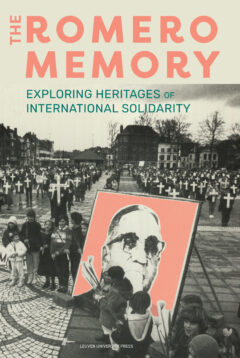 The Romero Memory
Judith Gruber (Editor), Jonas Van Mulder (Editor), Kim Christiaens (Editor), Veerle Draulans (Editor), Jacques Haers (Editor), Joren Janssens (Editor), Stephan Parmentier (Editor),
December 2026

 Toekomstdromen
Maarten Van Dijck (Editor), Gerrit Verhoeven (Editor), Hans Cools (Editor),
November 2026
 Feminists Resisting Gendered Violence
Hemangini Gupta (Editor), Fiona Mackay (Editor), Jan Breckenridge (Editor), Louise Chappell (Editor), Rachna Mehra (Editor), Rukmini Sen (Editor), Mailin Suchting (Editor),
October 2026
 German–Rapanui Entanglements
Cristián Moreno Pakarati (Editor), Diego Muñoz (Editor), Philipp Schorch (Editor),
August 2026
 Trend en toeval – vierde editie
Bruno Blondé (Author), Isabelle Devos (Author), Jord Hanus (Author), Wouter Ryckbosch (Author),
August 2026
 Cinema in Post-War Belgium
Gertjan Willems (Editor), Bjorn Gabriels (Editor), Bénédicte Rochet (Editor),
May 2026
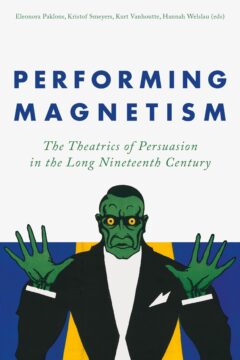 Performing Magnetism
Eleonora Paklons (Editor), Kristof Smeyers (Editor), Kurt Vanhoutte (Editor), Hannah Welslau (Editor),
May 2026
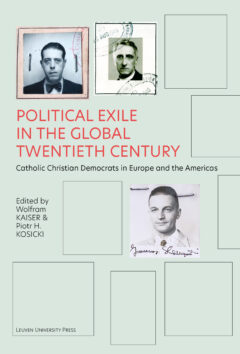 Political Exile in the Global Twentieth Century
Wolfram Kaiser (Editor), Piotr H. Kosicki (Editor),
April 2026
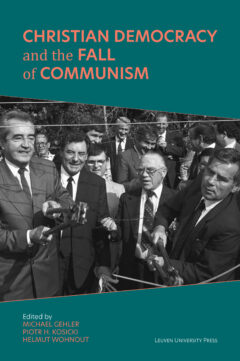 Christian Democracy and the Fall of Communism
Michael Gehler (Editor), Piotr H. Kosicki (Editor), Helmut Wohnout (Editor),
April 2026
 Brusselse plaatsnamen
Iadine Degryse (Editor), Benjamin Wayens (Editor), Chantal Kesteloot (Editor), Dennis De Vriese (Editor), Matthijs Degraeve (Editor),
April 2026