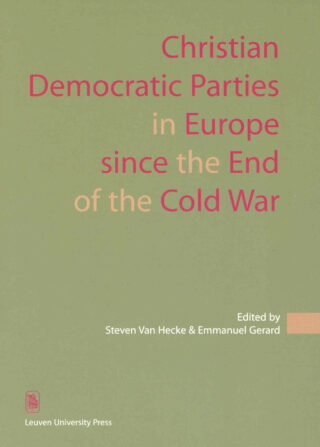
Christian Democratic Parties in Europe since the End of the Cold War
Emmanuel Gerard (Author), Steven Van Hecke (Author),
The period since the end of the Cold War has been characterised by an acceleration in the European integration process, a changing pattern of political ideologies and the emergence of new political parties and issues. This book assesses the impact of these phenomena on Christian Democratic parties in the current and future member states of the European Union and highlights some of the particularities and universalities of European Christian Democracy from a comparative and transnational perspective. Political scientists and historians from various universities examine the way in which Christian Democratic parties have responded to these challenges (for instance by a rapprochement with non-Christian Democrats) and explain how those responses have resulted in failure in some cases and success in others.
European Christian Democracy in the 1990s. Towards a Framework for Analysis
Emmanuel Gerard & Steven Van Hecke
The Consociational Construction of Christian Democracy
Paolo Alberti & Robert Leonardi
Christian Democratic Parties and Europeanisation
Steven Van Hecke
Two Crises, Two Consolidations? Christian Democracy in Germany
Frank Bösch
Rejuvenation of an ‘Old Party’? Christian Democracy in Austria
Franz Fallend
From Dominance to Doom? Christian Democracy in Italy
Robert Leonardi & Paolo Alberti
Living Apart together. Christian Democracy in Belgium
Wouter Beke
Paradise Lost, Paradise Regained? Christian Democracy in the Netherlands
Paul Lucardie
At the Centre of the State. Christian Democracy in Luxembourg
Philippe Poirier
The impossible Resurrection. Christian Democracy in France
Alexis Massart
Life at the Northern Margin.Christian Democracy in Scandinavia
John T.S. Madeley
Who learns from Whom? The failure of Spanish Christian Democracy and the Success of the People’s Party
Peter Matuschek
A Decade of Seized Opportunities. Chrisitan Democracy in the European Union
Steven Van Hecke
Quo Venis et Quo Vadis? Christian Democracy in Central and Eastern Europe
Ausra Aleliunaite
European Christian Democracy in the 1990s. toward a Comparative Approach
Emmanuel Gerard & Steven Van Hecke
Bibliography
Index
Emmanuel Gerard
Steven Van Hecke
Steven Van Hecke is professor of European politics at KU Leuven and visiting professor at the University of Sarajevo. He conducts research on European political parties, EU institutions, and the history of European integration. In 2024, he wrote the book essay Het kantelende continent (Acco), which has now been expanded and translated as Brave Old Continent?.
Frequently Asked Questions
What is "Christian Democratic Parties in Europe since the End of the Cold War" about?
The period since the end of the Cold War has been characterised by an acceleration in the European integration process, a changing pattern of political ideologies and the emergence of new political parties and issues. This book assesses the impact of these phenomena on Christian Democratic parties in the current and future member states of the European Union and highlights some of the particularities and universalities of European Christian Democracy from a comparative and transnational perspective. Political scientists and historians from various universities examine the way in which Christian Democratic parties have responded to these challenges (for instance by a rapprochement with non-Christian Democrats) and explain how those responses have resulted in failure in some cases and success in others.
Who wrote "Christian Democratic Parties in Europe since the End of the Cold War"?
"Christian Democratic Parties in Europe since the End of the Cold War" was written by Emmanuel Gerard and Steven Van Hecke.
Steven Van Hecke is professor of European politics at KU Leuven and visiting professor at the University of Sarajevo. He conducts research on European political parties, EU institutions, and the history of European integration. In 2024, he wrote the book essay Het kantelende continent (Acco), which has now been expanded and translated as Brave Old Continent?.
Is "Christian Democratic Parties in Europe since the End of the Cold War" part of a series?
Yes, "Christian Democratic Parties in Europe since the End of the Cold War" is part of the "KADOC-Studies on Religion, Culture and Society" series. It's book 1 in the series.


The longstanding peer-reviewed book series KADOC Studies in Religion, Culture and Society is devoted to a deeper understanding of the role of religion(s) in society in Europe and the world since 1750. By means of monographs and edited volumes, the series explores thematic frontiers and embraces innovative methodological approaches in historical, sociological and anthropological scholarship on religion, culture and society. The series particularly welcomes manuscripts adopting interreligious and transnational perspectives. Taken together, KADOC Studies in Religion, Culture and Society and its companion series KADOC Artes represent a diptych featuring the immaterial and material legacies of religions in Europe and the world from the 18th century onwards.
KADOC Studies in Religion, Culture and Society is managed by an independent Editorial Board. Books are published in English. Open Access publishing is encouraged. Financial support will be examined on a case-by-case basis and in consultation with the author.
KADOC, the Interfaculty Documentation and Research Centre on Religion, Culture and Society at KU Leuven, is an internationally oriented interdisciplinary research center as well as a heritage institution recognized by the Flemish Government with particularly rich and diverse documentary holdings.
Editorial board
Elena Arigita Maza (Universidad de Granada)
Florian Bock (Ruhr Universität Bochum)
Timothy Brittain‐Catlin (University of Cambridge)
James Chappel (Duke University)
Kim Christiaens (KADOC-KU Leuven)
Kathleen James-Chakraborty (University College Dublin)
James Kennedy (Utrecht University)
Franziska Metzger (PH Luzern)
Patrick Pasture (MoSa‐KU Leuven) - chairman
Isabelle Saint‐Martin (EPHE Paris)
Thijl Sunier (VU Amsterdam)
Árpád von Klimó (Catholic University of America)
Veerle De Laet (Leuven University Press)
Peter Heyrman (KADOC-KU Leuven) - secretary
Proposals
Proposals and enquiries can be sent to Peter Heyrman. The series welcomes monographs and edited volumes. Book proposals may relate to, for example, the political impact of religion, the dynamics between religion and welfare, and missionary history. All proposals and manuscripts are subject to double blind peer review involving at least one external reviewer (proposals) or at least two (manuscripts). The editors strive towards completing the review of proposals within two months and of complete manuscripts within five months after submission.
Please make use of the submission form to present your manuscript or proposal to our board.
Authors interested in Open Access can consult the available funding options.
Links & Resources
What is the Table of Contents for "Christian Democratic Parties in Europe since the End of the Cold War"?
European Christian Democracy in the 1990s. Towards a Framework for Analysis
Emmanuel Gerard & Steven Van Hecke
The Consociational Construction of Christian Democracy
Paolo Alberti & Robert Leonardi
Christian Democratic Parties and Europeanisation
Steven Van Hecke
Two Crises, Two Consolidations? Christian Democracy in Germany
Frank Bösch
Rejuvenation of an 'Old Party'? Christian Democracy in Austria
Franz Fallend
From Dominance to Doom? Christian Democracy in Italy
Robert Leonardi & Paolo Alberti
Living Apart together. Christian Democracy in Belgium
Wouter Beke
Paradise Lost, Paradise Regained? Christian Democracy in the Netherlands
Paul Lucardie
At the Centre of the State. Christian Democracy in Luxembourg
Philippe Poirier
The impossible Resurrection. Christian Democracy in France
Alexis Massart
Life at the Northern Margin.Christian Democracy in Scandinavia
John T.S. Madeley
Who learns from Whom? The failure of Spanish Christian Democracy and the Success of the People's Party
Peter Matuschek
A Decade of Seized Opportunities. Chrisitan Democracy in the European Union
Steven Van Hecke
Quo Venis et Quo Vadis? Christian Democracy in Central and Eastern Europe
Ausra Aleliunaite
European Christian Democracy in the 1990s. toward a Comparative Approach
Emmanuel Gerard & Steven Van Hecke
Bibliography
Index
Related titles
 Margarete Schütte-Lihotzky and the Architecture of Collective Dissidence, 1918–1989
S.E. Eisterer (Author),
April 2027

 The Romero Memory
Judith Gruber (Editor), Jonas Van Mulder (Editor), Kim Christiaens (Editor), Veerle Draulans (Editor), Jacques Haers (Editor), Joren Janssens (Editor), Stephan Parmentier (Editor),
December 2026

 Toekomstdromen
Maarten Van Dijck (Editor), Gerrit Verhoeven (Editor), Hans Cools (Editor),
November 2026
 Feminists Resisting Gendered Violence
Hemangini Gupta (Editor), Fiona Mackay (Editor), Jan Breckenridge (Editor), Louise Chappell (Editor), Rachna Mehra (Editor), Rukmini Sen (Editor), Mailin Suchting (Editor),
October 2026
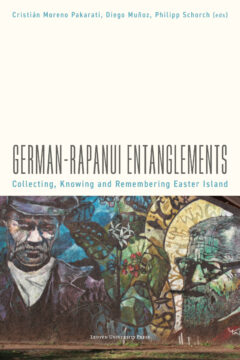 German–Rapanui Entanglements
Cristián Moreno Pakarati (Editor), Diego Muñoz (Editor), Philipp Schorch (Editor),
August 2026
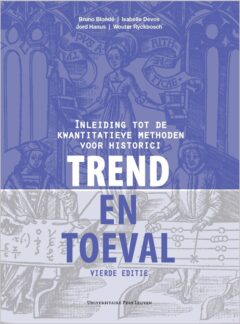 Trend en toeval – vierde editie
Bruno Blondé (Author), Isabelle Devos (Author), Jord Hanus (Author), Wouter Ryckbosch (Author),
August 2026
 Cinema in Post-War Belgium
Gertjan Willems (Editor), Bjorn Gabriels (Editor), Bénédicte Rochet (Editor),
May 2026
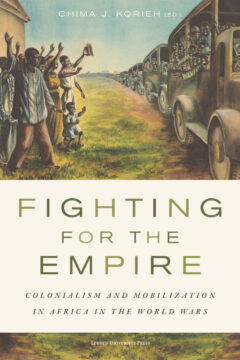
 Performing Magnetism
Eleonora Paklons (Editor), Kristof Smeyers (Editor), Kurt Vanhoutte (Editor), Hannah Welslau (Editor),
May 2026
 Political Exile in the Global Twentieth Century
Wolfram Kaiser (Editor), Piotr H. Kosicki (Editor),
April 2026
 Christian Democracy and the Fall of Communism
Michael Gehler (Editor), Piotr H. Kosicki (Editor), Helmut Wohnout (Editor),
April 2026
 Brusselse plaatsnamen
Iadine Degryse (Editor), Benjamin Wayens (Editor), Chantal Kesteloot (Editor), Dennis De Vriese (Editor), Matthijs Degraeve (Editor),
April 2026